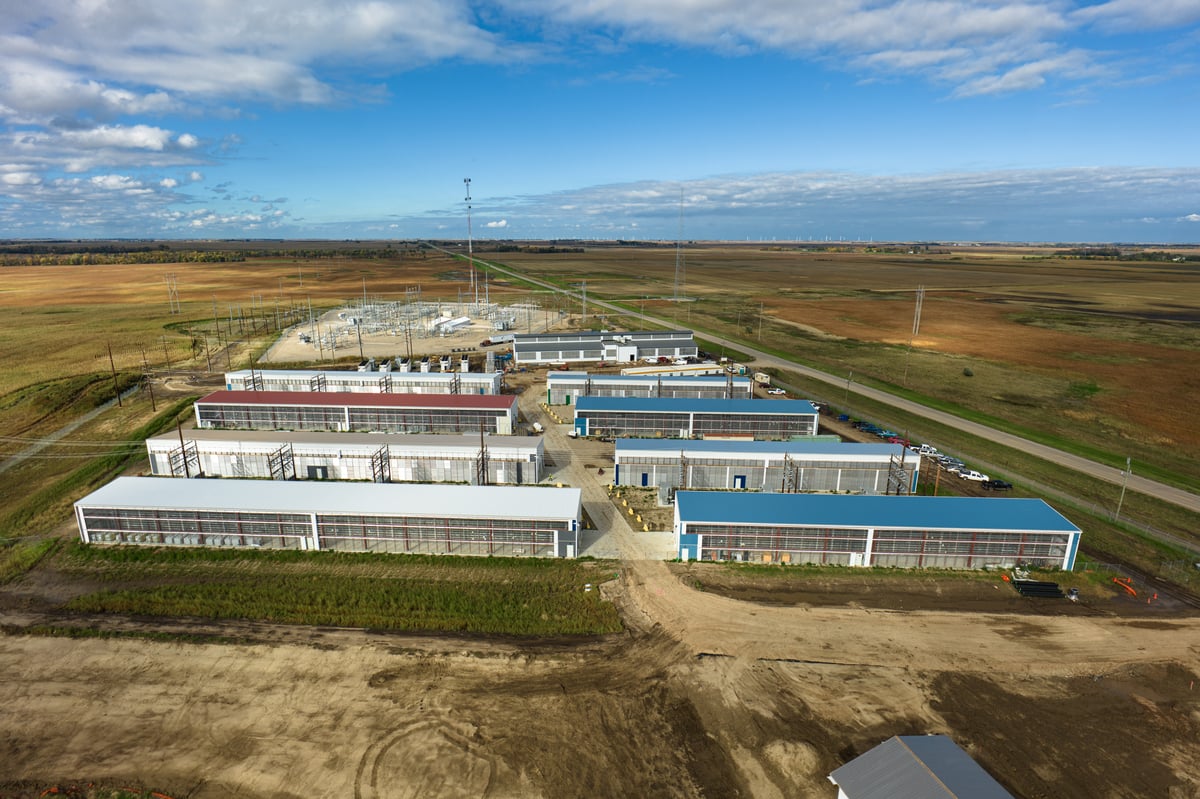
CoreWeave (CRWV +11.72%) closed Thursday at $72.91, down 52% from its 52-week high of $153.20. The main reason the stock keeps falling is the cost of its growth: The artificial intelligence (AI) cloud provider borrows heavily to build data centers, and the bill for that debt is growing about as fast as the business itself.
The first quarter showed both sides. Revenue rose 112% year over year to $2.1 billion. But interest expense more than doubled to $536 million, up from $264 million in the year-ago quarter, and the company's net loss widened to $740 million from $315 million. When CoreWeave reported those results in May, the stock sank about 10% as its revenue forecast disappointed investors and its spending forecast grew again.
Image source: The Motley Fool.
This week brought fresh pressure, with shares falling 3.5% on Wednesday and dropping again Thursday as AI infrastructure stocks sold off broadly.
Insiders haven't helped the mood. CEO Michael Intrator sold about 369,000 shares for roughly $31 million in early July, then about 308,000 more for roughly $25 million on July 14, though the sales came under a prearranged trading plan adopted last year.

NASDAQ: CRWV
Key Data Points
And then there's Meta Platforms. Bloomberg reported on July 1 that the social media giant is planning a cloud business, known internally as Meta Compute, that would sell surplus AI computing capacity to enterprise customers. Renting out AI computing capacity is exactly CoreWeave's business. Making matters more complicated, Meta is also one of CoreWeave's largest customers. The two expanded their relationship in April with an agreement worth about $21 billion through 2032.
Demand, notably, is not the problem. CoreWeave's revenue backlog reached $99.4 billion as of March 31, in what management called the strongest bookings quarter in the company's history. Active power topped 1 gigawatt in the first quarter, and management believes the company is on its way to more than 8 gigawatts by 2030.
What would it take to stop the slide? Most likely, interest costs would need to grow far more slowly than they have been, showing the debt-heavy model can scale toward profitability. And investors would need evidence that the nearly $100 billion backlog can convert into revenue at healthy margins, even with a major customer like Meta potentially competing for the same business.
Until then, the pattern of the past month could persist: strong demand headlines, followed by reminders of what that demand costs to serve. The business keeps growing quickly. The stock's problem is the price of funding that growth -- and, for now, the market keeps marking that price down.