Nvidia (NVDA -0.52%) enjoys one particular attribute that is a hallmark of many successful companies: It's still being led by one of its founders, Jensen Huang. There are countless examples of visionaries who have built business empires, and Huang ranks among the best.
Over the company's past few quarterly conference calls, Nvidia has repeatedly told investors it expects that the world's annual data center capital expenditures could grow to up to $4 trillion by 2030. That's a huge prediction, and if it's right, Nvidia could become a $20 trillion stock over the next few years.
That would be a gigantic increase from its $5 trillion market cap today, but the math to support that prediction is pretty simple.
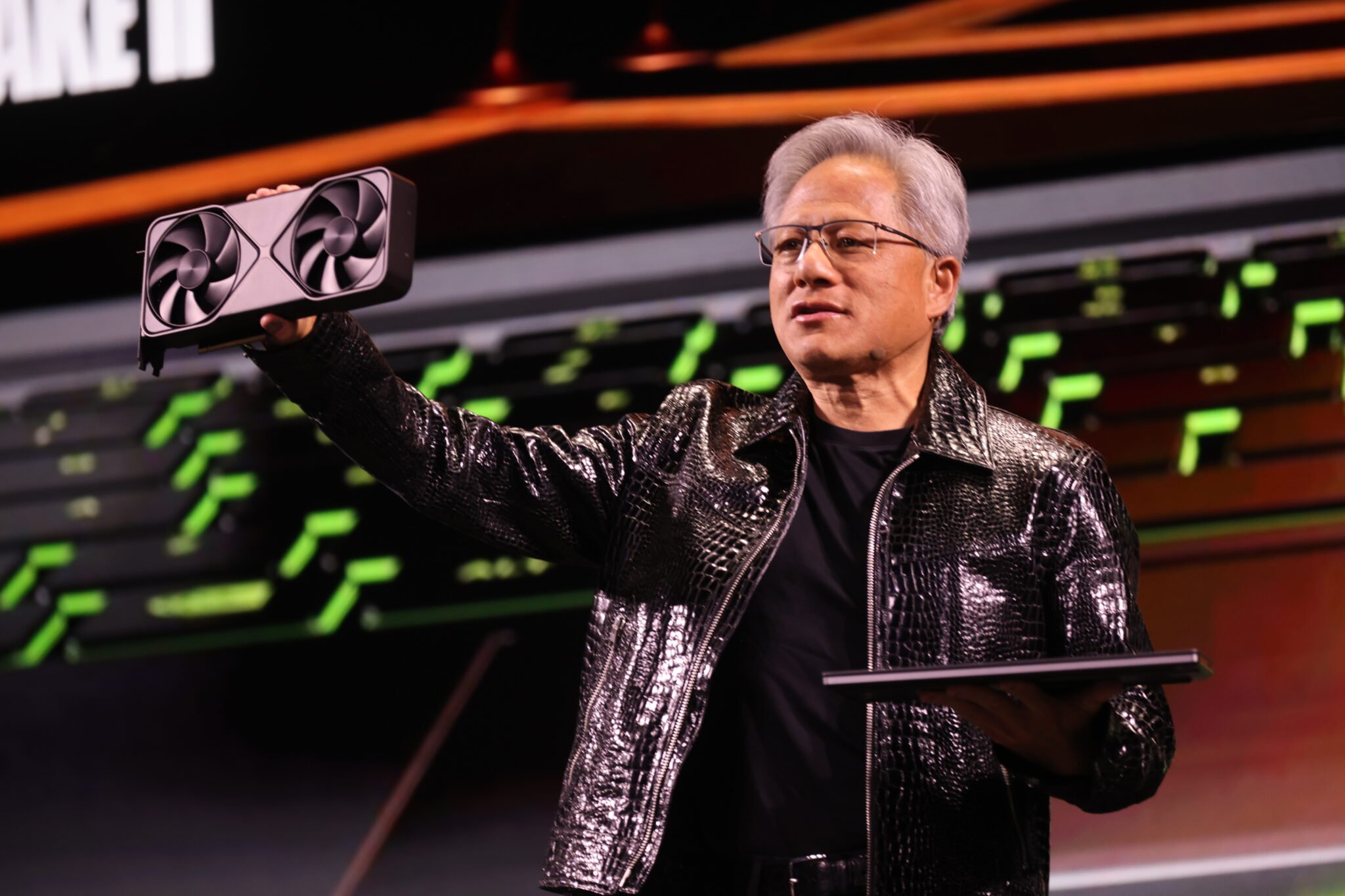
Image source: Nvidia.
The data center build-out could last for many years
Nvidia makes GPUs and the various products that support their use in data centers. Its GPUs have become the gold standard by which all high-performance parallel processors are measured. Furthermore, Nvidia captured the vast majority of the market in the early days of the AI arms race, which makes it incredibly difficult for data center operators to switch away from its products now. This advantage will only grow as more data centers are built.
The big four AI hyperscalers have estimated that they will spend a total of around $650 billion on data center capital expenditures in 2026. That figure doesn't include the spending of neoclouds, international players in markets such as China, nor other rising stars like large language model developers Anthropic and OpenAI.
With that in mind, we can estimate that 2026's actual total data center spend will be something more like $800 billion. Huang's prediction of $4 trillion in global data center capital expenditures by 2030 would therefore be a fivefold rise. If Nvidia keeps capturing its current share of that market's sales and profits, its top and bottom lines would rise proportionally.
The company only needs to quadruple to reach a $20 trillion market cap from today's level, so Nvidia could actually lose market share and still hit that target, assuming Huang's projection for data center capex pans out.

NASDAQ: NVDA
Key Data Points
However, I don't see that market share loss as likely. Nvidia is still rapidly growing: In its latest quarter, revenue grew 85% year over year. Next quarter, Wall Street analysts expect nearly 100% revenue growth. All that growth is without any chip sales to China. But that could be changing.
A U.S. official recently stated that "very few" Nvidia H200 chips have been shipped to China. While that may sound negative, that comment can actually be read as a strong sign that Nvidia is returning to the Chinese market. The U.S. government banned the export of most of its high-end chips to China, and even after President Trump relaxed those restrictions somewhat, the Chinese government has been putting roadblocks in the way of Nvidia's return. If those barriers are coming down, that would be a growth catalyst for sales that's currently not factored into any of the company's guidance figures. The result could be even greater growth for Nvidia and better returns for its shareholders.
Given the potential for Nvidia to quadruple over the next four and a half years, it's a no-brainer buy at these levels.