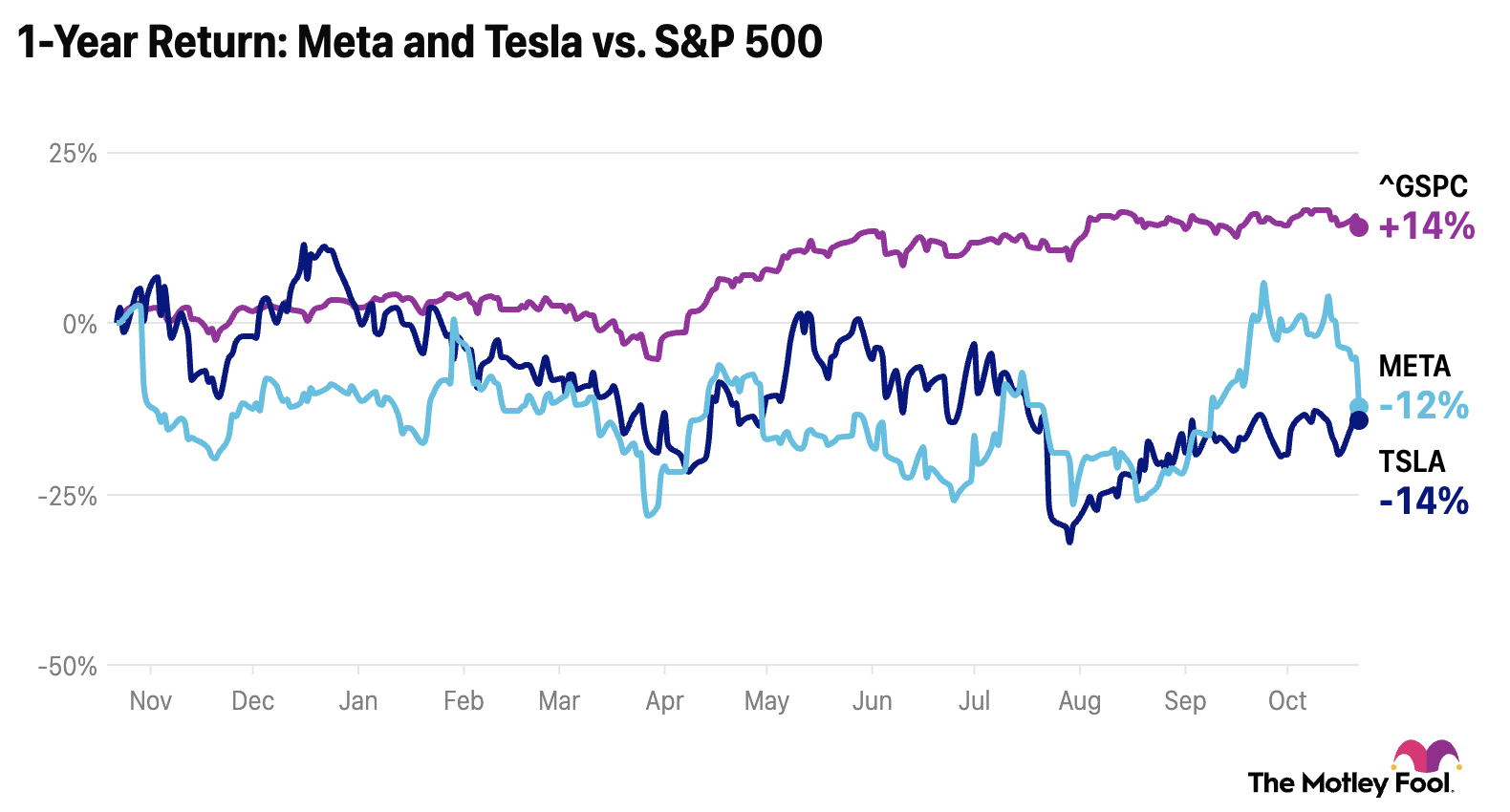
Tesla (TSLA -0.63%) plunged by 14% after releasing its second-quarter earnings, but that dip may just be the beginning. The company has physical artificial intelligence (AI) products in the pipeline, with Optimus robots being a future catalyst, but Tesla still relies heavily on automobile sales and has the profit margins of an automaker.
Image source: Getty Images.
Rising capital expenditures without rising profits
Elon Musk told investors to expect a "massive capex year" in 2026, while Tesla CFO Vaibhav Taneja anticipates capital expenditures (capex) growing for "the next two or three years."
It's the cost of doing business as tech companies scramble to throw capital at AI opportunities, but Tesla hasn't boosted profits for all of that spend. Alphabet (GOOG -1.08%) (GOOGL -1.24%) reported higher operating income, even with higher AI expenditures, and that has been a common pattern among the largest tech companies.
Tesla's operating income dropped by 57% year over year, and the company had only a 1.4% operating margin. Electric vehicles still make up a large portion of total revenue, more than 70%. Automobiles are a low-margin business, and Tesla's rising capital expenditures guarantee that its margins will be under more pressure for multiple years.
TSLA Tesla
NASDAQ · As of 4:00 PM ET 10/23/26

Assessing the valuation
Tesla trades at almost a 300 price-to-earnings (P/E) ratio, even after the recent dip. If you treat it like a pure-play automobile stock, that valuation needs to drop a lot before Tesla reaches fair value.
Bulls have rightly argued that it's not just an automobile stock. The high capital expenditures are going toward Robotaxis and Optimus robots. These are moonshot opportunities that can help justify the current valuation, but for now, they have zero impact on Tesla's business.
A quote from Elon Musk perfectly sums up the opportunities and risks associated with Tesla stock: "I'm confident that all the things that we're investing in will yield incredible returns," Musk said during the call.
Investors are holding on to shares because they believe robotaxis and robots will fuel the next megacycle. However, there are several questions that the current valuation does not account for.
How long will it take for these opportunities to become commercialized? Will Tesla get a large market share with these innovations or gradually lose ground, as has been the case for its electric vehicles? Will demand be strong enough to justify Tesla's current market cap?
These questions show plenty of uncertainty and business execution risk. Elon Musk previously predicted its Robotaxis would be available to half the U.S. population by the end of 2025, which did not materialize. These initiatives may eventually pan out. However, "eventually" isn't a justification for a nearly 300 P/E ratio when most of the money coming in is from electric vehicles and margins are tightening.
Tesla stock needs a deeper dip before it will justify purchasing shares.