MercadoLibre (MELI +0.73%) stock has fallen by 31% from its previous peak as Wall Street focuses on near-term margin pressure and intensifying competition. Yet the business continues to expand rapidly in Latin America's e-commerce market, potentially setting the stage for market-beating returns in the next five years.
Its lower margins are not a result of competition, but rather of its higher near-term spending on infrastructure to support growth. This makes the stock a compelling buy for patient investors.

Image source: The Motley Fool.
Building a competitive moat
Similar to Amazon in the U.S., MercadoLibre has a structural advantage in Latin America's e-commerce market. It continues to invest in logistics infrastructure to build the most efficient delivery network in one of the world's fastest-growing e-commerce markets.
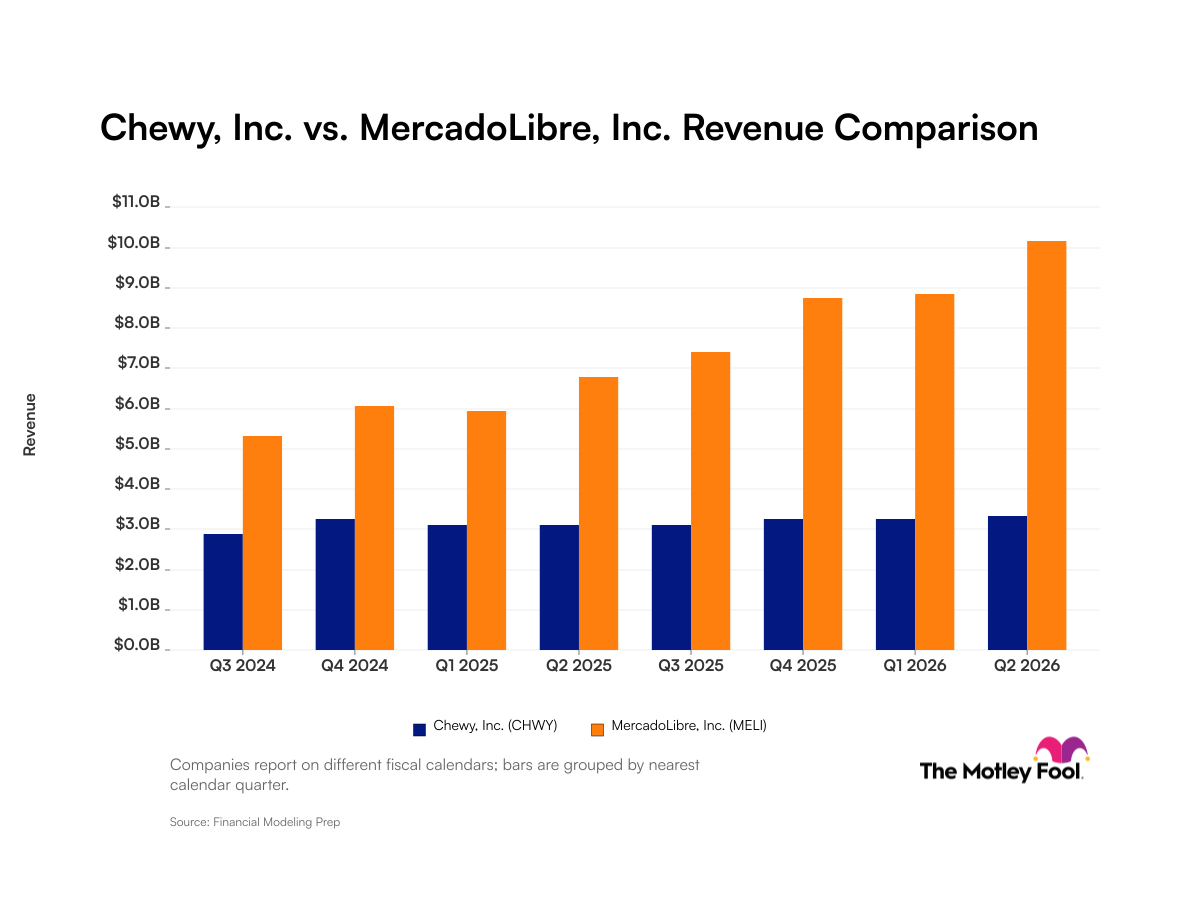
The growth it continues to report shows a huge opportunity ahead. The number of unique active buyers grew 26% year over year in the first quarter. Gross merchandise volume increased by 36%, with the number of items sold rising by 47%. It does face increasing competition from Asian e-commerce companies like Temu and Shopee, but these numbers show that MercadoLibre's investments to expand free shipping offers and other services are protecting its competitive position.
Investments in its delivery network are driving faster delivery and lowering costs. Unit shipping costs declined 17% year over year in local currency, despite a sharp increase in order volumes. MercadoLibre is benefiting from higher purchase frequency and greater scale and productivity, which points to healthy margins in the long run.

NASDAQ: MELI
Key Data Points
Growth potential and returns
E-commerce is only half the story. MercadoLibre is also a major player in fintech, where its massive volume of marketplace data gives it the ability to make more accurate estimations in its credit underwriting. It has issued 2.7 million credit cards, effectively turning marketplace-only users into financial services customers and creating a powerful growth flywheel.
The stock's latest sell-off reflected the company's sliding profit margin, which fell from 8.3% a year ago to 4.7% in the first quarter. However, the long-term growth opportunity is still quite large. Latin America's retail e-commerce growth was about 1.5 times the global average in 2025, according to eMarketer. E-commerce penetration in Argentina, Brazil, Colombia, Mexico, and Uruguay is less than 10%, suggesting that MercadoLibre can continue to grow for many years.
Despite the opportunity ahead of the company, the stock is trading at its lowest sales- and earnings-based multiples in several years. Analysts expect earnings to grow at an annualized rate of 29% in the coming years. At that rate, MercadoLibre stock could reasonably double in value in five years and potentially outperform the broader market.