Since early June, the timeless Dow Jones Industrial Average (^DJI +0.04%), benchmark S&P 500 (^GSPC +0.19%), and innovation-inspired Nasdaq Composite (^IXIC +0.04%) have all blasted to fresh record highs. But the outperformance of these major stock indexes doesn't accurately reflect the heightened pressure inflation is placing on consumers and businesses.
Although Iran-war-driven inflation has dominated headlines since early March, it's a stiff warning offered by now-former Fed Chair Jerome Powell that's now coming home to roost following a new announcement by President Donald Trump.
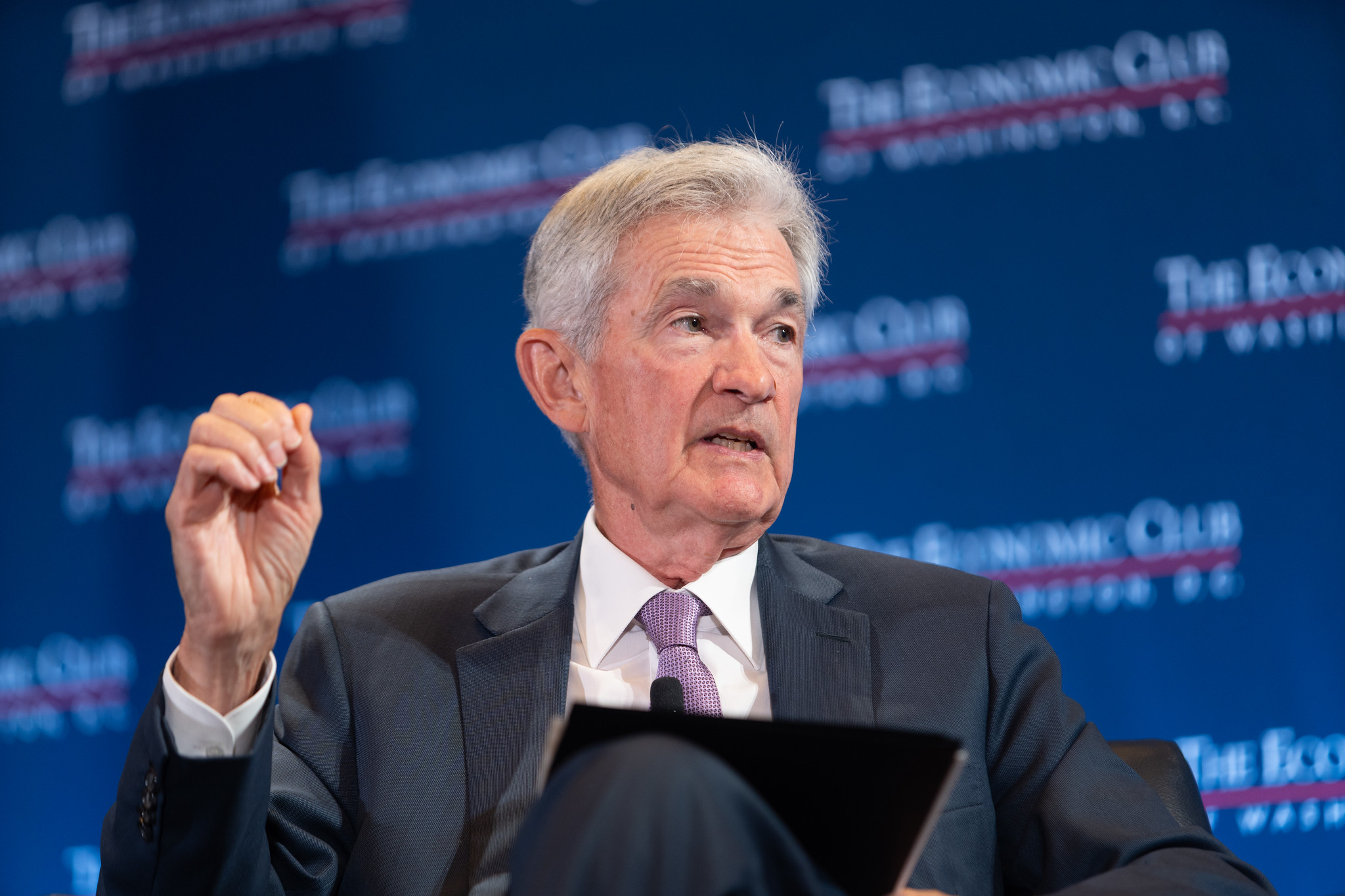
Former Fed Chair Jerome Powell often blamed Trump's tariffs for America's above-average inflation. Image source: Official Federal Reserve Photo.
Trump's new tariffs are likely to exacerbate inflationary concerns
At nearly every Federal Open Market Committee (FOMC) meeting leading up to the end of Powell's term as Fed chair in mid-May, he highlighted President Trump's tariffs as a catalyst for above-average inflation. In Powell's final FOMC meeting on April 29, he proclaimed:
Excluding the volatile food and energy categories, Core PCE prices rose 3.2% over the 12 months ending in March. This relatively high rate largely reflects the effects of tariffs on prices in the goods sector.
Though many of the sweeping global tariffs and higher reciprocal tariffs that Trump introduced in April 2025 were invalidated by a February 2026 U.S. Supreme Court ruling, this hasn't stopped the president from leaning on different justifications to impose tariffs.
BREAKING: President Trump is preparing to announce 10% tariffs on "dozens of countries" this week, per FT.
-- The Kobeissi Letter (@KobeissiLetter) July 21, 2026
Details include:
1. These new tariffs come as President Trump's current 10% tariffs expire later this week
2. President Trump's advisors have reportedly warned him...
Last week, after a temporary 10% tariff (announced after the Supreme Court ruling) expired, the Trump administration revealed new tariffs on 60 trading partners, ranging from 10% to 12.5%. These new tariffs are being enacted under Section 301 of the Trade Act of 1974.
Adding duties to unfinished imported goods can increase production costs for U.S. manufacturers, who then pass these higher costs on to consumers, ultimately raising the prevailing inflation rate. In other words, Powell's inflation warning rings truer than ever after this announcement.

Image source: Getty Images.
The FOMC is facing an inflation quadruple whammy
The issue for policymakers is that tariffs aren't the only source of inflation. Trump's newest announcement means that four factors are now responsible for fanning the flames of inflation:
- Energy supply shock: The shutdown of the Strait of Hormuz due to the Iran war has sent crude oil prices, and thus fuel prices, soaring.
- Broad-based inflation: While trailing 12-month headline inflation fell from 4.2% in May to 3.5% in June, forecasts for Core Personal Consumption Expenditures (PCE) haven't budged much, if at all. The inflationary effects of the Iran war have spilled over into the broader economy.
- AI-driven inflation: The June FOMC meeting minutes pointed to tangible evidence of artificial intelligence (AI)-driven inflation. Demand outstripping AI hardware supply has afforded chip and memory companies with otherworldly pricing power. Unfortunately, this leads to higher costs for consumers.
- Tariffs: Donald Trump's tariffs will exacerbate price stickiness in the goods sector, providing a further boost to Core PCE.
This quadruple whammy is what makes predicting the FOMC's interest rate decision on July 29 so challenging.