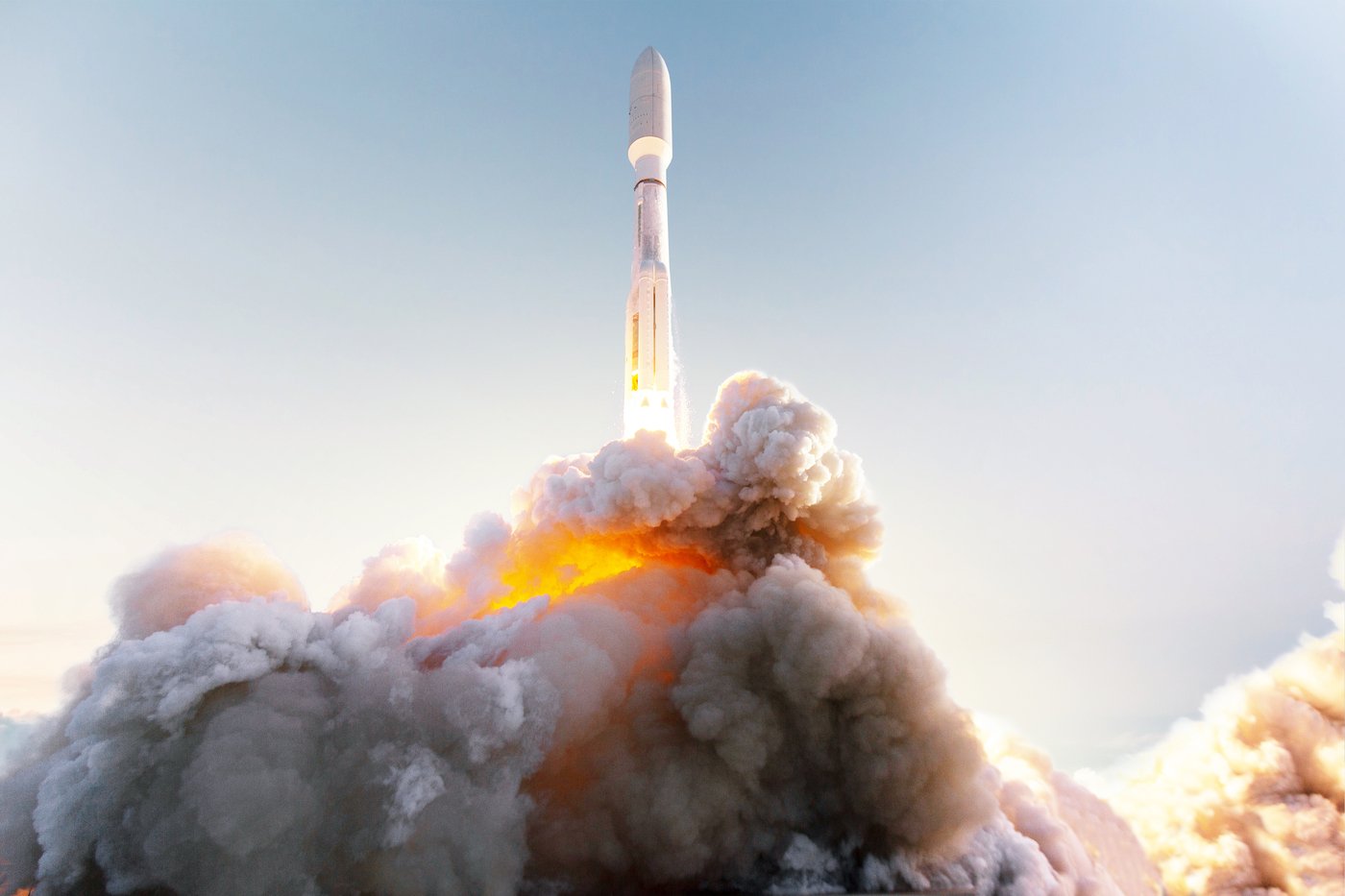
Space Exploration Technologies (SPCX +1.89%) recently completed the 13th test flight of its large Starship rocket, and by the company's own accounts, it was mostly successful. Even with the rocket completing many of its objectives -- including a soft splashdown in the Indian Ocean and the release of Starlink satellites -- investors weren't wowed.
In the first trading session following the launch, SpaceX stock was down by more than 4%.
So, why aren't shareholders pleased with the results? It's likely because SpaceX is spending billions of dollars to build its artificial intelligence infrastructure -- and they're worried it won't pay off.
Image source: The Motley Fool.
Why a successful launch isn't enough for investors
Starship is an important part of SpaceX's future because the world's largest rocket could help the company eventually reduce the cost of reaching orbit by 99% compared to the historical average launch cost.
Starship will be used to launch payloads into space for customers and, as the test flight showed, send more Starlink satellites into space. Starlink is critical to SpaceX's growth, as the satellite internet service is SpaceX's biggest revenue driver. Starlink sales were about $3.2 billion in Q1 2026.
But some shareholders likely looked past the successful Starship test because SpaceX is more than just a rocket company, and its spending on its artificial intelligence projects is sky-high.
In the first quarter, 76% of SpaceX's $10 billion in capital expenditure (capex) was allocated to its AI programs, primarily for data center infrastructure. Not only is that a large percentage of total spending, but overall capex spending is accelerating at the company.
In 2025, SpaceX's total capex was $20.7 billion, meaning that in the first quarter of this year, the company had already spent about half of all of last year's total.
Investors are increasingly skeptical that the billions of dollars being spent on AI infrastructure will ultimately pay off for SpaceX and other tech companies. Profits from massive AI spending have been hard to come by, and it's erasing much of the free cash flow that large tech companies are used to generating.
One recent example is Alphabet, whose share price has fallen as investors focused on the fact that its free cash flow was negative $5.9 billion in the first quarter -- its first negative free cash flow since going public in 2004.
SpaceX is worse off because, unlike Alphabet, the company isn't profitable. And investors are skeptical that it'll be profitable any time soon with all its AI spending underway.
SPCX Space Exploration Technologies
NASDAQ · As of 4:00 PM ET 10/23/26
It's not the time to buy SpaceX yet
Potential SpaceX investors aren't wrong to be skeptical of SpaceX's spending, and current shareholders are right to be concerned.
The company shows no signs of slowing down its AI investments, and another Musk-led company, Tesla, just reported negative free cash flow for the first time in more than two years. Investors punished Tesla's shares for the decline.
Rockets, satellite internet, and AI business aren't cheap, of course, but I don't think investors are going to give up their aversion to AI overspending any time soon. As long as the spending is high and profits are low, it's likely SpaceX's stock could struggle to gain traction.
What's more, SpaceX shares already trade at a premium. The stock's price-to-sales (P/S) ratio is about 77 right now, compared to the tech sector average P/S ratio of 7.
Owning some AI stocks can be a smart move, but investors may want to focus on more profitable companies right now. The AI spending boom isn't slowing down any time soon, but that doesn't mean shareholders have to own shares of an AI company that's miles away from profitability and spending too much on AI bets that may not pay off.