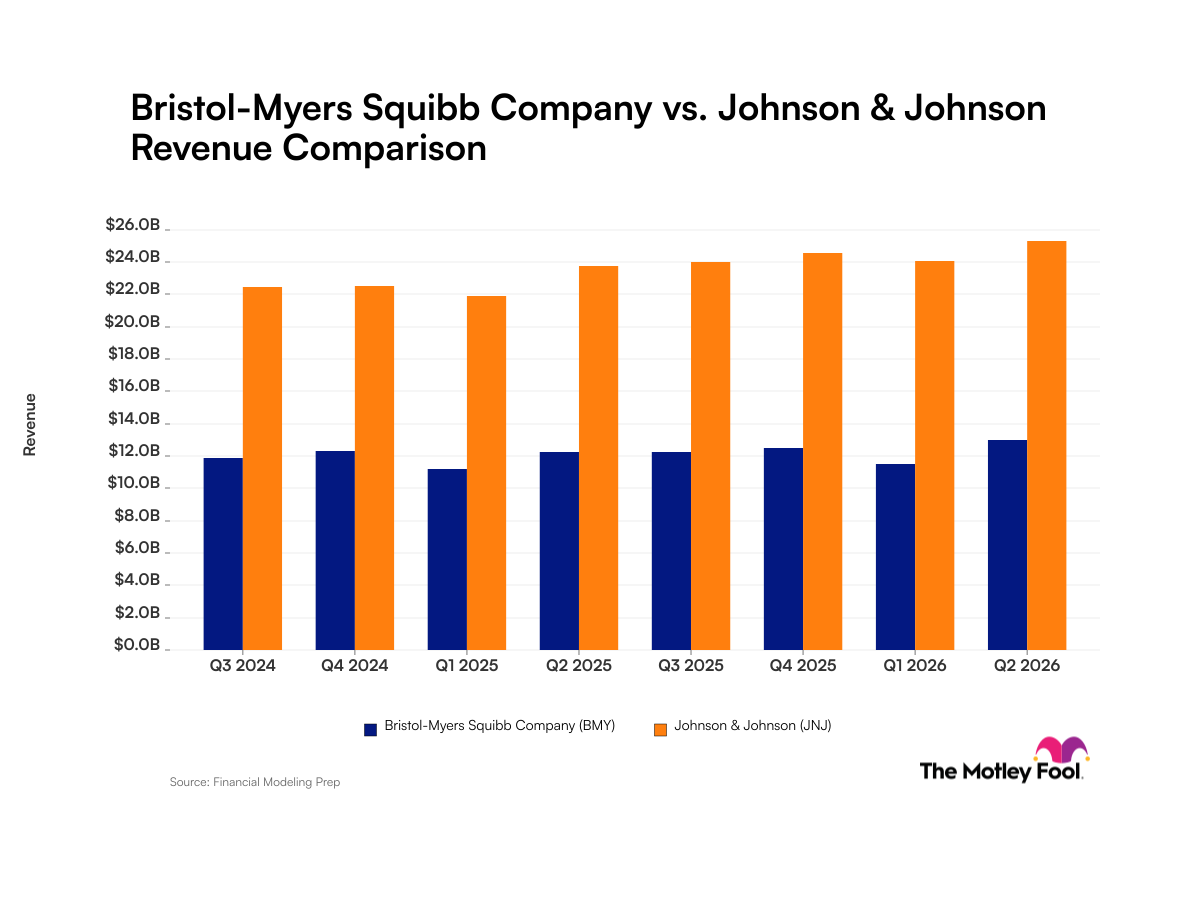
Johnson & Johnson (JNJ -1.02%) is having a great year. The healthcare giant's shares are up 28% compared to the S&P 500's 8% gain. Several factors are driving this strong performance from the drugmaker. First, despite government drug price negotiations that are leading to lower sales for some of its products, not to mention biosimilar competition for Stelara, an immunology medicine, the company's revenue is moving in the right direction. In the second quarter, Johnson & Johnson's net sales climbed by 6.6% year over year to $25.3 billion. The company is still projecting that it will generate a little over $100 billion in sales this year, marking only the second time in history that a biopharmaceutical company achieves this milestone.
Image source: The Motley Fool.
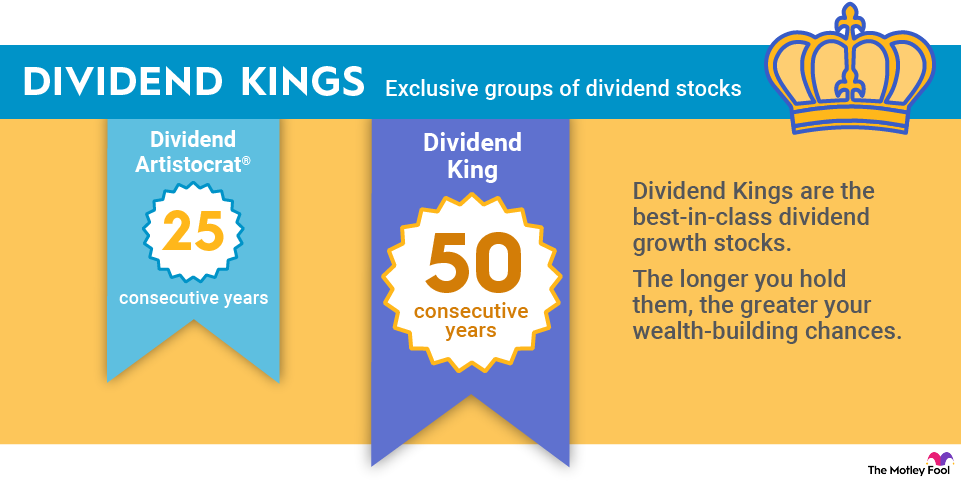
Second, Johnson & Johnson recently received clearance for the Ottava, a robotic-assisted surgery (RAS) system, for a range of general-surgery procedures. The company's entry into this market could be a big deal. The RAS industry is arguably underpenetrated and could become a growth driver for Johnson & Johnson down the line. Third, the healthcare leader continues to raise its dividend, having done so for 64 consecutive years. That makes it a Dividend King, a status that requires a corporation to have raised its payouts for at least 50 consecutive years. All of these are already great reasons to consider the stock, but one ongoing development may overshadow them all. Here's what investors should be most excited about right now.
Putting a major risk in the rearview mirror
For years, Johnson & Johnson has dealt with thousands of lawsuits alleging that its talc-based products gave patients cancer. Plaintiffs claim that the company knew about these risks and should have warned consumers. These drawn-out legal battles have tarnished Johnson & Johnson's public image and reputation. The company has tried to get rid of them several times, but to no avail. That may be about to change.
Johnson & Johnson recently reached a proposed settlement with the law firms representing most of the remaining talc plaintiffs, contingent on at least 95% of the claimants participating. The proposed settlement commits Johnson & Johnson to pay up to $5.5 billion in claims, with an initial payment of up to $3 billion due in 2027, and no additional payment due before 2028. To be clear, this isn't a done deal yet, but it's about the closest Johnson & Johnson has been to resolving these lawsuits.
It wouldn't significantly harm the company's financial position either. Johnson & Johnson generated $22.6 billion in free cash flow over the trailing-12-month period. A $5 billion hit over the next two years (at least) isn't the end of the world, especially considering that the company may have ended up spending much more than that on legal fees to defend itself in court. This settlement, if finalized, will allow Johnson & Johnson to eliminate a major risk hanging over it.

NYSE: JNJ
Key Data Points
Johnson & Johnson is a great long-term pick
Johnson & Johnson has shown the resilience and flexibility of its business over the past few years. Dealing with slowing top-line growth, the company spun off its consumer health operations into a stand-alone business and focused on higher-growth opportunities in medtech and pharmaceuticals.
Government-led price negotiations are also not harming the company too much, thanks to its deep, diversified product lineup across multiple therapeutic areas. And now, it may show that it can survive an avalanche of lawsuits and emerge from the ordeal in one piece. Meanwhile, the company continues to innovate, even beyond Ottava's clearance, which may help boost future sales growth. Johnson & Johnson recently earned approval for Icotyde, a medicine for plaque psoriasis that could become a notable player in this niche.
Analysts believe that at its peak, Icotyde will generate well over $1 billion in sales. Last year, Johnson & Johnson launched Imaavy, a drug for a rare neuromuscular disorder called generalized myasthenia gravis. This medicine may also achieve blockbuster status.
The company is also working on newer medicines, including milvexian, a highly promising anticoagulant it is developing in collaboration with Bristol Myers Squibb. Johnson & Johnson's exceptional underlying business should help it sustain its dividend program, and the company has many years of payout growth ahead. Investors looking for solid dividend payers should consider buying the company's shares.