Several days ago, the Nasdaq-100 index officially touched correction territory. On July 29, it closed just over 11% below its all-time high reached in early June.
For those worried about the implications of this pullback for their portfolios, it's important to remember that these kinds of drawdowns aren't unusual. The index was down more than 10% at the end of March this year. It nearly fell 20% in the first half of 2025 when the Trump administration imposed the "Liberation Day" tariffs. Another pullback occurred during the summer of 2024.
Corrections are normal and healthy (even though they can feel painful). But there are things you can do to help:
- Avoid the temptation to time the market. Studies have shown that investors usually lag the market when they try to get in and out.
- Continue automatic investments. Buying stocks throughout downturns can help lower your average purchase price and improve returns over time.
- Stay diversified. Try not to make significant asset allocation changes, such as moving everything to cash, during a correction.
- Revisit your risk tolerance. If a 10% pullback makes you uneasy, it might be time to consider a more conservative long-term asset allocation.
If those ideas aren't helping you feel any better, maybe this one will.
Image source: Getty Images.
History says that corrections have a 100% recovery rate
Around two months ago, the Nasdaq-100 index and the Invesco QQQ ETF (QQQ +0.38%), which tracks it, were trading at an all-time high. That means that the index has historically been able to come back from every dip, correction, bear market, and total meltdown it has ever experienced.
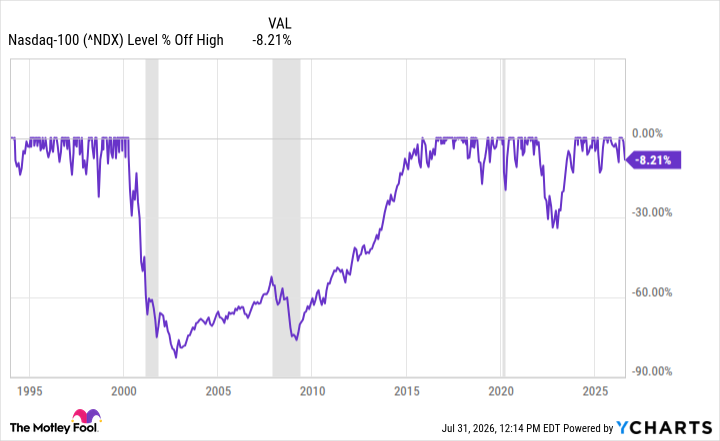
Granted, some drawdowns are easier to recover from than others. It took 15 years to recover from the tech wreck that kicked off the 2000s.
But look at the bright side of these events.
If you had continued to invest throughout that bear market, you would have bought shares at some pretty low prices. That's the part of investing that requires discipline. For most people, the inclination is to sell stocks before they fall any further. In the case of the tech bubble, they may have even saved themselves some additional losses, depending on when they got out.
But most investors don't get back in until the recovery is well underway. They may or may not avoid some losses, but they usually miss out on the upside, too. By remaining invested and continuing to buy, you capture the full recovery and you buy at what's likely to be remembered as discount prices.
Historically, the market has continued to push higher. Market corrections aren't fun, but they're normal and part of the process. Handle them like a pro and you'll likely come out in better shape in the end.