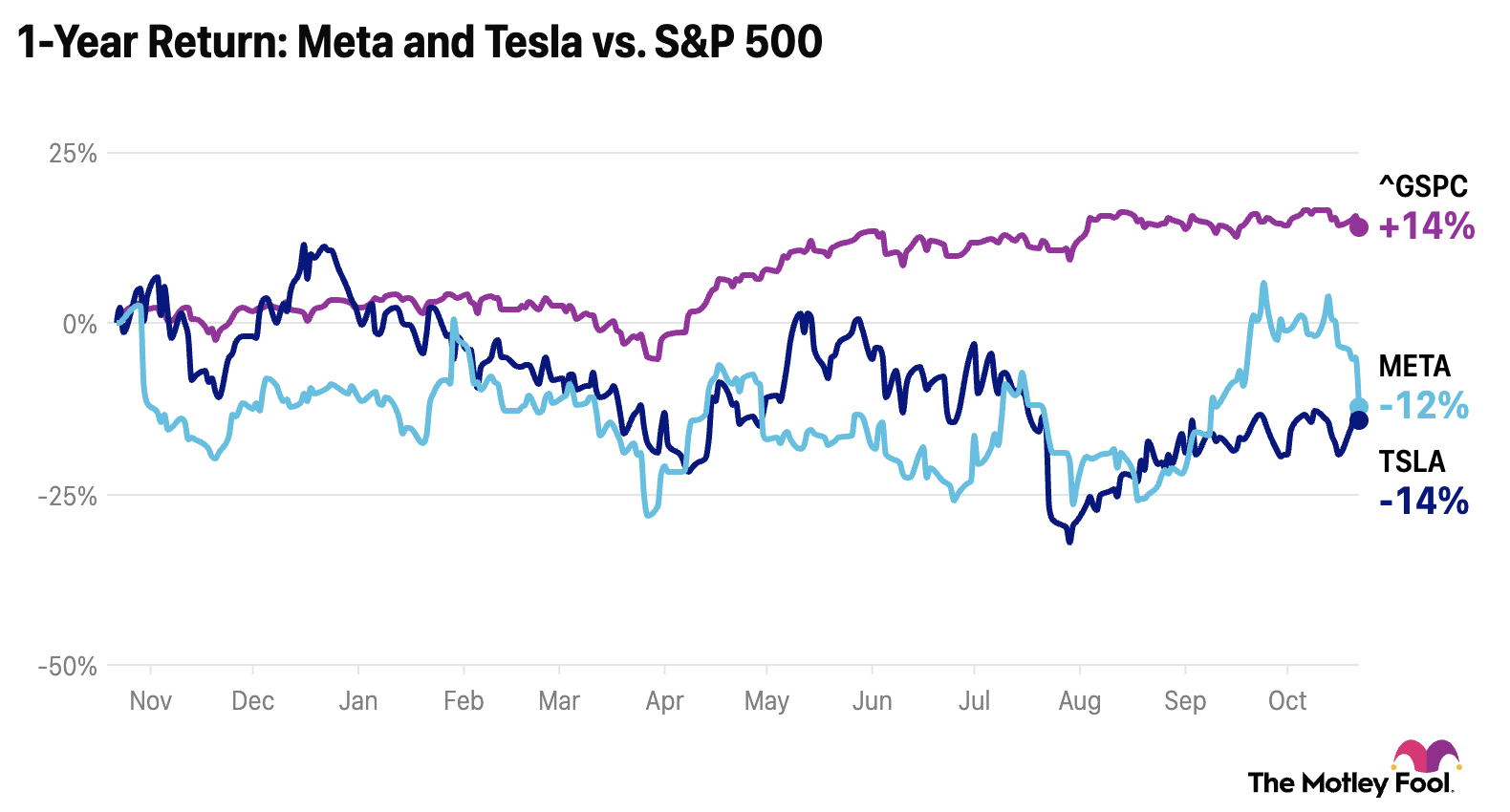
Tesla (TSLA -0.63%) stock declined notably after its recent second-quarter earnings. While the sell-off is understandable, I think long-term investors may be missing one key robotaxi development that strengthens the case for the stock. Here it is.
A reset of expectations on robotaxi
The decline in the stock came down to a pincer-like movement on gross and operating margins caused by rising costs, including raw material costs and increased costs of providing financing, and increased research and development in connection with robotaxi and Optimus.
TSLA Tesla
NASDAQ · As of 4:00 PM ET 10/23/26

At the same time, revenue expectations from the robotaxi rollout have been pushed out because Tesla isn't meeting the expectations previously laid out by CEO Elon Musk in terms of the scale of the rollout. Management's commentary on the rollout during the earnings call also dampened the enthusiasm of some investors over a massive scaling in 2026
That said, it's possible that the selling reflected a reset of expectations on robotaxi. Once the more exuberant notions of a sudden scaling have exited investors' thinking, the stock is likely to appreciate on any positive development on robotaxi.
Why the latest version of full self-driving software matters
The good news is that Tesla is making progress. To understand why, you have to go back to the last earnings call in April, when Musk outlined that "it wouldn't be right for us to go to like very large scale unsupervised FSD when we know that there are software improvements in the pipeline." Those improvements are coming with the next version of full self-driving (FSD) software, namely v15.
Image source: The Motley Fool.
As such, it's clear that Tesla, in Musk's words, needs to "finish writing that software, validate it and release it before going to large-scale unsupervised FSD." In other words, no v15 equals no large-scale robotaxi rollout, and given that Musk believes v15 will be released in late 2026 or early 2027, it's unrealistic to expect massive scaling until then.
Tesla is making progress on robotaxi
Fast-forward to the recent earnings call, and Tesla's vice president of AI, Ashok Elluswamy, told investors that "The currently operating robotaxi fleet is already running early versions of the v15 FSD software." This is a key point. Tesla is actively operating and testing an early version of its final solution for robotaxi FSD.
Moreover, Elluswamy noted that Tesla had "seven major improvement tracks" for v15, all developed in parallel, which have "40% of those tracks merged together, and that's what's running in the fleet right now."
He also noted that unsupervised robotaxi had notched up 380,000 miles without any notable incidents and was growing this figure at a double-digit rate every week.
Image source: Tesla.
What it means for investors
Tesla is taking a safety-first approach to the rollout and making real progress on v15 FSD, such that when all the pieces are in place and v15 is released, and Tesla sorts out the operational issues around robotaxi, the rollout can scale. The kind of overnight robotaxi rollout that many investors expect is unlikely to occur in 2026; more likely in 2027.
As such, in 2026, investors should look out for more updates on v15, ongoing demonstration of safety with robotaxi, regulatory progress with Cybercab, FSD take-up rates, and approvals in Europe, rather than worrying too much over X or Y cars in the robotaxi fleet by date A or date B.