Departing Apple CEO Tim Cook held his final earnings conference call with the tech giant on July 30, and his parting comments should bode well for memory makers.
Cook compared memory pricing to a "hundred-year flood," and noted that the company will pay significantly more for memory in the upcoming September-ending quarter than in the recent June-ended quarter. He also indicated that memory prices are expected to continue to increase after the September quarter.
Given the high memory prices, Apple has wanted to start sourcing some of its DRAM from Chinese companies, with the hope that this could help ease prices. However, representatives from both sides of the aisle have asked U.S. Department of Commerce Secretary Howard Lutnick to deny this request.
Currently, there are only three big DRAM makers outside of China: U.S. company Micron Technology (MU +4.06%) and Korean companies SK Hynix (SKHY -2.36%) and Samsung Electronics.

NASDAQ: MU
Key Data Points
Supply-demand imbalances
Surging DRAM prices are the result of a large supply-demand imbalance related to the AI infrastructure build-out. Graphics processing units (GPUs) and other AI chips need to be packaged with a special form of DRAM called high bandwidth memory (HBM) to reduce latency and optimize chip performance. AI infrastructure spending is through the roof, and the rise of inference, which tends to be more memory-reliant, is only adding to demand.
The big three memory makers are directing most of their resources to HBM, which is lifting all DRAM prices. However, there are natural bottlenecks that are keeping capacity tight. First, foundries, like Taiwan Semiconductor Manufacturing, only have so much advanced packaging capacity to package AI chips with HBM. Second, ASML Holding is the only company in the world that makes EUV machines, which are needed to manufacture the most critical components of both advanced logic chips and HBM, and it can only make so many of these complex machines a year.
Third, HBM uses upward of 3 times the wafer capacity of ordinary DRAM, which hampers capacity increases and requires more cleanroom space. Finally, it generally takes a few years to build new greenfield cleanroom facilities.

NASDAQ: SKHY
Key Data Points
While DRAM makers have largely been focused on HBM due to surging demand and better long-term unit economics, ordinary DRAM prices have actually been rising at a faster pace, given a lack of new supply. This has also trickled over into the NAND (flash) memory market, where prices have also surged due to supply-demand imbalances. The big three memory makers also make NAND, while Sandisk (SNDK +1.93%) is a pure play that has been benefiting from these trends.
The supply-demand imbalances in DRAM and NAND have led not only to surging revenue for these companies, but also to ballooning gross margins and huge profit increases. Ironically, the companies with the more commoditized memory exposure, such as Sandisk and Micron, have seen the biggest boosts, while HBM leader SK Hynix has posted great results, but not quite to the extent of Sandisk and Micron.

NASDAQ: SNDK
Key Data Points
In the short term, Micron and Sandisk should continue to see stronger growth, but SK Hynix is the better-positioned company longer-term. In the first quarter, it held nearly 60% market share in HBM and is Nvidia's main supplier. It also just signed a whopping $500 billion, multi-year supply deal with the chip giant. On top of that, the Korean company has structured its long-term deals with no price caps, giving it more potential upside.
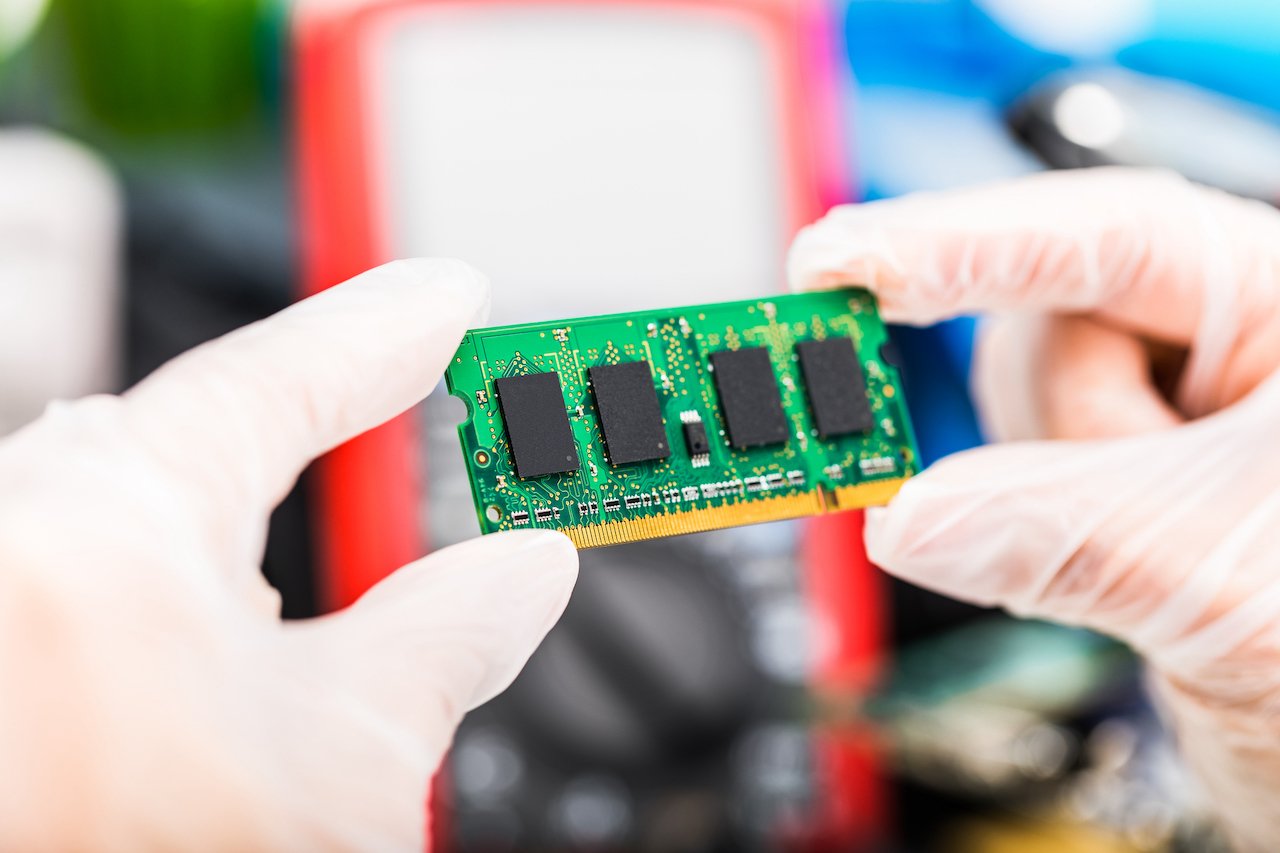
Image source: Getty Images.
I expect Micron and SK Hynix to continue to benefit from robust DRAM prices, with the latter saying it expects 2027 to see the biggest supply-demand imbalance in industry history. Meanwhile, it doesn't expect the market to become balanced until 2030 at the earliest. With both stocks trading at forward P/Es near 5 and the supply-demand imbalances likely to continue well into the future, I think more aggressive investors can scoop up these AI stocks here.