It's certainly no secret that artificial intelligence data centers are popping up everywhere, with plenty more left to build. In fact, real estate management firm JLL predicts that AI data centers will collectively need 200 gigawatts of electricity by 2030, up from just over 100 gigawatts today.
And it's fitting that this growth outlook is measured in power rather than footprint, since that's the bigger bottleneck now and for the foreseeable future. Utility companies just aren't ready to deliver the electricity that the artificial intelligence infrastructure industry increasingly needs.
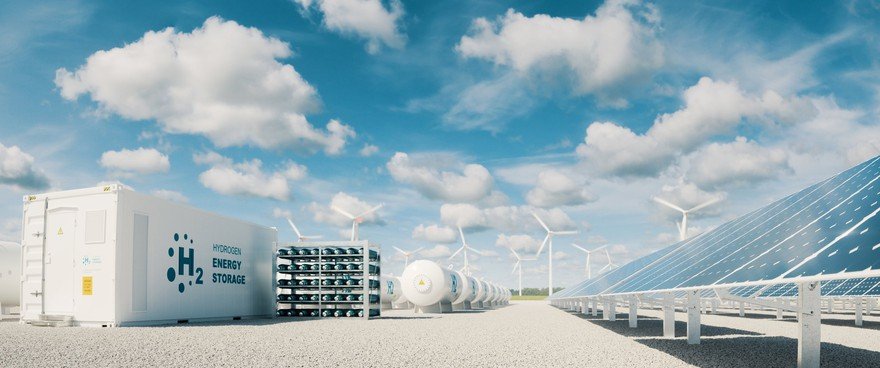
Fortunately, there's a smart solution that's moving away from the fringes and into the mainstream. That's hydrogen fuel cell technology, like that offered by Bloom Energy (BE +3.19%).
Image source: The Motley Fool.
What's a fuel cell?
Simply put, fuel cells turn hydrogen into electricity by passing it through an electrolyte membrane that separates negatively charged electrons and positively charged protons. No moving parts are needed, and the only output is heat and water. Although initially used for smaller equipment, larger-scale systems can now be used to power buildings, and yes, artificial intelligence data centers.

NYSE: BE
Key Data Points
Bloom Energy's fuel cells are different, or more to the point, superior in most regards. Its solid oxide fuel cell technology works with hydrogen, but can also be powered by readily available natural gas, or even biogas.
And almost needless to say, power-hungry data centers are embracing the option. Last quarter's top line of just over $1.0 billion was up 165% from Q2 2025, driven by customers like Honda, AT&T, and Walmart.
It's still only scratched the surface of its opportunity, though, now that the AI data center industry recognizes this once-unlikely source of electricity is up to the task. Indeed, earlier this year, the company expanded its initial agreement to provide artificial intelligence powerhouse Oracle (ORCL +1.61%) with 1.2 gigawatts of power to a 2.8 gigawatt deal. For perspective, that's enough electricity to power between 2 million and nearly 3 million homes, or several data centers, depending on their computing capacity.
Right place, right time, right business
Great. Of all the options beyond ordinary institutional utility service, why Bloom Energy's solid oxide fuel cells? For a handful of reasons.
Chief among these reasons is that it's available, and soon. Whereas it can take months if not years to connect a new data center to the grid, Bloom can install its hardware in a matter of weeks.

Image source: Getty Images.
It's also more marketable. In an environment where communities are understandably concerned that data centers are straining water and power supplies, fuel cells sidestep both problems. They don't require any water or outside electricity. They're also quiet, unlike the natural gas turbines or diesel generators powering some AI data centers these days.
Whatever the reason(s), Bloom Energy promises to feature prominently in the future of artificial intelligence data centers, and even beyond data centers. A long-term projection from Precedence Research predicts the worldwide hydrogen fuel cell market is poised to grow at an average annual pace of more than 20% through 2034, when it will be worth more than $27 billion per year.
That's still only part of Bloom's opportunity, though. The company also sells electrolyzers that create usable hydrogen, and even offers managed electricity production services.