If you're not investing in semiconductor stocks right now, it certainly may feel like you're missing out. Again.
What's that? After soaring in April and May, semiconductor stocks like Nvidia and Broadcom then tumbled, giving up a big chunk of those gains. Now they're rallying again, and more than a little. It's tempting to dive back in.
That may well end up being the right call. However, it's just not a move I can talk myself into making at this time.
Image source: Getty Images.
On the backside of the AI hype cycle
Don't misunderstand. There's little doubt that technology stocks in general -- and semiconductor stocks in particular -- will continue dishing out long-term gains simply because their underlying companies are changing the world, mostly for the better.
It would be naïve, however, to ignore that these highly cyclical stocks are at or near a cyclical peak.
Valuations mark part of this peak. The VanEck Semiconductor ETF (SMH -0.49%), the iShares Semiconductor ETF (SOXX -0.17%), and the SPDR S&P Semiconductor ETF (XSD +0.12%) all sport trailing price-to-earnings ratios ranging from 40 to over 60. Valuation isn't everything. But it's certainly something.

NASDAQ: SOXX
Key Data Points
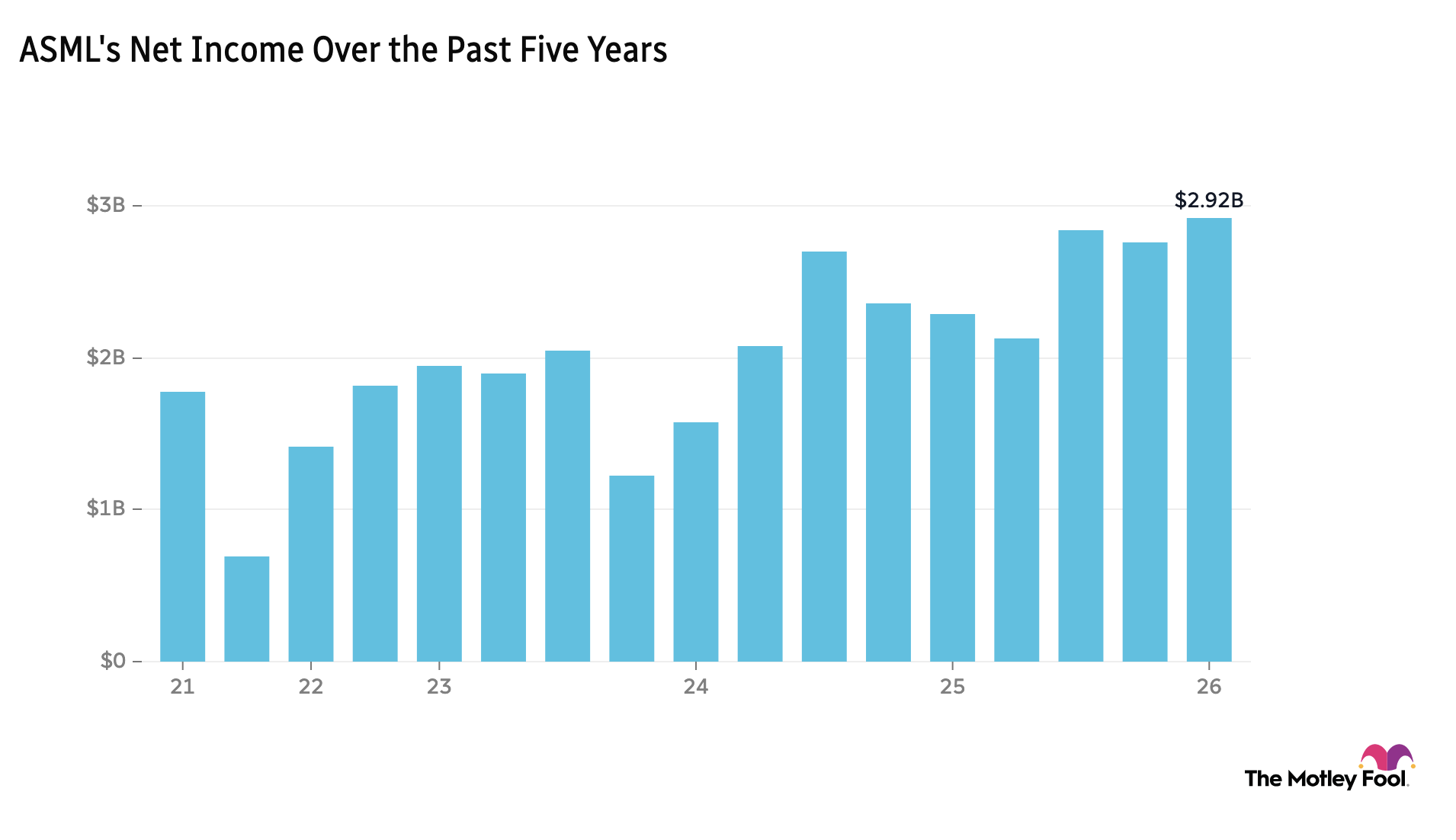
And curiously, while some semiconductor stocks' P/E multiples are still rising to uncomfortably high levels, others' price/earnings ratios are actually falling even though profits are still growing. Nvidia's, for instance, has peeled back from more than 100 in 2023 to just over 30 now. It's a hint that investors are becoming less willing to maintain the premium pricing of at least some of these names, suggesting they see a slowdown on the horizon.
My other concern is more qualitative than quantitative. That's the changing mood of the headlines, and the market's changing response to them. It's been so subtle and slow-moving that it's been almost impossible to notice. But this feels eerily like the tech sector's slowdown in 2013 and then again in 2016. No recessions then. Just nothing new to add to the recently exciting innovations.
And if you look closely, while big tech is still increasing its capital expenditures on AI infrastructure, it's not clear that artificial intelligence is delivering sufficient marketable value to justify this spending. OpenAI recently made dramatic price cuts for certain versions of ChatGPT, for perspective.
Then there's this: In an effort to raise as much money as possible, too many technology companies wait too long in a technology growth cycle (artificial intelligence, in this case) to go public, often ending up making the move only after investors have shifted from being bold to being suspicious. In this vein, while Space Exploration Technologies pulled the trigger, it's telling that the stock had a short-term runup that soon was roughly cut in half. In the meantime, the presumed valuation of OpenAI's anticipated public offering is declining.
These are all hints that investors sense AI mania pushed too many of the tech sector's semiconductor stocks ahead of themselves. Now the market's making the correction. It happens.
Strategy shift
Again, this doesn't mean semiconductor stocks are forever doomed. It just means there may be better options out there. We're seeing clear rotation out of them, in fact. If you want in, your best bet is to strategically select individual semiconductor names rather than buy whole baskets of them.