All eyes were on Space Exploration Technologies (SPCX +0.44%) stock this week as it reported its first results since going public.
For the 2026 second quarter, SpaceX trounced Wall Street expectations on both the top and bottom lines. Analysts were looking for a $0.26 loss per share on $6.9 billion in revenue, and the company reported a $0.09 loss per share on $7.8 billion in revenue, a 92% year-over-year increase.
Despite what appears to be positive financials, the stock fell 12% after the report. The number that stood out to the market was $18.4 billion. That was the capital expenditures (capex) in the quarter, and the market was none too pleased with it.
Image source: Getty Images.
The opportunity for SpaceX is in AI
SpaceX investors think the company is going to the moon, and they want to be a part of it. However, if you dig deeper, the company sees its main opportunities in artificial intelligence (AI), and that's what investors are really getting. Management was clear about this in its investing prospectus, citing a $28.5 trillion market opportunity, with $26.5 trillion of it in AI. This is what came out of the first earnings report, as well.
Out of the $18.4 billion capex in the second quarter, $15.8 billion went to AI, double last year's total amount. Musk claimed, "We're building AI compute capacity at scale faster than anyone else."
This is much less than what Amazon and Alphabet are spending, at $220 billion and $200 billion annually, respectively, but the market has become wary of high AI spending.
President Gwynne Shotwell pointed out that already a few weeks into the third quarter, SpaceX has contracted for $6.7 billion in revenue over the next six months, and she claims the business will reach a $100 billion in annualized revenue run rate by the end of the year. CFO Bret Johnson also downplayed the risk of high capex by confirming that it will take less than a year to recoup the investment.
The space opportunity
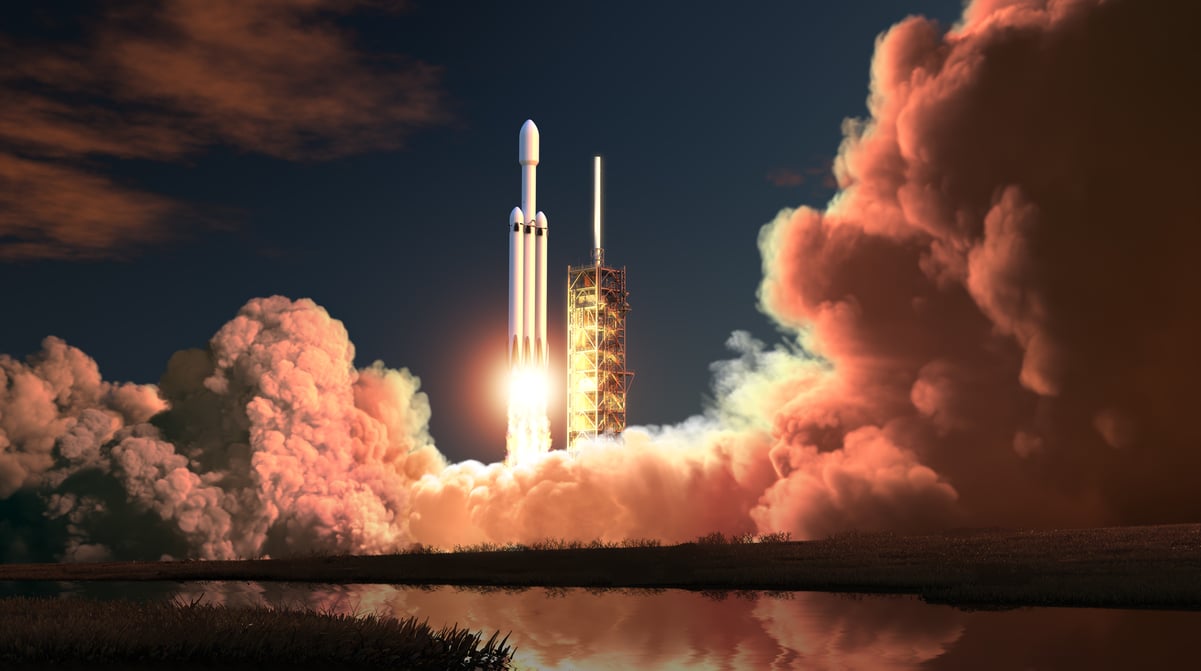
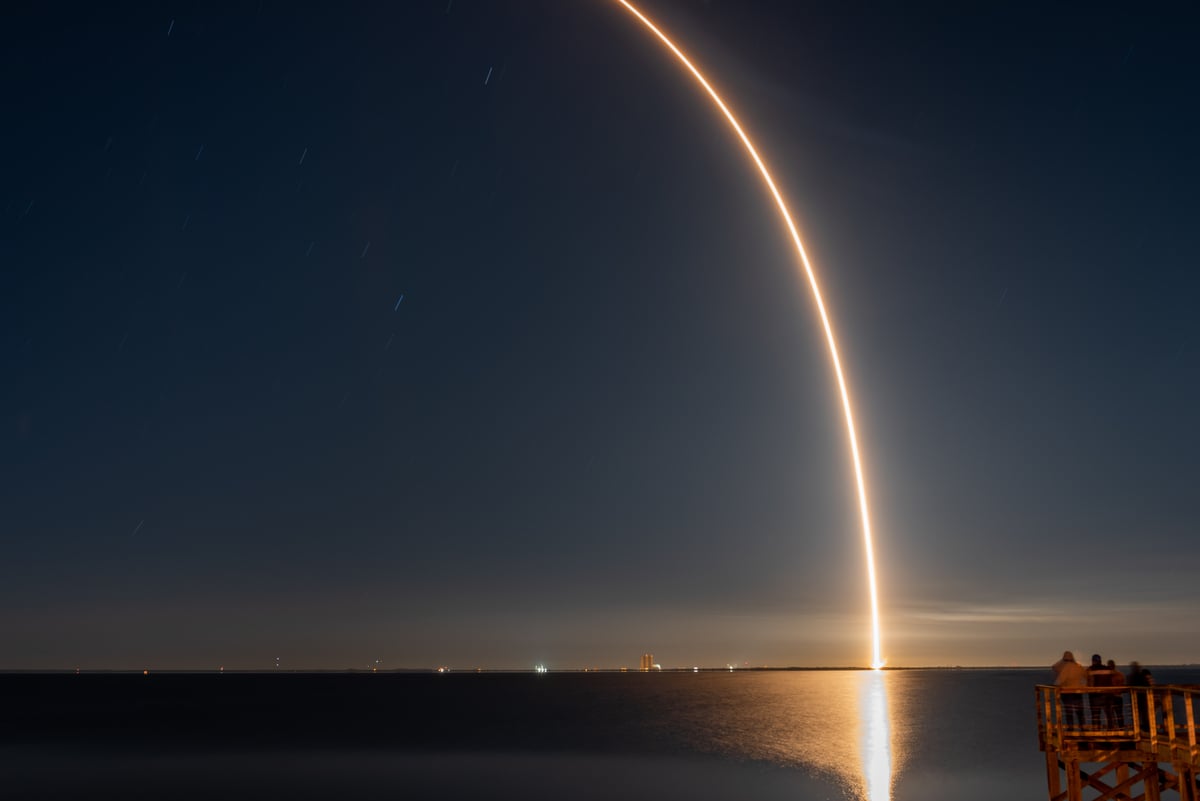
Many investors are riveted by the space opportunity, and that might take a while to get off the ground. The company is transitioning from its cost-effective, partially reusable Falcon series to Starship, which is expected to be fully reusable and eventually reach Mars. SpaceX has had to repeatedly postpone takeoffs, but Musk is confident that in a year from now, it'll be sending up a flight a day.

NASDAQ: SPCX
Key Data Points
He explained the space business's results in terms of tonnage, noting that right now SpaceX delivers 2,500 tons to orbit per year, while the competition delivers 300 tons. He expects Starship to reach 1 million tons annually and eventually 10 million tons annually.
These are exciting updates, but the market isn't buying it right now. That means either Musk and company may not meet their lofty expectations, or investors who buy the stock today will get a windfall next year.
The market is leaning toward the former, and investors who want to buck that trend are betting on high risk and high reward.