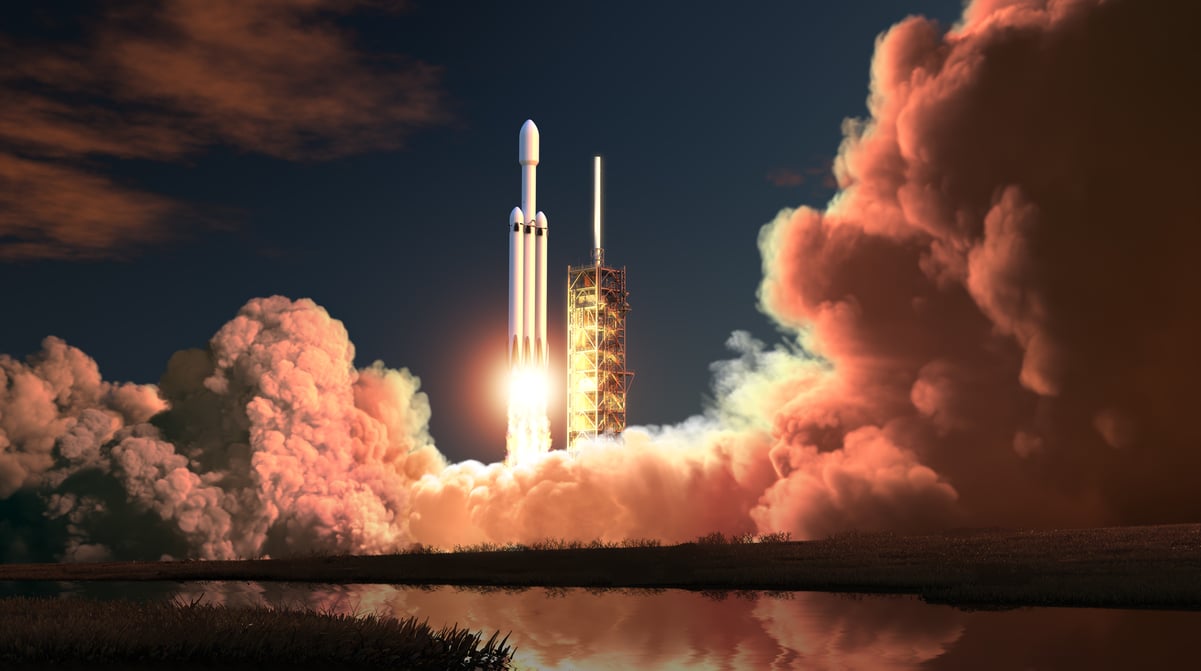
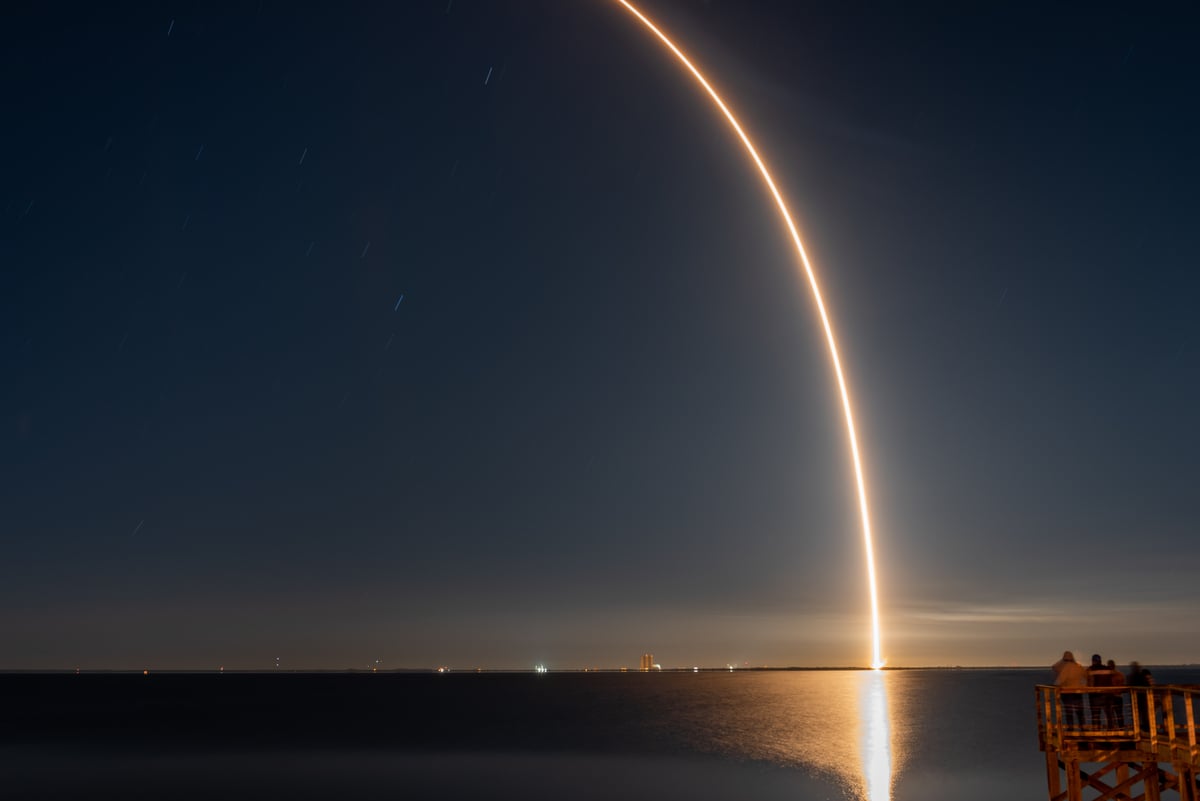
SpaceX (SPCX -1.92%) plans to catch a returning Starship upper stage with its launch tower for the first time this month.
"I'd say things look very good, and that's why we, assuming we receive regulatory approval to do so, will attempt to catch the Ship with the tower on the next flight, which is tentatively scheduled for the end of this month," CEO Elon Musk said on the company's Aug. 4 earnings call, its first since going public in June.
The confidence traces to Flight 13, which flew July 24 and ended with the Ship surviving reentry and splashing down softly in the Indian Ocean. Flight 14 is also slated to put Starlink V3 satellites into an operational orbit for the first time.
Two steps sit between here and the attempt: the preflight engine firings both vehicles still have to complete, and the regulatory sign-off Musk named.
The company's towers have caught the returning Super Heavy booster before, but never the Ship, which comes back from space at far higher speeds.

Elon Musk at the White House. Image source: The White House.
Reusability is the cost case
The reason a catch matters is money. Starship's economics rest on both halves of the rocket flying again quickly -- a booster and Ship recovered at the tower are meant to be turned around and reflown instead of rebuilt.
And a tower catch is the version of reuse that saves the most. The vehicle lands where it launched, gets inspected, and gets restacked, with no ocean recovery in between.
For now, the finances run through Starlink. SpaceX's connectivity segment grew revenue 66% year over year to $4.3 billion last quarter, the only segment operating at a profit, while the company overall narrowed its net loss to $541 million from $1.0 billion on revenue that nearly doubled to $7.8 billion.

NASDAQ: SPCX
Key Data Points
The company also closed the quarter with $100 billion of cash and marketable securities and a $47.5 billion backlog, resources it says are going into Starship, Starlink satellites, and its artificial intelligence (AI) platform.
The V3 satellites Flight 14 would carry are the larger generation that the network's next capacity step depends on.
Of course, a tentative date is just that. The flight could slip into September, and the regulatory review isn't on the company's clock. A missed catch wouldn't end the program, either. Test flights exist to find the failures.
But a catch that works would be the first time the Ship itself came back to the tower. And with the stock around $141 as of this writing and the company valued near $1.9 trillion, the reusability case is arguably carrying a lot of that price.