Netflix's (NFLX -2.49%) bad year got worse last month as signs continued to show that the company was losing ground to rival YouTube, and even co-CEO Ted Sarandos acknowledged that recent engagement trends have been disappointing.
At the Emmys last month, Netflix had its lowest-converting and weakest performance at the TV awards show in a decade, reflecting an underwhelming slate of original programming.
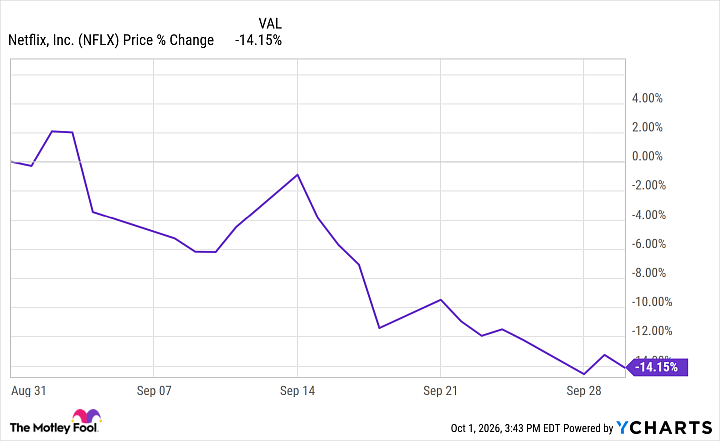
The stock finished September down 14%, according to data from S&P Global Market Intelligence.
As you can see from the chart below, the stock fell mostly steadily over the course of the month, reflecting souring forward expectations as the streamer struggles with engagement.
What's going wrong at Netflix
There was no major company-specific news out on Netflix last month. Instead, there was a steady drumbeat of downbeat news items and negative analyst notes.
On Sept 18, Wells Fargo lowered its rating on Netflix from equal weight to underweight and slashed its price target from $80 to $57, predicting a weak original content slate in the second half of the year. It also forecast a 21% decline in hours watched for its top 100 original shows, which would represent a crisis at Netflix if true.
HSBC followed that up with its own downgrade from buy to hold, citing trends that show Netflix has lost significant viewer share to YouTube over the last year, as Netflix's share of viewing time in the U.S. fell by about one percentage point to 7.8%.
Netflix's disappointing showing at the Emmys also seemed to underscore its troubles, as it had its lowest Emmy conversion rate in a decade, winning 16 awards on 111 nominations. It finished behind both Apple TV and HBOMax, and Netflix was nearly shut out of top categories like major comedy and drama.
Toward the end of the month, co-CEO Ted Sarandos addressed the company's challenges, saying it is "not growing as fast as I want," and he cited headwinds related to its investments in live sports, which, on an ROI basis, perform poorly in terms of engagement. Nonetheless, live sports are good for signups and advertising, and the company expects to do more of it.

Image source: Netflix.
What's next for Netflix
Netflix will report third-quarter earnings on Oct. 20, but the results are unlikely to kick-start a comeback, given Sarandos's own admission of weak growth.
However, there is an argument that Netflix has gotten too cheap at this point, trading down nearly 50% from its all-time high last year.
The company has dug out of holes like this before, and it likely only needs one or two hit shows to change the narrative. Meanwhile, its resilient business model and global presence should help overcome these challenges. While the stock could head lower in the short term, it still looks like a winner over the long term.