States with no capital gains tax
Alaska, Florida, Missouri, Nevada, New Hampshire, South Dakota, Tennessee, Texas, and Wyoming do not impose a state income tax on capital gains.
States with the highest capital gains taxes for high-income earners
Top rates for capital gains include California at up to 13.3%, New York at up to 10.9%, New Jersey at up to 10.75%, Oregon at up to 9.9%, and Minnesota at up to 9.85%.
Expected state capital gains tax rate changes for 2026
States are constantly looking at their tax laws to provide incentives for people and businesses to locate there. Here's what we know is changing for 2026:
- Mississippi is set to decrease its top income tax rate to 4% in 2026.
- Nebraska has been phasing in income tax cuts over several years, and the top rate in 2026 will fall to 4.55%.
- North Carolina is completing a multi-year scheduled reduction in its income tax rates with a cut to 3.99% in 2026.
- Ohio's top tax income rate is set to fall to 2.75% in 2026.
- Oklahoma's 2026 top income tax rate is falling to 4.5%, along with a simpler set of tax brackets.
How does capital gains tax work?
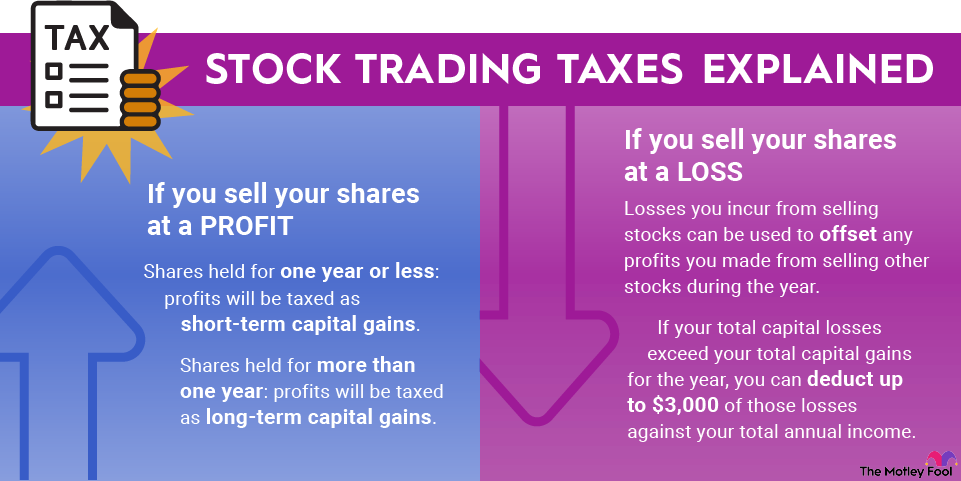
Taxpayers are generally allowed to offset capital gains with capital losses on investments that they sell at a loss. The net amount of capital gains is subject to tax.
Special tax worksheets from the IRS are available to work through the different tax rates and brackets for ordinary income and capital gains. Tax software typically handles the necessary computations automatically.
How to avoid capital gains tax
Here are five ways you may be able to avoid or reduce capital gains tax.
- Just don't sell. Capital gains tax isn't due on an asset that has risen in value until and unless you sell it. This is a major benefit of long-term stock investing.
- Wait longer than a year before selling. There will be times when you may have no choice but to sell an investment, or when selling will be the right move despite capital gains tax. In those situations, ensuring that you have a holding period longer than one year will get you the benefit of lower taxes on your investment returns.
- Use tax-deferred accounts like IRAs and 401(k)s. Many special accounts, such as retirement and health savings accounts, allow the sale of assets within the account with no immediate tax impact. You won't owe capital gains tax on such sales.
- Offset gains with losses. As mentioned above, the IRS and state tax authorities allow taxpayers to take any capital losses and use them to reduce their capital gains for the same year. If the losses exceed the gains, you'll owe no capital gains tax. If the gains exceed the losses, you'll still pay less than you would have without the losses.
- Take advantage of special rules. The home sale exclusion lets qualifying homeowners exclude as much as $500,000 in long-term capital gains from the sale of their primary residence. Also, the stepped-up basis rules allow heirs of a deceased person to sell an inherited asset using the date-of-death value as the starting point rather than its value when the deceased person bought the asset.