Why you should consider dividend reinvestment
The power of compounding
The strongest argument for dividend reinvestment is compound growth. By reinvesting dividends, you're buying more shares that will generate their own dividends, which buy even more shares. This snowball effect dramatically increases your returns over time.
Consider this: An investor who put $10,000 into an S&P 500 index fund in 1960 would have $1,035,827 by the end of 2024 from price growth alone, according to data from Morningstar and Hartford Funds.
But add in reinvested dividends? That same investment would be worth over $6.4 million -- more than six times higher.
Psychological benefits
Dividend reinvestment offers mental advantages that help you stick to your investment plan:
- Set it and forget it. If you never see the dividend money, you won't be tempted to spend it on anything except your portfolio.
- Prevents panic selling. When you check your portfolio less frequently, you're less likely to panic during market downturns. Even high-conviction holdings can look scary in rough markets -- automatic reinvestment keeps you from making emotional decisions.
- Effortless growth. Your portfolio grows without any action on your part. This passive approach is how many long-term investors build wealth.
It reduces friction
Dividend reinvestment is easy to set up, usually commission-free, allows fractional share purchases, and puts cash to work immediately. You don't need to accumulate dividends from multiple sources or time the market -- the money gets invested automatically at regular intervals.
When you shouldn't reinvest dividends
Despite these advantages, automatic dividend reinvestment isn't always the right choice. You might want to take dividends as cash if:
- You need the income. If dividends help cover your living expenses, take the cash.
- You're rebalancing your portfolio. Maybe you want to use dividend income from stable companies to buy growth stocks or other investments.
- You're overallocated. If a stock has grown to become too large a portion of your portfolio, reinvesting just makes the concentration worse.
- You have better opportunities. Sometimes your capital is better deployed elsewhere, especially if a dividend-paying stock has become overvalued.
Understanding dividend reinvestment taxes
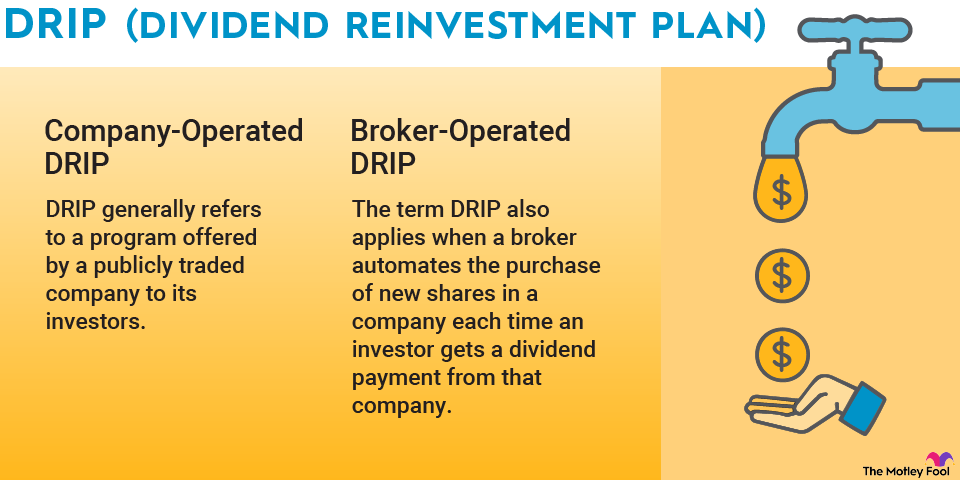
Cash dividends are usually taxable even if investors reinvest that money automatically through their brokerage account or via the company's DRIP.
However, tax rates vary significantly:
- Qualified dividends are taxed at 0%, 15%, or 20% depending on your taxable income and filing status. Most dividends from U.S. companies held for the required period qualify for these preferential rates.
- Nonqualified dividends are taxed as ordinary income at your regular tax bracket, ranging from 10% to 37%.
- Exception: Stock dividends paid by companies that don't offer a cash alternative typically aren't taxable until you sell the shares.
Even though you're paying taxes on money you never received as cash, the long-term growth potential generally makes dividend reinvestment worthwhile for investors in taxable accounts.