As cybersecurity and automation converge, choosing between high-growth leaders can be difficult. Is the premium price of CrowdStrike (CRWD +2.39%) worth it, or does UiPath (PATH -0.42%) offer better value for your money?
CrowdStrike provides cloud-delivered cybersecurity software that protects organizations from sophisticated threats. UiPath focuses on enterprise automation, enabling AI agents and robots to perform complex tasks. While both operate in the software infrastructure space, they offer different profiles regarding growth, profitability, and valuation.
CRWD & PATH: Performance Comparison
Key Financial Metrics


The case for CrowdStrike
CrowdStrike primarily sells its Falcon cybersecurity platform via software-as-a-service subscriptions to enterprises and government organizations. The company competes for market share among tech stocks and has established a new distribution deal with OpenAI to integrate advanced models into its platform. It also maintains a strong partnership with Amazon (AMZN +1.68%) to secure cloud workloads.
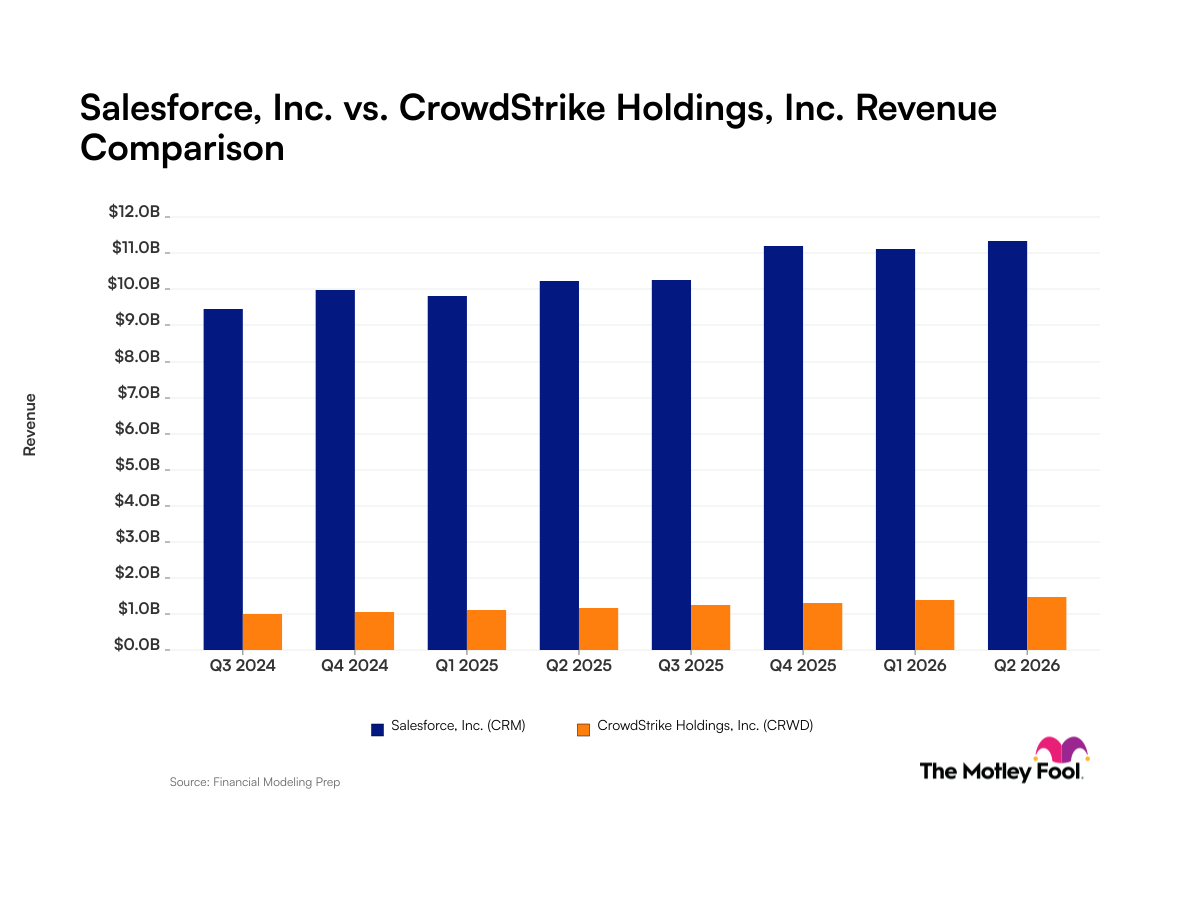
In its latest annual report for FY 2026, revenue reached nearly $4.8 billion, which is an increase of approximately 21.7% year over year. The company reported a net loss of roughly $162.5 million, resulting in a net margin of negative 3.4%. Net margin represents the percentage of revenue remaining after all business expenses are paid.
As of its January 2026 balance sheet, the debt-to-equity ratio is roughly 0.2x, which measures how much a company relies on borrowed money. A current ratio of nearly 1.8x suggests the company can comfortably cover its short-term obligations with its current assets. Note that stock-based compensation represented roughly 68% of operating cash flow, which inflates reported cash generation since SBC is a non-cash expense added back in the cash flow statement.
The case for UiPath
UiPath provides an enterprise automation platform that allows people and AI models to work together efficiently. The company currently serves approximately 10,747 customers across various sectors, including financial services and healthcare. Recent strategic acquisitions of companies like WorkFusion and Peak have expanded its capabilities in AI-driven pricing and financial crimes compliance.
For the fiscal year ended Jan. 31, 2026, revenue reached close to $1.6 billion, representing growth of approximately 12.7%. The company achieved a net income of nearly $282.3 million, yielding a net margin of roughly 17.5%. This profitability is a significant change from the net losses recorded in previous years.
As of its January 2026 balance sheet, the company reported a debt-to-equity ratio of approximately 0.0x, meaning it has very little debt compared to its equity. Its current ratio of roughly 2.5x indicates a strong ability to pay off short-term debts. Note that stock-based compensation represented roughly 78.3% of operating cash flow, which inflates reported cash generation since SBC is a non-cash expense added back in the cash flow statement.
Risk profile comparison
CrowdStrike faces ongoing legal and reputational impacts from the system crash incident that occurred on July 19, 2024. These risks include pending securities litigation and the potential for customer churn as organizations evaluate their security providers. The company also operates in an intense competitive landscape where it must defend its market share against rivals offering AI-driven security solutions.
UiPath deals with substantial customer concentration, as a significant portion of its revenue is derived from a limited subset of top enterprise clients. The company faces intense competition in the agentic automation market from both established software vendors and emerging start-ups. Additionally, integrating acquired businesses like WorkFusion and Peak remains a challenge as the company seeks to maintain its new level of profitability.
Valuation comparison
UiPath currently offers a much lower valuation relative to its future earnings estimates than its peer. The following comparison highlights the Forward P/E, which measures price against projected profit, and the P/S ratio, which measures price against sales.
| Metric | CrowdStrike | UiPath |
|---|---|---|
| Forward P/E | 146.6x | 15.9x |
| P/S ratio | 39.3x | 4.2x |
Valuation metrics sourced from Financial Modeling Prep (FMP) and may differ from other data providers.
Which stock would I buy in 2026?
I'd go with CrowdStrike. It just reported record annual recurring revenue and free cash flow surging to nearly a third of total revenue, and its platform keeps winning more of each customer's security budget. It's simply one of the most dependable growth stories in enterprise software right now. Every enterprise that adds an AI workload also adds new entry points that need protecting, which means CrowdStrike's addressable market keeps expanding alongside the AI build-out itself.
UiPath, to its credit, is a more interesting business than its stock price suggests. The company just posted its fourth consecutive quarter of GAAP profitability, beat revenue estimates, and raised its full-year outlook. The automation platform is finding traction with enterprise AI deployments, and it's starting to show up in the numbers.
But UiPath is growing at a more modest pace, and the stock keeps falling even when results beat expectations, signaling that investor confidence still has room to rebuild. For a long-term investor, CrowdStrike's growth, profitability, and platform stickiness make it the stronger pick right now.