Cybersecurity spending continues to climb, and artificial intelligence (AI) is creating even more systems that businesses need to protect. In fact, technology research firm Gartner estimates that global information security spending will reach roughly $244 billion in 2026. Gartner also expects spending specifically on AI cybersecurity to nearly double from $25.9 billion in 2025 to $51.3 billion this year. Two companies are particularly well positioned to capture that spending are CrowdStrike (CRWD +1.48%) and Palo Alto Networks (PANW +1.76%).
CrowdStrike
CrowdStrike built its reputation protecting computers and other devices from cyberattacks. But its Falcon platform has expanded well beyond that.
Today, CrowdStrike offers 34 cloud-based security modules covering everything from endpoint and cloud security to identity protection, threat intelligence, data protection, and cybersecurity for generative AI. That broad portfolio gives CrowdStrike a strategic advantage. You see, once a business uses Falcon for one security function, CrowdStrike can sell that customer additional products without having to win an entirely new account. In fact, 51% of its subscription customers now use at least six Falcon modules, while 26% use eight or more.

Image source: Getty Images.
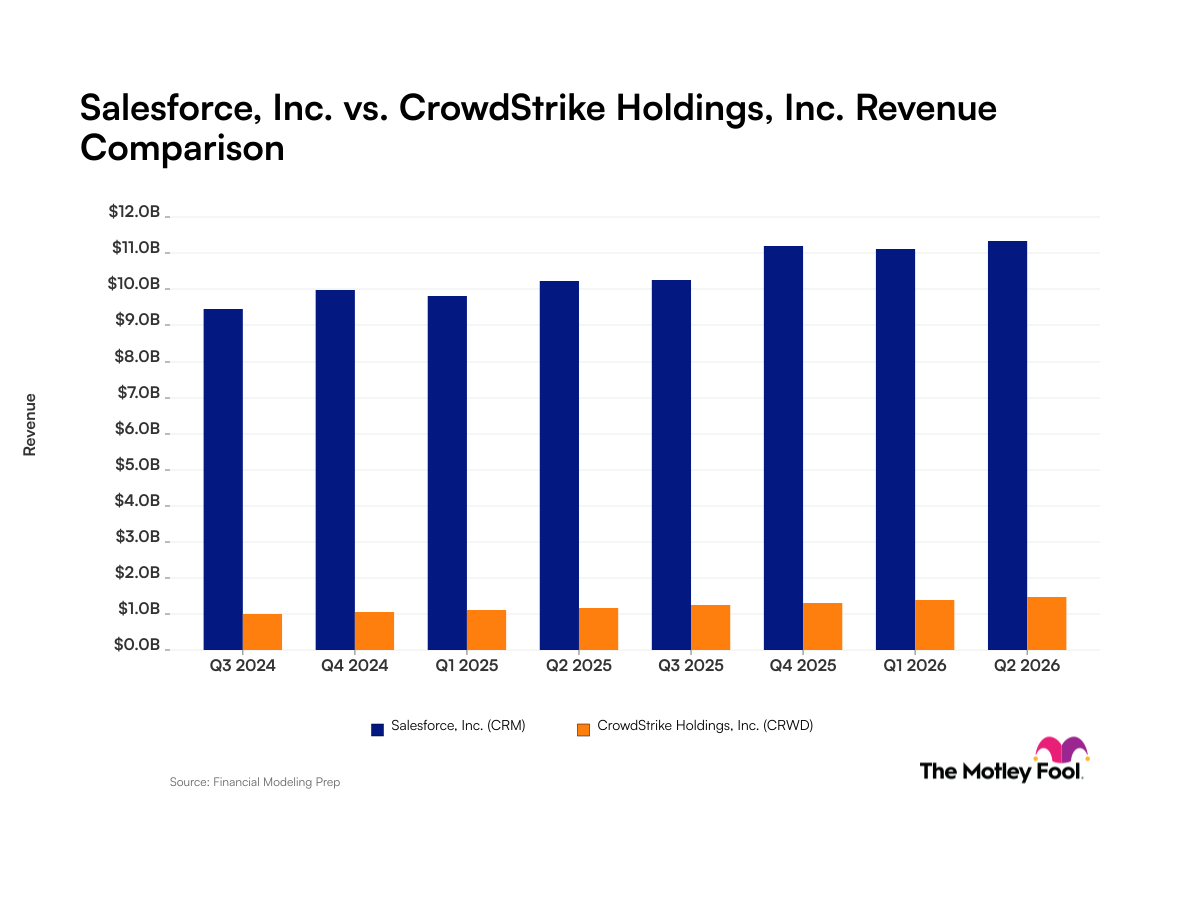
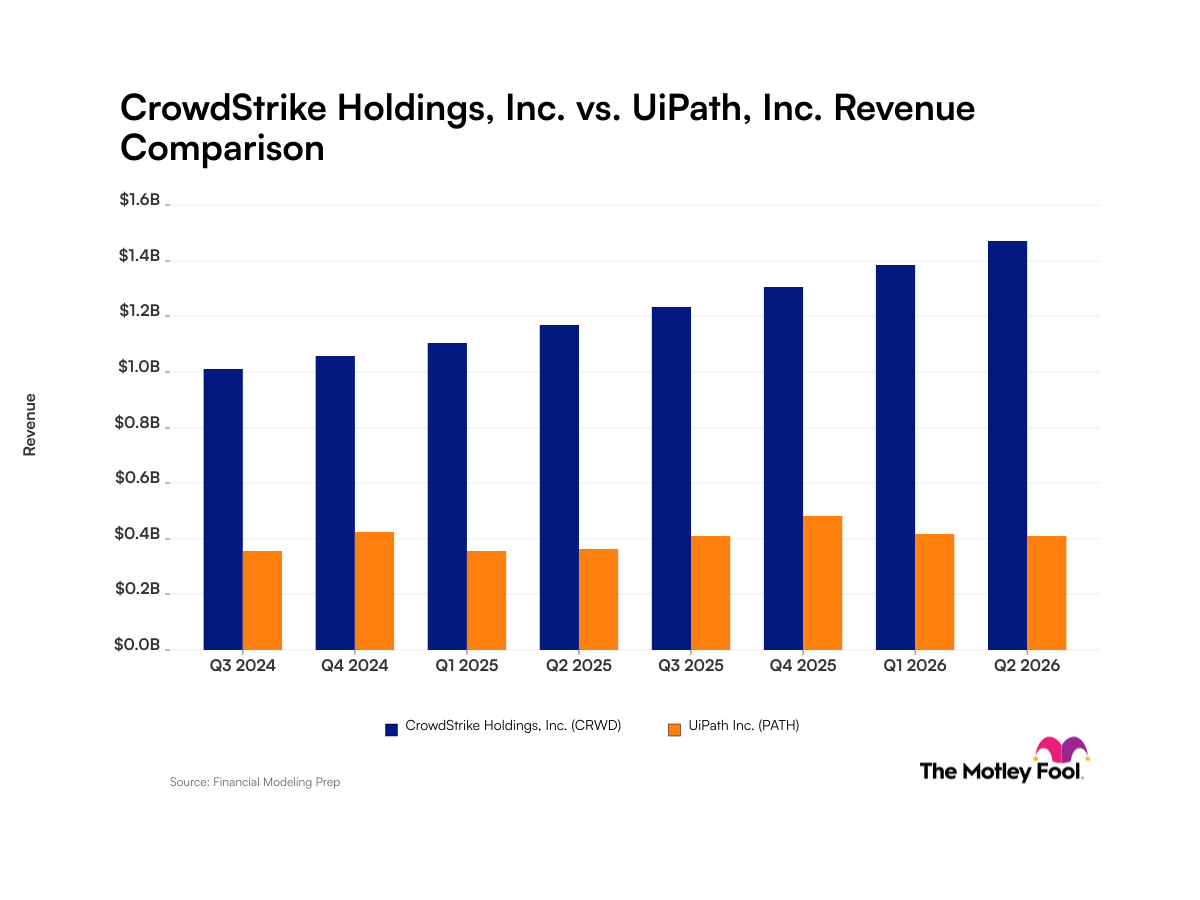
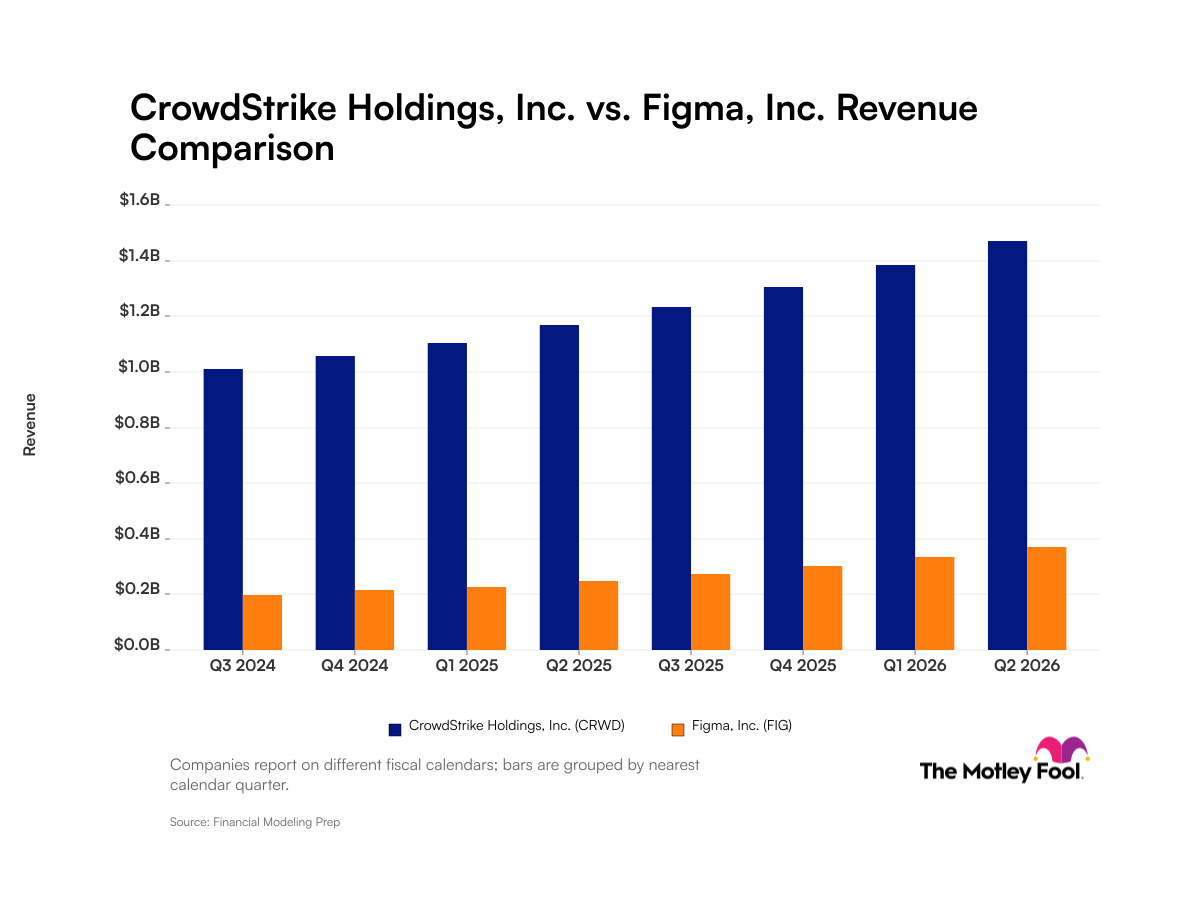
In its fiscal 2027 second quarter, CrowdStrike generated $1.47 billion in revenue, up 26% year over year. Annual recurring revenue (ARR) increased by 25% to $5.84 billion, while the company added a record $333 million of new ARR during the quarter.
Then there's cash flow. CrowdStrike generated a record $377 million in free cash flow during the quarter, up from $284 million a year earlier. Management now expects fiscal 2027 revenue of approximately $6 billion and ARR of roughly $6.6 billion.
The truth is, companies aren't simply deploying AI software anymore. They're increasingly deploying autonomous AI agents that can access corporate systems, data, and applications. Those agents create another category of digital surface that needs protection.
CrowdStrike is already building security products specifically for AI agents. Its Falcon Guardian platform is designed to discover AI agents operating across an organization, monitor what they're doing, detect suspicious behavior, and stop compromised agents in real time.

NASDAQ: CRWD
Key Data Points
The company has also introduced an Agentic Identity Provider, which gives AI agents their own identities, and controls what applications and data they're allowed to access. As businesses deploy thousands, or potentially millions, of autonomous AI agents, securing those agents could become another significant growth market for CrowdStrike.
Palo Alto Networks
Palo Alto Networks offers a slightly different opportunity. The company has spent years expanding beyond traditional network firewalls into cloud security, security operations, identity security, and AI. Now, its strategy is focused on getting customers to consolidate multiple cybersecurity products onto its platforms.
In its fiscal 2026 fourth quarter, revenue increased 34% to $3.41 billion, while next-generation security ARR jumped 63% to $9.1 billion. Remaining performance obligations (essentially contracted business that hasn't yet been recognized as revenue) reached $21.2 billion, up 34%.
For its fiscal 2027, Palo Alto is now forecasting revenue in the range of $14.1 billion to $14.2 billion, which would equate to growth of 23% to 24%, with next-generation security ARR expected to reach roughly $11.1 billion.

NASDAQ: PANW
Key Data Points
Acquisitions are expanding the business, too. Early this year, Palo Alto bought identity-security specialist CyberArk and cloud observability company Chronosphere, strengthening its ability to protect identities, applications, and infrastructure across increasingly complicated corporate networks.
Two expensive stocks with long runways
Neither stock is particularly cheap, and that's probably the biggest risk for investors. Cybersecurity is also fiercely competitive. Diversified tech giants like Microsoft and Alphabet, as well as a variety of other specialized cybersecurity companies, are all fighting for slices of the same corporate technology budgets.
But cybersecurity isn't discretionary in the same way many other technology products are. A company might choose to delay buying new computers, but it can't simply stop protecting its network, customer information, cloud infrastructure, and increasingly its AI systems.
CrowdStrike and Palo Alto Networks are turning that necessity into growing recurring revenue and billions of dollars in cash flow. So if you're willing to hold on through the inevitable volatility that comes with high-growth technology stocks, both companies have the financial strength, recurring revenue, and expanding markets needed to potentially compound for many years.