Image source: The Motley Fool.
DATE
Tuesday, Feb. 3, 2026 at 10 a.m. ET
CALL PARTICIPANTS
- President and Chief Executive Officer — David A. Ciesinski
- Chief Financial Officer — Thomas K. Pigott
Need a quote from a Motley Fool analyst? Email [email protected]
TAKEAWAYS
- Consolidated Net Sales -- $518 million, up 1.7%; adjusted net sales (excluding temporary supply agreement) increased 0.1% to $510 million.
- Gross Profit -- $137 million, a 3.4% increase, setting a second-quarter record.
- Reported Gross Margin -- Expanded by 40 basis points; adjusted gross margin grew 80 basis points, excluding non-core sales.
- Retail Segment Net Sales -- Decreased 1.1%; prior quarter had 6.3% growth, with decrease attributed to softer demand during the government shutdown.
- New York Bakery Frozen Garlic Bread Sales -- Grew 8.4%, gaining 300 basis points of market share for a total of 44.6% in category.
- Sister Schubert's and Texas Roadhouse Frozen Dinner Roll Sales -- Combined growth of 7.1%, lifting market share by 40 basis points to 60.8%.
- Licensed Chick-fil-A Sauces -- Sales up 6.7%, with 13 basis points increase in share, supported by expanded club channel distribution.
- Marzetti Produce Dips -- Sales rose 0.3%, boosting market share by 130 basis points to 75.5%.
- Adjusted Foodservice Net Sales -- Up 1.6%; foodservice volume in pounds shipped declined 0.4%.
- Pricing Impact -- Net pricing added approximately 140 basis points; core volume and mix reduced results by 130 basis points.
- Temporary Supply Agreement (TSA) Sales -- $8.2 million, or 160 basis points of total growth; TSA sales expected to end in the following quarter.
- Selling, General, and Administrative Expenses (SG&A) -- Increased by $3.3 million, or 5.8%, mainly due to higher marketing spend and expanded Texas Roadhouse launch.
- Restructuring and Impairment Charges -- Recorded at $1.7 million, driven by manufacturing asset impairment in foodservice and Lopitas, California facility closure plans.
- Reported Operating Income -- Decreased $500,000, with gross profit growth offset by higher SG&A and impairment charges.
- Diluted Earnings Per Share -- Increased by $0.37, or 20.8%, to $2.15; prior year included a $0.39 pension settlement charge and $0.05 acquisition-related cost, while current quarter includes $0.05 restructuring and impairment cost.
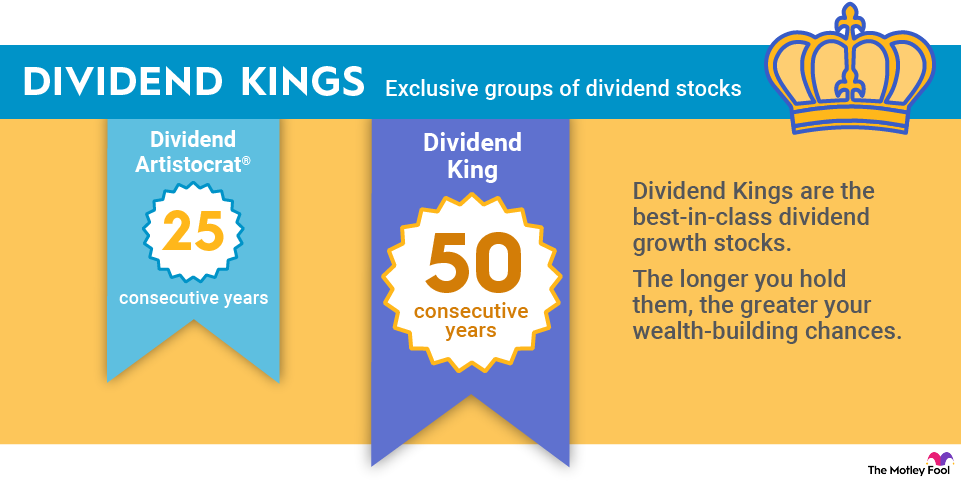
- Quarterly Dividend -- $1 per share on December 31, a 5% increase, marking sixty-three consecutive annual rises; $27.6 million paid in dividends.
- Share Repurchases -- $20.1 million in common stock repurchased during the quarter.
- Balance Sheet & Cash -- Debt-free with over $201 million in cash at quarter's end.
- Bachan's Acquisition -- Entered definitive agreement to acquire Bachan's for $400 million cash; cited as accretive to top-line and gross margin beginning year one.
SUMMARY
The Marzetti Company (MZTI +0.19%) disclosed a $400 million cash acquisition of Bachan's, targeting immediate enhancement to sales growth and gross margins as management aligned the deal with its strategic M&A and licensing agenda. Executives highlighted robust expansion in core categories, with New York bakery and Texas Roadhouse products outpacing overall retail sales performance. Management confirmed the company's shift back to a consistent dividend increase approach and an attritional share repurchase strategy given the acquisition, leveraging a strong, debt-free cash position. Bachan's was identified as high-margin, premium-priced, and synergistic with Marzetti's manufacturing supply chain and innovation capabilities. The company called out imminent TSA sales concluding next quarter and expects continued moderate cost inflation, with mitigation planned via pricing and cost savings focus.
- David A. Ciesinski emphasized, "We see meaningful opportunities to accelerate Bachan's next chapter of growth by leveraging Marzetti's culinary capability, retail relationships, and foodservice partnerships."
- Thomas K. Pigott clarified TSA (temporary supply agreement) sales are $8.2 million and will end by March 31, 2026, signaling their non-recurring nature in future results.
- Ciesinski stated Bachan's sales grew "48%" annually from 2022 to 2025, predominantly through Costco and more recently through mass and retail channels.
- Bachan's currently maintains minimal foodservice presence, which Marzetti plans to expand using existing national account relationships.
- Ciesinski confirmed the Bachan's product margin is "accretive to our existing retail segment at gross margin."
- Management projects low single-digit retail revenue growth for the second half, with quarterly cadence expected to remain even despite holiday impacts and club launch timing.
INDUSTRY GLOSSARY
- Temporary Supply Agreement (TSA): Short-term sales arrangement for product supply, not recurring in standard core revenue calculations.
- Co-pack/Co-man: Contract manufacturing in which production is outsourced to third parties instead of in-house facilities.
- SG&A: Selling, general, and administrative expenses, including marketing, administrative, and other non-production overhead.
- Adjusted Operating Income: Operating income excluding restructuring, impairment, and certain acquisition-related expenses for clearer core business performance representation.
Full Conference Call Transcript
Dave Ciesinski, our President and CEO, will begin with the business update and highlights for the quarter. Tom Pigott, our CFO, will then provide an overview of the financial results. Dave will then share some comments regarding our current strategy and outlook. At the conclusion of our prepared remarks, we'll be happy to respond to any of your questions. Once again, we appreciate your participation this morning. I'll now turn the call over to The Marzetti Company's President and CEO, Dave Ciesinski. Dave?
David A. Ciesinski: Thanks, Dale, and good morning, everyone. It's a big day here for The Marzetti Company because in addition to reporting our Q2 results for fiscal year 2026, we are thrilled to announce that The Marzetti Company has entered into a definitive agreement to acquire Bachan's, the authentic, great-tasting, and rapidly growing Japanese American barbecue sauce brand. I will have more details to share on the acquisition later in the call, following the review of our second quarter results. In our fiscal second quarter, which ended December 31, consolidated net sales increased 1.7% to $518 million. Excluding non-core sales attributed to a temporary supply agreement or TSA, adjusted net sales increased one-tenth of 1% to $510 million.
Gross profit grew 3.4% to a second quarter record $137 million. In our retail segment, the 1.1% decline in net sales compares to a strong prior year quarter of 6.3% and reflects softer demand during the timeframe of the US government shutdown. Retail segment sales highlights include continued growth from our category-leading New York bakery frozen garlic bread products and expanding distribution for our Texas Roadhouse dinner rolls. Sercana scanner data for the quarter ending December 31 showed solid performance for several of our core brands and licensed items, with overall scan sales of 2.3% for the thirteen-week period.
In the frozen garlic bread category, our New York bakery brand grew sales 8.4%, adding 300 basis points of market share for a category-leading 44.6%. In the frozen dinner roll category, our Sister Schubert's brand and our licensed Texas Roadhouse brand combined to grow 7.1%, resulting in a market share increase of 40 basis points to a category-leading 60.8%. In the shelf-stable sauces and condiments category, sales of our licensed Chick-fil-A sauces grew 6.7%, resulting in 13 basis points of share growth. Chick-fil-A sauce has benefited from expanded distribution into the club channel that began during our fiscal fourth quarter, which ended June 30.
In the produce dips category, sales of our Marzetti brand increased three-tenths of 1%, adding 130 basis points of market share for a category-leading 75.5%. In the foodservice segment, excluding the non-core TSA sales, adjusted net sales grew 1.6%, while volume measured in pounds shipped declined four-tenths of 1%. In addition to the benefits of inflationary pricing, the increase in foodservice segment sales reflects increased demand for several of our core national account customers and higher sales for branded foodservice products. During the period, we are pleased to report a 3.4% increase in gross profit to a second quarter record of $137 million, with reported gross margin up 40 basis points.
Our focus on supply chain productivity, value engineering, and revenue management all remain core elements to further improve our margins and financial performance. I'll now turn the call over to Tom Pigott, our CFO, for his commentary on our second quarter results. Tom?
Thomas K. Pigott: Thanks, Dave. Overall, the company delivered improved performance against a strong comparative period. In addition, investments were made to support future growth. Second quarter consolidated net sales increased by 1.7% to $518 million. Breaking down the revenue performance, net pricing was accretive by approximately 140 basis points. Core volume and product mix drove a 130 basis point decline. In addition, the company reported $8.2 million in sales, or 160 basis points of growth, that resulted from a temporary supply agreement with WynnWin Foods, the seller of the Atlanta-based manufacturing facility that we acquired last year. We entered into this agreement to facilitate the closing of the transaction.
It's important to note that these temporary and non-core sales are expected to conclude during the quarter ended March 31, 2026. Consolidated gross profit increased by $4.5 million or 3.4% versus the prior year quarter to $137.3 million, and reported gross margin expanded by 40 basis points. The gross profit growth was driven by our productivity program, where we benefited from cost savings across a number of areas including procurement, manufacturing, value engineering, and distribution. In addition, our pricing actions offset the higher commodity costs we experienced during the quarter. Note that excluding the $8.2 million in sales from the temporary supply agreement, which did not contribute meaningfully to gross profit, adjusted gross margin expanded by 80 basis points.
Selling, general, and administrative expenses grew by $3.3 million or 5.8%. The increase was primarily driven by higher marketing spend as we invested to support the continued growth of our retail brands and the expanded launch of Texas Roadhouse Rolls. Note that last year, SG&A expenses included acquisition-related costs of $1.6 million. During the quarter, the company recorded $1.7 million in restructuring and impairment charges. The charges are attributed to a non-cash impairment charge on manufacturing equipment in our foodservice segment as well as the planned closure of our sauce and dressing facility in Lopitas, California, that we previously announced. Consolidated reported operating income decreased by $500,000.
The gross profit growth was offset by the higher investments we made in SG&A and the restructuring impairment costs. Excluding the restructuring impairment charges and the acquisition-related costs recorded in the prior year, adjusted operating income declined by $400,000. Our tax rate for the quarter was 22.6%, versus 22.5% in the prior year quarter. We estimate our tax rate for the remainder of the fiscal year '26 to be 23%. Second quarter diluted earnings per share increased $0.37 or 20.8% to $2.15. Note that in the prior year, we took a pension settlement charge of 39¢. In addition to the acquisition-related costs, which totaled $0.05. In the current year quarter, the restructuring impairment charges totaled $0.05 per share.
With regard to capital expenditures, our payments for property additions totaled $17.7 million for the quarter. For fiscal 2026, we are forecasting total capital expenditures between $75 million and $85 million. We will continue to invest in both cost savings projects and other manufacturing improvements as well as the Atlanta facility we acquired last year. In addition to investing in our business, we also return funds to shareholders. Our quarterly cash dividend of $1 per share paid on December 31, represented a 5% increase from the prior year's amount. It marked sixty-three consecutive years of regular cash dividend increases. In addition to the $27.6 million paid in dividends, the company repurchased $20.1 million in common stock in the second quarter.
Our financial position remains strong with a debt-free balance sheet and over $201 million in cash. And as Dave will discuss, we plan to take advantage of that strong position to invest for further growth with the acquisition of Bachan's. As we complete the first half of the year, we're pleased to report growth in net sales of 3.6% and adjusted net sales of 1.7%. Reported and adjusted gross margin reflected increases of thirty and eighty basis points, respectively. Reported operating income was up 2.2% while adjusted operating income increased 3.1%. In addition, operating cash flow grew by $30.6 million or 24%.
To wrap up my commentary, our results demonstrate strong execution across a number of areas that drove solid top and bottom-line performance in a difficult operating environment. In addition, we returned funds to shareholders through our increased dividend and share repurchase. And also continued to make investments to support further growth and cost savings. I'll now turn it back over to Dave for his closing remarks. Thank you.
David A. Ciesinski: Thanks, Tom. As we look ahead, The Marzetti Company will continue to leverage the combined strength of our team, our operating strategy, and our balance sheet in support of the three simple pillars of our growth plan. To one, accelerate core business growth. Two, to simplify our supply chain to reduce our cost and grow our margins. And three, to expand our core with focused M&A and strategic licensing. As an example of how we're executing against that third pillar, this morning, we announced that The Marzetti Company had entered into a definitive agreement to acquire Bachan's, the authentic, great-tasting, and rapidly growing Japanese American barbecue sauce brand.
Bachan's has been built around a multigenerational family recipe passed down to its founder, Justin Gill, who has done an amazing job of developing the products and building this brand. We are extremely excited to add Bachan's to our portfolio. In the months ahead, we look forward to sharing with you our plans to leverage our industry-leading culinary and product development capabilities and working shoulder to shoulder with the Bachan's team to deliver long-term growth while maintaining the authenticity and quality that makes the Bachan's brand so special. This transaction reinforces Marzetti's position as a leader in sauces by adding a premium brand that is exceptionally well aligned with evolving consumer preferences for authentic, global flavors and better-for-you products.
From 2022 to 2025, 48% driven by strong consumer demand and expanded distribution. We see meaningful opportunities to accelerate Bachan's next chapter of growth by leveraging Marzetti's culinary capability, retail relationships, and foodservice partnerships. Over time, we intend to broaden distribution, support continued product innovation, and thoughtfully extend the brand into new channels and adjacent categories. We also expect to capture substantial synergies as we carefully integrate Bachan's into our supply chain by leveraging our scale and expertise in making many of the world's most iconic and great-tasting sauces. The total consideration for the acquisition was approximately $400 million in cash. Overall, we expect this acquisition to be accretive to both top-line growth and gross margins beginning in year one.
Looking ahead to the back half of our fiscal year, excluding any impact from the planned acquisition, we project retail sales will continue to benefit from our expanding licensing program led by Texas Roadhouse Dinner Rolls. In addition to investments in innovation and growth for our own brands. Note, with this year's earlier Easter holiday, we anticipate some retail segment sales will be pulled forward into our fiscal third quarter. In the Foodservice segment, we expect continued growth from select customers in our mix of national accounts. Like many of you, we continue to monitor factors, including US economic performance and consumer behavior, that may impact the demand for our products.
With respect to our input cost in the aggregate, we anticipate a modest level of cost inflation that we plan to offset through contractual pricing and our cost savings program as we remain focused on continued margin improvement. In closing, I would like to thank the entire Marzetti company for all their hard work this past quarter and their ongoing commitment to grow our business. I would also like to convey to Justin Gill and the entire Bachan's team how excited we are about the opportunities to grow that lie ahead. This concludes our prepared remarks for today, and we'd be happy to answer any questions you may have. Operator?
Siobhan: At this time, I would like to remind everyone in order to ask a question, please press 11 on your phone. Your first question comes from the line of Scott Marks from Jefferies. Your line is open.
Scott Michael Marks: Hey, good morning. Thanks so much for taking our questions. First thing, good morning, Dave. How are you doing? Right? Just wanted to ask a little bit about top-line performance in the quarter. I think you called out on retail, obviously lapping a very strong quarter last year as well as some of the government shutdown impacts. Yeah. You know, as we think about maybe the go forward, should we expect that the impacts from those government shutdowns are fully behind us? Should we be thinking about any type of inventory rebuild coming into the pipeline in addition to some of those Easter shifts? Or any other dynamics that we should be thinking about with regard to the retail segment?
David A. Ciesinski: Yeah. It's a great question. One that we've obviously watched carefully, and maybe I'll try to frame it in a little context for you. First, as you pointed out on the retail side of the business, we were going up against a strong comp last year where our volume was actually up 7.4%. Then you get sort of walked down from that as you highlighted, we saw a bit of a category slowdown between the thirteen-week period and the five-week period, across all Mulu and in our categories in particular. And importantly, Scott, as you pointed out, by the time we got back into December, we started to see those rates recover.
As we then lift our focus to the go-forward period, we continue to believe that we're set up to deliver low single-digit volume growth against this business here.
Scott Michael Marks: Got it. Appreciate the answer there. And then maybe just shifting over to the foodservice side, I think after last quarter, the commentary was pretty positive, you know, just around some of the initiatives within foodservice and being able to continue with some of the volume momentum. Obviously, volumes came in a little bit softer than folks were expecting. So just wondering if you can share with us maybe you know, what happened in the quarter? What was the reason for the organic volume declines? And then how are you thinking about the rest of the year for that foodservice segment?
David A. Ciesinski: Yeah. Let's do the same thing. Let's kinda ladder up and set a little context for the industry, and then we'll bring it down specifically to our business. So at an overall industry level, I think the best way to categorize things is that essentially they're flat. We also saw a bit of a pullback in foodservice during the period of government shutdown. But there again, we saw an element of normalization. If you look at most of our large national accounts, we're continuing to win with those, AAA Domino's, Taco Bell, etcetera. I would say in those particular cases, you know, we were very satisfied with their performance and our performance.
If you go back and you look at the script for probably the last couple of periods, we talked about the fact that we were going to be lapping a couple of limited-time offerings during this period that we thought were going to create a hole. I think that the setup that we used is we expected volume to be down a couple of points and for us to be able to get a little bit of pricing to get us closer to flat in the business. So it gets I think the way we were thinking about it then, it came in I would say, at or maybe even slightly better than we were expecting.
Now let's come in maybe even a click deeper on what actually happened in the period. You know, first, I think it's we've continued to work and benefit from our partners that are doing well on a relative basis. And particularly, we had a number of specialty sauce promotions that were going on in the period either new items that were limited-time offerings or, in some cases, just core menu sauces that we've used that select foodservice partners have decided to promote in the period. So on this piece of the business, as you continue to shift your focus forward, I would argue that we're feeling a little bit more optimistic than we might have the last couple of quarters.
You know, all eyes are on the consumer to see what happens, but you know, it's really hard to envision as we move now into calendar year '26, you know, short of a black swan, something changing materially on the downside. I think there are a couple of things that are working in our favor for everybody that services foodservice first. Gas prices are down year against year, which we know gives consumers discretionary spending that oftentimes comes back in away from home dining. The other thing that we're seeing here is like you, I think we're expecting income tax returns to be a little bit stronger this year than they were last year because of some of these changes.
And those ordinarily hit around the time of President's weekend or so. So you put the fact that inflation remains relatively in check, gas prices seem to be moderating some. There's a case for slightly stronger income tax returns. I think the setup there for all of foodservice is at least for a flat scenario, if not for a modest improvement. And if past is prologue, what we see is that the winners continue to win in this environment. And I think this is where we'll continue to perform relatively well. So that would be kind of the view.
Scott Michael Marks: Understood. Appreciate the thorough answer. We'll pass it on.
David A. Ciesinski: Yes. Pleasure. Thanks, Scott.
Siobhan: Thank you. Our next question comes from the line of Todd Brooks with Benchmark. Your line is now open.
Todd Morrison Brooks: Hey. Great. Thanks for taking my call. First time. Wonder. Hey. Congratulations on the Bachan's acquisition. I was wondering, I know there'll be a plan for the synergies and everything that you'll look to be harvesting, but if you look at that business in '25, I think it was like, an $87 million business. But wondering what kind of the exit rate was. It looks like maybe there was some SKU expansion there was probably door expansion. As we think about maybe an exit quarterly run rate for Bachan's in Q4 2025? Is there anything you can share there?
David A. Ciesinski: Yeah. So why don't I maybe step back and frame it if you allow me a little more broadly? But first of all, this is a business that we had been tracking in the industry for the better part of four years. It's a really amazing product and amazing brand. It's an authentic founder story. It's great tasting. Clean label, and what we love about this product, Todd, is that when you look at it, it significantly over indexes with millennials and Gen Z. So it does well with all of the various cohorts.
But if you look at sort of the future of food consumption, and these are people that love their sauces, it does particularly well with those cohorts. And that, in conjunction with the fact that the brand has very broad shoulders, it plays in sauces, plays in marinades, plays in glazes, even plays in dips. We tested all of these items. It gave us reason to believe that this could be a very meaningful brand platform for us. And as we talk to Justin Gill, the founder of the business, and his team, really what we focused on was the fact that we believe we have best-in-industry culinary and product development capabilities. We can't develop everything.
But when it comes to sauces, and dips and flavor systems, we believe that we really have top of the peer group capabilities. And I think that became part of a selling point for our partnership together. Now as you pointed out, the business did $87 million in sales strong growth rate. If you look at the history of the business, it grew principally through Costco, and then began to diversify into mass into, with Walmart, and into retail. So the mix of the business was growing a little bit faster this most recent year. In mass and in retail. The price point is premium, which gives it the ability to make it margin accretive.
And as you might imagine, there is a synergy case here given that this is in sauces, and it's really our wheelhouse to be able to support this business. So overall, you bring it all together, authentic founder story, great tasting product, aligned with where consumers are going, GLP friendly, it really just made a lot of sense for us. So a very, very exciting item here. So I'm gonna give you a little inside baseball for those listening. We literally signed this last night. We had been following this business for four years. We had participated in the process. We've been diligencing it for months. But, literally, we signed last night. So relatively fresh news.
And we'd like to come back to you with a more complete story for how we intend to grow the business and outline for you the synergy case and everything else. But suffice it to say, if you look at us, our history really started in dressing. And our most recent chapter of growth in sauces has come by way of brands that we've licensed. And we love those brands. That being said, we've always wanted brand platforms that we could own that we could also grow. So we could have multiple pathways to growth.
Our legacy brands, Marzetti, Sister Schubert, and New York, these amazing highly relevant restaurant brands, but then over time, the right circumstances to add additional brands that we think are consumer relevant for the future that we could own and help grow. So for us, it really checks all of those boxes.
Todd Morrison Brooks: That's amazing. And, one nonrelated follow-up, and I'll jump back in queue. Dave, if we think about the Texas Roadhouse dinner rolls, I think scanner data north of $20 million in the quarter. When you originally talked about the launch of the product, you thought this was next $100 million offering within the licensed branded portfolio. As we look towards the back half, how do you think about exit run rates for this business given the distribution continues to grow? And you've also talked about possible extensions with additional flavorings and things like that. Can you address that as well? And I'll jump back in queue. Thanks.
David A. Ciesinski: Yeah. I'd be happy to, and thank you for asking. The business continues to maintain that same growth rate. If you look at it, you pointed out most recent period, we exited about 20%, $20 million run rate. Actually, the five-week was better than the thirteen-week. And I think there's still room for us to continue to dial in the merchandising on the shelf. And, a range of other things. Parasitically, yesterday, I was on the phone with the team at Texas Roadhouse, and we were talking about partnership and how mutually excited we are about the whole thing. And we are also talking about other items that are in the pipeline.
So, you know, you get to the end of our fiscal year, I think there's most certainly a case that this thing could be working towards a retail $100 million run rate. And this is an amazing brand. It's really one of those away from home brands that really connects with consumers in a good economy and in a tough economy. And, we feel like we're uniquely suited to work with them in their iconic role platform to grow the business.
Todd Morrison Brooks: That's great. Thanks, Dave.
David A. Ciesinski: Thank you. Thanks, Todd.
Siobhan: Thank you. Your next question comes from the line of Alton Stump from Loop Capital. Your line is now open.
Alton Kemp Stump: Great. Thanks, guys. Excuse me for taking my questions this morning. As always, I guess, one is for Tom. I wanted to ask, you know, with the $21 million in share buybacks, obviously, it's not a big number with where your balance sheet's at, but believe it's the biggest number even on a full-year basis that you bought back in over a decade. So I guess, you know, anything to read from that as far as, you know, your appetite for, you know, buybacks going forward. Obviously, you just completed a, you know, sizable deal. So that probably, you know, has an impact. But just kinda what your thoughts are when it comes to buybacks.
Thomas K. Pigott: Yeah. So great question. So, you know, obviously, with the stock trading off and with the rest of the sector, we felt opportunistically there was an opportunity to buy back. So we executed a limited number of buybacks during the quarter. Now, as you've mentioned, we were levering that balance sheet against the acquisition of Bachan's which, you know, as Dave articulated, will be tremendously positive for our financials over time. So I think at this time, it's safe to say we'll kinda go back to our attritional approach on buybacks.
That said, on the dividend policy, we continue to expect to grow it consistent with our history even with this acquisition given the very strong cash position the company has developed over time.
Alton Kemp Stump: Understood. Makes sense. You know? And, Dave and, you know, thanks for the color that you just signed this deal last night, so I'm sure there's gonna be some more information to come. You know, you know, on the opportunities as you kinda work through things. But I think you mentioned that it grew, you know, 48% annually, you know, during '22 to 2025. So clearly, in which is established in 2019, like I said, in release. So it's obviously a brand new brand. I would think that there's a ton of distribution opportunities. You know, like you mentioned that they've obviously, you know, had a lot of growth Costco and Walmart.
So maybe just high-level color on kind of what you know, distribution, you know, upside potential could look like.
David A. Ciesinski: Yeah. Well, our early thinking on things as we get to know the business is maybe, first of all, this is a very, very capable team, very cohesive team, and our intention is to keep the team together and really augment them with our resources to help them grow rather than to, you know, do anything other than that, really continue that momentum. As we think about how we intend to grow that, it's likely to come in three stages, where the first phase is going to be focused on really refining the distribution that they have in place.
The second phase would come by driving new items that were in their pipeline and in our pipeline and really helping them execute those. And then the third phase would be extending them even more into broader adjacencies with new items. So this is a brand that plays most certainly well in the United States. We've seen it. And it's also a brand that we believe could play in a very meaningful way in Canada. If not other countries beyond. The last thing that I'll point to is if we look at this, one of the things that the business that really impressed us is when you look at the velocities of these items, the velocities are really remarkable.
And the other thing that we saw that we really liked about it is the net promoter score. Which is, you know, that ratio of positive feedback to negative feedback. And the net promoter score on this brand was higher than virtually any other brand that we tested out there, including many of the most popular items that the industry has talked about most recently. Whether in sauces or even in other categories. So the setup here is very, very positive.
Alton Kemp Stump: Interesting. Well, some great color. Thank you so much, Dave and Tom. I'll hop back in the queue.
David A. Ciesinski: Thank you.
Siobhan: Your next question comes from the line of Brian Holland from D. A. Davidson.
Brian Holland: Yes, thanks. Good morning. Maybe just sticking along with the Bachan's acquisition. So when you make an acquisition like this, there's two factors to consider. The availability of, you know, a desirous asset. I'm talking about this from a timing perspective. So the availability of a desirous asset and the readiness of the acquirer to complete the acquisition. I think, Dave, as you and I have talked about, obviously, the market generally has some skepticism, spotty M&A track record. You know, historically, I think it's fairly straightforward here. You know, looking backwards, some of those acquisitions were taking big swings. They were focused on addressable market expansion, etcetera.
Big swings at least from, you know, a new category standpoint, not necessarily size. This is right in your wheelhouse. So can you just kinda talk about why this less about the asset. We know about that. We can dig into it a second here. But why now is the right time for Marzetti to be able to execute and integrate this asset a way that it may not have been able to do five years ago.
David A. Ciesinski: No. It's, you know, Brian, I'm really glad you asked that question, and you followed us long enough in closely enough I think really you know, appreciate the journey that we've been on. And I think I would maybe talk to several things. Over the course of the last handful of years, we've really begun to narrow our focus into building end-to-end capabilities in sauces, dressings, dips. Even when we think about our dough items, we think about the ability to stick flavor on top of those oftentimes. But focusing narrowly on sauces and dressings and dips, which is our core, this whole transformation has taken place in several steps.
One has been going back and looking at our asset base to modernize those to make sure that we could move from slower, less efficient filling lines to highly efficient, scalable, manufacturing and filling lines. And that was played out with HorseCave. It was played out with some of the other smaller expansions. And it was also played out with the most recent acquisition that we did at College Park. As we worked our way through that, as you're aware, we looked at assets to buy, but the prices didn't make sense or the asset didn't make sense for what we were trying to achieve. And instead, we leaned into another inorganic growth pathway which for us has been licensing.
And we've added, as you know, over that period of time, I'm guessing $400 million plus or so of profitable revenue by way of that licensing arm. You continue to move forward with that. We had an antiquated IT infrastructure system. We had a Cobalt-based system installed in 1994 that we tore out and replaced during COVID, and we went to really, end-to-end SAP S4HANA, all based in the cloud. All of with our data in one day in one data lake. So another element of modernization.
So as we work to grow by way of organic activity and inorganic activity, with licensing, we've also worked in earnest to strengthen our capabilities so we could get to a point where we feel like we have industry-leading culinary and product development capabilities. Industry-leading manufacturing capabilities, and then industry-leading marketing and selling capabilities. So we're at a moment in time now where most of the infrastructure, let's call it, remediation and rebuilding, is behind us. Whether it's in the IT space or whether it's in the physical space. And it was a logical time with this experienced team to think about an acquisition. And this acquisition, like you said, was just really right down the wheelhouse.
It has combination on the asset now of a great founder story, clean label, great tasting product, you know, I could go on and on. And the partner, you know, Justin Gill and the team that he has built, is really top flight. So you bring all that together it really made us feel like this was the time for us to think really hard about this. If we get it at the right price, to move forward, and we felt like this was the right price for us.
Brian Holland: Appreciate it as always, the thoughtful answer. And then forgive me if you referenced this earlier in your remarks and I just missed it. But just curious on the integration, the cost synergy side. Supply chain, etcetera. Are you what can you offer immediately? I do these are they self-manufactured? Is this something you get to bring in-house? Obvious the excitement, enthusiasm around growth would Yeah. You know, maybe need more capacity at some point. Is that something that you can offer immediately, or will that require some capital investment in a meaningful way to allow for that future growth runway?
David A. Ciesinski: Sure. So as it stands today, the business is co-packed 100%. And, obviously, that provides us with a pathway to integrate some of the manufacturing into our network. But this is one of those scenarios where we most certainly wanna go slow to go fast. We wanna make sure we understand the business. We wanna make sure we understand how to manufacture the business. They have a good co-pack partner that's out there right now. And the last thing we wanna do is to bugger this thing up.
But as you think about over the longer arc of time, there is a strong case for synergies here throughout the supply chain, and then we talked about the gross synergy case as well.
Brian Holland: Great. Thanks. I can leave it there.
David A. Ciesinski: Thank you. Thanks, Brian.
Siobhan: Thank you. And our last question comes from the line of Jim Salera of Stephens. Your line is now open.
James Ronald Salera: Good morning. Thanks for taking my question. I wanted to dig in a little bit if I could on Bachan's potential co-man. I assume that you have the capabilities in place to make this in one of your existing facilities. Is there any way you can frame up the opportunity for you know, where the margins might come in, whether it's relative to your existing margins or if you have a specific number in mind?
David A. Ciesinski: Yeah. So this is a very high-margin business. The product sells at a premium price point. Justifiably. And the existing margins are accretive to our existing retail segment at gross margin. So we're starting off with a premium product. And as we look at it, we have opportunities not only in terms of utilizing our capabilities in manufacturing, procurement, distribution, is another drill site for us. So this is gonna be immediately margin accretive to us at the gross margin level. With potential to add to that going forward.
James Ronald Salera: And then I wonder if you have any detail on did they have any sales in foodservice right now? Because I know we've seen other brands do kind of collaborations with foodservice partners if they have a particularly unique or prominent sauce. Is that something that they know right now, or that's a possibility?
David A. Ciesinski: No. It's a great question, and it's a great opportunity for us. Right now, they do a very limited amount with foodservice customers. And as we worked, you know, with them over the course of several meetings, we both felt like this is a really exciting opportunity where we obviously have great capabilities to help them work with national accounts. You know, ideally, if you can imagine a Bachan's barbecue sauce, a wing sauce of some sort, feels like a home run. So there's a range of opportunities there potentially with national accounts that we would like to investigate. And, also, just you know, opportunities up and down the street.
This is a tabletop item that people also use to drizzle, particularly on bowls. So there is a real foodservice opportunity here and one of the things that I think that the team at Bachan's liked about us was our foodservice reach.
James Ronald Salera: Perfect. Then if I could just sneak in one quick, near-term question. Just with all the moving pieces, for 3Q with Easter and pull forward, and then 3Q is also going up against a negative comp in the year ago. I think sales were down, like, 3%. In Q3 2025. Would it be reasonable to expect 3Q to be up kind of you know, if we're thinking kinda 2% for the year, that 3Q would be, like, three to 4%. And then 4Q would be you know, the balance of that to average two for the year. Just wanna make sure, you know, we're kinda getting the cadence right.
As we think about modeling overall the calendar changes and then the year-over-year could lap.
Thomas K. Pigott: Yeah. We have, for retail, we have low single-digit revenue growth for the second half. It actually is fairly even by quarter as forecasted today. And, certainly, you know, we do have while we have the Easter tailwind, we have some difficult new item launch comps and in the club. In Q3. In the club sector. So you know, I would model it fairly even by quarter.
James Ronald Salera: Okay. Perfect. Thanks, guys. Forget the call.
David A. Ciesinski: Thanks, Jim.
Siobhan: If there are no further questions, we will now turn the call back to Mr. Ciesinski for his concluding comments.
David A. Ciesinski: Well, thank you, operator, and thank you, everyone, for participating this morning. We look forward to sharing with you our third-quarter results in May and giving you more exciting information about the acquisition of Bachan's. Have a great rest of the day.
Siobhan: Thank you for your participation in today's conference. This does conclude the program. You may now disconnect.