Image source: The Motley Fool.
DATE
Tuesday, April 21, 2026 at 7:30 a.m. ET
CALL PARTICIPANTS
- Chairman and Chief Executive Officer — H. Lawrence Culp
- Chief Financial Officer — Rahul Ghai
- Vice President of Investor Relations — Blaire Shoor
- Operator
TAKEAWAYS
- Orders -- Up 87%, with Commercial Engines & Services (CES) orders up 93% and Defense & Propulsion Technologies (DPT) up 67%, driven by record defense orders.
- Revenue -- Increased 29%, with CES up 34% and DPT up 19%, supported by CES services and double-digit DPT growth.
- Operating Profit -- Rose 18% to $2.5 billion, with both segments delivering double-digit growth; profit increase primarily from services volume and price.
- EPS -- Up 25% to $1.86, reflecting operating profit gains, a lower 14.7% tax rate (down 3 points), and reduced share count (down 24 million shares).
- Free Cash Flow -- $1.7 billion, a 14% increase, driven mainly by higher earnings and strong working capital utilization.
- Certain Margins -- Total company margin decreased 200 basis points to 21.8%; CES margin declined 230 basis points to 26.4%; DPT margin decreased 20 basis points to 11.8% due to mix, investments, and inflation.
- Backlog -- Commercial services backlog exceeded $170 billion (up nearly $30 million from 2024); total backlog surpassed $210 billion, providing multi-year visibility.
- Spare Parts Dynamics -- Spare parts orders up 30% year over year; spare parts revenue comprises ~40% of services revenue, with delinquency on shipments up ~70% since 2024 due to demand exceeding supply.
- Shop Visits -- Shop visit pipeline for internal shops oversubscribed by roughly a third relative to guidance; two thirds of engines due in 2026 are already off wing.
- Engine Deliveries -- Total deliveries up 43%; LEAP deliveries up 63%; widebody deliveries up more than 25% led by GE9X.
- CES Equipment Orders -- Equipment orders for CES more than tripled to nearly $8 billion.
- Guidance Maintained -- Full-year revenue growth guidance (low double-digit), profit ($9.85 billion to $10.25 billion), EPS ($7.10 to $7.40), and free cash flow ($8 billion to $8.4 billion) were all reaffirmed, with management noting a trend toward the high end.
- Services Revenue Outlook -- Full-year services revenue growth raised to roughly $4 billion from previous $3.5 billion, supported by “95% of spare parts revenue already in backlog.”
- Flight Deck Initiatives -- Material input from priority suppliers grew double digits both sequentially and year over year; output improvement at Terre Haute supplier site contributed to engine output increase.
- U.S. Manufacturing and Supplier Investment -- $1 billion earmarked for U.S. manufacturing sites and supply chain for the second consecutive year; $100 million directed at external suppliers for new equipment and tooling.
- LEAP Durability Upgrades -- Over 30% of the LEAP-1A fleet operating with the new durability kit; nearly $200 million of manufacturing investment targets LEAP upgrades.
- Commercial Engine Wins -- Over $1 billion in new commercial engine orders (~650 engines) in the quarter; American Airlines ordered 300+ LEAP-1A engines, United selected 300 GE9X engines, Delta committed to 60 GE9X engines.
- Defense Contracts -- Awarded $1.4 billion for additional T408 engines for the U.S. Marine Corps CH-53K; defense deliveries up 24%.
- DPT Book-to-Bill -- Defense segment achieved book-to-bill above 2 for a second consecutive quarter.
Need a quote from a Motley Fool analyst? Email [email protected]
RISKS
- Management reduced its global air departures outlook to “flat to low single-digit growth” for the year, citing ongoing conflict in the Middle East and forecasted high double-digit decline in Middle East departures, potentially impacting future services growth with a lag.
- Spare parts delinquency increased approximately 70% since 2024 due to material availability constraints and elevated demand, creating a risk of failing to meet customer expectations.
- Ongoing macroeconomic uncertainty, elevated fuel prices, and a global reduction in GDP growth are factored into guidance, with explicit mention that “guidance does not contemplate a global recession unfolding.”
- Management referenced a possible deceleration in second-half spare parts growth, lighter work scopes in shop visits, delayed spare engine shipments, and reduced billings as risks embedded in full-year outlook.
SUMMARY
General Electric (GE +0.14%) reported broad-based growth, with orders, revenue, earnings, and cash flow increases across Commercial Engines & Services and Defense & Propulsion Technologies segments. New commercial and defense contract wins, a record order pipeline, and streamlined manufacturing drove backlog expansion, supporting multi-year growth visibility. Management outlined aggressive capital investments—including $1 billion for U.S. manufacturing and $100 million for suppliers—to boost output, accelerate engine deliveries, and expand capacity for critical programs such as LEAP upgrades. Despite a trimmed outlook for air traffic departures, GE confirmed its full-year revenue, profit, and cash guidance, highlighting large backlogs, strong shop visit and spare parts pipelines, and early realization of operational benefits from Flight Deck digital initiatives. Ongoing supply chain bottlenecks were acknowledged, with rising delinquency in spare parts and continued constraints addressed through supplier collaborations and process redesign.
- Culp said, "we are reducing our full-year departures outlook from mid-single-digit growth to flat to low single-digit growth," reflecting direct impact from regional conflict and macro headwinds.
- Ghai explained, "retirement rates that we have assumed for 2026 with CFM56 are in the 2% range, and what we saw in the first quarter is sub-1%," indicating lower-than-expected aircraft retirements supporting near-term aftermarket demand.
- Annual services revenue growth was revised higher to approximately $4 billion, reflecting stronger-than-anticipated shop visit and spare parts contributions in the first half and management’s statement that “two thirds of the engines due for our projected shop visits for all of 2026 are currently off wing.”
- The company emphasized a lagged effect of lower air traffic on services revenue, noting its robust multiyear backlog and installed base as key factors mitigating near-term downside volatility.
- LEAP and GE9X engine programs saw new global wins and aftermarket margin improvements, with leadership stating, “LEAP service margins to approach overall CES service margins by the time we get into the 2028 time frame.”
- GE underscored investment in digital and AI-driven process enhancements, with Flight Deck cited as enabling output gains and shop visit turnaround reductions.
- No “evidence of a pull-forward” in aftermarket orders was identified, with management highlighting that current backlog reflects organic and pent-up demand rather than customer prebuying behavior.
INDUSTRY GLOSSARY
- Flight Deck: GE Aerospace’s digital operations platform integrating supply chain, manufacturing, and maintenance data to improve output, reduce turnaround, and lower cost of ownership.
- Shop Visit: A scheduled event where an engine is removed from an aircraft for maintenance, repair, or overhaul.
- Spare Parts Delinquency: The amount of spare parts shipments delayed beyond scheduled delivery, typically due to supply shortages.
- Book-to-Bill: The ratio of orders received to products shipped and billed during a period; a measure of demand relative to supply.
- LEAP: A high-bypass turbofan jet engine produced by CFM International for narrowbody commercial aircraft.
- GE9X: GE Aerospace’s next-generation turbofan engine for the Boeing 777X widebody aircraft.
- OE: Original Equipment; refers to engines or systems as delivered for installation on new aircraft.
- T408: A turboshaft engine developed for use on heavy-lift helicopters, notably the U.S. Marine Corps CH-53K.
- RISE: GE's technology program focused on open-fan architecture aimed at improved efficiency for next-generation aircraft engines.
Full Conference Call Transcript
H. Lawrence Culp: Thanks, Blaire. Good morning, everyone. I want to start by addressing the conflict in the Middle East and the dynamic geopolitical environment our industry is navigating. We are hopeful for a peaceful resolution, and we are also embracing today’s reality. With safety our top priority, we are focused every day on supporting our teams in the region and our customers globally. At GE Aerospace, we remain committed to our purpose. We invent the future of flight, lift people up, and bring them home safely. Right now, nearly 1 million people are in flight with our technology under wing, a responsibility our 57,000 employees take seriously. Turning to our first quarter results, 2026 is off to a strong start.
Orders were up 87%, with CES nearly doubling and DPT up 67%, including record defense orders for this decade. Revenue increased 29% driven by CES services and double-digit growth in DPT. Operating profit grew 18% with both segments up double digits. And EPS increased 25% to $1.86, with free cash flow up 14%. Flight Deck enabled us to improve output again, with commercial services revenue up 39% and total engine deliveries up 43%. All the while, we are continuously investing to improve time on wing and lower cost of ownership for our customers across our current fleet and for next-generation technologies.
I want to express a big thank you to both the GE Aerospace team and our supplier partners for their unwavering commitment to deliver for our customers. Turning to slide four and what we are currently seeing in today’s operating environment: In the first quarter, global departures were up low single digits, including a high single-digit decline in the Middle East, which represents roughly 5% of our departures. For the balance of the year, we have assessed multiple scenarios to develop a range of outcomes, with our current assumption that the conflict and its effects continue through the summer. As a result, we are reducing our full-year departures outlook from mid-single-digit growth to flat to low single-digit growth.
This includes a low double-digit decline in the Middle East for the year with modest reductions to other regions. Based on our experience during the global financial crisis, the impact on services will likely lag changes in air traffic demand by several quarters, to be followed by a period of above-average growth. We are well positioned to navigate cycles, with our backlog providing resilience through changes in air traffic. And we have a young and diverse fleet with leading programs in both narrowbody and widebody. For our largest program, the CFM56, about two thirds of the fleet has yet to undergo a second shop visit, and utilization remains stable, supporting continued demand.
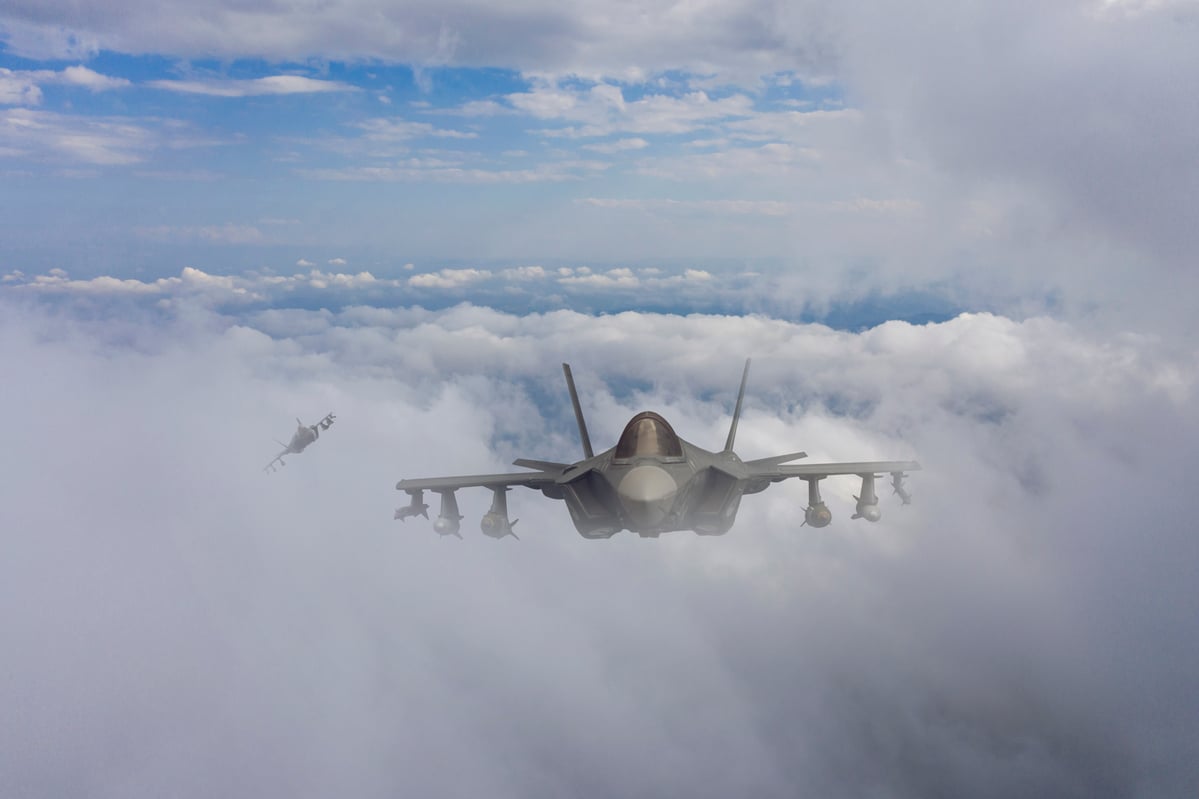
Additionally, our defense business is supporting U.S. and allied warfighters—our engines powering the Black Hawk, the Apache, the B-1, the B-2, the F-15EX, the F-16, and the Eurofighter. We are seeing increased utilization since March, creating future aftermarket demand. Diving deeper into services orders and backlog: Our commercial services business is supported by a robust backlog of over $170 billion, up nearly $30 million since 2024, providing visibility into multiyear demand and supporting our continued growth. Over the last twelve months, commercial services orders increased over 30%, including 49% growth in the first quarter. Within services, demand remains strong for spare parts, which represent roughly 40% of services revenue.
Since March, spare parts orders are up over 30% year over year, and sequentially flat to the first two months of the first quarter. Even with over 25% revenue growth over the last five quarters, demand continues to exceed supply. As a result, spare parts delinquency—shipments that have been delayed due to material availability constraints—is up roughly 70% since 2024. Given the sustained demand environment and our existing delinquency, we are entering the second quarter with more than 95% of spare parts revenue already in backlog.
Turning to internal shop visits, which represent roughly 60% of our services revenue, approximately two thirds of the engines due for our projected shop visits for all of 2026 are currently off wing, either in our shops or waiting to be inducted. Additionally, we have high visibility into the engines which will come off wing over the next couple of quarters based on utilization trends and required removal thresholds in concert with the airlines. Our pipeline of planned engine removals in the second and third quarters combined with engines that are currently off wing exceeds our shop visit guide, providing ample demand to fulfill our outlook and de-risking our 2026 guide.
Overall, we expect a limited impact on services revenue and profit in 2026, holding our full-year guidance across the board. Given the macro uncertainty though, with our strong start to the year, we are trending toward the high end of that range. Shifting to slide six: Flight Deck is fundamentally changing the way we operate, and in times like these, it matters even more. Collaborative problem solving with suppliers, airframers, airlines, and lessors is key to this effort. For example, we recently hosted a key supplier at our Terre Haute, Indiana site. Leveraging Flight Deck, we worked together to improve flow and reduce waste on their lead production line, and they have since increased output by over 40%.
Actions like these contributed to priority supplier material input increasing double digits both sequentially and year over year again in the first quarter, resulting in the increased outputs I mentioned, including engines up 43%. Across our MRO network, we are using Flight Deck to increase output, reduce turnaround times, and lower the cost of shop visits. Take our McAllen, Texas site, where we reduced LEAP high pressure turbine repair time by over 50% by redesigning the cell for better flow. And we know AI will be an accelerator for Flight Deck.
At our Lafayette, Indiana facility, we expanded the deployment of an AI-based material assistant to predict shop visit work scopes for LEAP engines nine months in advance, building on the turnaround time reductions we have recognized in both our Selangor and Malaysia sites. Collectively, our efforts improved shop visit turnaround times for both narrowbody and widebody platforms year over year. With our growing installed base, we are focused on expanding capacity to fulfill customer demand. Within the LEAP external network, Delta TechOps is now the first North American airline MRO provider licensed for both the LEAP-1A and LEAP-1B. And we just announced Iberia as our seventh Premier MRO, supporting growth in Europe.
More broadly, maintaining U.S. aerospace leadership requires sustained investment to meet customer demand. We recently announced plans to invest $1 billion in our U.S. manufacturing sites and supply base for the second consecutive year to help accelerate engine deliveries, ramp part production that extends time on wing, and strengthen our defense industrial base. Additionally, $100 million will be invested in our external supplier base to provide equipment and tooling to increase capacity. These actions and investments are driving meaningful progress to services and equipment output, and while there is more to do, we are off to a strong start and positioned to ramp even further.
Shifting to slide seven: Our growing backlog reflects our commitment to deliver customer value, investing to improve time on wing and cost of ownership. Nearly $200 million of our $1 billion investment in U.S. manufacturing supports expanding capacity for LEAP durability upgrades. We are making progress upgrading the fleet, with the durability kit now on over 30% of the LEAP-1A installed base. Growing our repair capability is critical to improve turnaround times and lower cost of ownership, as a repaired part can cost 50% less than a new part. At our Singapore repair facility, we are investing $300 million to support new technologies and repair processes.
Our customer-driven approach is driving backlog growth, with more than 650 commercial engine—or over $1 billion—in wins in the first quarter alone. This included extending our fifty-plus-year partnership with American, as they celebrate their one hundredth anniversary this month. American recently committed to more than 300 LEAP-1A engines with options for 200 more to power future A321neo and A321XLR deliveries. United, also celebrating one hundred years this month, selected 300 GE9X engines for its 787 fleet, making it the largest GE9X operator globally. Additionally, Delta committed to 60 GE9X engines with options for 60 more for its new 787 fleet, marking its first GE9X selection.
In services, we signed an agreement with Ryanair covering approximately 2,000 CFM56 and LEAP engines, providing material support and MRO services to scale their in-house capabilities, consistent with our open MRO strategy. And in defense, in support of the CH-53K and the critical missions it performs for the U.S. Marine Corps, we were awarded a $1.4 billion contract for additional T408 turboshaft engines. With continued momentum, we are looking forward to what should be an exciting Farnborough Air Show in July. Our experience with our current fleet is also informing next-generation technology. RISE is central to that strategy and will enable improved efficiency without sacrificing durability.
This quarter, together with the Civil Aviation Authority of Singapore and Airbus, we established the world’s first airport test bed for open-fan technology as part of the RISE program. This testing will validate how next-gen engine architectures operate in real-world airline environments and marks another step forward toward ground and flight tests later this decade. In Defense and Systems, we also continue to execute with speed against high-priority military needs in support of U.S. and allied warfighters. This quarter, deliveries were up 24%, and we continue to receive awards across our family of small engines, a key growth area as programs progress. This included an award from the U.S.
Air Force to complete an initial design concept of the GEK 1,500 in partnership with Kratos, with potential applications across unmanned aerial systems, collaborative combat aircraft or CCAs, and missiles. This work is being informed by the maturity of the GEK 800, which completed successful altitude testing last fall. The team designed, built, and tested the first GEK 800 in less than twelve months, testing the fifth iteration of the engine last summer. We are making progress with high-end CCAs through our partnership with Shield AI for the X-PAT Vehicle program, pairing our propulsion development, testing, and certification expertise with their autonomous aircraft capabilities to accelerate delivery of mission-ready capabilities.
We also recently completed a preliminary design review on a hybrid-electric turbogenerator engine system for Beta Technologies’ MB250 VTOL autonomous aircraft. This confirms the engine concept and demonstrates the power of combining our technical expertise to accelerate key programs. Stepping back, we are driving measurable progress on what matters most to our customers: ramping output and improving durability while reducing the cost of ownership, which supports their growth and ours. Rahul, over to you.
Rahul Ghai: Alright. Thank you, and good morning, everyone. We started the year with over 20% top-line and earnings growth. Orders were up 87%, with CES up 93% and DPT up 67%. Revenue increased 29%, with CES up 34% while DPT was up 19%. Operating profit was $2.5 billion, up approximately $380 million, driven by services volume and price. Margins, as expected, decreased 200 basis points to 21.8% from the impact of installed engine growth, investments, and inflation. EPS was $1.86, up 25% from increased operating profit, a lower tax rate, and a reduced share count. Free cash flow was $1.7 billion, up 14%, largely driven by higher earnings.
Working capital and AD&A combined was nearly a $500 million source with strong utilization billings, partially offset by the expected timing of compensation payments. Going deeper on our 25% EPS growth this quarter: Growth in operating profit drove $0.29, or nearly 80% of the improvement in EPS, with increased profit in CES and DPT. This was partially offset by higher corporate cost and eliminations, which were up around $120 million—roughly half from an increase in eliminations and half from an increase in environmental, health, and safety expenses off a low base. A lower tax rate and reduction in share count drove an additional $0.10 of EPS growth.
The tax rate decreased three points to 14.7% from earnings mix and benefit from recent tax legislation. Share count was down 24 million from our previously announced capital allocation actions. Turning to CES: In the first quarter, orders grew 93%, with services up 49% and equipment more than tripling to nearly $8 billion. Revenue increased 34%. Services grew 39% with internal shop visit revenue up 35% from higher volume, including LEAP internal shop visit growth of over 50%, and increased work scopes. Spare parts sales were also up over 25% from improved material availability and growth of external LEAP shop visits. Equipment revenue grew 20%, with engine deliveries up 50% including LEAP up 63%.
Widebody deliveries were also up over 25% driven by GE9X, which was up even more. Profit was $2.4 billion, up nearly $450 million from higher services volume, price, and the absence of charges related to estimated profitability on long-term service agreements taken in 2025. As expected, margins were down 230 basis points to 26.4% driven by installed engine growth, including 9X shipments, and investments. Both installed engine and spare engine volume increased year over year, but growth in installs outpaced spare engine growth. Overall, CES continues to deliver meaningful growth largely driven by services as OE ramps. In DPT, orders increased 67%, including T408 engines for the U.S. Marine Corps CH-53K.
Defense book-to-bill was above 2 for the second consecutive quarter. Revenue grew 19%. Defense and Systems revenue was up 14% as June grew 24% driven by an increase in F110 and rotorcraft engines. Propulsion and Additive Technologies grew 29% with growth across the portfolio led by Avio Aero. Profit grew 17% from increased volume and price. Margins were down 20 basis points to 11.8% driven by mix, investments, and inflation. DPT delivered a solid first quarter with continued demand strength and improved output. Moving to guidance on slide 12: Our first quarter exceeded expectations, given stronger spare parts sales growth and shop visits increase.
We have a robust backlog supporting our growth for several years, and we are taking actions to navigate the current environment. Due to the dynamic macroeconomic backdrop, we are maintaining our guidance across the board, and as Larry mentioned, given our strong start to the year, we are trending towards the high end of the range of low double-digit revenue growth; profit of $9.85 billion to $10.25 billion; EPS of $7.10 to $7.40; and free cash flow of $8 billion to $8.4 billion for total company. We are also maintaining segment guidance for both CES and DPT, with a similar trend towards the higher end.
Our guidance is based on full-year departures growth of flat to low single digits and is underpinned by the following assumptions: fuel prices remain elevated above current levels through the third quarter and decrease to current levels by year-end; a near-term impact from fuel availability in certain geographical regions; a global reduction in GDP growth impacting air travel demand. This guidance does not contemplate a global recession unfolding. Near term, orders continue to be strong, and we expect the strength in the first quarter to continue into the second quarter, with 95% of spare parts in backlog and all shop visits for the quarter already off wing.
As a result, we are expecting second-quarter services growth of high teens, above our full-year guide, and supporting total company year-over-year and sequential profit growth in the quarter. For the full year, we are now expecting services revenue up roughly $4 billion year over year, from approximately $3.5 billion expected previously, supporting our increase of profit and cash to the high end of the range. However, as we get into the second half, we are taking a more measured view given the evolving environment and have included the potential impact from deceleration in spare parts growth, lighter work scopes, delayed spare engine shipments, and reduced billings within our guidance.
While the external environment remains uncertain, we are taking proactive actions, including managing discretionary spending and conducting reviews to assess risks and opportunities to support our customers. Overall, balancing the various factors, we are confident in our ability to deliver the high end of our guidance given our strong first quarter, outlook for the second quarter, and a substantial backlog. With that, Larry, back to you.
H. Lawrence Culp: Rahul, thanks. Our momentum is further supported by our sustained competitive advantages. With the industry’s largest fleet—80,000 engines and growing—and more than 2.3 billion flight hours, we operate at scale with unmatched proximity to our customers across decades-long life cycles, which makes us the partner of choice. Our field experience combined with nearly $3 billion in annual R&D enables continuous improvement in time on wing and cost of ownership, directly aligned with what our customers value most. Across narrowbody, widebody, regional, and defense platforms, we offer leading performance under wing, supported by deep technology expertise and a growing services network. Our world-class engineering teams develop next-gen technology to improve durability, efficiency, and turnaround times, along with advanced defense capabilities.
Through Flight Deck, we are turning strategy into results, with a focus on safety, quality, delivery, and cost—always in that order, every day. With Flight Deck, our over $210 billion backlog, and the actions underway, we are well positioned to manage near-term uncertainty and deliver value. With that, let us go to the questions.
Blaire Shoor: We will now open the call for questions. Before we open the line, I would ask everyone in the queue to consider your fellow analysts and ask one question so we can get to as many people as possible. Liz, can you please open the line?
Operator: Ladies and gentlemen, if you wish to ask a question, please press 11. Our first question comes from David Strauss with Wells Fargo.
David Strauss: Thanks. Good morning. Thanks for taking my question. Thanks for all the detail on how you are thinking about the aftermarket. But I just wanted to clarify. So, Larry, it sounds like you ultimately do expect an impact on services growth from your lower departures growth forecast, but maybe it sounds like you are thinking more so in 2027, or carrying into 2027, than 2026 given your strong Q1 and the backlog that you have on the services side? And I guess in terms of how you are thinking this might play out, are you thinking at this point that there could be a pickup in CFM56 or GE90 retirements?
Or are you just expecting lower utilization to come through at this point? Thanks.
H. Lawrence Culp: Good morning, David. David, I think what you see in the lean toward the high end of the guide is the expectation that we are going to have a strong second quarter given the visibility that we have both with spare parts and shop visits—we touched on that earlier—and I think that is very meaningful. I think what we are acknowledging is it is very hard for any of us to call the duration of what is happening in the Middle East at this point.
By holding the guide, I think what we have suggested is that the backlog that we have, the visibility that we do have for the second half, should allow us to be within that guide that we offered up ninety days ago. We are acknowledging that if there is sustained softness in departures, there is an effect typically in commercial services, but with a lag. Let us hope we are not staring at something akin to the GFC—we mentioned that in our prepared remarks—but there will be a lag effect. At this point, I think given what we know, we feel strongly about our ability to deliver the high end of the guide here in 2026.
Rahul Ghai: Yeah, David, just to add to that, when we think about 2027, like you said, we feel good about 2026. Having leading positions in both narrowbody and widebody—75% share of the narrowbody cycle, 55% share of the widebody cycles—is helpful in times like this when air traffic growth is uneven, as it dampens the volatility that we see in the market. Also, the fleet is young. You touched on the CFM56 and GE90. A third of the CFM56s have not seen their first shop visits, two thirds have not seen a second shop visit, and there are similar trends for GE90—70% of the GE90s have not seen the second shop visit.
It is early days, but as we sit here in April, both the number of parked aircraft and the retirements are really low. In fact, the retirements in the first quarter for CFM56 were lower than what we experienced in the fourth quarter. So we have not seen any increase in either of those two trends. As Larry mentioned in his prepared remarks, as we have seen in prior cycles, the air traffic has a strong recovery after every downturn. So if you see any impact here in the second half of the year, it is going to be a push-out of demand versus a disruption. It is hard to call 2027 just yet.
It all depends on how the situation evolves over the next few months. It is early to call, but overall, we feel good about the trajectory that the business is on through this cycle.
Operator: Our next question comes from Sheila Kahyaoglu with Jefferies.
Sheila Kahyaoglu: Maybe just a follow-up on David’s comments. Larry and Rahul, services up 39% in Q1—great quarter both on shop visits and spare parts—and Q2 expected to be up high teens, implying only mid- to high-single digits in the second half. So maybe delve a little bit more into the visibility you have through the summer. And, Rahul, you mentioned push-out of demand, not demand destruction. How do we think about where you are seeing most potential risk post-Q4, whether it is narrowbodies or widebodies? And how do we think about retirement rates staying low today and potential assumptions for 2026 and 2027?
Rahul Ghai: Yeah. So, Sheila, I think we touched on a couple of things here. As you said, we see good visibility into the second quarter. We have said—Larry and I both said—95% of the spare parts for the second quarter are in backlog, and all the engines that we need to work on for the second quarter are in the shop. Larry also provided a full-year shop visit view that we are about a third oversubscribed right now from what is already off wing and what will come off wing in the second and the third quarter. So that gives us confidence around 2026. Now as we go to 2027 and where the risks may come, you touched on retirement rates.
Keep in mind that the retirement rates that we have assumed for 2026 with CFM56 are in the 2% range, and what we saw in the first quarter is sub-1%. As we get into 2027, we have already assumed in our prior outlook that retirements increase to 3% to 4%. So we have factored in a certain increase in retirements. We have not seen that. We are not seeing anything concerning just yet. Our order trends are holding. But it is more about what is unknown, and that is a little bit of caution, prudence—whatever words you want to use—for the second half of the year. Time will play out and give us more visibility into 2027.
Overall, the business is strong, the franchise is strong, and I think we should be able to navigate anything that evolves over the next few months.
Operator: Our next question comes from Kenneth George Herbert with RBC Capital Markets.
Kenneth George Herbert: Yeah. Hi. Good morning, Larry and Rahul. Really strong spare parts orders in the first quarter. I am just curious—especially your comment on March strengthening from the first two months—do you get a sense that there was any prebuying by your customers on the aftermarket ahead of potential disruptions or concerns down the road? I am just curious as to what was underlying the real strength in orders in the quarter and if there could have been any pull-forward in the order demand. Thank you.
H. Lawrence Culp: Ken, I do not think we have seen any evidence of a pull-forward here. To Rahul’s comments just a moment ago, when you think about the breadth of the portfolio—narrowbody, widebody, on a global basis—we just have not seen that sort of behavior. We also noted in the prepared remarks that, as proud as we are of the operational progress that we have made, we still saw delinquency increase, which means we are past due on the spare parts orders that we do have. I think customers are busy. There is still perhaps some pent-up demand from the pandemic that is working its way through the system. But to your specific question, we have not seen that behavior.
Operator: Our next question comes from Christine Liwet with Morgan Stanley.
Christine Liwet: Hey, good morning, everyone. Larry, Rahul, you talked a lot about demand, and I just want to dive a little bit deeper here. You talked about 2Q and 3Q engine removal pipeline above your shop visit guide. So, holding the macro environment you called out, is this higher removal pipeline contemplated in your upper-reach 2026 outlook, or could we see revisions higher in the year if oil resolves in 3Q?
H. Lawrence Culp: Christine, good morning. I think if it were not for current events, we would be talking about an increase in the guide this morning, not color and body language toward the high end of the existing range. In many respects, given the backlog that we have highlighted a couple of times already, both in terms of spare parts and shop visits, absent a change in customer behavior and continued progress on our part relative to internal operational execution, that potential does exist. But, again, given current events, we thought it most prudent to stay with the range that we issued ninety days ago and provide a little bit more color, particularly with respect to the quarter and the first half.
I will not repeat what we have already said. In terms of our ability to control the controllable, we feel very good about that. The progress that we have made with the supply base has been considerable already this year and builds on the progress over the last couple of years. You see that not only in the input numbers we have cited, but in turn the output numbers as well, both in terms of units and dollars. That should continue.
Rahul Ghai: And, Christine, to get to a higher shop visit number—that is not factored into our guidance. What we will need to see is better material flow through than what we have currently factored in, to burn some of that delinquency that exists on both spare parts and the shop visit side. Back to your point, that is when we would take our services guidance above where we have it, around $4 billion of growth this year.
Operator: Our next question comes from Scott Deuschle with Deutsche Bank.
Scott Deuschle: Hi, good morning. Rahul, I was wondering if you might share with us an update on LEAP aftermarket profitability, and particularly how LEAP aftermarket margins are trending in 2026 relative to 2025. And then I would love to get your latest thinking on the path to margin expansion on the program beyond 2026 and over the long term. Thank you.
Rahul Ghai: Yeah, Scott, on LEAP, the services business is trending really nicely. We are expecting a further improvement this year on margins. Trends have been good for the first half of the year, and it is coming from a few things: increased volume that we are driving in our shops; the repairs that we are developing in our aftermarket business—this year, we expect the number of repairs that we develop on LEAP to double over what we developed last year, which helps reduce the cost of the shop visit; and the external channel is coming up nicely as well. We are now at about 15% of our shop visits for LEAP performed by third parties.
That number was close to 10% just eighteen to twenty months back. So that part of the business is developing nicely. If you put all that together and think longer term to your second part, we do expect the LEAP service margins to approach overall CES service margins by the time we get into the 2028 time frame. Really pleased with the progress—for a business that was just kind of breakeven a few years ago, we have made a lot of progress in the last eighteen months.
Operator: Our next question comes from Robert Stallard with Vertical Research.
Robert Stallard: Thanks so much. Good morning. Just want to follow up on slide five and that spare parts delinquency chart you have in there. Is that continued march higher in delinquencies just due to continued demand exceeding supply—the supply chain strain? And how long do you think it will take to get that back down to a more reasonable number?
H. Lawrence Culp: It is—despite the progress we have talked about a few times now this morning, not only with inputs but outputs—just a function of demand outstripping supply. We highlight delinquency simply to make sure investors understand that dynamic is in play. Operationally, it is a number we are not proud of, because we are failing to meet customer expectations in that regard. I think it is going to take us a while yet to get to zero delinquency. That clearly is the goal. On-time delivery is one of our critical operational KPIs as part of Flight Deck.
We are not going to be able to circle that, but given the continued momentum we see with our suppliers and our own operations, that is something that we should deliver on in time, regardless of the demand environment.
Operator: Our next question comes from Douglas Stuart Harned with Bernstein.
Douglas Stuart Harned: Good morning. Thank you. I wanted to continue on a look at the current environment because when you look forward and see some of the challenges out there—if we see jet fuel above $200 in Asia and in Europe—there are quite a few airlines that could be under some real financial pressure. When you look at the steps you need to take over the next year or so, how do you compare the concerns around, say, an airline that is in difficult financial straits and cannot do an overhaul versus simply reductions in flying hours that could take some dollars out of LTSAs? How do you think about these different hazards over the next year?
H. Lawrence Culp: Well, Doug, the scenarios that we talked about earlier have us contemplating a range of possibilities, given that none of us know how things are going to play out here, particularly with respect to duration in the Middle East. I do not think we have tried to tether ourselves to one scenario or another. We have considerable backlog—we have talked about that a number of times this morning. We are mindful of the risks that we may have in the customer base. Rahul and the team have increased the work we do in that regard.
But first and foremost, we are trying to support our customers as best we can to weather these storms as we have in past situations—be it the pandemic, be it the GFC, and even situations that were of lesser impact. We are also putting our spending under greater scrutiny—continuing to invest in the future of flight, of course, and continuing to invest in improved durability and lowering the cost of ownership. But given the situation, we are making sure that as a senior leadership team, we are spending in a more cautious fashion today given what we know and given what we do not.
Operator: Our next question comes from Scott Stephen Mikus with Melius Research.
Scott Stephen Mikus: Good morning, Larry and Rahul. Figured there would be a lot of questions about the conflict in the Middle East, so I wanted to check in on the GE9X. Boeing flagged a fatigue issue with the engine, so just curious if you could provide an update on that. Is there any change to the expectations you had for losses on the program this year?
H. Lawrence Culp: No change on schedule, no change on losses. I would just start, Scott, by reiterating that we are thrilled to be the sole-source partner on the 777X. We have over a thousand engines on order, and customers want the engines, they want the airplanes. What we shared with folks is that we saw back in January a durability issue with the mid-seal. Remind everybody, this is on an engine that was certified back in September 2020. The crack that we uncovered during a shop visit—which is part of a flight test engine—is something we have seen before. We think we are at root cause.
We are finalizing the modification as we speak, and we have been fully transparent with Boeing and the FAA every step of the way. So, I think as Boeing has said, we believe we are on track with the certification plan that has been communicated to customers. No change to the schedule. Of note, the 777X flight test program continues—it is ongoing. With respect to deliveries, we had deliveries in the first quarter. Currently, we are continuing to build up in assembly to the point of the mid-seal, modifying the tooling, and ramping some suppliers for the modified part.
We will end up having deliveries that will be more second-half weighted, but at this juncture, there is no reason to believe the full year will be any different than what we have communicated.
Operator: Our next question comes from Myles Alexander Walton with Wolfe Research.
Myles Alexander Walton: Thanks. Good morning. I was hoping to switch gears a little bit on aeroderivatives—I know off-topic question—but you had a disclosure that had a restatement and moved derivatives equipment from your CES segment to your DPT segment. You had 94 deliveries of aeroderivatives last year to your customers, but the pricing on those looks fairly benign relative to the potential for where pricing could be, given the backdrop for power. So can you talk about what the strategy is for aeroderivatives and what the upside opportunity could be there for repricing and volume? Thanks.
Rahul Ghai: Yeah. So, Myles, on aeroderivatives, as you know, we provide the engine and then our partners in the JV take the product to market. They do the system integration and add some controls—there is work done by both parties. What you saw in our disclosure is basically the fact that we are burning the pre-spin backlog. That was backlog that we had sold when we were part of one company that had different agreements. Post-spin, the pricing to the JV has been revised substantially, and we are working our way through the old backlog. We should transition to the orders that we have won post-spin over the next, I would say, eighteen to twenty-four months.
You will see a gradual increase in pricing over the next few months to quarters. Overall, it is a great business. We are sold out through the early 2030s, so that is one leg of the stool. And then, obviously, everything that you are seeing with now CFM56 getting added potentially to the power generation capacity—that gives another level of growth toward the CFM56 platform, be it through spare parts sales to third parties who are developing that product, or some other form of collaboration. We are exploring all those things. Overall, the aeroderivative business is in a really good spot in the market, both with the existing product that we have and potential new entrants to that market.
H. Lawrence Culp: And, Myles, we moved it over from CES into DPT really to give the commercial team the opportunity to focus exclusively on the airliners, the airlines, the airframers. At the same time, there are some similarities to part of our defense engines and services business, especially in and around marine applications. So there is a better operational home for this business in the other segment. That is the sole reason for the move earlier this year.
Operator: Our next question comes from John Godden with Citi.
John Godden: Hey, guys. Thanks for taking my question. If I could just come back to CES margins specifically. There is a concern out there that if this fuel shock continues, retirements spike and, in particular, your CES margins would be at risk. You have been very thoughtful about your guidance and embedded a pretty conservative outlook for global aviation, and it does not seem like you think that risk is particularly likely. I would love to get your reaction to the concern on margin risk and what positive offsets to this mix effect might exist if global aviation continues to deteriorate.
Rahul Ghai: I think there are two parts to the question. For the current year, as you think about the margins, we baked in kind of flattish margins for the year. If you think about the growth for the year—the $4 billion of growth that we are now expecting—keep in mind, the first quarter grew by about $2 billion, and we are expecting high-teens growth in the second quarter. That gets us closer to two thirds to three fourths of the growth being in the first half of the year. We feel good about the growth rates that we have for the year, and that should support the flat margin expectations that we have for the business.
What is happening in the year, as we have discussed previously, is that we are getting good support from our services growth—that is dropping through at a healthy clip. In the first quarter, service margins were actually up year over year. That was a positive trend. We are not baking that in for the full year—full year, we are expecting service margins to be flat—but it is a good start to the year. That positive drop-through from services is getting offset by the OE growth that we saw. For the full year, we expect deliveries to be up 15%.
While both spare engines and installed engines are going to be up for the year, the growth is primarily going to be driven by installed engines, and then we have 9X shipments. Put all that together, and we expect flattish margins for the year for CES. As you go outside the year, we spoke about the LEAP margin trajectory earlier to Scott’s question. We expect LEAP margins to approach overall CES levels of service profitability in the next couple of years. 9X losses should also peak by the time we get to 2028, given that we are driving a 50% production cost reduction in 9X.
So LEAP margins improving and 9X headwinds peaking in 2028—beyond that is when we expect both accelerated profit and margin expansion in the business.
Operator: Our next question comes from Gavin Eric Parsons with UBS.
Gavin Eric Parsons: Good morning. Thanks, guys. This is Joel Santos filling in for Gavin Parsons. Thanks for taking my question. Moving to defense—strong results in 1Q, solid margins, stronger order environment. As we look through the rest of 2026, how should we think about the sustainability of growth and margins in the segment?
Rahul Ghai: For DPT, you saw our revenue growth in the first quarter. We are expecting high-teens revenue growth for the full year. Overall, if you look at the results for the first quarter, they keep us on pace for what we have guided for the full year, both on year-over-year profit growth and the absolute dollar of profit that we delivered in the first quarter. Margins were a little bit light in the first quarter largely because equipment grew more than the aftermarket, but that mix should improve as we go through the year. Overall, we are on track as we think about the year.
We are going to drive strong output, productivity is going to get better, and the mix should also improve. Given the growth rates that we had in the first quarter, we feel good about the year, and as we said in our prepared remarks, we do expect DPT to be at the higher end of the guidance we previously committed, given the growth rates we are seeing and the expected drop-through.
Operator: Our next question comes from Seth Michael Seifman with JPMorgan.
Seth Michael Seifman: Hey, thanks very much and good morning. In the outlook where you talk about Brent prices remaining fairly elevated through Q3, in addition to Brent prices we have seen a significant increase in the spread for jet fuel. Are there special things we should be thinking about there, and reasons why from a jet fuel perspective this could carry on longer and/or be more disruptive than simply what is happening with oil prices?
H. Lawrence Culp: Seth, I do not think we are trying to be too granular in the underlying assumptions. The economic realities you have pointed out are there, and I hope what we are taking is a conservative set of assumptions on board here between now and, let us say, Labor Day. Time will tell. By and large, we know that between inflation and potential scarcity in other parts of the world, we could see some near-term airline behavior shift. By near term, I mean late summer and early fall—call it the second half. We are also assuming that by the end of the summer, we are on our way back to more normal conditions.
Given what we have seen before, we may have a lag in the aftermarket on the commercial side of the business from what is happening currently, but then we tend to have a spring back, which is why we have alluded to some of our historic reference points. Demand tends to get pushed out as opposed to going missing indefinitely.
Blaire Shoor: Liz, we have time for one more question.
Operator: This question comes from Gautam J. Khanna with TD Securities.
Gautam J. Khanna: Hey. Thank you. I had actually two questions, but the first one just on supply chain—you mentioned delinquencies and the like. If you could just characterize how material improved sequentially and where, and maybe just an update you have given in the past on how many suppliers and where the pinch points are strongest. And then secondly, I was wondering on the company’s aftermarket exposure to low-cost carriers or business models in the airline industry that might be more affected by a high oil environment. Maybe if you could elaborate on that.
H. Lawrence Culp: I will take the supply chain question and let Rahul speak to certain customer segment risk. From an input perspective, we mentioned earlier that we have seen double-digit increases again sequentially and year over year from some of the critical suppliers. We have said all along we are going to be the problem solvers, not the finger pointers, and I am really pleased with the way we have had suppliers across the board engage with us. It has been a journey at every point, but we are simply getting better.
We are more transparent, we are more trustworthy with each other, and in turn we have allowed our best people to go to gemba—to go to where the constraints and bottlenecks exist—and solve them. There is no way we take engine output up 43% without that sort of support from the supply base. Likewise, commercial services up 39%—there is no way we are able to get that volume out the door to serve our airline customers without really good progress using Flight Deck with the supply base. That is not to suggest that we are all clear between now and 2030—there is still a lot of work we are going to have to do, more every year.
But what a wonderful challenge to have. Kudos to our team and to the supply base for engaging and supporting us with our ultimate customers in mind, particularly here in the first part of 2026.
Rahul Ghai: And, Gautam, to your second question—if I step back and look at the environment we have seen since the start of the conflict, there is nothing giving us pause. Customers are eager to get back in the air. Yes, they are experiencing temporary disruptions given everything that is going on—directly in the Middle East, and a little bit from lack of fuel availability and higher fuel prices—but everybody is eager to get back and support the flying public.
We spoke to the trends we are expecting in the second quarter, and as we think about the full year—had it not been for the environment that we are in, and I am repeating something Larry said earlier—we would have raised our guidance. The first quarter was about $300 million better than what we had expected at the beginning of the year, and we are carrying that strength into the second quarter. The momentum is clearly carrying through, and we spoke to both sequential and year-over-year profit growth in the second quarter with high-teens services growth expected. The second half is just about what we do not know.
Hopefully, as Larry said earlier, we are being conservative and cautious—prudent, whatever words you want to use. Time will tell, but we feel good about the year as we sit here today. We are not seeing any disruptive behavior on the part of the customer. We are not seeing risks that we did not have just a couple of months back. We are monitoring the situation very closely, as you would expect us to, and we will provide updates throughout the quarter as we learn more.
Blaire Shoor: Larry, any final comments?
H. Lawrence Culp: Just in closing, Flight Deck will help us deliver what our customers value most—higher outputs, improved durability, and lower cost of ownership—even as we navigate the current environment. We are confident in our trajectory and our ability to deliver value for customers and shareholders. We appreciate your time today and your interest in GE Aerospace.
Operator: Thank you, ladies and gentlemen. This concludes today’s conference. Thank you for participating. You may now disconnect.