Image source: The Motley Fool.
DATE
May 5, 2026, 8 a.m. ET
CALL PARTICIPANTS
- Chief Executive Officer — Tyler Page
- Chief Financial Officer — Greg Mumford
- Head of Investor Relations — Thomas Armstrong
TAKEAWAYS
- Operating and Contracted Capacity -- 907 megawatts, including three signed data center campus leases with investment-grade hyperscale tenants and the Odessa bitcoin mining site.
- Total Contracted Revenue -- $11.4 billion across the current base lease terms (10-15 years), providing long-term, predictable cash flows.
- Average Annualized Net Operating Income -- $787 million expected from October 2026 through September 2036, with $892 million targeted for 2035.
- Development Pipeline -- 3.3 gigawatts of grid capacity in advanced stages, with priority sites Reveille and Ulysses holding interconnection approvals and targeting energization in 2027.
- Fiscal first quarter ended March 31, 2026, revenue -- $35 million, a decrease from $60 million in the fiscal fourth quarter ended December 31, 2025, driven by the winding down of mining at Black Pearl and transition toward contracted data center revenue.
- GAAP Net Loss -- $114 million, or $0.28 per diluted share, a reduction from the prior quarter’s $734 million loss, with the latest decline driven by lower revenue, decreased fair value of the power purchase agreement, and higher interest expense.
- Total Debt Principal Outstanding -- $5.2 billion, predominately nonrecourse and tied to contracted project assets; $1.7 billion at Cipher Compute (Barber Lake) and $2 billion at Black Pearl Compute.
- Unrestricted Cash and Cash Equivalents -- $715 million at quarter end, with additional liquidity of $76 million in Bitcoin and an undrawn $200 million revolving credit facility.
- Restricted Cash -- $3.5 billion allocated for project construction, consisting of project-level reserves and restricted construction accounts.
- Bond Offering -- $2 billion high-yield completed at a 6.125% coupon, fully funding Black Pearl’s buildout and including a $233 million reimbursement for prior equity contributions.
- Corporate Revolving Credit Facility -- Inaugural $200 million facility established, supported by a syndicate including Morgan Stanley, Goldman Sachs, JPMorgan, Wells Fargo, Santander, and SMBC, undrawn at quarter end.
- Headcount -- Increased to 70 employees in the fiscal first quarter ended March 31, 2026, from 50 in the fiscal fourth quarter ended December 31, 2025, with a target of slowing hiring and normalizing around 85 full-time employees.
- Barber Lake Construction Progress -- Over 1,100 daily active workers in April, 1 million cumulative labor hours with zero lost time incidents, and building topped out after 127 days for an 800,000 square foot facility.
- Equipment Procurement for Projects -- 99% secured at Barber Lake, 93% at Black Pearl Phase I, and 80% at Black Pearl Phase II, with procurement risk minimized for construction timelines.
- Odessa Mining Operations -- 346 Bitcoin mined in the quarter, operating at 207 megawatts with 11.6 exahash per second and a fleet efficiency of 17.2 joules/terahash; no further capital investment planned for mining operations.
Need a quote from a Motley Fool analyst? Email [email protected]
RISKS
- Greg Mumford stated, "The [fiscal first quarter ended March 31, 2026,] loss was primarily driven by a decrease in revenue from the planned wind down of mining operations at Black Pearl, the decrease in the fair value of our PPA, and the increase in interest expense from our new debt facilities."
- "We are hoping for a good outcome from the finalization of that batch process in June." — delays or changes in ERCOT grid interconnection approvals could impact project timelines for pipeline sites.
SUMMARY
Cipher Mining (CIFR +1.62%) directly reported $35 million in revenue for the fiscal first quarter ended March 31, 2026, as the company transitions from bitcoin mining toward contracted data center operations anchored by three hyperscale lease agreements. Management executed a $2 billion bond with a 6.125% coupon and closed a $200 million revolving credit facility, fully funding Black Pearl's construction and establishing committed liquidity. The current development portfolio is comprised of 907 megawatts of operating and contracted capacity, with $11.4 billion of revenue secured under long-term leases, and a total pipeline of 3.3 gigawatts of grid-approved expansion opportunities. Management confirmed the majority of project debt is nonrecourse and matched to contracted assets, mitigating balance sheet risk while preserving flexibility for future project financing.
- Barber Lake achieved significant safety milestones, surpassing 1 million labor hours without a lost time incident and topping out its 800,000 square foot structure in 127 days.
- The company expects the Odessa mining operation to remain cash flow positive with fixed-rate power through the next 14 months before further winding down bitcoin exposure.
- Management identified growing pricing power for near-term data center leases and highlighted current premium demand, especially when rapid site availability can be demonstrated.
- Discussion of potential business model evolution included consideration of compute ownership on select sites, particularly Reveille, if risk-adjusted returns and credit support are favorable.
- Liquidity as of quarter end included $715 million in unrestricted cash, $3.5 billion in restricted accounts for construction, and bitcoin holdings valued at $76 million.
INDUSTRY GLOSSARY
- ERCOT: Electric Reliability Council of Texas, the grid and market operator for most of Texas, responsible for approving data center interconnections and capacity scaling.
- PJM: Pennsylvania-New Jersey-Maryland Interconnection, a regional transmission organization operating a large segment of the Mid-Atlantic and Midwest power grid for wholesale electricity markets.
- Neocloud: Cloud computing providers that are not currently hyperscalers but have ambitions to scale rapidly, sometimes backed by larger industry players for credit support.
- HPC: High-Performance Computing, referring to data center infrastructure designed for large-scale, compute-intensive workloads, such as AI and scientific modeling.
- Batch 0: The initial group of projects designated for prioritized review and approval under ERCOT's new batch process for grid interconnection.
- Colocation (Colo): Leasing of data center space and power capacity to tenants who deploy their own computing hardware within the facility.
Full Conference Call Transcript
Thomas Armstrong: Good morning, and thank you for joining us on this conference call to address Cipher Digital's business update for the first quarter of 2026. Joining me on the call today are Tyler Page, Chief Executive Officer; and Greg Mumford, Chief Financial Officer. Please note that our press release and presentation can be found on the Investor Relations section of the company's website where this conference call will also be simultaneously webcast. Please also note that this conference call is the property of Cipher Digital, and any taping or other reproduction is expressly prohibited without prior consent. Before we start, I'd like to remind you that the following discussion as well as our press release and presentation contain forward-looking statements.
These statements include, but are not limited to, Cipher's financial outlook, business plans and objectives, and other future events and developments, including statements about the market potential of our business operations, potential competition, and our goals and strategies. Forward-looking statements and risks in this conference call, including responses to your questions, are based on current expectations as of today, and Cipher assumes no obligation to update or revise them, whether as a result of new developments or otherwise, except as required by law. Additionally, the following discussion may contain non-GAAP financial measures. We may use non-GAAP measures to describe the way in which we manage and operate our business.
We reconcile non-GAAP measures to the most directly comparable GAAP measures, and you are encouraged to examine those reconciliations, which are filed at the end of our earnings release issued earlier this morning. I will now turn the call over to our CEO, Tyler Page. Tyler?
Rodney Page: Thanks, Drew. Good morning, everyone, and thank you for joining us today. I'm Tyler Page, CEO of Cipher Digital, and I'm pleased to welcome you to our first quarter 2026 business update call. 2026 is the year of execution for Cipher, and we kicked the year off with a strong first quarter. We signed our third data center campus lease with an investment-grade hyperscale tenant, completed a $2 billion high-yield bond offering for Black Pearl, fully funding the project through completion, closed a $200 million revolving credit facility from a syndicate of leading global financial institutions and made substantial progress on the construction of our Barber Lake and Black Pearl HPC data centers.
Execution, that is what defines this quarter and what will continue to define the rest of this year. When we rebranded to Cipher Digital, we did so with a declaration, "We are Built for Hyperscale." That phrase carries real meaning for us, and I want to spend a moment on what it means in the context of this quarter's results. Built for Hyperscale is not a marketing tagline. It is a description of the foundation of this company and the best-in-class team we have built, in-house power origination, engineering, construction management, and operations, all purpose-built to deliver bleeding-edge data center infrastructure at the speed and precision hyperscalers require. Each quarter, we add another point of proof.
Our first lease at Barber Lake was proof of concept. Our second at Black Pearl was the proof of repeatability. Our third lease this quarter is proof that Cipher Digital itself is a leading development platform Built for Hyperscale. As we move through 2026 with 2 data centers under construction, a third preparing for mobilization and an extensive pipeline behind it, our differentiation will become increasingly visible to the market. Slide 4 provides a snapshot of Cipher Digital as it stands today. We are a vertically integrated developer and operator of industrial scale data centers built to serve the world's leading companies. Our in-house capabilities support the delivery of power dense, large-scale facilities to exact hyperscalers specifications at speed.
As of today, we have 907 megawatts of operating and contracted capacity, anchored by 3 signed data center campus leases with world-class hyperscalers. That portfolio carries approximately $11.4 billion in contracted revenue across base lease terms of 10 to 15 years, providing Cipher with durable, high-quality, and long-term cash flows. Beyond that, we have an approximately 3.3 gigawatt pipeline of grid capacity, providing an extensive runway for future growth. The quality and scale of our pipeline is a competitive advantage that is difficult to replicate, representing years of disciplined power origination work. We are no longer an aspirational HPC developer. We are a company with signed contracts, billions of capital raised, and multiple data center construction projects progressing toward completion.
Zooming out, Slide 5 shows the full geographic reach and scale of our development platform. Our portfolio consists of approximately 4.2 gigawatts of grid power across operating, contracted, and pipeline sites. Roughly 78% of that capacity represents pipeline HPC opportunities with the remaining balance split between our existing contracted capacity, our newly contracted capacity from this quarter's third lease, and our operating Bitcoin mining site at Odessa. The geographic concentration in West Texas is intentional. For years, the conventional wisdom in the traditional data center industry was that hyperscalers would not venture outside major metropolitan areas and that our sites were, as I described once before, at the edge of the known world.
We disagreed and the market has proven us correct. West Texas has become one of the most sought-after regions in the country for large-scale AI infrastructure development, and Cipher is well positioned to execute on this unique opportunity. The addition of our Ohio site at Ulysses reflects our intentional geographic diversification. Major hyperscalers require data center capacity across multiple markets and power grids. Our ability to offer sites in both ERCOT and PJM strengthens our value proposition as a development partner for tenants with multi-market capacity requirements. This portfolio, the scale of it, the quality of the sites, and the geographic reach is the product of years of on-the-ground sourcing work.
It cannot be assembled overnight, and it will continue to be a source of competitive advantage as demand for large-scale data center capacity continues to intensify. Let's now turn to the future trajectory of Cipher's contracted cash flow profile. Our 3 executed data center campus leases are expected to generate approximately $787 million of average annualized net operating income from October 2026 to September 2036. In 2035, we expect to have approximately $892 million of contracted net operating income. The addition of our third lease this quarter further strengthens this profile of contracted cash flows and adds meaningful net operating income to our projections.
As a reminder, this is contracted net operating income, not a projection based on assumed future leases, not a model dependent on speculative outcomes. These are signed long-term agreements with investment-grade counterparties that create visible, stable contractual growth over the next decade. This slide shows the fundamental change in the financial character of this company. We are a business defined by stable long-term cash flows. The leases are signed, the financing is in place, and the construction is underway. The cash flows on this chart are not aspirational. They are contracted. Let me now walk through the specific highlights that defined our first quarter.
On the corporate side, we accomplished 3 significant execution milestones that speak directly to the strength and maturation of this platform. First, we signed our third data center campus lease, a 15-year initial term agreement with an investment-grade hyperscale tenant. This is now 3 consecutive long-term leases with world-class counterparties in the span of approximately 8 months. We also completed a successful bond offering for $2 billion at a 6.125% coupon, fully funding the build-out of Black Pearl through delivery. The offering was significantly oversubscribed, and it included a reimbursement of approximately $233 million to Cipher for our prior equity contributions to the site.
And finally, we closed our inaugural $200 million revolving credit facility, supported by a syndicate of leading global financial institutions. This was a landmark moment for Cipher. For the first time in our history, we now have a corporate level committed credit facility, a reflection of the maturation of our platform, the quality of our contracts, and the confidence of the world's strongest institutional lenders in Cipher. On the physical execution side, our results are equally impressive. At Barber Lake, we had over 1,100 daily active workers on site in April with more than 1,400 expected in May. More importantly, we have exceeded 1 million cumulative labor hours on site with 0 lost time incidents.
That is an extraordinary safety record for a project of this scale and complexity, and it reflects the culture of operational discipline we have built within our construction team. At Black Pearl, we completed the demolition of the existing Bitcoin mining infrastructure for the Phase I retrofit within 1 month of kickoff. Phase II broke ground just 3 months after design kickoff. With both sites tracking, we have entered the second quarter with significant momentum. Now let's take a more detailed look at our current development portfolio. At Barber Lake, construction is well advanced, and the focus is entirely on delivery. I am pleased to report that Barber Lake is tracking well.
In April, the building officially topped out, marking the completion of the primary structural steel. From the first column to the last structural beam, it took 127 days to stand up a roughly 800,000 square foot structure. This achievement is a testament to the quality of our construction management team and the depth of our supply chain relationships. Mechanical, electrical, and networking work fronts are now progressing in parallel, and the project continues to track toward meeting all contractual early access and substantial completion milestone dates. From a procurement standpoint, we have secured approximately 99% of the equipment required to complete this project.
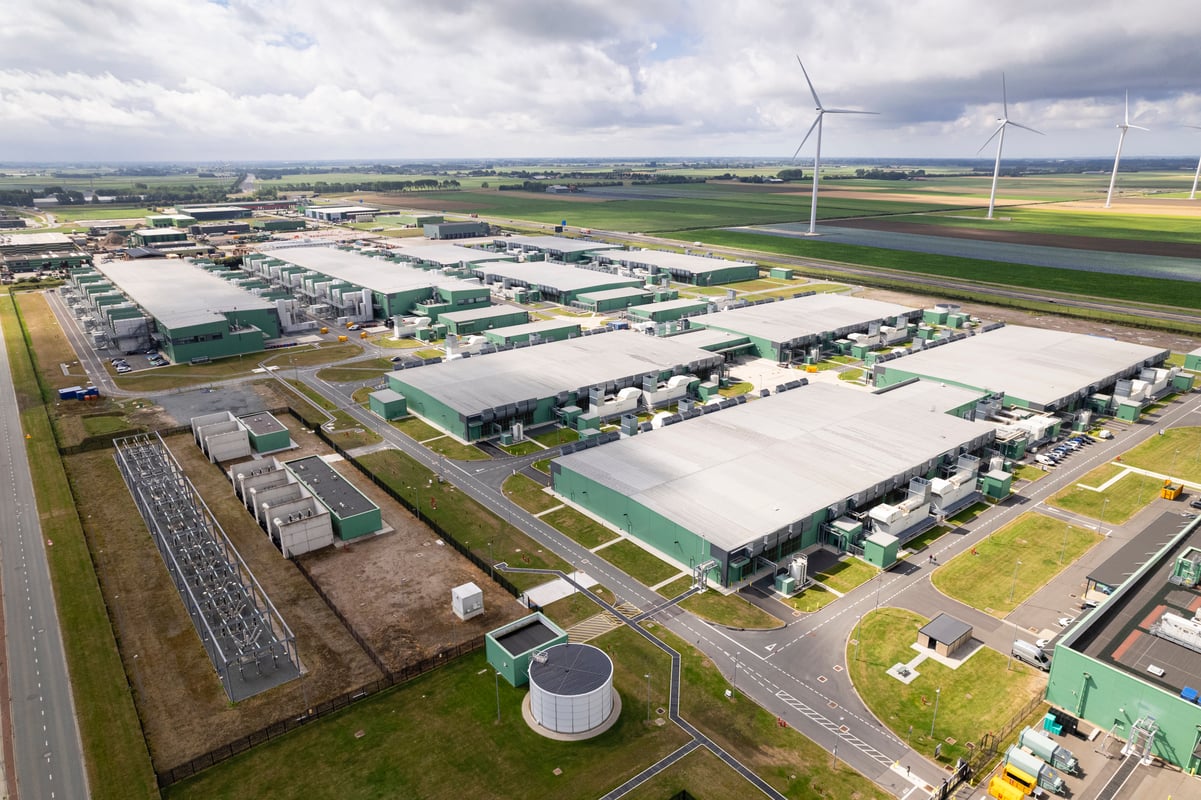
Equipment delivery schedules are aligned to support our construction completion targets, which means the risk of supply chain disruption to our timeline is minimal. Our design is 100% complete. All design milestones have been achieved on schedule, which eliminates another meaningful source of construction risk at this stage of the project. The next slide gives investors a visual representation of what has been accomplished at this site, and I encourage you to take a moment to look at it closely. Slide 10 shows an aerial photograph of the Barber Lake campus taken last week. Look at this image carefully because I think it captures something that numbers and bullet points cannot fully convey.
Eight months ago, this was an open field in West Texas. Today, it is one of the largest data center structures under active construction in the United States. The scale of what this photograph shows is immense, a facility built to deliver 207 megawatts of critical IT load for some of the world's most sophisticated technology companies rising from the ground with a speed and precision that we believe is unmatched in this industry.
When I think about how we got here, the years of site sourcing, lease negotiations, the financing work, the design and engineering, the procurement, the construction management, and I look at what stands on this site today, I am genuinely proud of every member of this team. This is what Built for Hyperscale looks like in practice. We look forward to welcoming our tenants to the campus later this year. Similar to Barber Lake, Black Pearl is progressing with the same level of discipline and velocity. The decommissioning of Bitcoin mining infrastructure is complete. The site has fully transitioned to data center development mode.
Phase I of the retrofit is progressing well with mechanical, electrical, and networking work fronts in full swing. Crews are actively working to install the cooling and electrical infrastructure to enable the legacy building to accommodate the new HPC equipment. On the procurement front, approximately 93% of Phase I equipment is secured and delivery schedules are aligned to support our completion targets. On Phase II, site layout and earthwork began in April, just 3 months after design kickoff. We have also secured approximately 80% of Phase 2 equipment and delivery schedules are aligned to support our completion targets.
The project is tracking to meet contractual early access and rack ready dates across both phases, and we remain confident in our ability to deliver this campus on schedule. Slide 12 provides a first look at construction progress at our Stingray site in Andrews County, Texas. As a reminder, this site has 100 megawatts of gross capacity fully approved with a target energization date in the fourth quarter of 2026. Development activity at Stingray began during the first quarter. Earthwork and pad preparation are currently in progress. Electrical work for the substation has commenced, consistent with our Q4 2026 energization timeline. We look forward to providing further updates on this site as construction mobilization progresses.
Odessa continues to mine Bitcoin and the site performed well in the first quarter. As a reminder, Odessa's fixed price power purchase agreement at approximately $0.028 per kilowatt hour continues to position Cipher among the lowest cost Bitcoin producers in the industry. Today, we are operating 207 megawatts of capacity, generating approximately 11.6 exahash per second of total hash rate at a fleet efficiency of approximately 17.2 joules per terahash. In the first quarter, we mined approximately 346 Bitcoin at Odessa. Our mining operations remain fully self-funded. We do not anticipate additional capital investment in this part of the business as we continue prioritizing our platform towards HPC.
Odessa continues to generate healthy cash flow as our data center leases ramp towards revenue commencement later this year. Let's now shift to an update on our development pipeline. Turning to Slide 15. I want to walk through the specific sites in our near-term pipeline and give investors a sense of where each stands today. Reveille and Ulysses represent our most advanced precontracting opportunities and are both fully interconnection approved. Reveille, located in Cotulla, Texas, has received ERCOT interconnection approval for 70 gross megawatts, and substation development has been initiated. We are in active and advanced discussions with multiple potential tenants for an HPC hosting lease at this site.
Given Reveille's capacity falls below the threshold that would trigger ERCOT's batch process and given that its interconnection is already approved, the site's energization timeline of Q3 2027 is not subject to batch process uncertainty. The load is firm, the approvals are in hand, and we are actively converting this site into a contracted asset. Ulysses, our 200-megawatt site in Southeastern Ohio, has all necessary approvals to participate in the PJM market, and we are similarly in advanced discussions with prospective tenants for an HPC hosting lease here. This site is Cipher's first in PJM, and it is well suited for HPC data centers. We are targeting energization in Q4 2027 and remain highly confident in that timeline.
Looking beyond these near-term sites, we have McLennan, Mikeska and Colchis. Each is advancing through the ERCOT interconnection process and tracking well. We continue to push all required workflows forward, fund all deposits on schedule, and ensure these energization timelines are preserved. All 3 sites are expected to energize in 2028, and all 3 sites are expected to be in batch 0 of the new ERCOT batch process. We have strong conviction in the quality of our pipeline positioning and continue to engage proactively with prospective tenants at each of these sites. Slide 16 brings the entire portfolio together in one view and illustrates the depth of the platform we have built.
On the left, our current operating and contracted capacity, 207 megawatts of Bitcoin mining at Odessa, 300 megawatts contracted at Barber Lake with FluidStack and Google, 300 megawatts contracted at Black Pearl with Amazon Web Services, and 100 megawatts contracted under our newly signed third lease. Together, that totals 907 megawatts of operating and contracted gross capacity today. On the right, the pipeline capacity timeline tells the story of what comes next. In the 2027 window, Reveille and Ulysses together represent 270 megawatts of near-term pipeline capacity. In 2028 to 2029, Mikeska, McLennan, Milsing, and Colchis add up to 2.5 gigawatts of additional pipeline capacity.
And looking to 2030 and beyond, an additional 500 megawatts at Barber Lake represents a further upsized opportunity at an already contracted and operating site. Altogether, this represents up to 4.2 gigawatts of total portfolio capacity from the grid. Our conviction has only strengthened over the past quarter. We believe Cipher is among the best positioned companies in the world to continue converting this pipeline into contracted long-term cash flows, and we look forward to demonstrating that over the quarters ahead. I'll now turn the call over to our CFO, Greg Mumford, who will walk through our financing activities, capital structure, and financial results for the first quarter. Greg?
Greg Mumford: Thanks, Tyler, and good morning, everyone. Over the past year, Cipher has taken significant steps to reshape the financial profile of the company, transitioning from a start-up Bitcoin miner to an institutionally backed digital infrastructure platform with long-term contracted cash flows and a purpose-built capital structure. In the first quarter, we continued to strengthen that financial foundation in ways that meaningfully derisk execution and improve forward visibility. We entered 2026 focused on strategic capital allocation, isolating construction risk via nonrecourse financing, and improving our corporate liquidity. In Q1, we successfully completed 2 additional financings, the $2 billion Black Pearl project level financing that fully fund our second data center campus through completion and a $200 million revolving credit facility.
This revolver marks the first of its kind amongst our peer group, securing multi-year committed liquidity from leading financial institutions, including Morgan Stanley, Goldman Sachs, JPMorgan, Wells Fargo, Santander, and SMBC. Each of these transactions highlights the continued maturation of Cipher's platform. The Black Pearl financing represents our third successful project-level bond issuance, demonstrating repeat access to the capital markets and a growing diversified institutional investor base following our story. We achieved highly competitive pricing while maintaining structural flexibility through a callable format, which we believe positions us to actively manage and optimize our capital structure over time.
The revolving credit facility supported by a broad syndicate of leading global banks further underscores the increasing confidence of institutional lenders in Cipher as a scaled and creditworthy counterparty and provides the liquidity foundation to support our continued growth. Turning to Slide 18. I want to walk investors through our full capital structure and liquidity position as at March 31, 2026. At the corporate level, we have a 4-year committed revolver for $200 million and 2 unsecured convertible notes. Revolving facility bears interest at SOFR plus 125 to 175 basis points, subject to the company's total debt-to-market capitalization ratio.
This facility was undrawn at quarter end, but provides us the flexibility to support working capital, issue LCs, and fund growth initiatives. At the project level, we continue to pursue nonrecourse financing through construction, reflecting our disciplined approach to capital allocation. Cipher Compute LLC, the entity that holds the Barber Lake lease, carries approximately $1.7 billion of 7.125 senior secured notes due November 2030. These notes amortize aligning debt service with the cash flows generated by the lease. Black Pearl Compute LLC carries $2 billion of 6.125 senior secured notes due February 2031. Both bonds are currently trading at a premium to par, reflecting investor confidence in our ability to execute on both projects.
In aggregate, total principal outstanding on our debt was approximately $5.2 billion. Unrestricted cash and cash equivalents stand at $715 million, providing substantial corporate liquidity in addition to Bitcoin totaling $76 million and our undrawn revolver availability. Restricted cash of approximately $3.5 billion includes approximately $1.8 billion at Cipher Compute or approximately $1.5 billion net of DSRA and interest-bearing construction accounts and approximately $1.8 billion at Black Pearl Compute or approximately $1.5 billion net of DSRA and interest-earning construction accounts. Both projects remain sufficiently capitalized through construction based on our current estimate to complete. This capital structure is purpose-built and our liquidity position is sufficient to fund our near-term development pipeline without requiring additional equity, providing clear visibility into execution.
Importantly, the majority of our debt is nonrecourse and tied to contracted assets, isolating risk through construction and aligning debt with cash flow. Let's now turn to review of our financial results for the first quarter of 2026. Revenue for the first quarter was $35 million, down from $60 million in Q4, reflecting the planned wind down of mining operations at Black Pearl and our transition toward contracted data center revenue. Mining at Black Pearl was fully decommissioned in February. For the quarter, we reported a GAAP net loss of $114 million or $0.28 per diluted share compared to a GAAP net loss of $734 million or $1.85 per diluted share last quarter.
The Q1 loss was primarily driven by a decrease in revenue from the planned wind down of mining operations at Black Pearl, the decrease in the fair value of our PPA, and the increase in interest expense from our new debt facilities. The Q4 loss was primarily driven by noncash and onetime items, including the embedded derivative revaluation on the 2031 convertible notes and mining asset write-downs. Cost of revenue for the first quarter was $18 million, down from $24 million in Q4, reflecting the transition to Odessa as our sole operating site. Compensation and benefits were $35 million in the quarter, in line with last quarter.
Year-over-year compensation increased from $14 million, primarily reflecting headcount growth and equity-based compensation associated with scaling the platform. We increased headcount from 50 people in Q4 to 70 in Q1, and we're starting to normalize and slow hiring around 85 full-time employees. General and administrative expenses were $12 million, up from $10 million last quarter, primarily reflecting increased legal and professional fees associated with our lease negotiations and financing transactions. Depreciation and amortization decreased to $19 million from $52 million last quarter, primarily due to mining asset sales and decommissioning associated with the Black Pearl retrofit.
The change in fair value of our power purchase agreement was a $28 million decrease this quarter compared to a $12 million decrease last quarter. As we've consistently noted, this is a noncash item. The value of the Luminant contract lies in its long-term fixed price power, supporting industry-leading power costs of approximately $0.028 per kilowatt hour, among the lowest in the industry. Moving below to the operating line. We generated $32 million of interest income in the quarter, up from $19 million last quarter, reflecting higher average cash balances following the Black Pearl financing. Interest expense was $59 million, up from $33 million last quarter, reflecting our project level financings.
The change in fair value of our warrant liability was $44 million noncash gain this quarter compared to a $13 million loss last quarter, reflecting the changes in the value of the Google warrants associated with the Barber Lake lease. Turning to our balance sheet as of March 31, 2026. Total assets grew to $6.4 billion at quarter end, up from $4.3 billion last quarter, primarily driven by the Black Pearl project financing reflected in growth in both property and equipment as well as restricted cash. Cash and cash equivalents were $715 million.
Restricted cash ring-fenced at the project entities and dedicated to construction spending totaled approximately $3.5 billion across current and noncurrent portions, including proceeds from the Black Pearl financing. Property and equipment net of depreciation grew to $1.3 billion from $633 million at year-end as a result of ongoing construction across multiple projects. On the liability side, borrowings totaled approximately $4.7 billion. Accounts payable grew to $198 million at quarter end from $40 million at year-end, consistent with the ramp-up of construction activity and normal timing of vendor payments. Balance sheet reflects the company in an active investment phase, deploying capital across multiple large-scale construction projects with associated contracted revenues ramping as assets come online.
We are executing in line with plan, and we remain well positioned from a liquidity and capital allocation perspective to execute on our commitments and scale the platform. Before we open the call to questions, I want to take a moment to reflect on the full picture of where Cipher Digital stands as we close out the first quarter of 2026. We have executed 3 long-term data center campus leases, generating approximately $11.4 billion of contracted revenue over the base lease terms. We have 2 data centers under active construction, both tracking well. We have a third site where we will begin mobilizing construction in Q2.
We have a strong balance sheet and have demonstrated a repeatable ability to finance construction projects competitively. We have retained flexibility in our financings and our capital structure will continue to evolve over time. Finally, we have approximately 3.3 gigawatts of additional capacity in our pipeline that positions us for continued growth well into the back half of this decade. We remain firmly committed to disciplined execution, capital efficiency, and delivering long-term value to our shareholders. The next 12 months will be defined by construction milestones, revenue commencement, and the continued conversion of our pipeline into contracted assets. We look forward to updating you on each of those fronts throughout the year. Thank you for your continued support.
Tyler and I would be pleased to take your questions.
Operator: [Operator Instructions] Our first question comes from Paul Golding with Macquarie.
Paul Golding: Congrats on all the progress on the sites. I just wanted to ask, first off, around pricing. It seems just doing the back of the envelope math that the incremental Stingray lease, the NOI seems to be per megawatt at least, an improvement on the other 2 on average. Just wanted to ask as you're engaged in these incremental conversations with prospective tenants, how pricing is trending? Is it continuing to trend in a positive direction relative to your existing deals? And then as a follow-up, I just wanted to ask, in general, given the strength of these leases and lease negotiations, how you're thinking about compute? Is that sort of a business that you're considering at all?
Has your thinking changed there? Or is the leasing environment for colo just so strong that you're sticking with that for now?
Rodney Page: Thanks, Paul. Let's start with pricing. So I think it's hard to give a one-size-fits-all answer for leasing because it's a dynamic question that's really linked to speed to market, speed to availability. I think when you've got a site that is already energized or energized in the very near future, there's no question it trades at a premium as far as what it can get for a lease. I think as you continue to demonstrate the ability to build things at an accelerated pace like we are capable of doing, that also makes those timelines more realistic and gives you more pricing power. So yes, fair to say we continue to see premium pricing in our negotiations.
But that's also because we have had sites that are available in the near term. So we still have 2 sites that we are currently marketing in Reveille and Ulysses that I would consider near-term availability that have a fair amount of interest. And I expect our pricing power to maintain there. Based on the conversations we're having, I do not see lease rates going down for premium sites with good timelines. And then I guess related to that, on the compute question, it's interesting. I think we have said historically, we -- if you are getting those premium lease rates for colocation, it's just a better business than owning the GPUs or TPUs or whatever chips you're running.
I'd say we are looking at an interesting test case at Reveille. Given that Reveille is still a big data center at 70 megawatts, but maybe below the targets of the kind of massive colocation tenants, we are looking at a variety of business models at Reveille, including ones where we may participate in the ownership of the computers. There are some interesting trends going on right now with credit support for Neoclouds. There's a variety of larger, more creditworthy supporters of Neoclouds that will provide credit support to try to ensure their success. And so at Reveille, we are looking at, given its scale, it is an attractive site for Neoclouds.
Those Neoclouds can now get investment-grade support or other forms, whether it's a guarantee or in the form of prepayment, et cetera. And so we are considering potential structures where we would also participate in owning and operating the compute at that site. I think on a risk-adjusted basis, the returns there could be very favorable because we could get some support participating in that side of the business. And at that scale, the returns can become pretty interesting. So I think that's our test kitchen site. We have had inquiries also at Ulysses on that. I think our appetite may be more the scale of Reveille if we were going to participate in the compute side of the business.
But in general, we favor -- when you can get very elevated lease rates, we favor the colocation business.
Paul Golding: That's really interesting. Do you see that decision being more prospective counterparty led or internal business model driven?
Rodney Page: I mean it's a little bit both. If you're speaking to Neocloud, in general, they're trying to leverage the credit support that they can get because these are expensive data centers as they try to ramp up. And they're not the really big Neoclouds that have access to broader capital markets that are kind of in the on-deck circle to become large or go public in the future or whatever. They may live in the ecosystem of an NVIDIA or an AMD or someone like that. And our understanding from those conversations is they have plenty of compute offtake ready to go.
Like, they've got their 5-year contracts for compute offtake lined up if they can find a good site within a good time window. So as far as it goes for our discussions, it's kind of -- it's a whole mix of factors as we look at it because we're talking about things like what kind of credit support makes a smaller Neocloud attractive as a tenant. Obviously, full backstop from an investment-grade supporter is kind of a gold standard. Prepayment of fees, if you stretch it out, we've seen and heard anecdotally some larger prepayments coming through, which significantly derisked the project. And then it really comes down to math.
I mean when you look at enough prepayment or a strong enough credit support, that can influence our willingness to participate in the compute side. I mean, I think high level -- that business has not been as attractive because while you can get a compute offtake agreement that will pay back the computers in 5 years, typically, there is a debt overhang on the data center after 5 years. And so you're taking this either extended life risk on how long is the useful life of today's machines. Obviously, those numbers have been really favorable recently. But as we know from our past lives with ASICs, that doesn't necessarily hold consistent forever.
And then the other question is sort of how much debt overhang are you comfortable with if in 5 years, you're done with your compute tenant and you have a not fully paid for data center, which is why I often say like the risk-adjusted returns are just extremely compelling in colo, when you get higher lease rates and longer contracts, you have a fully paid for asset at really attractive returns. And then frankly, it ties into our broader thesis about places like West Texas, having a ton of terminal value in those sites that the market does not fully appreciate yet. So it's a complex mix.
I guess, it's a long-winded way of saying we want to get the best risk-adjusted returns for shareholders. And so as credit support developments have evolved in that space, it has become more interesting for us to potentially participate in owning the computers at a site like Reveille.
Operator: Our next question comes from Joseph Vafi with Canaccord Genuity.
Joseph Vafi: Congrats on all the great progress, really great to see. Maybe, Tyler, any update on the Odessa PPA? Obviously, the market is really strong, and I'm sure that this is a top-of-mind issue. And then I have a quick follow-up.
Rodney Page: I mean, look, I'll tell you this, Joe, it's lovely to have the cheapest cost of electricity in the Bitcoin mining space because we make nice margins there every day as we mine Bitcoin, and that's locked in at a really low rate for the next 14 months or so. We do have a lot of interest in Odessa. We have a hyperscaler interest in that site. I think I've mentioned before, we would be interested in potentially evolving that site much like we did Black Pearl from a Bitcoin mining site to an HPC campus. That will involve several counterparties because, of course, we have to renegotiate that PPA, and we'll be working with the counterparty there.
So the PPA continues to be one of our very strong points that we negotiated a long time ago. And look, it certainly gives us a very strong bargaining chip as we think about what the future of that site may be. By the way, the future of that site could be that we decide to mine Bitcoin there for the next 14 months and make lots of money in Bitcoin mining there. We don't have to be in a rush because we're very favorably situated because of the low price.
Joseph Vafi: Sure. That make sense. And then just sticking to the behind-the-meter theme. I know, Tyler, in previous calls, you've mentioned exploring behind-the-meter options. I mean, clearly, you got a big power portfolio, but an update on your strategy and what you're thinking on behind-the-meter opportunities.
Rodney Page: Yes. So this has been a spot where we've had some of our best people spending most of their time in recent months. I think the potential for behind-the-meter on-site generation is extraordinary for us and our sites given where they are. We have access to a tremendous amount of cheap natural gas at our sites in West Texas. Pulling together all the pieces that need to be pulled together for a successful behind-the-meter generation data center is challenging. You've got to sort of solve some of the engineering challenges given the nature of the load profile for an HPC data center. Bringing your own generation will not have the same characteristics and consistency as grid-connected power.
So you've got to solve some engineering challenges. You've got to solve sort of the gas infrastructure piece. You typically are going to have IPPs involved where you're going to have to pick a source of generation, potentially get air permits, finance the whole thing, guarantee power purchase agreements for billions of dollars. And so, it's complicated. I think the good news is we are in the kitchen with the best shifts, and we have all the ingredients to make a Michelin 3-star meal. It's just pulling all those pieces together has pretty much not been done.
I mean, Elon has done it, and I'll put him in his own special category of having sort of dictatorial powers over the entire ecosystem, whereas the rest of us mere mortals have to deal with real-world humans from these different disparate parts of the ecosystem. And so it is an engineering challenge, a financing challenge, an emotional intelligence challenge, et cetera. I think we are extraordinarily well positioned for that opportunity. And it may be the most upside convexity potential in our stock, frankly, because, again, theoretically, there is gas that could power gigawatts of generation that we're not even talking about in our presentations because it's just early.
But the potential is exciting enough and the tenants are interested enough that we're spending a lot of time on it. So stay tuned.
Operator: Our next question comes from Brian Dobson with Clear Street.
Brian Dobson: So congratulations on the new contract. Can you give us any color, are there any potential options to expand on the initial 100 megawatts?
Rodney Page: So it's just 100 to start. But as I mentioned, we've got -- all the sites certainly are located above an entire ocean of natural gas. And we own lots of land, and we're in favorable locations. So stay tuned to see if there's a continuing behind-the-meter story there. But as per the contract, no, it covers the 100 megawatts.
Brian Dobson: Okay. Excellent. And then as you're looking out over the next few years, do you see a point where you could exit Bitcoin mining entirely? And what do you think the business looks like, call it, by 2030? You spent some time talking about the long-term goals of Cipher.
Rodney Page: Yes. I mean -- so look, it's a great question that keeps me up at night because I'm so excited about the potential. So first of all, I see Bitcoin winding down. As I mentioned, we do not plan to deploy further CapEx into Bitcoin mining. We have an operational site that could run until the end of July 2027 with really favorable economics. So we're not in a rush to turn it off. It brings in positive cash flow every month, several million dollars. So we're happy to have that.
That said, that is kind of an outside date for that, either we may repurpose that site or alternatively have it run down in the next 14 months and say thank you. Probably, we are also liquidated of our Bitcoin position, I would imagine, this year. We're not in any rush. We continue to sort of manage the inventory down. We have not been aggressive sellers at low levels because, frankly, we're reasonably bullish on Bitcoin here. We collected a fair amount of premium by selling some calls above the market price of Bitcoin at different times in the first quarter because we'd be happy to sell at higher prices, and if not, we collect a premium.
So we're prudently managing that down. I think Bitcoin will not be a part of our story by 2030, like you said, I mean, I would say by 2020 -- end of '27 at the latest, if not sooner. And it's already sort of dwindling as you look at the NOI that will be coming in from the leases, it will become immaterial as far as our financials go before it is completely wound down. Now by 2030, I mean, this is where you get really exciting about the upside. We are anxiously awaiting the results of ERCOT's batch process.
I think we tried to be very clear that we feel we are in a very strong position with our sites to be in batch 0 there. And again, I view the HPC business as a bit of a flywheel where you're signing leases, demonstrating excellence in the execution of the quality of what we're building, the quality of our relationship management, the timeline on which we are delivering, the ability to finance at the best rates in the space. I checked our debt for the 2 projects this morning, and I think the yields were about 6.2% and 5.7%, both trading above par.
So clearly, the debt investors of the world believe in our ability to construct and deliver on time. That positivity and access to finance then begets the ability to do more big data centers, and we've got that pipeline and those tenant relationships continue to flourish. I don't think any of our competitors has the tenant relationships we have. And so by 2030, to answer your question, I expect to have high-quality long-term leases with the best tenants in the world at all of the sites in our portfolio. And I would hope that we'll be operating 4 gigawatts plus of HPC at really attractive colocation rates. A lot of work to do between now and then.
That's aspirational, but I'm very positive this team can do it.
Operator: Our next question comes from Michael Donovan with Compass Point.
Michael Donovan: Congrats on the progress. Can you discuss what equipment remains outstanding for Black Pearl's Phase I and II?
Rodney Page: Sure. So for most of the equipment that is outstanding, it's -- that has not been acquired. It is all sort of on the expected procurement timeline that we laid out at the front end, and it tends to be commodity-like items. So I think we said in the presentation, we've got 93% of the Phase I equipment secured and 80% of the Phase II equipment secured. What remains outstanding are not the, like, long lead time items that tends to be stuff like, again, cable, office furniture. I think there are some like miscellaneous mechanical equipment, et cetera.
Michael Donovan: Great. That's helpful, Tyler. And then a follow-up. As your contracted backlog has expanded, has your view changed on how far in advance of expected site energization you would sign a new lease?
Rodney Page: Yes. So that's a good question. I think having the interconnect in hand is an important piece of that. So we're watching the batch process in ERCOT very carefully. If we end up where we think we're going to end up and have interconnects at a couple of large sites that we expect to energize in 2028, I think we'll proceed with lease negotiations reasonably quickly. Frankly, a gigawatt site is just so attractive that -- and you need enough time to build it. That -- I think that would be well within the window to begin fast-paced lease construction.
So -- but I still think having the interconnect has tended to be a proof point that tenants need to see because I think there's like 1,000 people that are suddenly data center developers and have a site somewhere. And when you kind of diligence just how far along and reliable the grid connection is, it often falls through. We see this as we look at corporate development opportunities, when we look at site acquisitions, fair to say to go through the rigors of a lease negotiation with a hyperscaler, you're going to have to have a really buttoned-up timeframe on your interconnect. So I still think that factor is probably what drives it. And then look, it's construction timelines.
I think for us, a huge advantage we've got is our ability to deliver quickly. We have a little bit of a different setup here than a lot of folks. I mean, we handle procurement in-house. We have a team of experts, ex-hyperscalers or the construction firms that serve them. And I think that's one of our biggest advantages to manage supply chain move quickly and control our own destiny. I think that's why we're in such a good position at our sites. I mean, at this point, I think we are more likely to deliver a site ahead of schedule than behind schedule. That's how strong our timeline management is.
So hopefully, we'll have some upside surprises before too long. But at any rate, I think managing that is one of our greatest strengths. And I see that playing into the flywheel, as I described earlier.
Operator: Our next question is from Ben Sommers with BTIG.
Benjamin Sommers: So you mentioned earlier on the inquiries you've gotten to potentially own your own compute at Ohio at Ulysses. I guess kind of just zooming out here, curious on the broader demand you are seeing for the site. And is there anything to call out here given that it is in a different power market than the rest of the portfolio?
Rodney Page: Yes, sure. I mean I think we have had inquiries, but we've also had inquiries and live discussions with multiple hyperscalers for that site. So I think fair to say if we're going to dip our toe in the compute ownership business, it's probably more likely to happen at Reveille just given the size and the risk exposure there. That said, never say never. If credit support continues to evolve among amazing counterparties for Neoclouds and that touches owning the computers, and we can make a better return for shareholders, we'll do it. But given that Ulysses has also interest from really great names just for traditional colocation, that's -- I mean, at this point, that's probably more likely.
Stay tuned. As far as being a different power market, like PJM is a market we have targeted for a long time. So we're excited to have a site there. I visited the site 2 weeks ago. It looks great. We're very excited about the potential. So I think a high degree of interest in the site, a little bit closer to a traditional location given that it's in the Greater Columbus area, sort of extended, which is a popular traditional data center market. So I think there's also a pretty big demand in PJM because you asked about the nature of the markets. As a broad generalization, there are higher deposit requirements there than ERCOT.
So I'd say it's a little more demanding. So it's sort of harder, I'd say, to get an attractive site in PJM. So that's another thing that puts a bit of a premium on that site. There's not as many opportunities.
Benjamin Sommers: Awesome. Super helpful. Then on to the financing side, just kind of curious if there's anything to call out on potentially project level financing for the new 100-megawatt contract. And I guess just anything you're seeing kind of the project level financing for colocation contracts that you want to call out?
Rodney Page: Greg, do you want to handle that one?
Greg Mumford: Yes, happy to jump in. And thanks for the question. So look, we've raised 3 successful project level bonds now. I think we've really demonstrated the ability to access capital markets. We have a diversified institutional investor base that's now following the name. I'm very confident that if we were to go out and doing another bond that looks similar to what we've done today, we would be very successful and price at similar, if not better terms. We're comfortable with that, and we're happy with how we finance to date. At our stage of growth, I really want to emphasize the fact that maintaining flexibility in our capital structure is so critical to us right now.
I think the way that this whole industry evolves over time still remains to be seen. So noncallable long-duration financings can look great from a headline number, but I think you could trap cash and limit your ability to optimize assets over time. So I think what we're focused on is flexibility in the capital structure kind of up and down. We're focused on nonrecourse financing to really isolate construction risk through construction. And then we're focused on optimizing the capital structure as we grow and we add more assets to the portfolio and more stabilized assets that provide collateral.
So every time we look at financing, we'll kind of put everything on the table, and we'll evaluate it, and we'll pick what the best option is. But we're confident that we'll be pursuing something with similar or better terms than what we've seen to date.
Rodney Page: Judging from the pace of calls from investment bankers to Greg eager to do more debt financing for us, I'm confident there is an extraordinary appetite for our paper out there.
Operator: Our next question comes from Mike Grondahl with Northland.
Mike Grondahl: See, I'm going to assume Reveille and Ulysses are pretty baked here. And I kind of want to look at McLennan, Mikeska, and Colchis. Tyler, what are the major hurdles or challenges to get those 3 energized? And then what does demand look like today for that 2028 power? How is those conversations going?
Rodney Page: Sure. Thanks, Mike. So the challenge here is that ERCOT is going through this batch process where they're doing constant meetings, considering all the final tweaks to how they want to implement it. There was a meeting yesterday that was several hours that we participated in. So we are -- what we have done at those 3 sites and the reason why we highlight them is that we have done everything that has been laid out to us to have those sites qualify for what will be in this batch 0 approval as it winds its way through ERCOT, which should be done next month. Given that, we believe -- and again, this has been like an evolving process, right?
ERCOT has changed requirements and they've delayed the batch process as we've gone along. So we're trying to be as transparent as possible. We believe we have done everything, but until we have the final okay, we won't have the interconnect. As I mentioned earlier, having that interconnect is probably the gateway to rapidly advancing tenant discussions. So again, we have a great team that is following this and participating, and I feel like we have our ear to the ground very well with what's going on with the evolution of the batch process. We are confident that these 3 sites have done what is necessary, and they have been done for a while.
So from a sort of chronological ordering perspective, they are in a good spot. We are hoping for a good outcome from the finalization of that batch process in June. And then I think we then flip to the next question, which is, okay, so if you've got about 1.5 years, you're going out to 2028, what's the level of interest. Historically -- well, by historically, I mean the last year or so, as you get into that kind of 1.5 years out window, there has been the greatest level of interest from tenants. That starts to be squarely in their wheelhouse where they can match up demand forecasts for what they need.
I have every reason to believe that there will be significant demand. And when you're talking about sites that have a gigawatt at the site or 500 megawatts, those are really big attractive sites. They're in Texas, which is data center friendly. We've got kind of really NIMBY issues across the country. We're managing those very well in Texas at our existing sites. Texas is set up for a favorable outcome on those kinds of issues. So I am just very, very, very bullish on the level of appetite for those sites once we get through the final unknown of the ERCOT process. And then hopefully, there's lots of upside stories to report in the coming months.
Mike Grondahl: Got it. Yes, a month isn't that far away. And then maybe just a follow-up. How should we handicap the odds that on your pipeline slide at, say, year-end 2026, there's new sites that you've acquired on there. Would you say that's low, medium, high?
Rodney Page: That one is really hard to say. I'd say we have seen quite an amount of inbound opportunities, I think, as we've gotten better known and people do channel checks on our tenants and the success of our construction projects and see our financings. That said, most of the opportunities we've seen that are coming in are way far out, and they haven't made as much sense for us. So an opportunity in 2030 or something like that. What I would say will be interesting, is that with the advance and finalization of the ERCOT process, a big part of that will be putting down large deposits.
Historically, we've acquired a lot of our sites from less well-capitalized speculators that find a good spot, but they're not prepared to really develop it or pay double-digit millions of dollars in deposits to show how real they are, which is part of the test in ERCOT. So it's hard to answer your question, but I'm actually cautiously optimistic that the finalization of this process may produce some opportunities where we have inbounds from people we know and follow in that ecosystem of kind of smaller developers that may be looking for a partner. So I can't give you an exact forecast. All I can say is we're looking at site opportunities all the time.
I think we may have a wave of them coming in an area where we have historically had a lot of success. So it's another stay tuned. That said, working on building the 4-plus gigawatts we've got will definitely keep us busy in the meantime.
Operator: Ladies and gentlemen, this does conclude the Q&A portion of today's program. I'd like to turn the call back over to Tyler for any further remarks.
Rodney Page: Just to say thanks again for everyone for dialing in and your continued support. We are really excited about what's going on, and look forward to talking to you again soon. Cheers.
Operator: Thank you. Ladies and gentlemen, this does conclude today's presentation. You may now disconnect. And have a wonderful day.