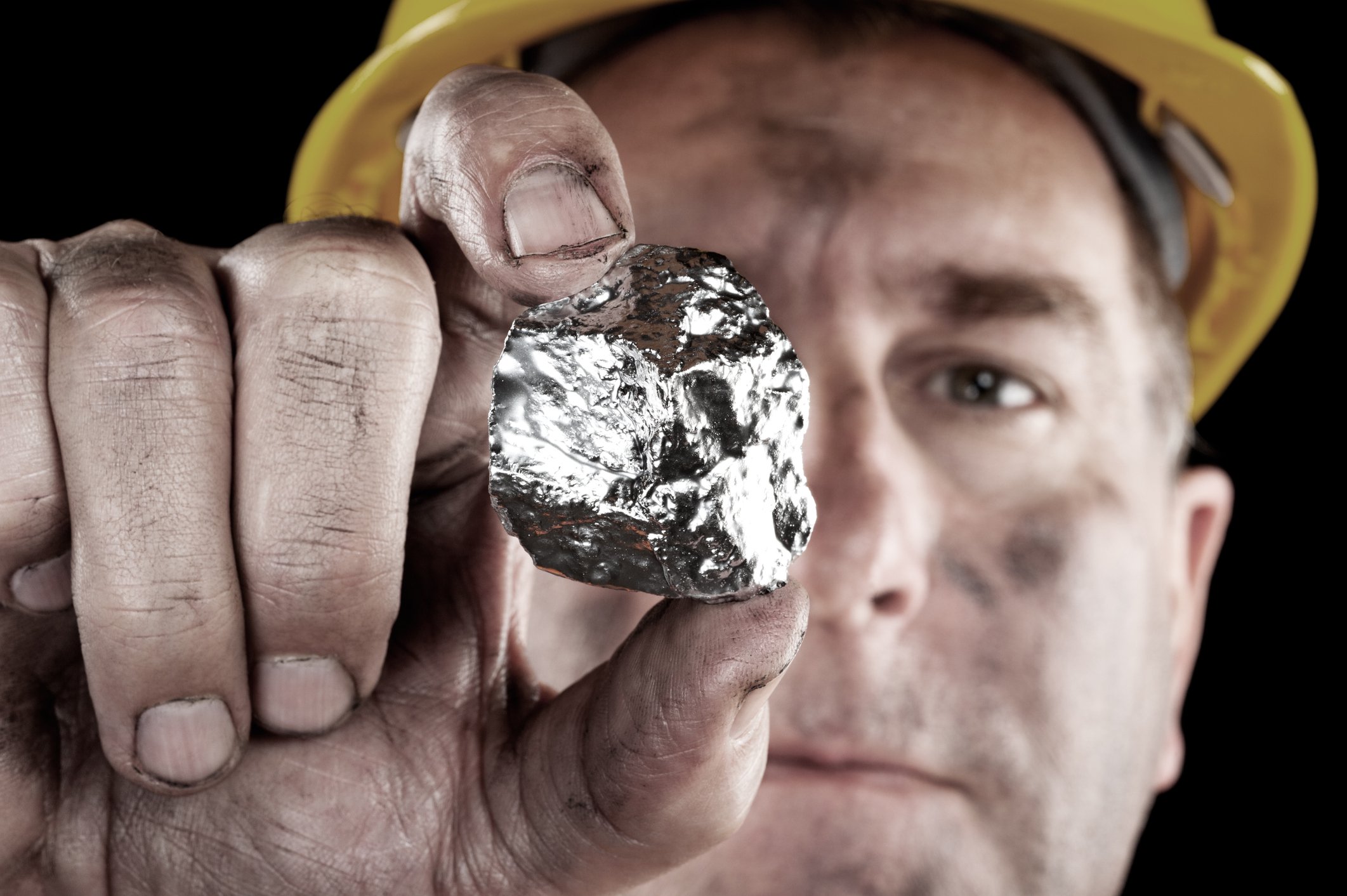
Image source: The Motley Fool.
DATE
Tuesday, May 12, 2026 at 11:30 a.m. ET
CALL PARTICIPANTS
- President and Chief Executive Officer — Keith N. Neumeyer
- Chief Financial Officer — Samir Devendra Patel
- Chief Operating Officer — David Howe
- Managing Director, Jerritt Canyon — Alexander Thompson
- Vice President, Investor Relations — Darrell Rae
- Director, First Mint — Mani Alkhafaji
TAKEAWAYS
- Silver Production -- 3.5 million ounces, representing 26% of full-year midpoint guidance, with volumes ahead of plan.
- Gold Production -- Achieved 28% of midpoint annual guidance.
- Average Realized Silver Price -- $86.35 per ounce, up from $33.10 in the prior-year quarter.
- Revenue -- $477 million, a 95% increase year over year.
- Unrealized Inventory -- 676,000 ounces of silver and 2,700 ounces of gold held in inventory, valued at $63 million, not recognized as revenue.
- Operating Cash Flow -- $311 million, or $63 per share, supported by cost controls and higher commodity prices.
- Free Cash Flow -- $224 million, calculated after a $95 million tax payment to the Mexican government for 2025 liabilities.
- Margin Expansion -- Silver margin increased to $52 per ounce from $13 per ounce year over year.
- Dividend -- Declared $0.0171 per share, the company’s highest ever, at 4x last year’s amount following a dividend policy increase from 1% to 2%.
- Cost per Ton -- $170, noted as the lowest in recent periods.
- Energy Exposure -- Diesel accounted for only 5% of total energy costs due to LNG conversions and grid reliance.
- Exploration Program -- Over 300,000 meters of planned drilling for 2026, including 42,000 meters at Jerritt Canyon.
- Santa Elena Resource Addition -- Added 90 million ounces to resources, attributed to Santo Niño and Navidad discoveries.
- Jerritt Canyon Investment -- $75 million committed for restart and pre-feasibility study, targeting production commencement in the second half of 2027.
- Key Personnel Appointments -- David Howe named Chief Operating Officer and Alexander Thompson hired as Managing Director for the Jerritt Canyon restart.
- First Mint -- Achieved record retail-driven sales in the quarter with further expansion plans under review.
- Operational Initiative at La Encantada -- Move to self-hauling with a new 12-truck fleet, expected to support higher throughput and eventual cost reductions.
- Profit Sharing Impact -- Approximated at $2 per ounce, contributing to all-in sustaining cost increases.
- Fixed Gold/Silver Price Ratio -- Set at 75:1 for the year to reduce volatility in cost calculations, noting a $3 per ounce cost increase from last year’s 90:1-91:1 ratio.
- Balance Sheet -- Cash position exceeds $1.1 billion at quarter-end.
Need a quote from a Motley Fool analyst? Email [email protected]
RISKS
- All-in sustaining cost per ounce increased due to the lower cutoff grade strategy, higher taxes tied to increased profitability, and elevated profit-sharing payments.
- Profit sharing and royalties have risen proportionally with higher silver prices, pressuring operating costs.
- Temporary operational disruptions included a 2.5-day mine stoppage at Los Gatos due to a ramp collapse, which management characterized as not material.
SUMMARY
First Majestic Silver (AG +0.72%) reported record revenue, substantial free cash flow, and notable margin expansion, attributing performance to disciplined cost management and significantly higher precious metal prices. Management announced ongoing aggressive expansion at both existing mines and development projects, including the substantial increase in resources at Santa Elena and a full-scale investment at Jerritt Canyon to resume production by 2027. Enhanced dividend policy and a strong treasury signal a strategic shift toward greater shareholder returns, while energy cost mitigation was further supported by reduced diesel exposure. The company indicated inventory retention strategy for silver and gold, with potential for positive future revenue impact if sold at higher prices.
- First Majestic Silver clarified that recent mine incident reports in Mexico related to Los Gatos were non-material, with production promptly restored following a short closure.
- Leadership changes highlighted a transition to executives with deep operational and industry expertise, expected to drive both cost discipline and project execution.
- Santa Elena and Los Gatos mine expansions proceed as planned, with operational bottlenecks addressed by external contractors and on-site investment.
- Management confirmed that bonus and labor cost structures are directly tied to metal prices, having negotiated recent union agreements smoothly while warning of cost sensitivity to continued commodity strength.
- Plans for the First Mint business include scaling operations in response to robust retail demand and price momentum in precious metals.
INDUSTRY GLOSSARY
- All-in Sustaining Cost (AISC): Comprehensive per-ounce production cost, including direct mining costs, royalties, sustaining capital, profit sharing, and general administrative expenses.
- Cutoff Grade: The minimum concentration of mineral in ore required for material to be economically mined and processed.
- Free Cash Flow: Cash generated by operations less capital expenditures, available for dividends, debt repayment, or reinvestment.
- Pre-feasibility Study (PFS): Interim technical and economic evaluation required before a full feasibility study and mine restart decision.
Full Conference Call Transcript
Samir Devendra Patel: Thank you. Before we begin today's call, I would like to remind you that we will be referring to certain non-IFRS measures making certain statements regarding First Majestic Silver and its operations that constitute forward looking statements in accordance with applicable Canadian and U. S. Securities laws. All statements that are not historical facts, such as statements regarding future estimates and plans, or expectations of future performance constitute forward looking statements. That reflect the company's current views with respect to future events. These statements are necessarily based upon a number of assumptions and estimates that while considered reasonable by the company, are inherently subject to significant business, economic, competitive, political and social uncertainties and contingencies.
We encourage you to refer to the cautionary language included in our news release that was disseminated earlier this morning and the disclosure on non IFRS measures in our most recently filed management's discussion and analysis as well as the risk factors set out in our most recently filed annual information form. As a reminder, these documents along with all of our continuous disclosure documents are available on SEDAR plus and on EDGAR. reliance on any forward looking statements made during today's call. The company does not intend or assume any obligation to update these forward looking statements or information. Other than as required by law. With that, I will turn the call back to Keith.
Keith N. Neumeyer: Okay. Thanks, Samir. A couple of things on our management changes. Steven C. Holmes has been with the company for 6 years, and he is been extremely instrumental in, positioning the company where it is today. Much of the improvements that the business has experienced over the last few years has been a result of Steven efforts. And we are sad to see him go, but at the same time, it is, time for him to retire, and we wish him the best in his future travel experiences with his wife and family.
So obviously, we will be staying in touch with Steven, but David Howe is now the new chief operating, and he brings a wealth of experience in the industry and Latin America. Held a number of key executive roles and we are really excited for him to help lead the First Majestic team to the next phase. Further description is available in today's news release. If you wish to read a little bit about his history. We are also quite pleased to announce a hiring that took place on April 20th. We were able to find a great leader for the Jarrett Canyon restart. We brought on Alexander Thompson.
And Alex is a seasoned and strategic planning executive with experience in building and operating mines all over the world. He will be a key part of the restart plan for Jerritt Canyon, which we will be excited about talking further about as developments continue. So going to Slide 3 of the presentation, which I am assuming some of you online have access to. You are just going back in time, if you go back over the last 20 years, Q1 is generally a kind of soft quarter. You get everyone coming back from holidays, and then you got to get remobilize all the contractors.
And, usually, you could lose up to 2 or 3 weeks in Q1. it is not that unusual. And we have experienced that many, many times the life of the business. But this Q1 was exceptionally good. We did not experience that same kind of dip. And we ended up, you know, producing 3.5 million ounces of silver, which is 26% of 2026 guidance, midpoint guidance. So that is pretty, pretty good at being ahead of guidance. And gold production was at 28% of midpoint guidance. So both silver and gold are above our current guidance, which is our at least midpoint guidance, which is fantastic to start the year off on such a positive note.
The average realized silver price is $86.35. Compared to $33.10 last Q1 25. Pretty impressive there. Revenues were record revenues $477 million up 95% compared to a year ago. And we did hold back some silver and gold as well, and so this was not included in revenue. We did hold back 676 thousand ounces of silver. Also 2.7 thousand ounce of gold held in inventory. At the end of the quarter, and the value of that inventory is $63 million So if we sold it, that obviously would have improved our revenue and also improved our profitability.
But we elected to hold on to it for higher prices, And we are expecting that is going to be a good strategy for us. We have we really got our eyes on margins, and you know, as the price of you know, silver goes up, costs also go up. We will address that in the next couple of slides. But 1 thing I think the analysts or the investors should really pay attention to is actually the expanding margins. Which is pretty impressive. And I have got a couple of more comments coming up on that topic. We have already been focused on efficiency and keeping our costs in check. it is really paying off.
We have had operating cash flows in Q1 of $311 million $63 a share. Our silver purity is 66%. You know, that compares to 60% in 2025. Our dividend is our largest dividend ever, 1.71 cents for shareholders of record. On May 15th. The dividend is basically 4x the size of last year's dividend. You know, with revenue doubling and us changing our policy increasing our dividend from 1% to 2% effective January 1st, 2026. has made a big impact. And so shareholders will be getting, you know, the highest dividend that they have ever received in the company's history. So would be fun to see all those checks arriving in people's mailboxes. The going on to slide 4.
So the cash cost and all in sustaining cost per ounce are aligned with plans. there is really no big surprises there. Per ounce cost, you know, increase when compared to Q1. As it shows on this slide there. The main drivers of the increase, as we have mentioned to the analysts before, it is we have changed our ratios, which has a big impact, which I will talk about shortly. But our production cost did go up a little bit mostly due to higher throughput, you know, because we have reduced the cutoff grades. Know, due to price. So, you know, we could mine a lot lower grade ore and still get the same ounces.
But it does affect your cost. Your cost to go to go up as a result of that method of mining. But it does improve life of mine as well at the same time. So it has a big benefit. And the and the revenues that we are getting, even though the grades are slightly lower, far outpaces the increase in cost, which is really nice to see. Other things I said, you know, the price ratio, that had a $3 impact, you know, if we use the same price ratios we did in 2025 at 2090-to-1, it would our all in sustaining cost would be basically $3 less than what we are showing in 2026.
But we did fix the ratio at 75-to-1 due to the volatility of silver and gold. And that 75 to 1 ratio will be held throughout the quarter or, pardon me, throughout the year. Profit sharing has also gone up, and I have got another comment later on that, but profit sharing is close to $2 an ounce. Smelting and royalties obviously go up as with silver prices going up. So you know, everyone's, you know, obviously a little bit more money, which is great to see. Important to note notice, you know, as I said about margins, the margins have increased almost 4x. So Our margins a year ago in Q1 were $13 an ounce.
Our margins in 2026 was $52 an ounce. So quite a game change. So any increase in costs that we are experiencing is easily taken with the increase in margins. Our cost per ton, you know, $170, which if you look at that chart on that slide, Slide 4, you will see that it is the lowest for a while. So that shows you quite clearly that we are having true a true impact on keeping our costs in line with our expectations. On a bit of a side note, we have got calls from analysts and others about our exposure to diesel with the happenings that are going on in The Middle East right now.
Most of you probably know that we converted 3 of our mines over to liquid natural gas over the last few years. Water reminds us on the grid. So our total exposure to diesel and cost is only 5%. So it is it is we rely on diesel very little Most of the energy is created by renewable sources. The going on to slide 5. We produced $311 million in operating cash flow from the 4 operating mines. Each of them had notable year over year improvements in profitability. Notably, La Encantada where it had a bang up quarter. La Encantada actually profited $30 million in Q1.
I do not actually remember the last time we made that much money, but it is obviously going quite well there. So it is nice to see that mine finally hitting its stride after, you know, some, you know, difficulty that it had over the last couple of years. Corporate wide, this translates into $224 million in free cash flow. Even accounting for a very large tax payment that was made in January as a result of our 2025 income taxes that just simply due to the profitability of the business The Mexican government has paid $95 million. Which obviously came out of our cash flow. So the chart shows the increase in cash flow being generated.
Operating discipline, of course, over our 4 mines is key. Cost efficiencies and obviously, the increase in silver price is, you know, having a huge impact on the business. We are very flexible for future growth, you know, the size of our treasury, over $1.1 billion obviously, pretty impressive. Our development and exploration programs are very aggressive and on track. And I have got a couple more comments later on the exploration programs. Operational expansions, both Santalena and Los Gatos is coming along quite nicely. We will all address that as well going forward.
And we just keep pushing other permits and the development of the Santalena new ore bodies which we will discuss, you know, as these topics become more relevant. And we will be discussing those via news releases in the coming months as these developments occur. So going to slide 6. Okay. So we continually have exploration success at San Dimas and Santa Elena and Los Gatos. We are expanding the Santa Elena mill We are we are expanding the Los Gatos mine development. At Los Gatos, our work is to mine 4 thousand tons a day. We have brought in a contractor to assist in getting up those levels. We are actually pretty close right now.
The mill itself can handle that. it is not it is not a bottleneck at the mill. it is always been a bottleneck at the mine, and that is what we are resolving by bringing on some assistance from a third party contractor, which seems to be working quite well. We are making good progress at Santa Elena, getting the mill expanded. As I think most of you know, we are expanding that mill to 3.5 thousand tons a day from 3.2 thousand tons a day, and we should reach that objective by age 26. Expiration is just going wonderfully. Navidad and Santanino discoveries are, you know, obviously really paying off.
We put out some numbers on those 2 ore bodies already. But we continually advance studies and work on those 2 ore bodies because we want to get them into the mill. As soon as we can. So that work is underway. And as we get more information and more timelines, associated with getting Santo Niño and Navidad up and running. We will be putting more additional news out on timelines and how that is gonna affect future production at Santa Elena. So always, you know, always looking for you know, enhancing adjustments, you know, productivity. that is always a focus not just at Santa Elena, but also in all the mines.
La Encantada, I think most of you likely know as well. We have decided about a year ago to go to self hauling. We were having challenges with contractors that were assisting in getting ore to the mill. And after the, you know, couple contractors, we decided just to do it ourselves. So we bought 12 trucks, which took almost a year to get delivered. And they are all now on-site, and they are all now operational. And I would expect you are gonna start to see cost come down a little bit as a result of that. But also, we are already noticing increased throughput at the mill. The mill can handle it. there is no problem with that.
This mill ran at 5 thousand tons a day back, you know, years ago. So it is just really the mine and we are resolving that by having this truck fleet and so on. So it is it is in early, early days, but it is looking pretty good. Going to Jerritt Canyon, you know, we are obviously very excited about the announcement of hiring Alexander Thompson as our managing director. We really needed a leader there to really get a ahold of this thing. You know, Alexander has 20 years experience, probably primarily at BHP.
But he is really taken control of this operation and he is very well liked by the team down on-site and we will be putting, a bunch of new people in place, you know, to get this operation up and running. We are investing $75 million in 2026. And filling in the talent base as I have as I have mentioned. We are preparing a feasibility study or a prefeasibility study, I should say, Hopefully, that will be out in early 27. We were prepping the underground. We have got people on-site right now underground. Prepping the area, planning on development. The plant upgrading is not quite started yet.
We are just in the order of process of ordering a bunch of different equipment. A bunch of appeals have gone out, and several more appeals will be going out over the next 2 weeks as, you know, items become obviously required or we identify items that we need And some of the items are longer needed than others, and so we are trying to get all those items necessary for the underground and the plant ordered. And in the system and, you know, get these pieces of equipment on-site as soon as possible. And we will share updates as we progress over the next year. We are still targeting for production to commence in H2 27.
And so far, we are on track. I did wanna bring something up. Because we had a false news release that went out of Mexico. It was regarding a collapse at Los Gatos. And, you know, I looked at the photograph myself, I read the article myself. And know, I do not know we actually do not even know where that mine is. It was definitely not a commercial operation It was some little hole in the side of a mountain that was probably just, you know, artisanal mining or maybe owned by a Mexican mining company or something. I have no idea. But it was definitely not a modern operation.
But we did have a small collapse, was a 10-meter section of the ramp that collapsed and we were down 2.5 days. You know, back on back on track. it is very normal. Was not material in any way at all. that is why we did not say anything about it. We did not usually see it because it was you know, things happen in mining and, you know, being down for 2 days is, you know, nothing. So we decided not to comment on it, but I know that number of analysts did phone the company asked about it and asked about that story.
I just wanted to address it on this call just so everyone's clear that everything's hunky dory, and there is no issues that remain. Just going to slide 7. So the solid balance sheet and cash flows, we are investing in our world class district scale operations. As you know, these are big, big chunky land packages, and you are increasing the mining rates of Los Gatos, you know, to you know, get that operation up to 4 thousand tons a day, as we have said already. And, you know, the plan, we wanna get this Santalina obviously, expansion completed as well. So a lot of focus is going on those 2 operations.
You will we have a very, very large exploration program. it is 266 thousand meters of exploration over the sites this year, and that does not include an additional 42 thousand meters at Jerritt Canyon, which we have just recently announced with the opening or reopening news release on Jerritt Canyon. So, you know, we are drilling over 300 thousand meters of drilling this year, which is, you know, quite a obviously, a very, very large program. So pretty exciting.
We have updated our resources and reserves in March, and I am not sure if you have seen the AIF that went out in March, but it is all there for people that want to go look at it. it is on SEDAR. It was also on our website. The Santa Elena, you know, we had a 90 million ounce increase, which is pretty amazing. That was basically due to Santo Niño and Navidad discoveries, and we continue to upgrade those assets. And I think that number is going to improve over the next year. Jerritt Canyon, with the including some of the underground, we have reaped kind of redeveloped that.
Based on the gold prices today, all those open pits that were, you know, being mined back in the eighties and nineties are not pretty well now economic. We are gonna be we have working on a plan to include the underground and open pit in the same mine plan, obviously, blending and so on. But we are now at 7.8 million ounces of gold at Jerritt Canyon. Which is, you know, pretty, pretty impressive compared to, you know, our prior disclosure a couple of years ago. Restart still scheduled, as I said, for H2. And I guess that is really about it. We will continually strengthen our cash flow, balance sheet, look for continued increase in our treasury.
Obviously, we are quite leveraged to the price of silver, as you can see in our share of volatility over the last couple of days. But that is something that we have got used to over time. So anyways, I am done with my presentation. We will now go to questions.
Operator: Thank you, Keith. We will now proceed to the Q&A session. If you are using the speakerphone, please pick up your handset before pressing any keys. If you are participating today through the webcast, you can submit question in writing by using the form in the lower section of the webcast frame on your screen. The first question comes from Heiko Ihle with H. C. Wainwright. Please go ahead.
Heiko Ihle: Hi, there. Thanks for taking my questions and congratulations to Alexander and David, who I know quite well from his time back at the Endeavor. Hey, Keith. You focused quite a bit on the margins earlier on this call. And, obviously, it is quite impressive what has been happening and what been accomplished the last few quarters. And I assume the answer is no, but do you think there comes a point when and if commodity prices keep rising or even staying at these levels where people are more so trying to get their piece, be it, you know, labor, governments, other stakeholders, Have there been any conversations? What have you seen?
I mean, you are much closer to the pulse than I am. Wayne just a bit of color.
Keith N. Neumeyer: Well, on the government, you can never predict. Right? So there is no rumors or there is no discussions that the government is gonna be changing anything. You know, you have to remember at these prices and the profitability of the Mexican miners, the government's, you know, getting a windfall. Right. You know, their tax income from mining has accelerated quite dramatically. So I am pretty sure the government's pretty happy. So I am not sure why they would wanna kill the, you know, goose or whatever. The unions, again, the same thing. You know, these union members, they are their bonuses are tied to the silver price.
So, you know, we have just gone through a couple of negotiations with the National Union, and they are very quiet, you know, quite happy, obviously. Negotiate negotiations went very smoothly. Yeah. So there is really no issues there, but they were getting paid more. So you know, the you know, our all in sustaining cost has increased as a result of you know, higher taxes and higher bonuses. So that, you know, can be expected. Other things, if we go back to last bull market 2011, when silver hit 50, we saw the Sandviks mix of the world you know, increase prices by 15% to 25%. We have not seen that.
We are we are just in the process of signing an agreement with Sandvik and you know, we are--it is looking like we are gonna get pretty reasonable pricing on this new purchase that we are putting in. We have not seen big increases in cyanide or ammonia You know, we do not rely on diesel that much. So, no, we have not really seen the inflation that maybe some would be expecting.
Heiko Ihle: Alright. Fair enough. Moving on to Jerritt Canyon. I mean, obviously, I am excited to see the site re enter production. I know we got Alexander on board now, but on a grander scale, I mean, went through your April 2nd release again this morning, and you mentioned the $75 million you spent this year. 7.5, a dozen work for us is nothing. When do you think hiring for the site should really start ramping up? I assume this is, like, second half or even fourth quarter kind of thing. And then building on all of that, once Jerritt is in full operations, I do not think you will have any issues getting workers given the proximity to talent.
What are you seeing, you know, with the labor pool because I mean, you are probably gonna take up a decent amount of the workforce in the local area now.
Keith N. Neumeyer: Well, I think all of it will come from the local area, and, maybe some of the turmoil at Newmont right now might assist. You know, hopefully, we do not know for a fact, but you know, we have a list of--pardon me, a list of positions that need to be filled. You know, it is very extensive, and detailed. And, you know, I think I do not have the exact number in front of me, but we have hired a handful of people just in the last couple weeks, for key management positions, and we are looking to hire, you know, several more people over the next week or 2.
And then at that point, we will start going down into the business deeper. And targeting more labor intensive type individuals. And we should be, you know, well manned you know, by fall. And then, you know, have to, you know, look at adding the underground workforce and so on in the early part of, you know, 2027. But do not forget, Jerritt is only 45 minutes away from town, Elko. And so it is a close it is the closest mine. To Elko. So if you are know, rather than having to drive to 1 of the other neighboring mines, it will take you an 1.5 hours both ways.
You know, you are on the road for 3 hours a day. You know, working at Jerritt, you are only on the road for 1.5 hours on a day. So it is a big, big difference, and it is a it is a well known site. And I think the community at Alcoa is pretty excited about it. And, you know, we are getting approached by people regularly know, to, you know, come on come on as employees.
Heiko Ihle: Yeah. And as someone who is been on the ground, Jerritt Canyon site is just gargantuan. it is huge. So anyways, on that note, I will get back in queue. Thank you very much.
Keith N. Neumeyer: Okay. Thanks, Heiko.
Operator: Once again, if you have a question, please press *1. The next question comes from Eric Windmill with Scotiabank. Please go ahead.
Analyst (Eric): Hi, Keith and team. Thanks for taking my question. Just continuing on Jerritt Canyon. So in addition to the hiring plans, any other critical path items or milestones beyond the PFS we should be looking for throughout this year and the next year?
Keith N. Neumeyer: Well, the 2 most critical things is the oxygen plant. And the underground fleet. So we are working right now on defining all of that. And defining costs and defining time lines, And then--it is still a little bit early, but you know, we will be putting an order in for some of the underground fleet in the next couple of weeks which will have, you know, 10 to 12-month lead times. We are just working with a group on the auction implant right now. And I cannot really give you a whole bunch of details because it is just kind of a moving you know, moving thing.
But, you know, once we know more, we will be putting more information out to the market.
Analyst (Eric): Okay, thank you. Appreciate that. Just some of the other expansions you are working on Los Gatos or Santa Elena, any critical items there we should be keeping an eye on?
Keith N. Neumeyer: No. No. Just time and money. there is nothing critical.
Analyst (Eric): Okay. Appreciate that. Just 1 more for me, if you do not mind. In terms of M&A, what are you guiding to the market? Are you happy with the size of portfolio or any change you want to make or assets you would like to look to add down the road?
Keith N. Neumeyer: Well, we are always looking for ways to grow. You know, I cannot talk too much about it. But, yeah, look. We have a you know, our group, you know, continually scours the planet and looking for good silver projects, and they are, you know, a kind of rare animal, and they are hard to find. And but we continue to look.
Analyst (Eric): Okay. I appreciate that. I will hop back in the queue, but thanks very much for the detail.
Keith N. Neumeyer: Cheers. Okay. You too. Thanks.
Operator: I will now pass the floor over to mister Darrell Rae, investor relations at First Majestic Silver to take us through questions submitted through the webcast.
Darrell Rae: Okay. Thanks, Ashiya. Yes, just a few here. 1 is just getting a general First Mint update, I see there are a few questions in here. What percentage of your total revenue came from First Mint business? And just talk about the first quarter.
Keith N. Neumeyer: Yeah. I am gonna pass this question over to Mani. Yeah.
Mani Alkhafaji: Thanks, Keith. Yeah. The Mint continues to operate quite nicely. Q1 was another record for us. it is it is very retail driven. So obviously, when we see the metal prices are running up, the orders are coming in nicely. So we had a nice uptick throughout the quarter, which was great to see. Operationally, it is going quite well. We were staffed quite nicely. And we do have plans for further expansion. We will be pulling the trigger on this in due course. But all in all, it is going you know, nicely in building on the momentum that we have from last year.
Darrell Rae: Okay. And the last 1 we have from the queue is just picking up on Keith's, your, comments and elaborating on the strategy about the lower cutoff grade and that seemingly increasing mine life. Just a little clarification question.
Keith N. Neumeyer: Yeah. You know, I would maybe use 20%. Should talk to our QP before I throw that number out, but that is kinda my guess. Is, yeah, my life does increase as a result of the lower cutoff grade. You know, we are--we, you know, historically well, previously, I should say, you know, you are in a underground, and you are mining 3, 4 meters of rock. And, you know, you are leaving behind you know, the low grade material on the walls of that tunnel, because it is deemed uneconomic, so you just leave it behind. And that is just common mining practice. Today, you know, we can widen those mining stopes, you know, by a couple of meters.
And still, you know, and pull all this rock out. And still make money even though the grade is lower. So, yes, it does. So you are mining slower or you are advancing slower, and you are mining wider. So that has an impact on your life of mine, and it is a obviously a positive impact.
Darrell Rae: And that is it from the webcast, Ashiya.
Operator: This concludes the question and answer session. I would like to turn the conference back over to Keith for any closing remarks. Please go ahead.
Keith N. Neumeyer: Yes. I think I covered everything. Obviously, impressive quarter. Q2 is looking pretty darn good as well. So we hope to have another great quarter. Back to back, but we will have much more things to talk about as we advance through this year. it is an exciting year with a large capital expenditure, you know, going into exploration and development and mill and mine expansion. So we are pretty excited about what we are seeing in the company. And also with metal prices, you know, the way they are today. Assuming they stay at these levels, you know, it is just gonna be a bang up record year again.
And I just want to-- Mani, is there anything that you would like to add before we go?
Mani Alkhafaji: No. Just be on the lookout for more updates throughout the year, but lot of exciting stuff.
Keith N. Neumeyer: Okay. Well, very good. Well, thanks, everyone, for joining us.
Operator: This brings to a close today's conference call. You may disconnect your lines. Thank you for participating and have a pleasant day.