Image source: The Motley Fool.
DATE
Thursday, July 30, 2026 at 12:00 p.m. ET
CALL PARTICIPANTS
- Director of Investor Relations - Ryan Vossler
- President and Chief Executive Officer - David P. Bauer
- Treasurer and Chief Financial Officer - Timothy J. Silverstein
- President of Seneca Resources and National Fuel Midstream - Justin Loweth
TAKEAWAYS
- Adjusted EPS -- **National Fuel Gas Company** (NFG +1.33%) reported adjusted earnings per share of $1.54, which represented a decrease from $1.64 per share in the prior-year period.
- Operating Revenues -- $537.5 million, representing a 1.1% increase from $531.8 million in the previous year's third quarter.
- Natural Gas Production -- 104.3 Bcf, a 7% decrease from the prior-year quarter due to natural declines from existing wells offsetting new turn-in-line production.
- Fiscal 2026 Adjusted EPS Guidance -- $7.40 to $7.60, revised from the previous range of $7.45 to $7.75 per share to reflect third-quarter results and production timing.
- Annual Production Guidance -- 420 Bcf to 430 Bcfe, reflecting the combined impact of appraisal activities and well interactions related to intensive completion design testing.
- Long-Term EPS Growth Target -- 7% to 10% per year on average through fiscal 2029, assuming the current forward curve for natural gas prices.
- Free Cash Flow Outlook -- $1 billion to $1.5 billion in total generation projected over the next three years, intended for debt reduction and strategic investments.
- Dividend Rate -- $2.22 per share annually, following a 4% increase approved by the Board of Directors in June.
- Line N System Upgrade -- 294,000 dekatherms per day of capacity, an expansion of 200,000 dekatherms per day from the previous project scope to support power generation.
- Shippingport Power Station Contract -- 400,000 dekatherms per day now contracted for the site to support coal-to-gas conversion and behind-the-meter generation.
- Acquisition Financing -- $1.5 billion across three multitranche notes with a weighted average interest rate of approximately 5% to fund the Ohio utility transaction.
- Discretionary Land Spending -- $100 million to $200 million planned over the next two years to expand core inventory depth in Tioga County.
- Realized Natural Gas Price -- $2.81 per Mcf, a 4% increase year over year after the impact of hedging and tighter basis differentials.
- Seneca Resources Capital Expenditures -- $580 million to $605 million for fiscal 2026, a 2% increase at the midpoint due to higher diesel and oil prices.
- Pipeline and Storage Capital Expenditures -- $235 million to $265 million, reflecting accelerated execution of modernization and expansion projects.
- Ohio Utility Financing Note -- $1.2 billion promissory note at a 6.5% coupon to be entered with CenterPoint at the closing of the acquisition.
- DD&A Expense per Unit -- $0.80 per Mcf, an increase from $0.71 per Mcf in the prior year following the normalization of rates after previous impairments.
- Longest Lateral Wells -- four wells drilled featuring treatable laterals of 18,000 to 20,000 feet and measured depths exceeding 30,000 feet.
- Production Exit Rate -- 14 wells scheduled to come online in the fourth quarter to support record daily production rates by the end of fiscal 2026.
- Lease Operating Expense -- $0.15 per Mcf, compared to $0.11 per Mcf in the prior year, driven by higher third-party gathering costs.
- Gathering O&M Expense -- $0.13 per Mcf, compared to an adjusted $0.11 per Mcf in the third quarter of fiscal 2025.
- Best-of-Class Rock EUR -- 3 Bcf per 1,000 foot of lateral, a productivity level the company expects to reach using Gen 4 completion designs in high-quality acreage.
Need a quote from a Motley Fool analyst? Email [email protected]
RISKS
- Loweth stated, "As part of our Gen 4 testing, we have observed frac interactions between offset Lower Utica wells that were greater than anticipated," noting that these interactions impacted near-term production volumes.
- Bauer stated, "Unfortunately, however, there's been some recent political pressure that has made it difficult to find common ground with all the parties involved," regarding settlement discussions for the Pennsylvania utility rate case.
SUMMARY
Management identified the pending Ohio utility acquisition as a primary driver for rebalancing the company's business mix and strengthening its credit profile. The company reported that regulated growth is being supported by infrastructure expansions and rate case activities across New York and Pennsylvania. In the integrated upstream segment, management is focusing on capital efficiency through well design optimization and lateral length extension in the Tioga County region. The company stated that it will utilize free cash flow for deleveraging to restore financial flexibility following the acquisition.
- Loweth stated that the company is "not seeing communication between the Upper and Lower Utica wells," which confirms the seismic rock serves as an effective fracture barrier for co-development.
- Bauer noted that gas demand at the Shippingport site has the potential to "nearly double" over time, with the company positioned to support this growth through future expansion projects.
- Management reported it is seeking a new system modernization tracker in New York to maintain returns on investment without requiring general customer rate increases.
- Silverstein indicated that the company targets a long-term leverage ratio of 2 to 2.25 to maintain strategic flexibility for future capital allocation.
- Loweth attributed the projected fourth-quarter record production rates to the scheduling of turn-in-lines for 14 new wells across the Utica and Marcellus formations.
- The company reported that its $1.5 billion debt issuance in June satisfied all financing requirements for the closing of the Ohio utility acquisition.
- Bauer indicated that despite political pressures in the Pennsylvania rate case, the company expects a recommended decision from the ALJ in August and new base rates to take effect in November.
INDUSTRY GLOSSARY
- Bcf: Billion cubic feet, a unit of measurement for natural gas volume.
- Bcfe: Billion cubic feet equivalent, a unit that converts various energy sources into a single gas-equivalent volume.
- Dekatherm: A unit of heating value equivalent to 10 therms or 1 million British thermal units.
- DIS Mechanism: Distribution System Improvement Charge, a regulatory tool allowing utilities to recover costs for infrastructure improvements between formal rate cases.
- EUR: Estimated Ultimate Recovery, an approximation of the quantity of oil or gas that is potentially recoverable or has already been recovered from a well.
- Line N: An interstate natural gas transmission system upgrade project located in Pennsylvania.
- Mcf: One thousand cubic feet, a standard unit for measuring natural gas.
- PJM Interconnection: A regional transmission organization that coordinates the movement of wholesale electricity in all or parts of 13 states and the District of Columbia.
- Utica: A geologic formation of sedimentary rock containing significant reserves of natural gas.
Full Conference Call Transcript
Operator: Hello, everyone. Thank you for joining us, and welcome to the National Fuel Gas Company Third Quarter Fiscal 2026 Earnings Call. [Operator Instructions] I will now hand the conference over to Ryan Vossler, Director of Investor Relations. Please go ahead.
Ryan Vossler: Thank you, and good morning. Apologies, we had temporary moderator challenges. So we appreciate you joining us on today's conference call for a discussion of last evening's earnings release. With us on the call from National Fuel Gas Company are Dave Bauer, President and Chief Executive Officer; Tim Silverstein, Treasurer and Chief Financial Officer; and Justin Loweth, President of Seneca Resources and National Fuel Midstream. At the end of today's prepared remarks, we will open the discussion to questions. The third quarter fiscal 2026 earnings release and July investor presentation have been posted on our Investor Relations website. We may refer to these materials during today's call. We would like to remind you that today's teleconference will contain forward-looking statements.
While National Fuel's expectations, beliefs and projections are made in good faith and are believed to have a reasonable basis, actual results may differ materially. These statements speak only as of the date on which they are made, and you may refer to last evening's earnings release for a listing of certain specific risk factors. With that, I'll turn it over to Dave Bauer.
David Bauer: Thank you, Ryan, and good morning, everyone. Before I get to the update on our business, I'd like to welcome Ryan Vossler to our IR team. He's part of our corporate strategy group and is pinch-hitting in the Investor Relations role for a few quarters while Natalie is on maternity leave. And on that note, congrats to Natalie on the new addition. We wish them well. Moving to results for the quarter. Last night, we reported adjusted earnings per share of $1.54, which was generally in line with our expectations. Tim and Justin will have more on the quarterly results and the outlook for the remainder of the fiscal year later in the call.
I'll focus on the strong long-term outlook for National Fuel and the significant opportunities we see across our businesses to continue driving long-term shareholder value. At the regulated businesses, increasing demand for natural gas is driving further interest and expansions on our interstate pipeline systems. We're also nearing the finish line with respect to the closing of our acquisition of CenterPoint's Ohio Gas utilities. These growth catalysts, combined with the pending rate-making activities in our various jurisdictions, make the outlook for the regulated businesses outstanding. On the Integrated Upstream and Gathering side, the future looks equally promising.
We control a significant acreage position in Tioga County, which is one of the few remaining premier natural gas resources in the country with significant undeveloped acreage. We expect the discretionary leasing program we announced last night will further bolster our footprint in the area, increase development plan optionality and add additional core locations to our nearly 20-year runway of existing low-breakeven inventory. This advantaged acreage position, along with our history of delivering significant capital efficiency improvements across our fully integrated operations, makes us excited about the future of IUG. With this strong foundation for growth across the company, we've updated our long-term outlook.
Assuming the current forward curve for natural gas prices, we now expect earnings per share to grow between 7% and 10% per year on average through fiscal '29. More importantly, we expect to achieve this level of growth while also generating between $1 billion and $1.5 billion of free cash flow over the same period. This combination of significant earnings growth and free cash flow generation is a highly compelling value proposition, one that few energy companies can match. While top-tier utilities are seeing similar growth, most need to raise a substantial amount of equity to underwrite it. National Fuel is unique in that we can produce meaningful earnings growth with internally generated cash flows.
With respect to our upstream operations, our industry-leading cost structure, high-quality marketing portfolio and commitment to hedging through commodity price cycles have allowed us to sustain strong cash flow margins relative to peers. These strong margins, along with our improving trend in capital efficiency, makes us confident in our ability to grow both per share earnings and free cash flow. Our confidence in the company's outlook is supported by the tangible results we've seen across the system. First, as we announced last night, we've expanded the size of our Line N system Upgrade Project by 200,000 dekatherms per day.
In total, the revised project, which has a target in-service date of November 2028, will now add 294,000 dekatherms of capacity on the Supply Corporation system. The incremental capacity is contracted for 20 years and will support the initial phase of the coal-to-gas conversion at the Shippingport Power Station. We now have more than 400,000 dekatherms per day contracted to the Shippingport site, supporting both behind-the-meter power generation as well as power generation into the PJM interconnection. Over time, gas demand at this site has the potential to nearly double, and we are well positioned to support that growth through future expansion projects.
In addition to Shippingport, we're continuing to see interest in further expansions of our Line N system in Southwest Pennsylvania. This includes substantial demand for capacity to support both data center and power generation facilities. We continue to engage in discussions with developers to evaluate and advance these projects and hope to have further projects to announce. We're also active on the rate-making front with rate cases at both our Pennsylvania utility and Supply Corporation. Starting with supply. We're in the early stages of the rate case we filed in the second calendar quarter with typical discovery processes underway.
Settlement discussions should begin in September, and I expect to have more to say on this in the fall as we work towards resolution with FERC and our shippers. Turning to Pennsylvania. We continue to progress through the utility rate case we filed earlier this year. We have the lowest delivery rates in the state by a wide margin and both our short- and long-term historical rate increases have been well below the overall rate of inflation. On top of that, the increase we're requesting is quite modest. So our initial expectation was that it would be straightforward to reach a settlement.
Unfortunately, however, there's been some recent political pressure that has made it difficult to find common ground with all the parties involved. As a result, the case has been fully briefed, and we expect a recommended decision from the ALJ next month. We remain optimistic that with our long-standing focus on limiting consumer rate increases, the commission will reach an outcome that balances our need to further invest in system safety and reliability with customer affordability. New base rates are expected to take effect in November, and the reset of our DIS mechanism should provide additional incremental revenues beginning in fiscal '28. In New York, we're entering the final year of our 3-year rate plan.
We've been working with the commission staff to develop a new system modernization tracker that we believe can keep us out of a rate case for the next year or 2. We filed a petition with the commission in May for a mechanism that, like prior iterations, would allow us to continue to earn a return on our modernization investments in a more real-time fashion. More importantly, we expect to accomplish this without increasing customer rates, which is a real win-win. We anticipate a commission order later in the summer. We've also seen great progress on our pending Ohio utility acquisition. In June, we received an order from the Ohio Commission approving the acquisition.
Also, our $1.5 billion long-term debt issuance in June completes our financing needs for the closing of the transaction. Our teams are working closely with CenterPoint to successfully integrate the business into National Fuel, and we remain on track to close in the calendar fourth quarter. Bringing it all together, we're excited about the outlook for our company. Each of our businesses is positioned to deliver meaningful growth in earnings and free cash flow. In addition, our utility acquisition will rebalance our business mix and further strengthen our investment-grade credit profile. The enviable combination of growing earnings, enhanced free cash flow generation and a strong credit profile makes National Fuel very well positioned to deliver long-term value to shareholders.
With that, I'll turn the call over to Tim.
Timothy Silverstein: Thanks, Dave, and good morning, everyone. Adjusted earnings for the quarter of $1.54 per share were down $0.10 compared to the prior year. This resulted from lower production in our Integrated Upstream and Gathering business that more than offset stronger natural gas price realizations and hedge gains. At our regulated businesses, we continue to see top-line margin growth resulting from our multiyear rate plan in New York and revenue associated with the DIS mechanism in Pennsylvania. These benefits for the quarter were largely offset by higher operating costs compared to last year, driven by general inflation and 2 discrete items.
First, if you recall in fiscal 2025, we had a sizable benefit related to our bad debt tracker in New York. Last year, we started accelerating write-offs as part of our rate settlement. With the bad debt tracker in place, we were able to reverse previously accrued expense, which will be recovered in a future rate proceeding. This led to a benefit that did not recur this year. Second, in Pennsylvania, we are seeing the impact of a new labor agreement with our field operations employees. This increase was included in our Pennsylvania rate case, so we'd expect minimal regulatory lag on recovering the associated costs. These items were anticipated and included in our prior guidance assumptions.
Sticking with the fiscal year outlook, we are revising our 2026 adjusted EPS guidance to a range of $7.40 to $7.60 per share. This range primarily reflects our updated Seneca production outlook for the year, which we now project to be between 420 and 430 Bcfe. Our NYMEX natural gas assumption remains unchanged at $3 per MMBtu. We are well hedged for the balance of the fiscal year with price certainty on 75% of our production at prices well above the current strip. Turning to the framework for fiscal 2027. There's strong momentum across the company, most notably the continued growth of our regulated businesses, the Ohio gas utility acquisition and ongoing efficiency gains at Seneca.
In the regulated businesses, we expect to have nearly $30 million of additional expansion revenue related to the Tioga Pathway Project and Shippingport lateral projects. Capital will come back down to more historic levels as these expansion projects are placed in service in November. We also anticipate seeing the impact of our pending rate proceedings in both Supply Corp and the utility Pennsylvania jurisdiction, with both expected to conclude during the calendar fourth quarter. In addition, with our ongoing multiyear rate plan in New York and the impact of the Ohio utility acquisition, we are expecting a material step-up in earnings from our regulated businesses. With respect to the Ohio gas utility acquisition, we continue to progress toward closing.
We are targeting an October 1 closing date and are currently working diligently with CenterPoint to finalize the transition plan and related services, which we expect to complete in the coming weeks. That is a key piece of formalizing our fiscal 2027 guidance, which we plan to provide next quarter. In the Integrated Upstream and Gathering segment, we have a track record of capital efficiency improvements, which we expect to continue over the next several years. We see strong momentum on our development program that is projected to deliver further production growth with lower long-term capital spending. On natural gas pricing, current forward curve implies a more moderate price environment next year.
The strong hedge book provides meaningful protection, although we do expect realized pricing to be lower than fiscal 2026 levels. We also expect cash unit costs to move modestly higher with inflation, while per unit DD&A continues to normalize towards our expected long-term rate in the low to mid-$0.80 area. Our current DD&A rate was temporarily lowered as a result of the ceiling test impairments recorded in fiscal 2025. Lastly, we will see the full impact of the capital markets activity completed during this fiscal year. As part of financing our acquisition, we issued 4.4 million shares of common equity and an incremental $1.2 billion of long-term debt.
Combined with the impact of the $1.2 billion promissory note we will enter into with CenterPoint at closing, which carries a 6.5% coupon, the full-year impact of this financing will increase interest costs and the weighted average share count next year. I want to touch a bit more on the financing we completed in June, which was the largest debt capital raise in our company's history. This multi-tranche transaction satisfied the financing need for closing the Ohio utility acquisition. We raised a total of $1.5 billion across 3 equal tranches, including 3-, 5- and 10-year tenors with a weighted average interest rate of a little over 5%.
We were very pleased with the transaction as we saw great demand for our bonds, which led to strong execution. Utilizing a portion of the proceeds, we redeemed a $300 million note that was set to mature in October, leading us to the incremental $1.2 billion of long-term debt that will be used to fund the acquisition at closing. From a balance sheet perspective, the current commodity price outlook is expected to place some near-term pressure on credit metrics, but our longer-term deleveraging trajectory remains intact. We maintain an active dialogue with the rating agencies, and they remain very constructive on our credit rating with our key metrics well within investment-grade thresholds.
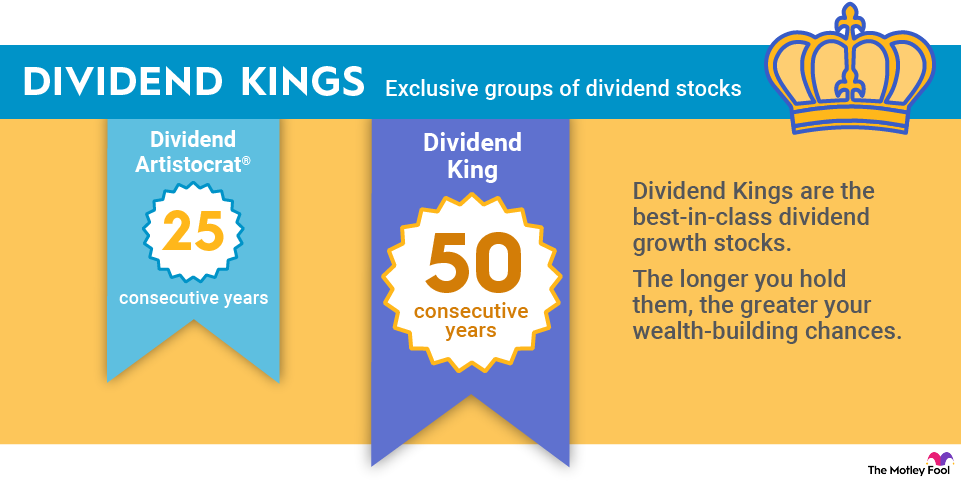
Given our strong outlook and solid financial footing, we continued our commitment to returning cash to shareholders. In June, our Board approved the 56th consecutive increase to our dividend. This also continued our streak of paying a dividend for 124 straight years. This is a track record matched by very few companies and something we believe can continue for many years to come. We truly are excited about the future. Backdrop for our industry is strong with demand for natural gas increasing, particularly in our own backyard. This is creating opportunities for growth across the company.
We are also nearing the closing of our transformational Ohio gas utility acquisition that will double our utility rate base and significantly rebalance our overall business mix. Combining this with growing free cash flow generation, our prudent approach to managing the balance sheet and our commitment to returning cash to shareholders, we see a clear path to significant value creation over the coming years. With that, I'll turn the call over to Justin.
Justin Loweth: Thanks, Tim, and good morning, everyone. Our Integrated Upstream and Gathering business delivered production and throughput of 104 Bcf and 117 Bcf during the quarter, respectively. While the quarter did not fully meet our expectations, it was an important period of progress across our development program. We believe we have one of the highest quality acreage positions in Appalachia. And one of the benefits of that is the ability to continuously refine and optimize our development program. As we test, learn and adapt, our conviction in the quality of our resource, depth of inventory and long-term opportunity only continues to strengthen.
Earlier this year, we brought online our first Upper and Lower Utica co-development pad, an important milestone in optimizing development across multiple horizons. We generated valuable insights regarding reservoir quality, landing strategy, completion design and development sequencing that are already being incorporated into future plans. Most importantly, we are not seeing communication between the Upper and Lower Utica wells, providing another positive data point that the seismic is a highly effective frac barrier between the horizons. While the Upper Utica wells on the pad performed modestly below our original expectations, the results improved our understanding of how development should be tailored across the acreage position.
This test reinforces our confidence in the ability to co-develop both zones across our Tioga acreage position and maximize the long-term value of our Integrated Upstream and Gathering business. As our understanding continues to evolve, our long-term plans are increasingly oriented around the Lower Utica first development program, which we believe provides the best pathway to optimize value over time. We are also refining our view of the Gen 4 Lower Utica completion design, which appears best suited for our highest quality rock where EURs may approach 3 Bcf per 1,000 foot, while the Gen 3 design may remain optimal in other areas.
We will continue evaluating that approach with an Upper and Lower Utica co-development test at our taft pad, where all Lower Utica wells utilize a Gen 4 design in what we believe is an area with favorable rock quality. As part of our Gen 4 testing, we have observed frac interactions between offset Lower Utica wells that were greater than anticipated. As we test increasingly intensive completion designs, we continue to learn more about fracture behavior and development sequencing. While these interactions impacted near-term production, they also provided information that will improve future development plans, including adjustments to offset well stage design.
Finally, the quarter also included an important operational milestone as our team successfully drilled a 4-well Lower Utica pad featuring the longest laterals in company history. Each well exceeds 30,000 feet of measured depth and approximately 18,000 to 20,000 feet of treatable lateral, highlighting our capability to drill longer wells, which in turn can drive continued capital efficiency improvements. Located in what we believe is excellent rock quality, we expect these wells to be among the most productive in our portfolio with the potential to sustain production rates approaching 40 million cubic feet per day per well for an extended period.
We expect to bring these wells online in early 2027 and look forward to sharing the results as we continue evaluating the full potential of the Lower Utica. Over the balance of the fiscal year, we have a significant amount of drill activity planned. We are just starting to flow back the first set of wells on our 8-well Taft Utica pad. And in about a month, we expect to begin flowback on a 6-well Marcellus pad in Lycoming County. With 14 wells forecasted to come online during the fourth quarter, we expect to exit fiscal '26 at record daily production rates.
Given the timing of these turn-in-lines, combined with the production impacts associated with some of the appraisal tests conducted throughout the year, we expect full year production to be between 420 Bcf and 430 Bcf. Stepping back, the common theme across these items is continuous improvement. The insights gained this quarter reinforce our confidence in the Tioga position and our ability to deliver sustained capital efficiency gains over time. While production growth remains an important outcome, we increasingly view capital efficiency as the best measure of long-term value creation. Put simply, our North Star is to generate more production per dollar of capital invested each year.
Our ongoing well design testing between Gen 3 and Gen 4 is a good example of this philosophy, where we will continually optimize well design to drive overall program economics as opposed to biasing one side of the equation or the other. As reflected in our investor materials, we see a clear path to continued capital efficiency improvements, which we believe we can achieve through additional development optimization, improved well performance and our ongoing ability to leverage significant gathering infrastructure. Another strong signal of the value of our Tioga position can be seen in today's leasing market. Across Appalachia, operators have increasingly shifted toward organic inventory expansion.
And we've recently seen increased leasing activity in Tioga County, where Seneca already holds a significant position. Based on the quality of our acreage in this area, we recognized this possibility several years ago and set in motion a plan to move quickly to secure additional acreage at the right time. We are well ahead of competitors through title work, landowner engagement and other long-lead-time efforts that allow us to move decisively as opportunities emerge. With our increased leasing efforts, we want to be more transparent about our approach and are now separating land spending between maintenance and discretionary categories.
Given our success to date, only modest maintenance spending, about $15 million per year is required to support our 5-year development plan. The discretionary component represents a strategic investment to protect and expand what we believe is one of the premier natural gas inventory positions in North America. Over the next several years, we see an opportunity to deploy approximately $100 million to $200 million of discretionary capital to secure additional core acreage and further bolster our position in Tioga County. This strategy extends inventory runway, enhances development optionality and supports sustainable growth beyond our current planning horizon.
As competitors increasingly recognize the value of this resource, we believe our early actions have positioned us exceptionally well to capture this opportunity. The remainder of our capital program remains largely on track, although we're modestly increasing our guidance at the midpoint, driven primarily by higher diesel and oil prices as well as schedule changes. In closing, the outlook for our Integrated Upstream and Gathering business is grounded in a simple belief. Great assets get even more valuable when they are continuously improved. Since 2023, we've consistently improved well performance, enhanced capital efficiency, secured premium firm transportation contracts and strengthen the long-term value of our inventory position.
We believe that progress will continue in the years ahead as we optimize development, leverage our gathering infrastructure and further improve free cash flow generation. At the same time, the natural gas macro outlook remains very constructive over the long term with growing LNG exports and rising power generation demand, providing durable support for long term natural gas prices, while increasing local demand across Appalachia should contribute to improving basis differentials. When combined with the quality of our asset base and our continued focus on capital efficiency, we believe we are exceptionally well positioned to deliver long term value for shareholders. With that, I'll turn it back to the operator to open the line for questions.
Operator: [Operator Instructions] Your first question comes from Tim Rezvan with KeyBanc Capital Markets.
Timothy Rezvan: My first one, maybe for Justin. I appreciate the kind of the review of sort of the ops, I guess, challenges and opportunities that you faced last quarter. Can you talk a little more about the well interaction issue? Was this a pad that was spaced too tightly given the Gen 4 fracs? Was it interference with offset wells? And just kind of -- I know it's early and you don't drill a lot of wells every year, but how is this sort of changing your bigger picture ideas on development?
Justin Loweth: Yes, Tim, thanks for your question. So from a holistic development, this is noise, not substance. The reality is we're early in the innings in terms of these significantly basically 50% upsized completions intensity jobs. And while historically, ourselves and other operators, you will see some interactions, we just saw it a little bit more than we would have expected. I guess a few things I want to make sure are very clear. One is these interactions were lower to lower. We're not seeing any interaction between uppers and lowers. So I think that's an important thing to know.
I think the other thing that's becoming increasingly clear is that the effectiveness of this seismic barrier is pretty absolute, and that's also concentrating that Lower Utica energy within that zone, which can increase and grow your kind of half-length on the frac and ultimately what you're doing. So -- within the pad we're completing, we don't see sort of any interaction. We're zipper-fracking these wells, generally speaking. Any interaction there would actually be very positive. So it would just be principally related to offset wells. And look, our team is focused on it. We're already implementing practices that we believe will dampen further impacts as we go forward, but something we're going to continue to watch like everything.
I mean at the end of the day, we want to really optimize our plans. We want to really dial in the right completion design. We want to focus on what's going to drive -- as I mentioned, what's going to drive the highest capital efficiency metrics we can over time. And that's going to -- that's all playing into how we think about the future.
Timothy Rezvan: Okay. I appreciate the details there. And then as my follow-up, maybe this is for Tim. CenterPoint closing and it looks like just about 2 months. We see the new kind of leverage profile as the cash goes out the door. How do you think about capital allocation in terms of repurchases maybe when you kind of get past this? We've seen, obviously, a lot of the natural gas-related companies have sort of underperformed a bit this year. Given where the stock is today, how compelling is the repurchase opportunity maybe into this winter and next year?
Timothy Silverstein: Yes, it's a fair question. I think our focus in the near-term will be around using the free cash flow to deleverage. As we've talked about in the past, our balance sheet will be in very good shape even after the closing of the transaction. But I think it's very important to rebuild the flexibility that we had going into this acquisition to allow us to be really strategic about long term capital allocation.
But that being said, we do expect the amount of cash that Seneca is generating over time to get our metrics back to a really acceptable level pretty efficiently, which really opens the toolkit up for strategic opportunities, returning cash to shareholders through buybacks or other avenues. So I wouldn't expect anything in the near term. But as we look out into the future, certainly have flexibility to consider all tools in the toolkit, so to speak.
Timothy Rezvan: Okay. Just to clarify, what do you view as sort of an appropriate leverage metric that you're looking to get to?
Timothy Silverstein: Yes. I think longer term, we'd like to get back into the low 2s, 2 to 2.25 area. I think with our business mix, that gives us a lot of flexibility. And we think we can get there within the first few years. And once we get on that trajectory, I think that really opens up the aperture of things to consider from a capital allocation standpoint.
Operator: Your next question comes from Neil Mehta with Goldman Sachs & Co.
Neil Mehta: Yes. I really appreciate all the color. And Justin, I just wanted to circle up on this Gen 4 stuff. And so it sounds like your perspective is some of the wobbliness of some of the recent results is more timing and noise than anything structural. But can you just unpack it for us in a little bit more detail to give people more conviction?
Justin Loweth: Yes. Thanks, Neil. I appreciate the question and the opportunity to talk about that more. Look, I've tried to speak to this over the last couple of calls and in some of our investor engagements. But what we're really optimizing for between Gen 3 and Gen 4 is something we talk with the team about is kind of bang for your buck. And so ultimately, what I mean when I say that is, is a more intensive and more -- a little bit more expensive completion, are you going to see enhanced productivity in a level to where it makes economic sense. And that's like point-blank kind of how we really focus on it.
I think increasingly, what we're starting to see as we do more of these Gen 4 tests and we look at the results and we compare that back to our multivariate models and subsurface models to really understand how we see it. What we're seeing is that we've got good rock and we've got great rock across our broader portfolio. When we pump these larger jobs on our good rock, we're not seeing enough of an uplift to necessarily justify it in terms of what the ultimate productivity is. Conversely, when we're pumping it on our best of the best rock, it's supercharging it.
And so I think what we're doing is just kind of learning as we go as we try to optimize what is the right design for this. And then this will play into kind of how we think about uppers long term, too, where there's increasing opportunity there to think about what the optimal completion design. But for now, focused on lowers. We think it's probably going to be a mix of Gen 3 and Gen 4. We may have a new Gen at some point that kind of blends the 2 or moves it around. And we're getting more dialed into where across our large acreage position, we think it makes most sense to utilize different designs.
Hopefully, that's helpful, Neil, but that's the color I can share with you.
Neil Mehta: It's fun to get into some of the details there. That's very helpful. And then the follow-up is Slide 6, you got this new adjusted EPS target of 7% to 10% through 2029. And so you guys have been around for a long time. That's a pretty big growth rate for a mature company. So just talk about what gets you to the top end of the range, what gets you to the bottom end of the range? And what's your conviction around this new disclosure?
Timothy Silverstein: Yes, Neil, I can take that. From a conviction standpoint, we have a lot of it. We've historically been more conservative on our long term outlook and not putting out a ton of detail around it, but I think this shows the confidence that we have in our assets. This -- at the midpoint of this range, it's really underwriting our base plan. So think of that as 5% to 7% rate-base growth on the regulated, mid-single-digit production growth on the upstream side of the business, the integrated side of the business and really not redeploying that capital to anything other than deleveraging.
So as I alluded to in Tim's question, longer term, I think we have a lot of flexibility to redeploy that capital to additional ways to grow per share earnings. Overall, what gets us to the high end of the range, things like future expansion projects, whether it's on the FERC-regulated pipes and continuing to expand in that Line N corridor. I think that will create potential upside there. Certainly, all of the learnings from Seneca and the continued optimization of their development program and the capital efficiency trends could push us higher. So I think this is a very achievable range.
And as we go through time and continue to optimize our capital deployment, we think we can deliver this value, which really is a good strong investment thesis for our investors.
Operator: [Operator Instructions] There are no further questions at this time. I will now pass the call back to Ryan Vossler for closing remarks.
Ryan Vossler: Thank you, Rebecca. We'd like to thank everyone for taking the time to be with us this morning. Again, apologies for the slight moderator delay. A replay of the call will be available on the website later today. Please feel free to reach out if you have any follow-up questions. Otherwise, we look forward to speaking with you again next quarter. Thank you, and have a great day.
Operator: This concludes today's call. Thank you for attending. You may now disconnect.