Signet Jewelers (SIG 0.12%) just delivered one of its best quarters in years.
The world's largest retailer of diamond jewelry and owner of banners like Kay, Zales, and Jared beat estimates on the top and bottom lines and breezed past its own guidance in the third quarter. This was even as consumer sentiment weakened measurably, with a number of consumer-facing brands like Target and Walmart noting an "affordability crisis" in the U.S.
Same-store sales rose 3% in the quarter, compared to guidance that called for them to be flat. This drove revenue up 3.1% to $1.39 billion, ahead of the consensus at $1.37 billion and management's own range of $1.34 billion to $1.38 billion.
Average unit retail prices rose 7%, driven by lab-grown diamonds in the fashion segment, higher gold prices, and new marketing campaigns that led to 6% same-store sales growth at Kay, Jared, and Zales, the company's three biggest brands.
The increase in comps, higher average unit prices, and marketing strategy also drove a significant improvement in margins. Gross margin rose 130 basis points to 37.3%, and adjusted operating income nearly doubled from 1.2% to 2.3%. As a result, adjusted earnings per share, which also benefited from an 8% decline in shares outstanding, jumped from $0.24 to $0.63, well ahead of the consensus at $0.29. That profit also comes from what has historically been Signet's slowest quarter of the year, as there is no major gifting holiday in the third quarter.
Despite those strong results, the stock fell on the news. It closed down 7% on Tuesday afternoon, as investors seemed disappointed by its fourth-quarter guidance.

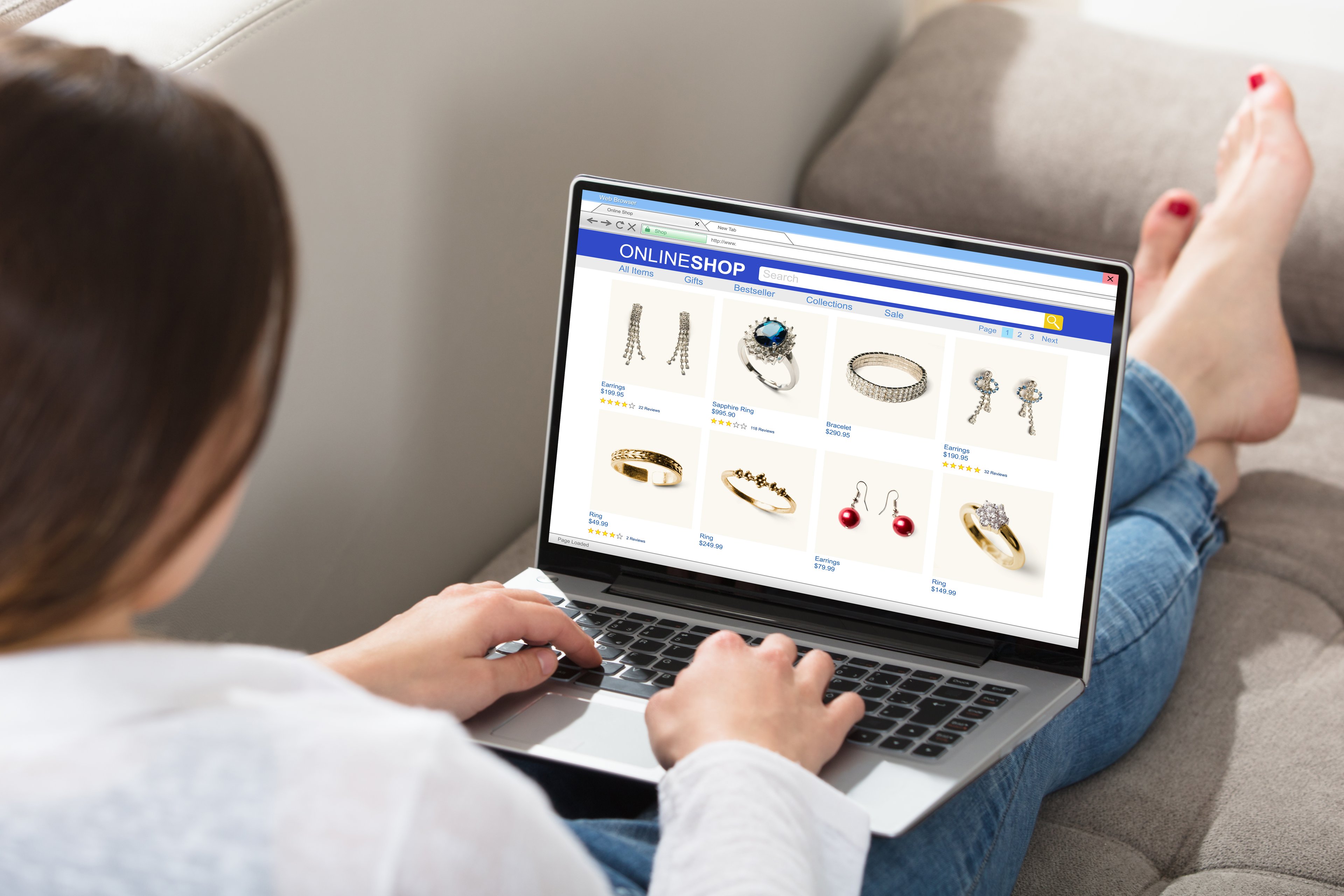
Image source: Getty Images.
What Signet sees for the holidays
Even as the company raised its full-year guidance, accounting for the strong Q3 performance, it sees momentum taking a step down in the fourth quarter. Management called for same-store sales ranging from -5% to +0.5% and revenue of $2.24 billion to $2.37 billion, below the consensus at $2.38 billion.
In the earnings release, CEO J.K. Symancyk noted "external disruptions since late October and potential continued softness in consumer confidence" that led to the company's cautious guidance, reflecting issues like the government shutdown, inflation, and a weakening labor market.
In an interview with The Motley Fool, CFO/COO Joan Hilson elaborated, saying that sentiment surveys have shown consumers adopting a more reserved posture with their spending. Hilson said that the company is focused on meeting customer value expectations at the right price point to meet demand.
In fact, Signet has increased its inventory of lower-priced fashion items, in the under $1,000 range, by five to eight times from a year ago, showing it is committed to meeting customers where they are. Last holiday season, the company fell short of expectations in part because it was understocked at that price point.
The 10 days before Christmas are especially crucial for Signet, and Hilson said the company was where it wants to be operationally: "We have the right assortment. We have the right marketing and promotion plan, and we're staffed and ready to go."

NYSE: SIG
Key Data Points
Is Signet a buy?
At a time when valuations across much of the market have been stretched during the AI boom, Signet continues to offer attractive value. Based on its improved adjusted earnings-per-share guidance of $8.43 to $9.59, the stock trades at a price-to-earnings ratio of just 10. It's taken advantage of that valuation by consistently buying back stock.
Given the execution in Q3, the slowdown in Q4 appears to be due to the same macro factors that other retailers are facing. This means that the sell-off looks like a buying opportunity for long-term investors.
While Signet, operating in a mature industry, will never be a high-growth business, the current valuation offers upside potential, especially considering the performance improvements in Q3. Whatever happens over the holidays, that should give the stock a long-term edge.