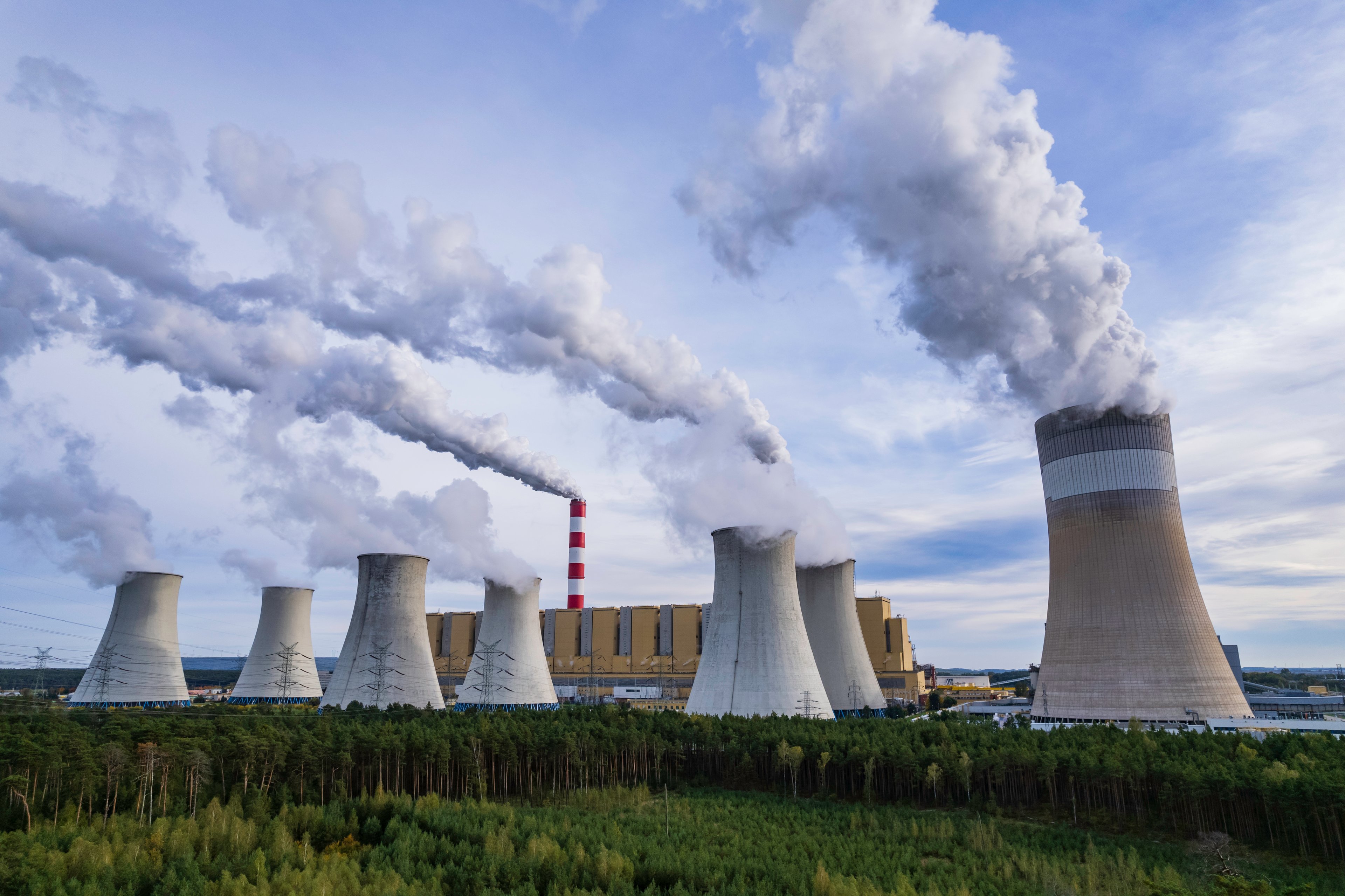
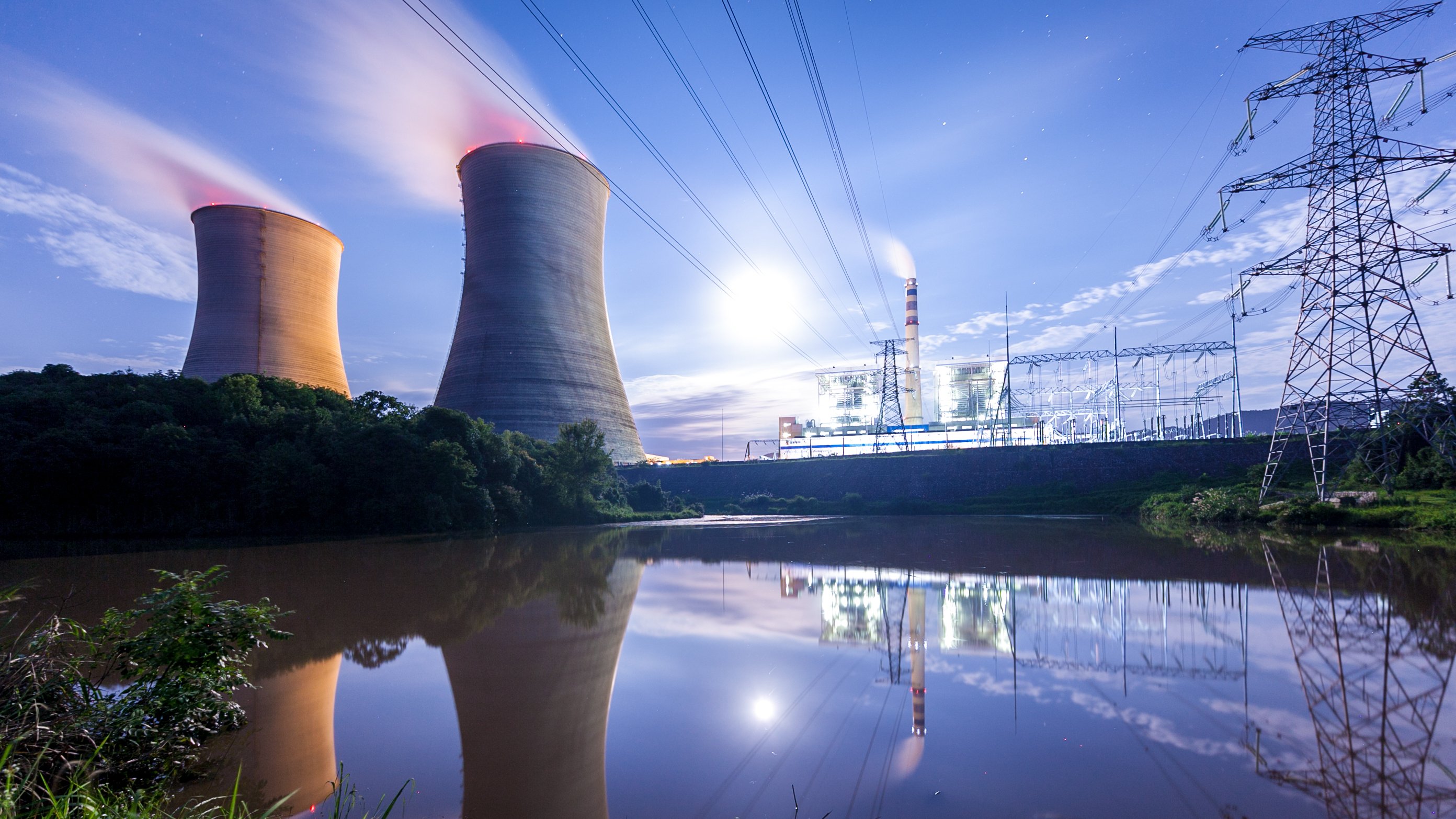
Nuclear is having a moment. With artificial intelligence (AI) data centers projected to consume as much electricity as the entire nation of Japan, governments around the world are turning to nuclear energy to power their economies.
The U.K. government is spending 18 billion British pounds (about $24 billion) to bring on what its energy secretary calls a "Golden Age" of nuclear investment. Last week, Poland began construction of its first nuclear plant after the E.U. approved 14.2 billion euros (about $16.7 billion) to finance it.
Last summer, Japan began building its first nuclear power reactor since the 2011 Fukushima disaster. And China is building almost as many nuclear reactors as the rest of the world combined.
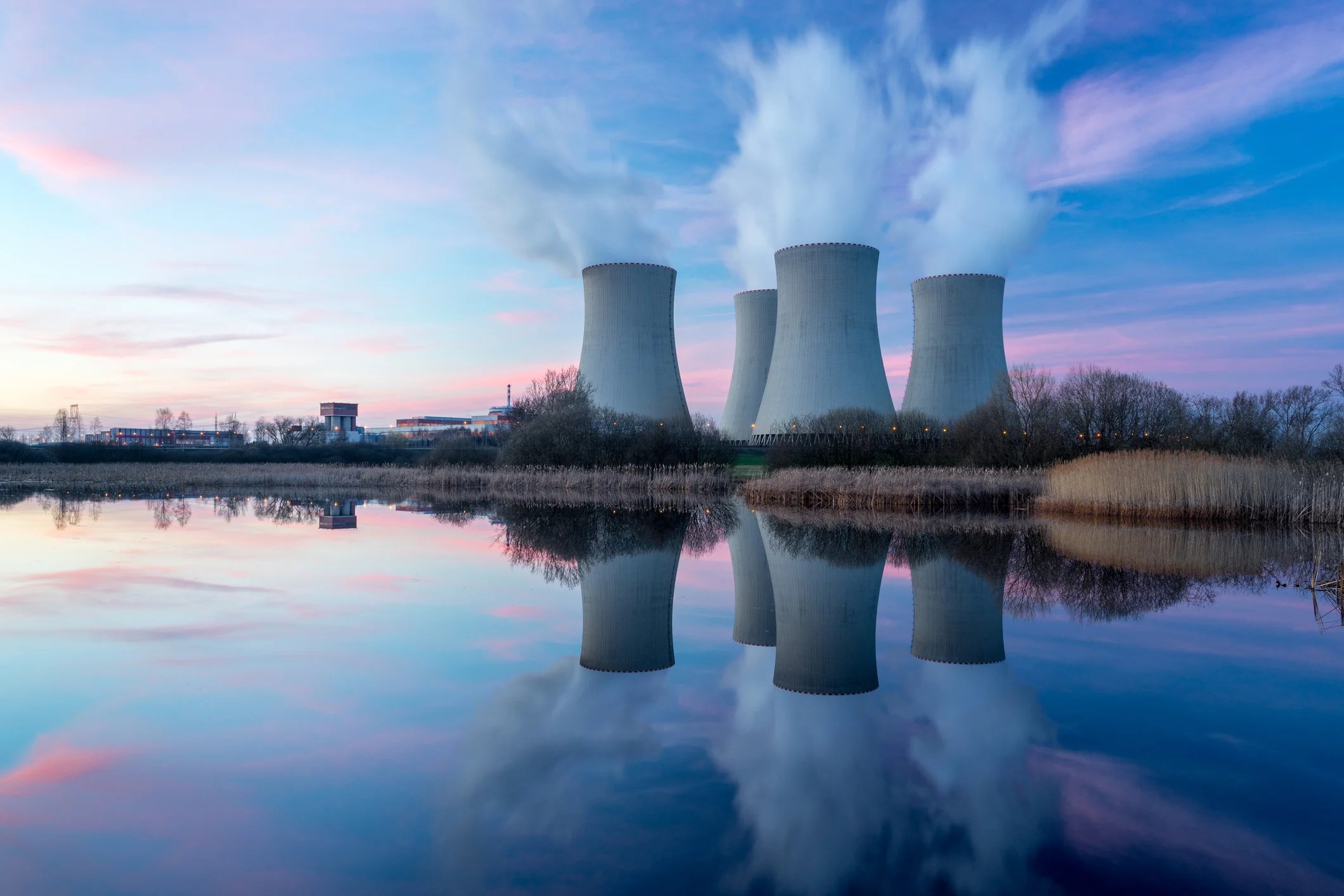
Image source: Getty Images.
America might be the starkest example of nuclear power's momentum. In 2024, Congress passed the ADVANCE Act to slash bureaucracy and red tape around nuclear reactor construction, simultaneously accelerating the approvals process and even making it easier to share nuclear technologies with other countries.
At a time when Republicans and Democrats seem to agree on almost nothing, the Senate passed the law by a landslide 88-2 margin. And President Donald Trump has signed executive orders to quadruple America's nuclear power capacity.
In times of soaring electric bills, policymakers can't ignore an energy source that's so powerful. An Olympic-sized swimming pool full of it could power 70 million homes.
With political resistance falling by the wayside, the only problem is how to secure the enriched uranium without feeding Vladimir Putin's war machine. Russia provides 40% of the world's enriched uranium, but Cameco (CCJ 0.31%), owner of the world's highest-grade uranium mine, is working to change that situation.
One-sixth of global market share and growing
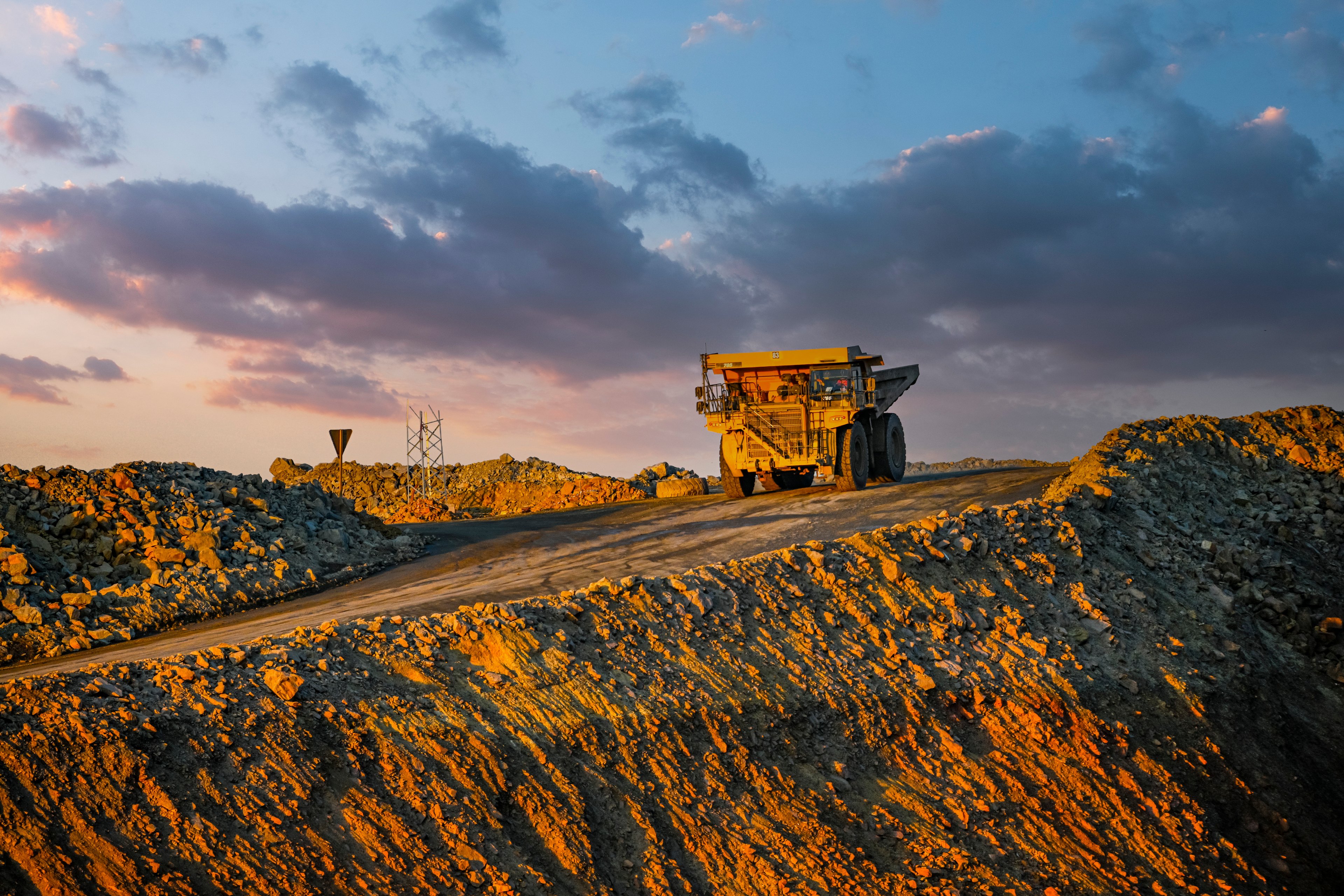
Based in Canada, Cameco controls mining operations with the capacity to produce 30 million pounds of enriched uranium each year. It's sitting on 457 million pounds of proven and probable uranium, with almost all of its mines in politically safe jurisdictions such as the United States, Canada, Australia, and Kazakhstan.
That amount puts a dent in the 180 million pounds of global demand for uranium, but only a dent. For now, America has no choice but to buy Russian uranium, importing $624 million worth of it in 2024, despite historic sanctions in seemingly every other sector.
Even so, that was only half of the $1.2 billion in uranium that the U.S. bought from Russia in 2023. With the Prohibiting Russian Uranium Imports Act taking full force in 2028, Washington is determined to stop relying on the world's biggest uranium importer.
It's a good thing, then, that Cameco's production of enriched uranium is growing at a rapid clip. Last year, it produced 23.4 million pounds of enriched uranium, a 33% increase from 2023's output. In 2025, it forecasts production of 32 million to 34 million pounds.
Cameco also enjoys the favor of the U.S. government. In October, Washington announced a partnership with Cameco and Brookfield Asset Management to unleash $80 billion in construction to ramp up deployment of its Westinghouse nuclear reactors. Terms of the deal entitle the U.S. government to 20% of any cash distributions in excess of $17.5 billion made by Westinghouse.
So, the U.S. government has a vested interest in Cameco's success -- no small thing at a time when its involvement with mining firms like MP Materials has sent those stocks soaring.
But Cameco might not even need government help to thrive in 2026 and beyond. It may not even need to keep growing its uranium production, though that certainly helps. Instead, its X factor could come down to supply and demand.
The biggest catalyst facing Cameco: the uranium bull market
When uranium prices take off, the gains can be stratospheric. We saw this in 2000-2007, when uranium prices bottomed out at $7 per pound after a post-Cold War supply glut before rocketing to $136 per pound in mid-2007. That's a 1,842% rise in just a few years.
Since mid-2021, the uranium spot price has risen from around $42 per pound to $75.8. And Bank of America sees prices climbing as high as $135 per pound in 2026. Citigroup and Morgan Stanley are only slightly more conservative, with forecasts in the $100 to $125 range.
Shares of Cameco may be up 86% for the year, but I still see it as a buy. The stock looks expensive, with a price-to-earnings ratio of 110, but it's natural for it to trade at a premium, considering we may be in the early stages of a uranium boom. And with robust net earnings growth of 33% year over year, this is one stock that could grow into its valuation and then some.