There's no doubt that Whirlpool (WHR 0.46%) shareholders surely feel that they missed out. The stock has significantly underperformed the S&P 500 index over the last year, the last three years, and the last five years. In fact, it has declined by 45% in the previous five years, compared to a 103% increase for the S&P 500 on a total return basis (which includes dividends). It's a highly disappointing performance, and investors will wonder how Whirlpool arrived at this point and whether it's a buying opportunity or a sign of something fundamentally wrong with the company.

NYSE: WHR
Key Data Points
What's going wrong at Whirlpool
Whirlpool is a company with $6.2 billion in long-term debt that has suffered a pincer-like impact on its profit margins and cash flow in recent years. A combination of relatively high interest rates pressuring the major domestic appliance market and extremely competitive actions by its Asian rivals in response to tariffs has pressured its top line. Meanwhile, there's upward pressure on its costs coming from the supply chain crisis and tariff cost headwinds.

Image source: Getty Images.
The change in expectations this year reflects the issues facing the company. Management began the year anticipating a full-year ongoing earnings before interest and taxes (EBIT) margin from ongoing operations of 6.8%; however, this guidance has now been reduced to 5%. It expected free cash flow (FCF) of $500 million to $600 million, but the latest guidance calls for $200 million. Moreover, management expected initially to reduce debt by $700 million in 2025, but that aim has now been pushed out to 2026.
It's a sorry picture, but does it mean the stock is uninvestable?
The investment case for Whirlpool
However, there is a case for buying the stock, based on the idea that the near-term impact of tariffs will evolve into a major benefit by 2026. Digging into the details of the change in EBIT margin expectations from 6.8% to 5% (management maintains expectations for $15.8 billion in sales), management has quantified that a 1.5% reduction was due to the "incremental impact of tariff changes."
In a nutshell, Asian competitors rushed to preload the market ahead of the imposition of tariffs, resulting in a "continued highly promotional environment through the third quarter of 2025," according to CEO Marc Bitzer on a recent earnings call. This is only to be expected as the tariffs act to increase costs on its Asian competitors.
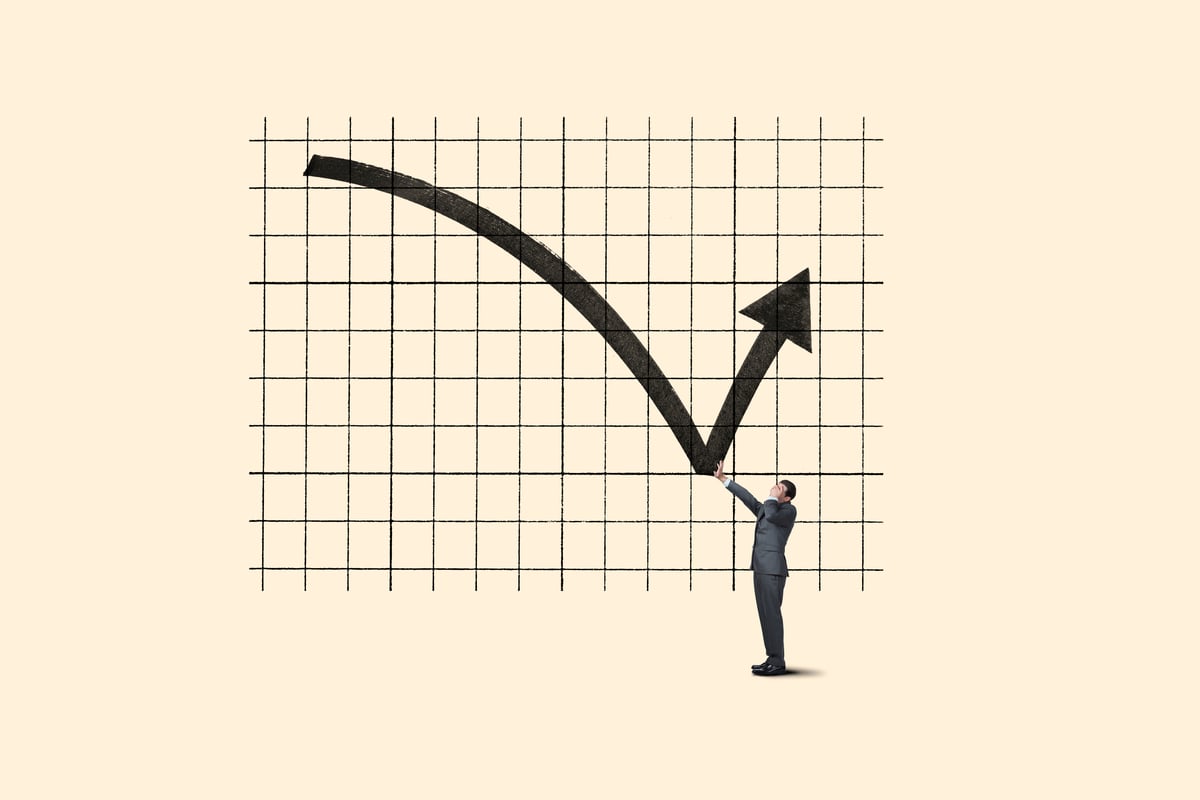
Image source: Getty Images.
However, with tariffs in place and a slowdown in import volumes, as well as competitors gradually selling off their inventory in the U.S., next year should be better for Whirlpool. It's set to be a net winner from the tariffs due to the fact 80% of its products sold in the U.S. are made in the U.S.
At the same time, the expected housing market recovery (expected to drive sales of higher-margin discretionary domestic appliances) didn't occur in 2025. Still, as the Federal Reserve continues to cut rates, it's only a matter of time before interest rate sectors, such as housing, will receive some encouragement.
As such, Whirlpool could finally deliver for investors next year.