The S&P 500 (^GSPC 0.35%) has been on a historic bull run since reaching the bottom of the bear market in 2022. The index has nearly doubled from its low point that year, fueled by the massive trend in artificial intelligence.
But as the bull market enters its fourth year, there are a growing number of red flags investors can't afford to ignore. The Federal Reserve has shown increasing signs of uncertainty in the future of the economy. And while the stock market isn't the economy, the S&P 500 is ringing an alarm that suggests any weakness in the economy could have a major impact on stock values in 2026.
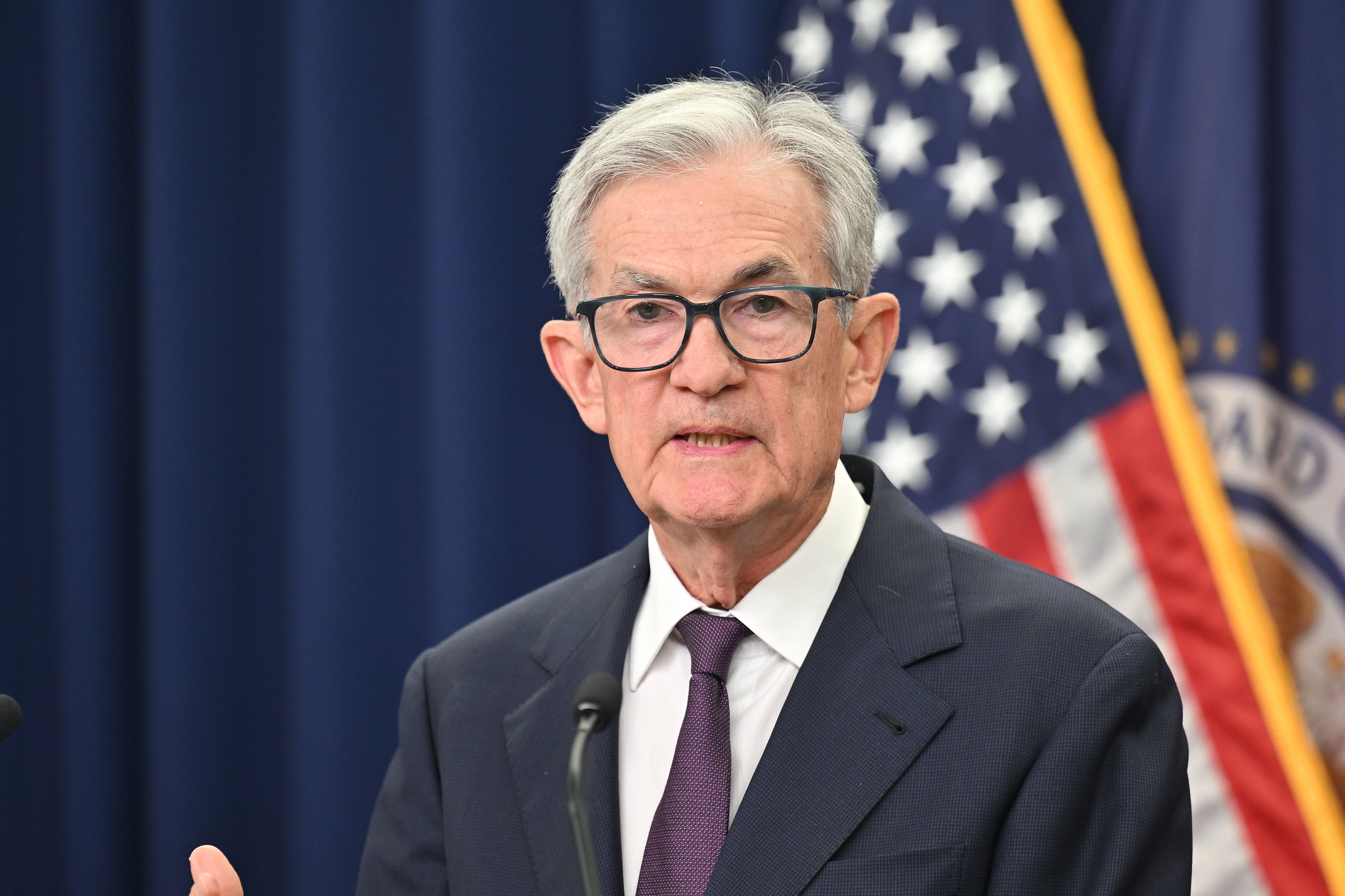
Chair Powell answers reporters' questions at the FOMC press conference on Sept 17, 2025. Image source: Federal Reserve Board of Governors.
The FOMC is facing a big division
The Federal Open Market Committee (FOMC) met in December, and the 12 voting members agreed to lower the target federal funds rate by a quarter of a percentage point. That was the third consecutive reduction in the target rate.
The target fed funds rate is the primary tool in the Federal Reserve's arsenal for fulfilling its dual mandate of full employment and moderate inflation. Higher rates combat inflation while lower rates encourage hiring and employment.
The FOMC meets eight times each year to assess the economy and set the new target rate. It usually votes unanimously. Starting in July, the FOMC saw two dissenting votes from members who thought lowering rates sooner was justified. That's the first time the committee saw two dissenting votes since 1993.
The number of dissenters climbed to three in the December vote. Not only did one member suggest a bigger cut this month, but two members also voted for no cuts at all. These divergent dissenters point to the growing economic uncertainty facing the country.
But the problem is even worse than that. The FOMC also releases a plot showing where each committee member expects the target fed funds rate to be at the end of the current year, the next year, two years, three years, and beyond. Six of the 19 FOMC participants (including non-voting members) considered it appropriate not to lower interest rates this month. Seven don't see any further rate cuts in 2026, with four seeing no need to cut rates through 2028.
As a result, there's no clear path to further rate cuts in 2026 as new voting members rotate in, even if President Donald Trump installs a dovish replacement for Chairman Jerome Powell.
Trump's tariffs may be to blame
The reason so many members are hesitant to cut rates is that the full impact of Trump's tariff policies has yet to materialize. The San Francisco Fed released a paper earlier this year that showed tariffs historically lead to higher unemployment in the short term, but eventually normalize. Meanwhile, it expects inflation to exhibit the opposite effect, with lower prices in the near term, but higher prices long term. The paper also notes that tariffs reduce demand and spending, which could negatively impact GDP.
A paper from the St. Louis Federal Reserve said 2025 has already seen higher prices, but many businesses have delayed price adjustments. As a result, inflation is likely to continue rising in 2026.
With expectations that tariffs could result in higher inflation but stable employment over the long run, it makes sense to keep interest rates higher for longer. Being too aggressive with rate cuts could cause inflation to spike again, leading to significant economic instability.
On the other hand, many are concerned that the job market might be weaker than headline numbers suggest, with many unemployed workers leaving the workforce or settling for underpaid positions. The GDP numbers may be propped up by massive artificial intelligence spending from a handful of companies. So, if any one of them slows spending or sees weak results, it could have a reverberating effect on the entire economy.
That puts the FOMC in a tough spot, and the entire economy in a precarious position.
The S&P 500 is ringing the alarm
Despite the growing risks and uncertainty facing the economy, the S&P 500 is priced as if there's no risk to the continued growth in corporate earnings for 2026. In fact, investors are currently willing to pay nearly 22 times analysts' earnings expectations for the full year. That's one of the highest earnings multiples the index has fetched since 1980.
If you look at the 10-year cyclically adjusted price-earnings (CAPE) ratio, the S&P 500 trades at a valuation seen just once before. The current CAPE ratio of 40.6 is the highest level the ratio has reached outside of the dot-com bubble of the late 90s and 2000. That led Robert Shiller, the metric's inventor, to predict returns that will likely trail inflation over the next decade.
With valuations elevated, any change in earnings expectations is magnified. Given the challenges and uncertainty facing the economy, as elucidated by the FOMC's recent meeting, there could be significant revisions to expectations in 2026.
Investors should be prepared for potential downside in the stock market for next year. That doesn't mean they should sell everything and move to cash, but increasing your cash allocation in your portfolio may be prudent. That's especially true for investors looking for more capital preservation than growth, such as those nearing retirement.
That said, most of your portfolio should remain in stocks. Just be sure you're invested in high-conviction companies you feel comfortable holding even if there's a downturn in the economy or a specific part of the economy those companies are exposed to. Investors relying on lower interest rates to fuel their stock portfolio growth in 2026 may be disappointed by the Federal Reserve's decisions.