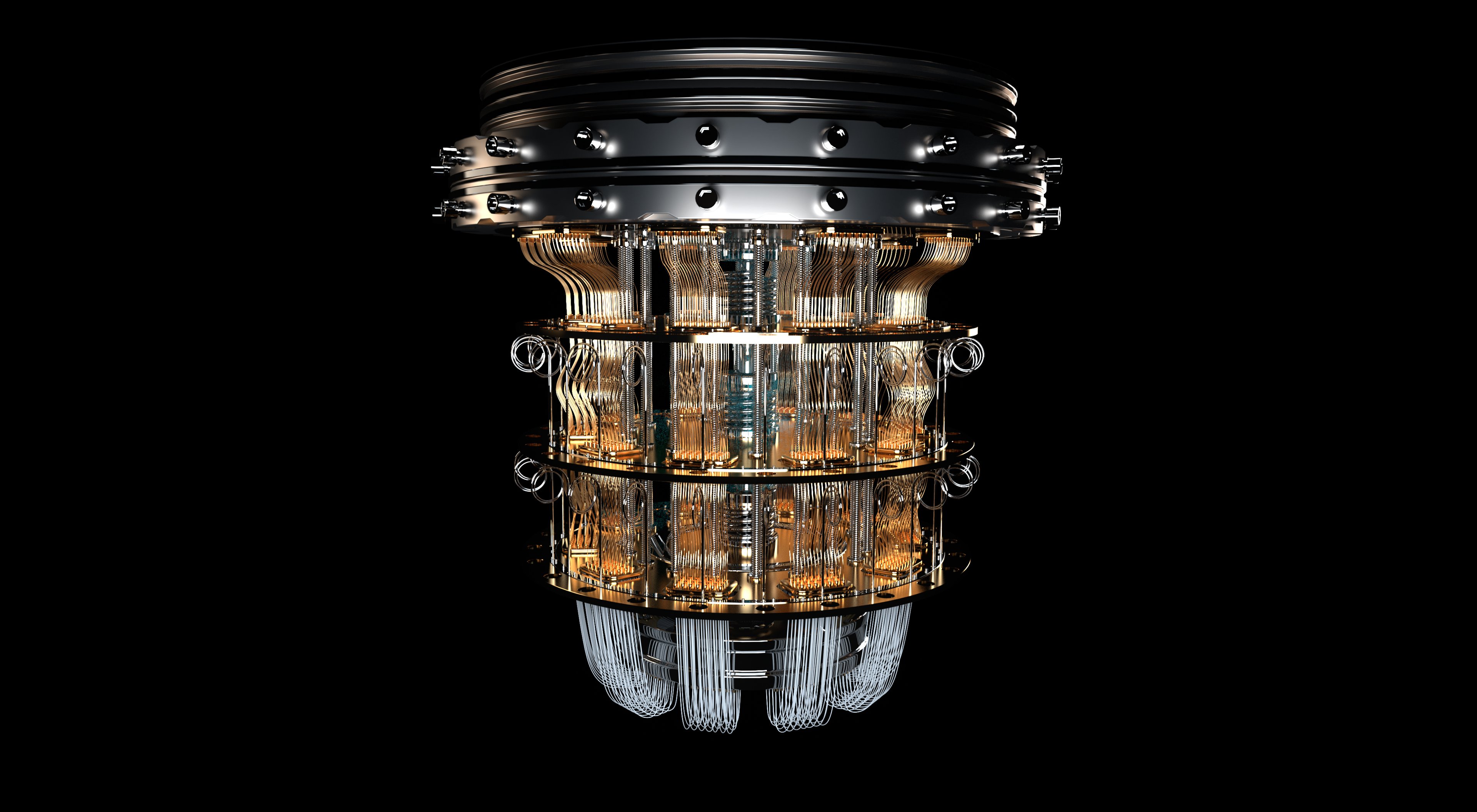
Although artificial intelligence has been the most front-and-center trend on Wall Street, it's arguably taken a back seat to the hype surrounding quantum computing stocks over the last year. Since Oct. 1, 2024, shares of pure-play stocks IonQ (IONQ 2.00%), Rigetti Computing (RGTI 2.10%), D-Wave Quantum (QBTS 4.00%), and Quantum Computing Inc. (QUBT 1.84%) have skyrocketed by 521%, 3,270%, 3,290%, and 1,790%, respectively.
Using specialized quantum computers to solve complex problems that classical computers can't tackle is a technological leap forward that analysts at Boston Consulting Group believe will add up to $850 billion to global gross domestic product by 2040. This sky-high addressable market, coupled with IonQ and Rigetti Computing landing several members of the "Magnificent Seven" as customers, has sparked jaw-dropping returns in quantum computing stocks.
But when things seem too good to be true on Wall Street, they often are. Although IonQ, Rigetti, D-Wave, and Quantum Computing Inc. have been the hottest thing since sliced bread, looking beyond the hype reveals five (predominantly historical) reasons these quantum computing stocks can crash in 2026.

Image source: Getty Images.
1. Next-big-thing technological trends endure bubble-bursting events
The first historical headwind that quantum computing stocks are bound to run into is the cycle of game-changing technological trends enduring early stage bubble-bursting events.
Since the proliferation of the internet roughly three decades ago, every major tech-driven advancement has eventually navigated its way through a bubble. This includes genome decoding, nanotechnology, 3D printing, blockchain technology, and the metaverse.
These bubbles form and subsequently burst because investors aren't affording these technological advancements the proper amount of time to be widely adopted, utilized, and optimized. In the case of quantum computing, IonQ, Rigetti Computing, D-Wave Quantum, and Quantum Computing Inc. are still in the exceptionally early stages of commercializing their quantum computers and services. It'll likely be many years before quantum computers are more cost-efficient than classical computers for practical problem-solving.
Although it's impossible to predict when the music will stop for a hyped trend, history points to an eventual bubble-bursting event for quantum computing stocks.

NYSE: IONQ
Key Data Points
2. Share-based dilution is likely
With all four pure-play stocks still getting their proverbial feet off the ground, operating losses and ongoing cash burn should be expected for the foreseeable future. While this is perfectly normal for early stage businesses, the capital-intensive nature of tech-based research and development suggests that share-based dilution is likely.
Last year, IonQ raised $2 billion through a common stock and warrant equity offering, which involved the sale of 16.5 million shares at $93, as well as the issuance of seven-year warrants to purchase up to 43.01 million shares of additional IonQ stock at an exercise price of $155 per share. In hindsight, selling shares at $93 to raise capital was a genius move (IonQ stock is at $50.76, as of this writing on Jan. 6). Nevertheless, it points to the likelihood of share-based dilution weighing on existing investors.
Early stage companies often lack access to basic financial services, such as traditional bank loans and lines of credit. Until quantum computing pure-play businesses establish that their operating models are sustainable, selling stock and diluting their shareholders is expected to be commonplace.

Image source: Getty Images.
3. Eye-popping valuation premiums are unsustainable
Admittedly, it's challenging to analyze and value companies that are very early in the commercialization of their products and services. Traditional metrics, such as the price-to-earnings (P/E) ratio, aren't helpful when there are no earnings to speak of. However, the price-to-sales (P/S) ratio can prove useful.
Companies that have been at the forefront of next-big-thing trends over the last three decades have consistently peaked at trailing 12-month P/S ratios that ranged from 30 to 40, with some wiggle room at each end of the spectrum. What history has repeatedly shown is that P/S ratios above 30 aren't tolerated over extended periods. In plain English, expensive early stage stocks don't remain pricey for very long.
As of the closing bell on Jan. 6, the price-to-sales ratios for the hottest quantum computing pure-play stocks were as follows:
- IonQ: 158
- Rigetti Computing: 975
- D-Wave Quantum: 376
- Quantum Computing Inc.: 3,167
Even extrapolating sales for these companies two or three years into the future doesn't bring them close to moving out of historical bubble territory.

NASDAQ: RGTI
Key Data Points
4. The stock market is historically pricey (which is generally bad news for early stage companies)
Keeping with the theme of historical headwinds, the stock market entered the new year with a sky-high valuation.
According to the S&P 500's (^GSPC +0.65%) Shiller P/E Ratio, which is also known as the cyclically adjusted P/E Ratio, or CAPE Ratio, this is the second priciest stock market in history, dating back to January 1871. Whereas the Shiller P/E has averaged a multiple of 17.32 over the last 155 years, it clocked in at nearly 41, as of the closing bell on Jan. 6.
History tells us that S&P 500 Shiller P/E readings above 30 are bad news. The five previous times the CAPE Ratio surpassed 30 during a bull market, the S&P 500 eventually lost 20% (or substantially more) of its value. While we can't predict when these corrections, bear markets, and/or crashes will happen, the Shiller P/E has a perfect track record of foreshadowing trouble for the stock market.
When volatility picks up on Wall Street, the priciest stocks tend to be hit the hardest. Since quantum computing stocks have yet to validate the sustainability of their operations, they would be expected to take it on the chin.

NYSE: QBTS
Key Data Points
5. The barrier to entry is lower than you think
The fifth and final reason that quantum computing stocks IonQ, Rigetti Computing, D-Wave Quantum, and Quantum Computing Inc. can crash in 2026 has to do with the low barrier to entry in the quantum computing industry.
For the moment, IonQ, Rigetti, D-Wave, and Quantum Computing Inc. are riding their first-mover advantage. For some of these pure-play companies, it's translated into multi-year contracts or partnerships with brand-name businesses. However, limited access to capital (beyond share-based dilution), coupled with the absence of foundational operating segments, leaves these pure-play stocks vulnerable to disruption.
Comparatively, members of the Magnificent Seven often have more cash than they know what to do with at their disposal and a desire to get their piece of the pie with every major technological advancement. Both Alphabet and Microsoft have developed quantum processing units -- Willow for Alphabet and Majorana 1 for Microsoft.
An abundance of available capital and operating cash flow could see these and other influential businesses rapidly close this first-mover gap.
In short, quantum computing stocks appear to be headed for a rough 2026.