If you're looking for potential millionaire-making stocks, you'll have to take some risks, as these types of stocks more often than not are packed with potential, but lack long-term track records.
This is particularly true in the quantum computing space. Quantum computing has the potential to be a game-changing technology that goes beyond artificial intelligence (AI), but right now it's still in its infancy, and companies have yet to fully crack the code.
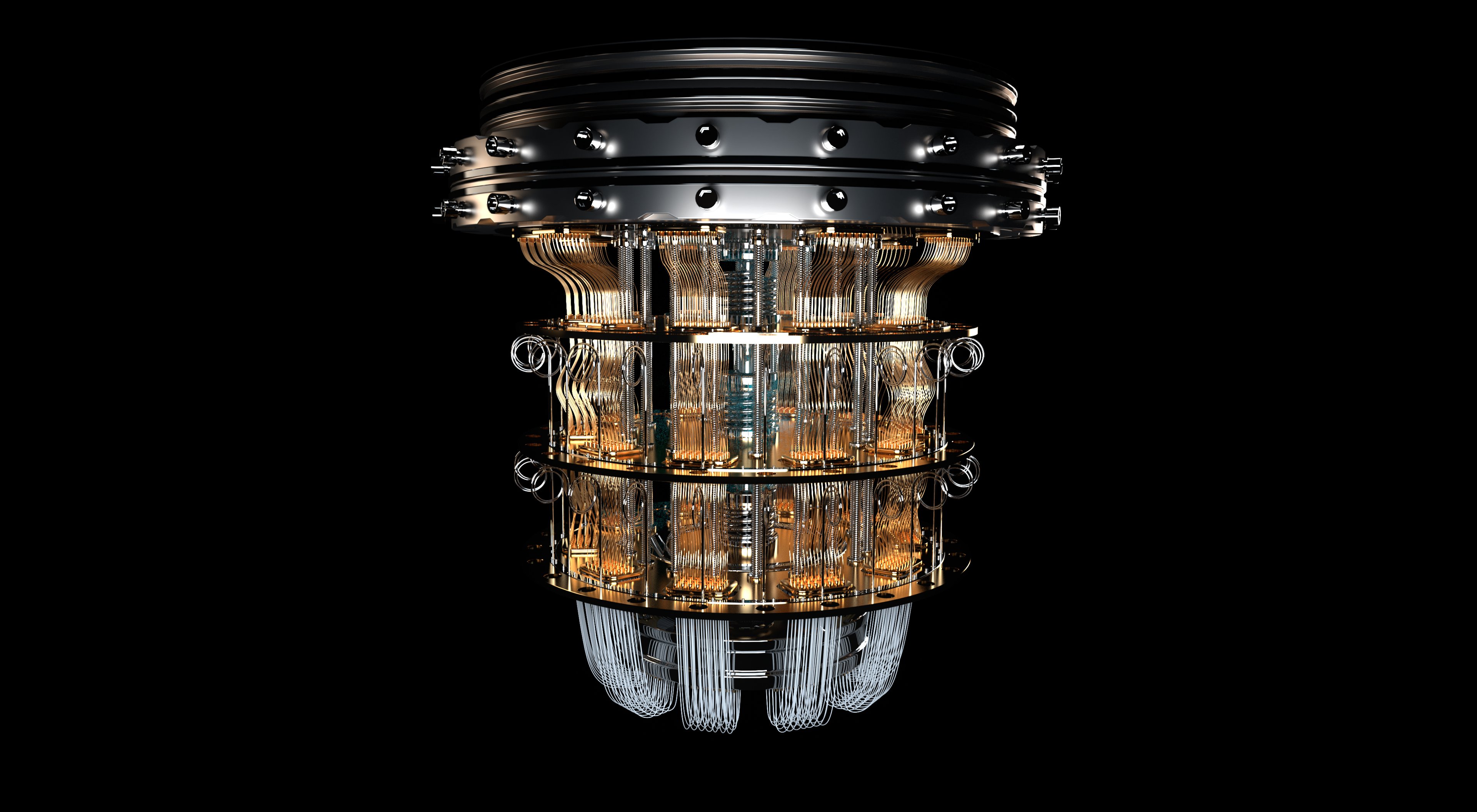
The biggest issue with quantum computing is that the technology is error-prone, and until it can reach fault-tolerance, it will remain in the more experimental phase. Instead of using bits, which can be a 0 or a 1, in classical computing, quantum computers use qubits, which are in what is called a state of superposition, as they can exist in a combination of both 0 or 1 until measured.
A qubit is sort of like a spinning coin before it lands, but this state makes it more sensitive to outside forces, such as temperature change or vibration, that can cause errors. At the same time, quantum systems aren't just trying to keep a single qubit stable; they are also trying to keep multiple ones stable in relation to each other.
Let's examine the stocks of two companies aiming to crack the quantum code and could become millionaire-making stocks if they succeed.
1. IonQ
While accuracy is one of the biggest issues facing quantum computers today, IonQ (IONQ -7.68%) is one of the companies that's furthest along in this regard. Its systems have recently hit a two-gate fidelity (accuracy) of 99.99%. In the world of computing, this is still very error-prone, but it makes it one of the leaders in this space and enables it to implement other measures to help reduce errors.

NYSE: IONQ
Key Data Points
The company has taken a different approach than most competitors, opting to use what is known as trapped-ion technology. It uses actual atoms, which by nature are identical, and thus can be more stable than lab-fabricated qubits. It has also developed a technique called Clifford Noise Reduction to help partially reduce errors, and it is working on an advanced error-correcting code.
IonQ is also looking to develop an entire quantum ecosystem, much like Nvidia has done with its graphics processing units (GPUs), CUDA, software platform, and networking portfolio. Toward this end, the company has been aggressive on the acquisition front, acquiring technology and talent to help it better scale its systems and build an entire quantum internet.

Image source: Getty Images.
2. D-Wave Quantum
D-Wave Quantum (QBTS -5.08%) is perhaps the pure-play quantum computing company closest to establishing a viable commercial business model beyond selling experimental systems to research labs and universities. This is a result of the company's core quantum annealing technology. Annealing is more specialized than the gate-based approach most quantum computing companies are pursuing, as it's not intended to solve general problems. Instead, the technology is designed to settle on the best solution among many possibilities.
While annealing is likely not the long-term answer in quantum computing, it has led to D-Wave building a commercial system that is good at tasks such as supply chain optimization. The company has hundreds of customers, and its revenue and bookings are just starting to ramp up. This business also provides the foundation to start pursuing a broader gate-based approach.
NYSE: IONQ
Key Data Points
D-Wave has just begun making an assertive push into gate-based systems, and with more than $830 million in cash on its balance sheet at the end of Q3, it now has the means to really pursue this space. In fact, it just announced that it will acquire Quantum Circuits for $300 million in stock and $250 million in cash to accelerate its efforts. The company plans to use fluxonium qubits with its gate-based systems, which it says are the most similar to the qubits it uses with quantum annealing.