UPS (UPS 1.34%) stock declined by more than 21% last year amid a turbulent period marked by difficult trading conditions. The decline continued, with the stock now down almost 42% in the previous three years, as I write. Still, there's a strong bull case for the stock, and the stock's 6.1% dividend yield makes it a favorite among income-seeking investors. Here's what happened and how the company is shaping up for 2026.
UPS in 2025
Management started the year expecting that the overcapacity in the U.S. small package market (built up during the unsustainable boom during the lockdowns) would clear, leading to more favorable trading conditions. In addition, the plan to reduce Amazon.com delivery volumes by 50% from the start of the year to the middle of 2026 would lead to margin expansion in line with management's operating philosophy of shifting focus to targeted end markets, such as higher margin healthcare, small and medium-sized businesses (SMBs), and business-to-business (B2B) deliveries, rather than chasing delivery volume in itself.

NYSE: UPS
Key Data Points
Unfortunately, a combination of a slowing industrial economy and the uncertainty and price increases created by trade tariffs slowed some of its higher margin activities. As such, the company is on track to miss the earnings and free cash flow guidance that management gave at the start of the year.
For example, management initially estimated $89 billion in revenue and an adjusted operating margin of 10.8% for 2025, implying $9.61 billion in adjusted operating profit. Fast forward to the third quarter, and the midpoint of management's fourth quarter guidance implies $88.18 billion in revenue and just $8.47 billion in adjusted operating profit.

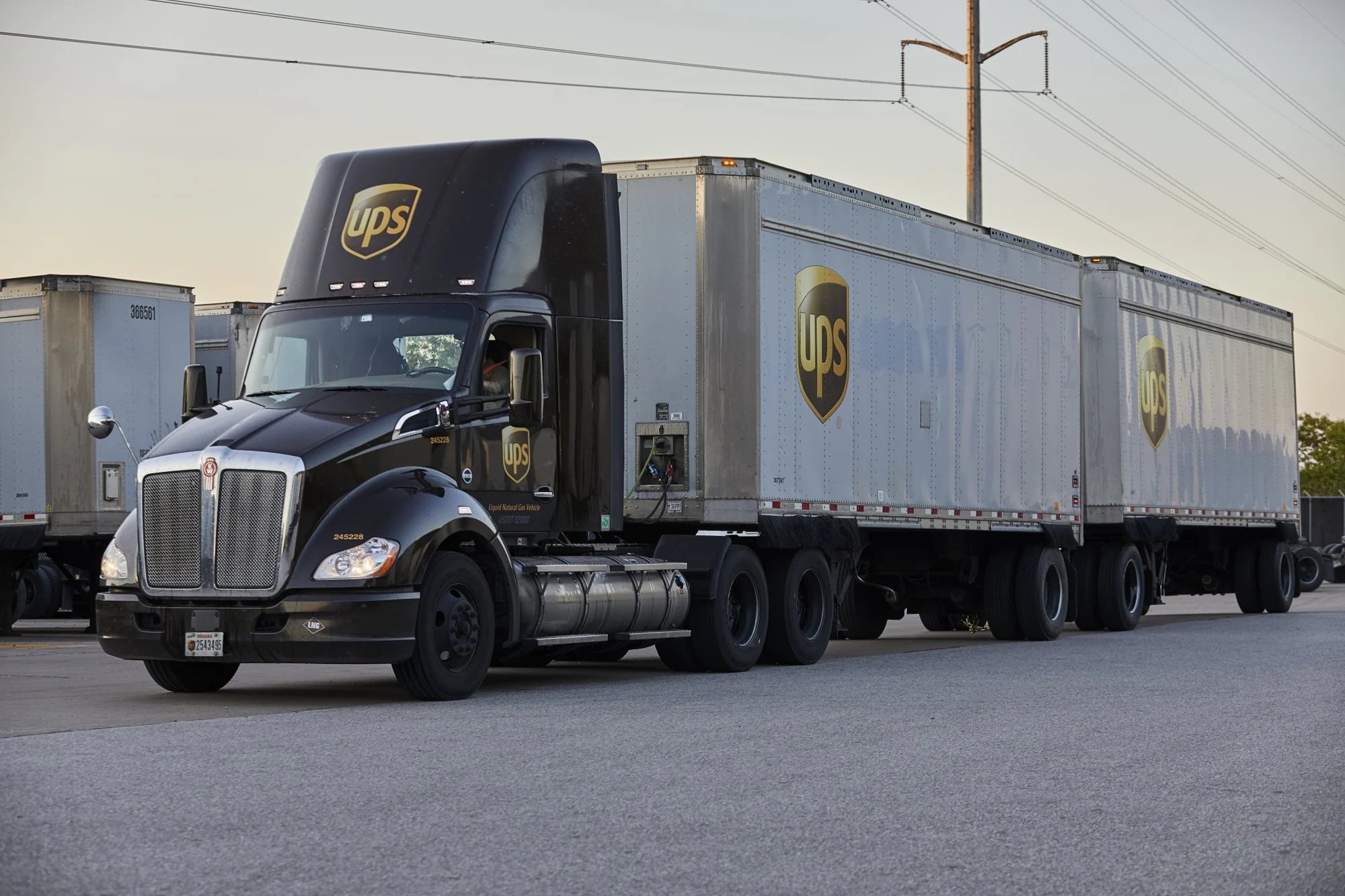
Image source: Getty Images.
The buy case for UPS stock in 2026
The bulls' case highlights the impressive progress the company has made on cutting expenses by $3.5 billion in 2025 in connection with the Amazon "glide" down. Additionally, ongoing investments in automation and smart facilities will enhance productivity and facilitate further site consolidations. Meanwhile, the continuing investments in expanding into higher-margin activities make perfect sense.
Bulls see 2025 as a rest year and 2026 as the year when the cost cuts and strategic restructuring start to pay off in terms of earnings growth.
An uncertain start to the year?
The long-term case is compelling, but UPS will have to navigate some still choppy waters. The U.S. manufacturing economy has contracted for 34 of the last 36 months, and for the previous 10 consecutive months, according to Institute for Supply Management surveys. This indicates weak B2B demand. Meanwhile, the full impact of the tariffs hasn't been felt on SMBs, as many will have to replace the inventory they ran down last year, and consequently could now face much higher prices.
UPS' best days are almost certainly ahead, but it faces some near-term uncertainty, and investors will need to take a long-term perspective in buying the stock.