No trend has been hotter over the last three years than the rise of artificial intelligence (AI). Empowering software and systems with the tools to make split-second decisions without human oversight is a technological leap forward that can add trillions to the global economy.
Although a laundry list of public companies has benefited from the AI revolution, none has enjoyed more direct success than Nvidia (NVDA 0.29%), whose market cap has expanded by more than $4.1 trillion since the beginning of 2023.
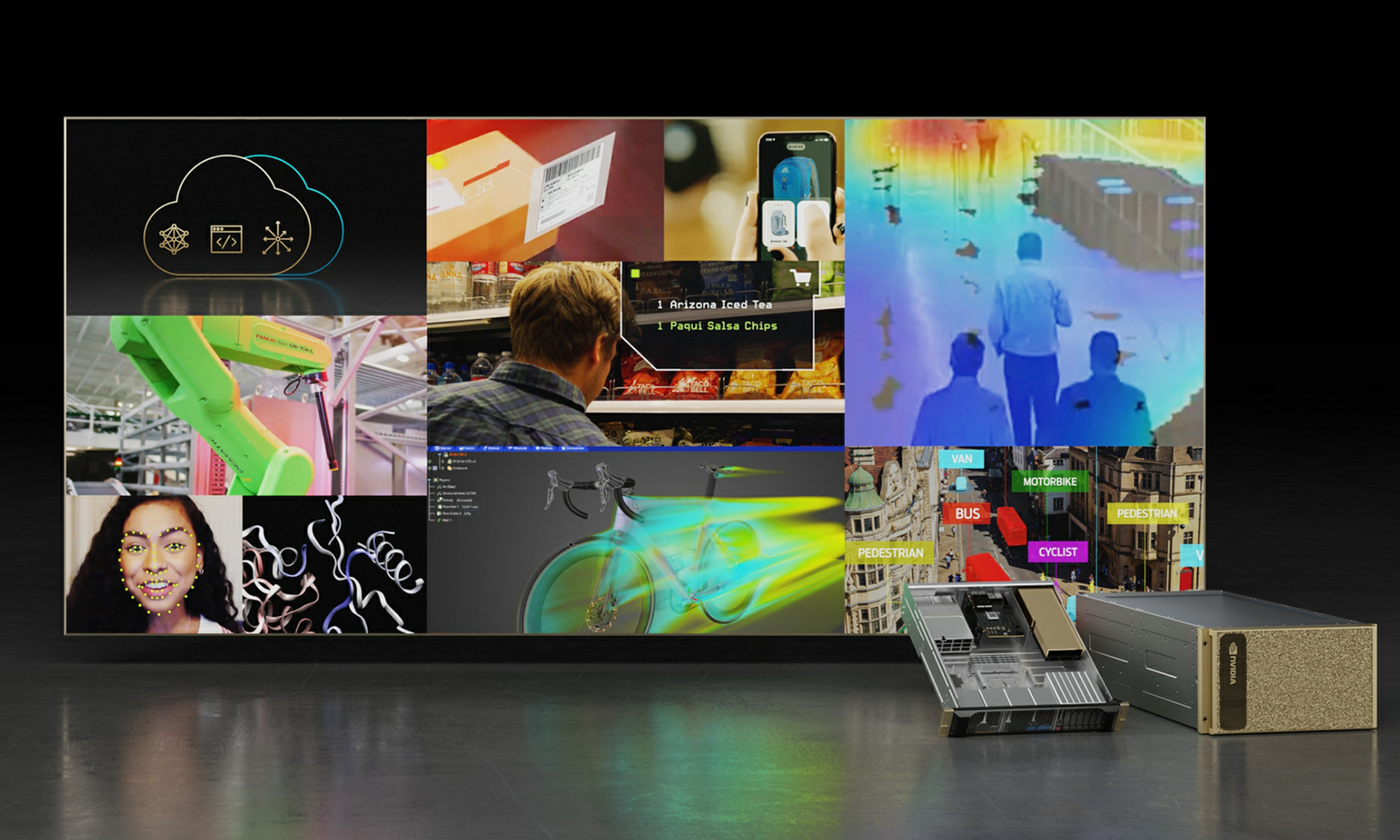
Nvidia's graphics processing units (GPUs) are the preferred choice of businesses operating AI-accelerated data centers. No external competitors are close to matching the compute capabilities of Nvidia's Hopper (H100), Blackwell, and Blackwell Ultra chips, and they're unlikely to catch up to the face of the AI revolution with CEO Jensen Huang aiming to bring a new advanced chip to market annually.

Image source: Nvidia.
While things appear to be going perfectly for Nvidia, history teaches us that headwinds always exist for Wall Street and its most influential public companies. In 2026, five tangible risks lie in wait to potentially trip up Nvidia's parabolic climb.
1. The AI bubble bursts
The foremost risk Wall Street's leading AI stock faces is the prospect of a bubble-bursting event in the new year.
Dating back to the advent of the internet in the mid-1990s, every next-big-thing technology has navigated its way through early stage hype that eventually led to the bursting of a bubble. This includes the internet, genome decoding, nanotechnology, 3D printing, blockchain technology, and the metaverse.
The reason bubbles form is that investors aren't allowing sufficient time for game-changing technologies to mature. Although some innovations enjoy rapid consumer or corporate adoption, optimizing game-changing technologies often requires years to perfect. For example, it took years for businesses to understand how to maximize their sales growth and profits following the proliferation of the internet.
While GPU and other hardware sales tied to AI are exceptionally strong at the moment, businesses aren't particularly close to optimizing this technology or necessarily generating a positive return on their AI investments. In short, the recipe for an AI bubble-bursting event is very much in place.
If an AI bubble were to form and subsequently burst, it's hard to imagine a company being hit harder than the face of the AI revolution, Nvidia.
2. Internal competition costs Nvidia valuable data center real estate
When discussing hot trends with trillion-dollar potential, growing competition is the expectation. While Nvidia has done a phenomenal job of outpacing its direct competitors, such as Advanced Micro Devices, there exists a scenario where internal competition trips up the kingpin of AI.

NASDAQ: NVDA
Key Data Points
On the one hand, several members of the "Magnificent Seven" have placed substantial orders that involve Nvidia's next-generation GPUs. When coupled with Nvidia's CUDA software platform, which helps businesses maximize the compute capabilities of their GPUs, the world's No. 1 AI company has done an excellent job of keeping its top clients within its ecosystem of products and services.
However, many of its top customers by net sales are developing AI-GPUs or solutions to use in their data centers. Even though these internally developed solutions aren't as fast as Nvidia's hardware, they offer the advantage of being notably cheaper and more readily accessible (many of Nvidia's chips are back-ordered due to strong demand).
If internally developed chips gain traction, it'll reduce GPU scarcity, which has been at the heart of Nvidia's pricing power and superior gross margin.
3. Nvidia loses its competitive edge in China
Although it's no secret, Nvidia has a China problem.
Historically, the world's No. 2 economy has accounted for a meaningful percentage of the company's annual sales. But the U.S. federal government threw several money wrenches into this important sales channel. This includes former President Joe Biden's administration restricting exports of high-powered AI chips to China, as well as President Donald Trump's tariff and trade policy, which created tension between the world's two largest economies.
If there's a silver lining for Nvidia, it's that the Trump administration has given the company the green light to ship its AI-powered H200 GPUs to China, in exchange for paying a 25% tax, based on total revenue from H200 chips, to the federal government. Though a 25% tax seems a bit steep on paper, it clears the way for Nvidia to add tens of billions in annual sales from a core market.
But there's a problem: Chinese regulators, as of this writing, aren't allowing H200 chips into the country. The longer Nvidia's hardware is left in limbo, the likelier it becomes that China develops hardware and/or software solutions to rival Nvidia's GPUs or its CUDA software platform.
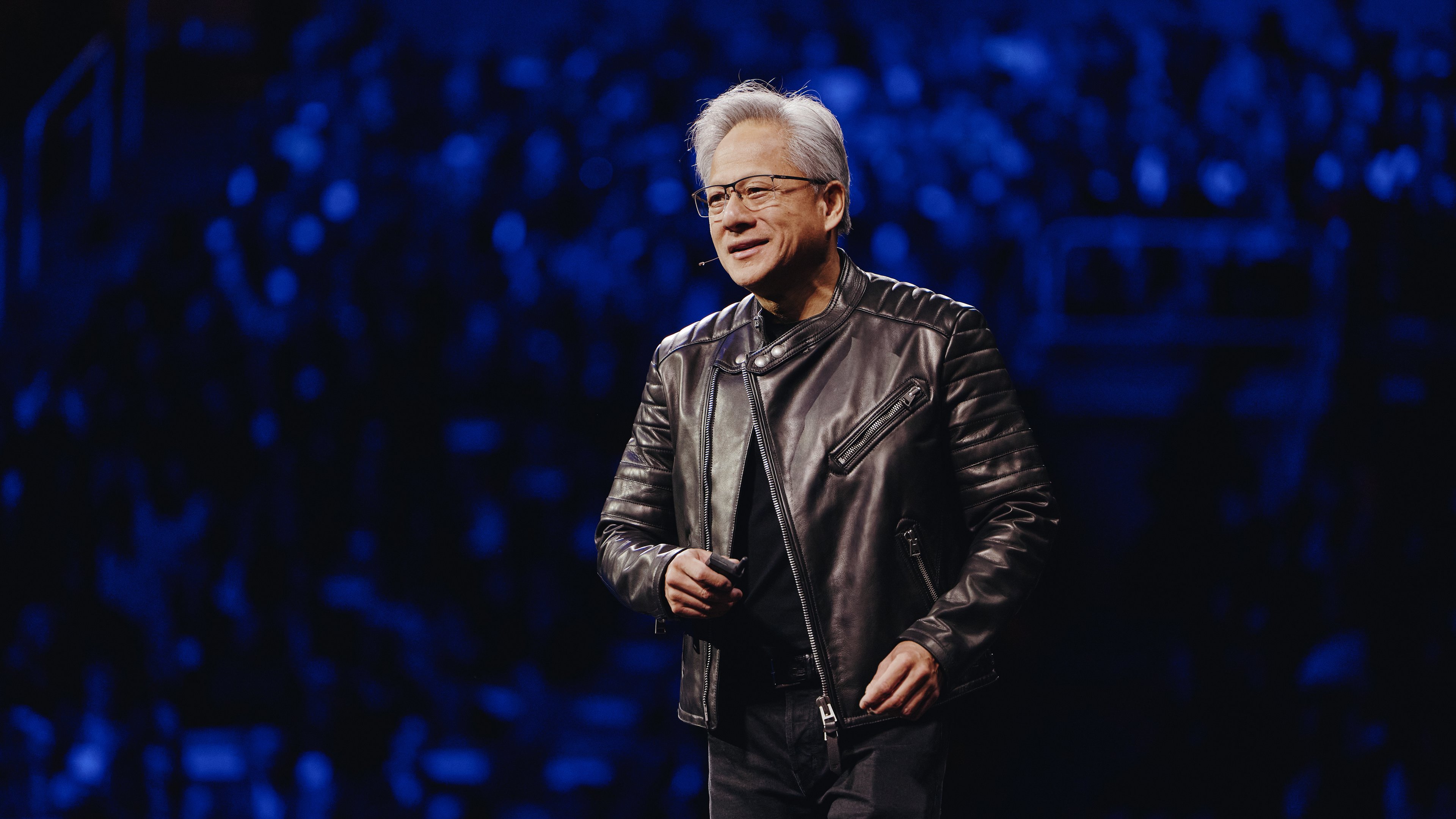
Nvidia CEO Jensen Huang delivering his GTC keynote address. Image source: Nvidia.
4. Jensen Huang's aggressive innovation cycle backfires
The fourth tangible risk that can completely upend Nvidia's parabolic stock rally in 2026 is the overzealous ambitions of CEO Jensen Huang.
To be objective, Huang has absolutely delivered for the company and its shareholders. The aggressive innovation timeline he's kept Nvidia on has produced the Hopper, Blackwell, and Blackwell Ultra, with Vera Rubin set to make its debut in the latter half of 2026. It'll feature the all-new Vera processor, which is considerably more powerful than its predecessors. Huang has made it challenging for external competitors to keep up with his company's innovation arc.
However, there's a potential negative to such an ambitious innovation cycle that could rear its head as early as this year.
Introducing an advanced GPU annually risks rapidly depreciating prior-generation GPUs. If these assets depreciate faster than businesses anticipate, it may delay future upgrade cycles. Even worse, rapid GPU depreciation might entice businesses to trade down to prior-generation chips that are considerably less costly.
In other words, Huang's desire to maintain his company's No. 1 compute status could backfire.
5. A historically expensive stock market rolls over
The fifth and final prominent risk that threatens to end Nvidia's parabolic climb is the historically pricey stock market.
Although Nvidia's forward price-to-earnings (P/E) ratio of 25 isn't particularly expensive, its price-to-sales (P/S) ratio is pricey. History has repeatedly shown that companies at the forefront of next-big-thing innovations struggle to maintain P/S ratios of 30 or above. Reaching a P/S ratio of 30 has typically been a signal that a stock is in a bubble over the last three decades. In early November, Nvidia's P/S ratio briefly topped 30.
S&P 500 Shiller PE Ratio hits 2nd highest level in history 🚨 The highest was the Dot Com Bubble 🤯 pic.twitter.com/Lx634H7xKa
-- Barchart (@Barchart) December 28, 2025
But the stock market as a whole is even pricier, according to the S&P 500's (^GSPC 0.06%) Shiller P/E Ratio. The Shiller P/E ended the Jan. 16 trading session at a multiple of 40.80, making this the second-priciest stock market in history, behind only the dot-com bubble.
There have only been six instances in 155 years where the S&P 500's Shiller P/E has topped 30, including the present, and the previous five were followed by declines of 20% or more in Wall Street's major stock indexes.
If a stock market correction, bear market, or elevator-down move were to take place this year, companies with valuation premiums, such as Nvidia, would be expected to head lower.