Here's a fact that many investors seem unaware of: Clean energy stocks dramatically outpaced the artificial intelligence (AI) rally in 2025. In a year in which semiconductor giant Nvidia, long considered the backbone of the $15.7 trillion AI boom, returned 39%, and the tech-heavy Nasdaq Composite rose 21%, the iShares Global Clean Energy ETF (ICLN +0.46%) outpaced them with its 47% rise. It even beat the 25% gain from the "Magnificent Seven" tech stocks that are seen as the foundational players of the AI revolution.
Of course, most investors remember the heady days of 2020, when clean energy stocks soared before crashing to earth. In fact, as you can see below, the iShares Global Clean Energy ETF still hasn't recovered from its 2021 sell-off.

NASDAQ: ICLN
Key Data Points
So, is the fund's 47% run a sign of things to come? Or is another brutal correction coming? Here are three reasons to think renewable energy stocks can charge higher and faster this year.
1. The Trump administration has ramped up short-term demand for renewables
This might surprise U.S. investors, considering how big a blow last year's repeal of the Inflation Reduction Act, with its hundreds of billions of dollars in tax credits and incentives for clean energy, was to the sector.
But President Donald Trump's "big, beautiful bill," signed into law in July 2025, forces companies to either begin construction of wind and solar projects by July 1, 2026, or forfeit lucrative tax credits. This has led to state governments fast-tracking approvals for wind turbines and solar farms.
As a result, the U.S. is forecast to add more clean energy capacity in 2026 than any year in its history, with the Energy Information Administration predicting the 2025 record will be beaten in both 2026 and 2027.
While full-year data for 2025 isn't yet available, the first eight months paint a clear picture, with a whopping 88% of new electrical generating capacity in the U.S. coming from wind and solar.
2. The rest of the world can't get enough clean energy
In the first half of 2025, for the first time in history, the world generated more energy from renewables than from coal, according to the energy research firm Ember. The historic shift came as India installed more renewable energy infrastructure than fossil fuel capacity, while China installed more solar and wind than the rest of the world combined.
In the European Union, the Energy Performance of Buildings Directive is requiring all new building rooftops to be designed for rooftop solar, while in the U.K., wind and solar power in 2025 broke records.
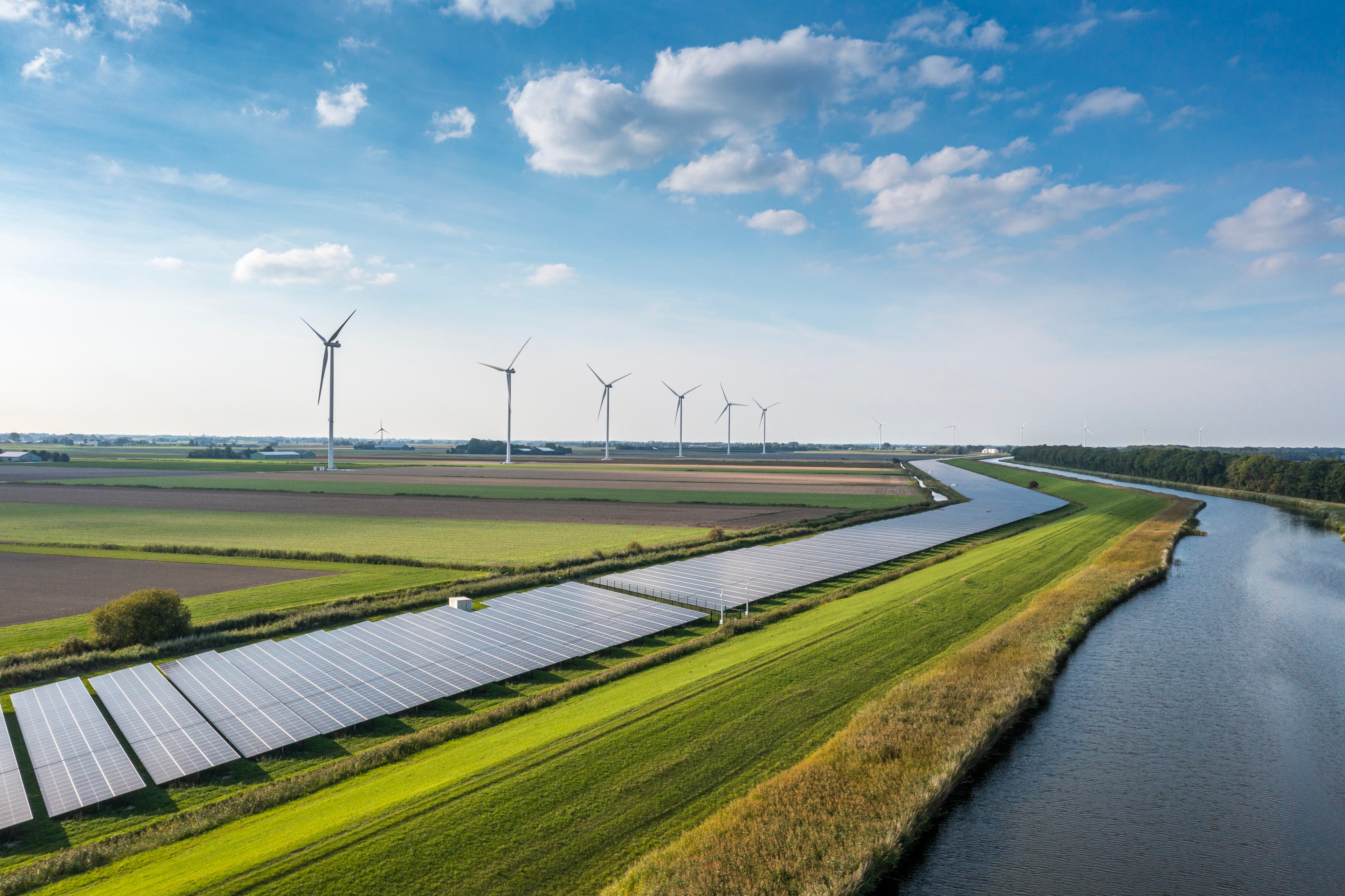
Image source: Getty Images.
Even Saudi Arabia is ramping up its clean energy capacity, with the 2025 launch of its multibillion-dollar Greenfield solar projects. And in Latin America, nearly 70% of electricity now comes from renewables, as solar, wind, and biofuels see significant increases across the region.
3. The AI revolution needs clean energy to continue
OpenAI CEO and AI billionaire Sam Altman has called for an "energy breakthrough" to meet the voracious energy appetites for AI data centers, which are projected to consume as much electricity as the entire nation of Japan by 2030.
In a 2024 summit, Altman said that increased renewables, in particular cheaper solar power and storage, were the way forward. His comments are seconded by Elon Musk, who warned last year that AI's electricity needs could lead to rampant power shortages.
The world will turn to fossil fuels to meet some of this demand. But the energy shortage will further drive interest in renewables, which aren't locked into a zero-sum battle with fossil fuels as many people assume.
A "catch-all" way to play this trend
The iShares Global Clean Energy ETF could still be in the early days of its rally as the renewables transition accelerates in 2026.
As an exchange-traded fund, it has over 100 holdings, with broad exposure across renewable energy sectors from solar to wind power to fuel cells. Its largest holding, Bloom Energy, is up 534% over the last year, but at just 10.55% of its portfolio, this fuel cell company's surge isn't the reason for the fund's outperformance. Another holding, the wind power company Vestas Wind Systems, has returned 90% over the last 12 months. And SolarEdge, a producer of microinverters for solar panels, has returned 136% over the last year.
These big gains across a variety of companies in different sectors of renewable energy -- wind, solar, and fuel cells -- show that the fund is thriving from broad-based exposure. Meanwhile, its expense ratio of 0.39% is lower than the industry average of 0.56%. For investors looking for a low-cost, simple way to capture broad-based upside in the renewables transition, this fund looks like a buy.