Every stock can be like the proverbial glass of water that's either half-empty or half-full, depending on how you look at it. United Parcel Services (UPS 0.35%) is no exception.
If you're a half-empty kind of person, you'll likely point out that UPS stock is down by a double-digit percentage over the last 12 months while the S&P 500 (^GSPC 2.06%) has soared. You might also note that the package delivery giant is spending more to pay dividends than it generates in free cash flow, a worrisome sign.
On the other hand, investors with a half-full outlook will probably focus on UPS stock's rebound, as shares have jumped more than 25% over the last three months. They'll also no doubt emphasize the company's better-than-expected third-quarter 2025 results.
I'm firmly in the half-full camp. Here are three key reasons why I think the future is looking up for UPS.

NYSE: UPS
Key Data Points
1. Higher-quality revenue
Yes, UPS' revenue isn't as high as it once was. The company's revenue fell 3.7% year over year in Q3. However, this decline was planned as part of a broader strategy.
UPS sold its Coyote Logistics unit in the third quarter of 2024, resulting in a significant drop in supply chain solutions revenue. It's also reducing the volume of shipments for Amazon (AMZN 3.40%). Why would the company deliberately take these actions? To increase its revenue quality.
CEO Carol Tomé noted in the company's latest earnings call that U.S. revenue per piece increased by 9.8% year over year in Q3. UPS is also working to replace the lost revenue with higher-margin business.
As a case in point, the company closed its acquisition of Andleuer Healthcare Group in November 2025. This deal helps UPS advance toward its goal of becoming the world's No. 1 provider of complex healthcare logistics.
2. A more efficient network
Higher-quality revenue is only one piece of the puzzle for UPS, though. The company is also transforming its delivery network to make it more efficient than ever.

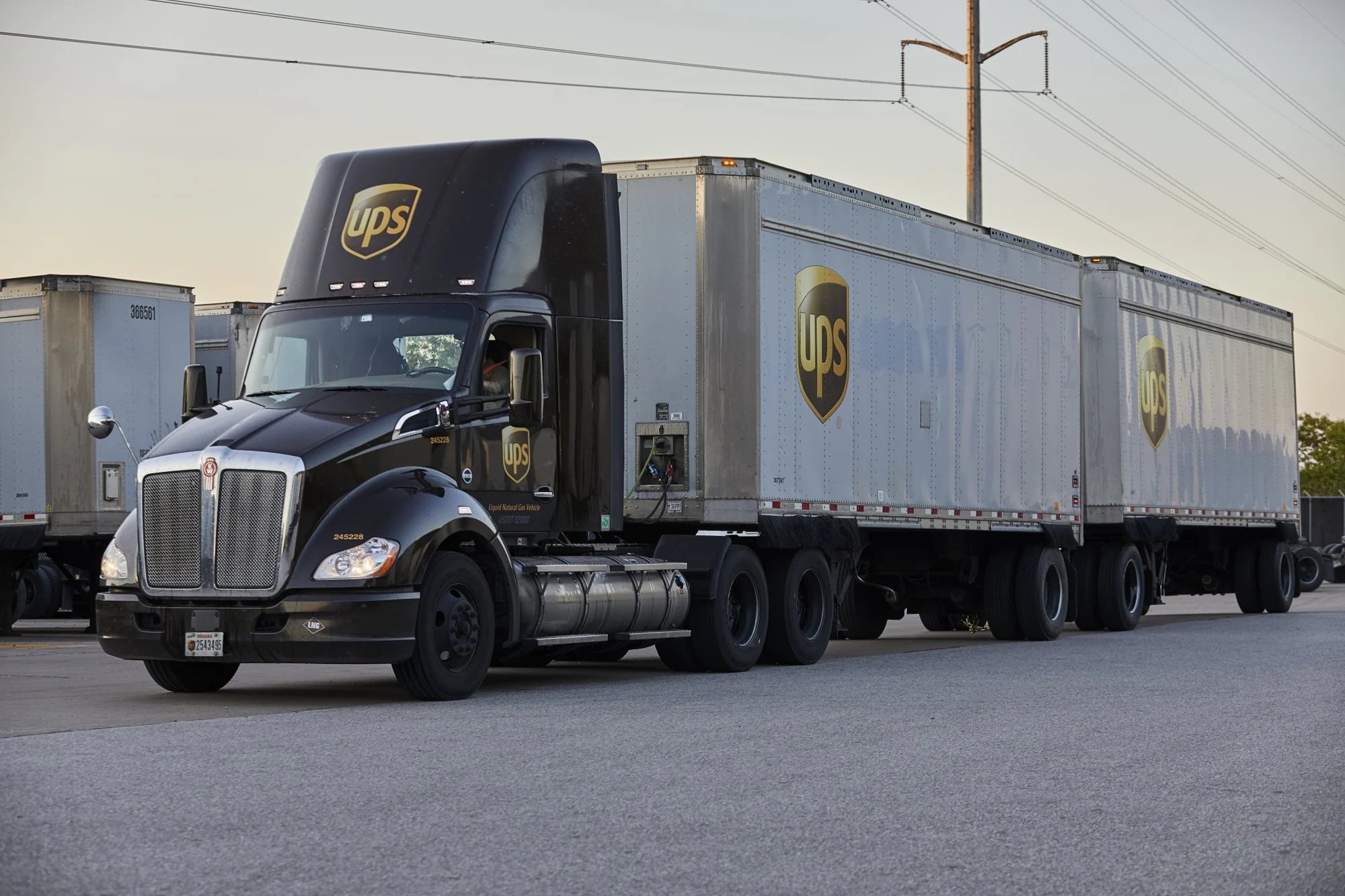
Image source: UPS.
UPS is in the midst of the most extensive network reconfiguration in its history. It has closed 93 buildings thus far, including 19 in Q3. The company completed a voluntary retirement program for many of its drivers. When UPS reports its full-year and Q4 results, it will likely announce that roughly $3.5 billion in costs were removed in 2025.
These efforts are already bearing fruit. U.S. operating margin increased by 10 basis points in Q3. I expect UPS' profitability will continue to improve over the next few years. I also believe that the company will generate more free cash flow, which should enable it to continue paying dividends at least at current levels.
3. A clearer tariff picture
The Trump administration's tariffs have presented significant challenges for UPS. Volumes fell in its higher-margin international lanes (especially China to the U.S.) and grew in its lower-margin lanes. However, Tomé said in the Q3 earnings call that the uncertainty related to tariffs is "now somewhat resolved."
To be sure, she didn't claim that the uncertainty has been entirely removed. Tomé acknowledged that small- and medium-sized businesses (SMBs) could "feel the full brunt of some of these tariffs" in 2026.
Still, the worst appears to be over for UPS regarding tariffs. In some ways, the increased complexity of trade policies works to the company's advantage over the long term. As Tomé stated in the latest quarterly update, "At UPS, we don't just move goods, we remove friction."
The company has deployed agentic AI technology to enhance its customs brokerage capabilities. It's helping customers navigate the disruptions and keep their shipments moving. UPS is arguably more important to global commerce than ever.