The S&P 500 (^GSPC 2.06%) added 14% during the past year despite President Trump's tariffs hiking the average tax on U.S. imports to its highest level since 1935. However, while the stock market's strong performance is encouraging, investors have several reasons to be nervous:
- Trump claimed exporters would absorb the tariffs, but Goldman Sachs research indicates that U.S. companies and consumers collectively paid 82% of the tariffs in October 2025. Furthermore, Goldman estimates consumers alone will bear 67% of the cost by July 2026.
- Trump said tariffs would bring manufacturing activity back to America, but the Institute for Supply Management (ISM) says U.S. manufacturing activity has actually contracted for 10 consecutive months.
- Trump said tariffs would create U.S. jobs, but the Bureau of Labor Statistics says the U.S. economy added only 584,000 jobs last year. That means, apart from the pandemic in 2020, the jobs market is weaker today than it has been since the Great Recession.
Unfortunately, investors recently got more concerning news about President Trump's tariffs, and the timing is especially bad, because the S&P 500 is sounding an alarm last witnessed during the dot-com crash. Here are the important details.
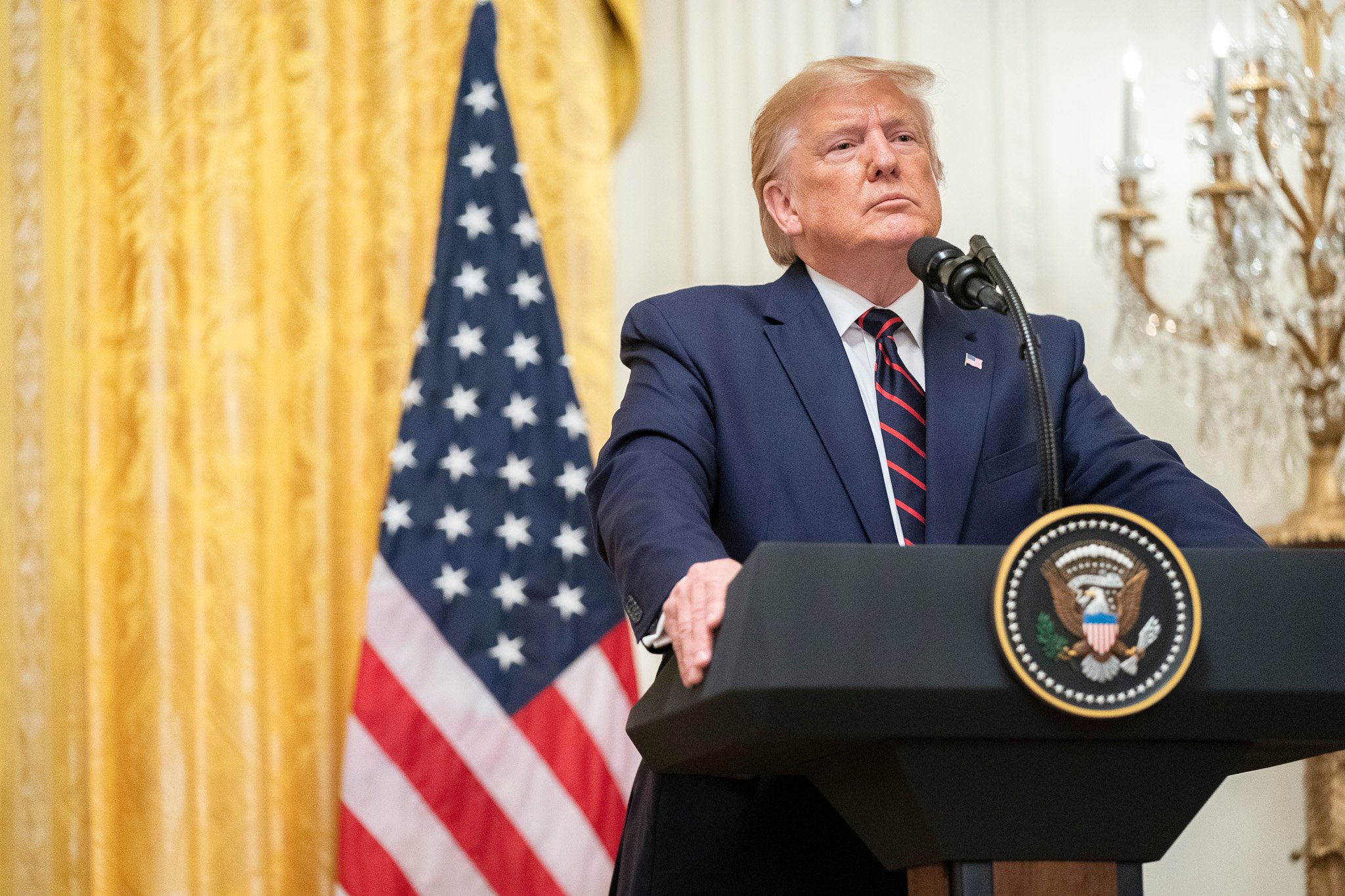
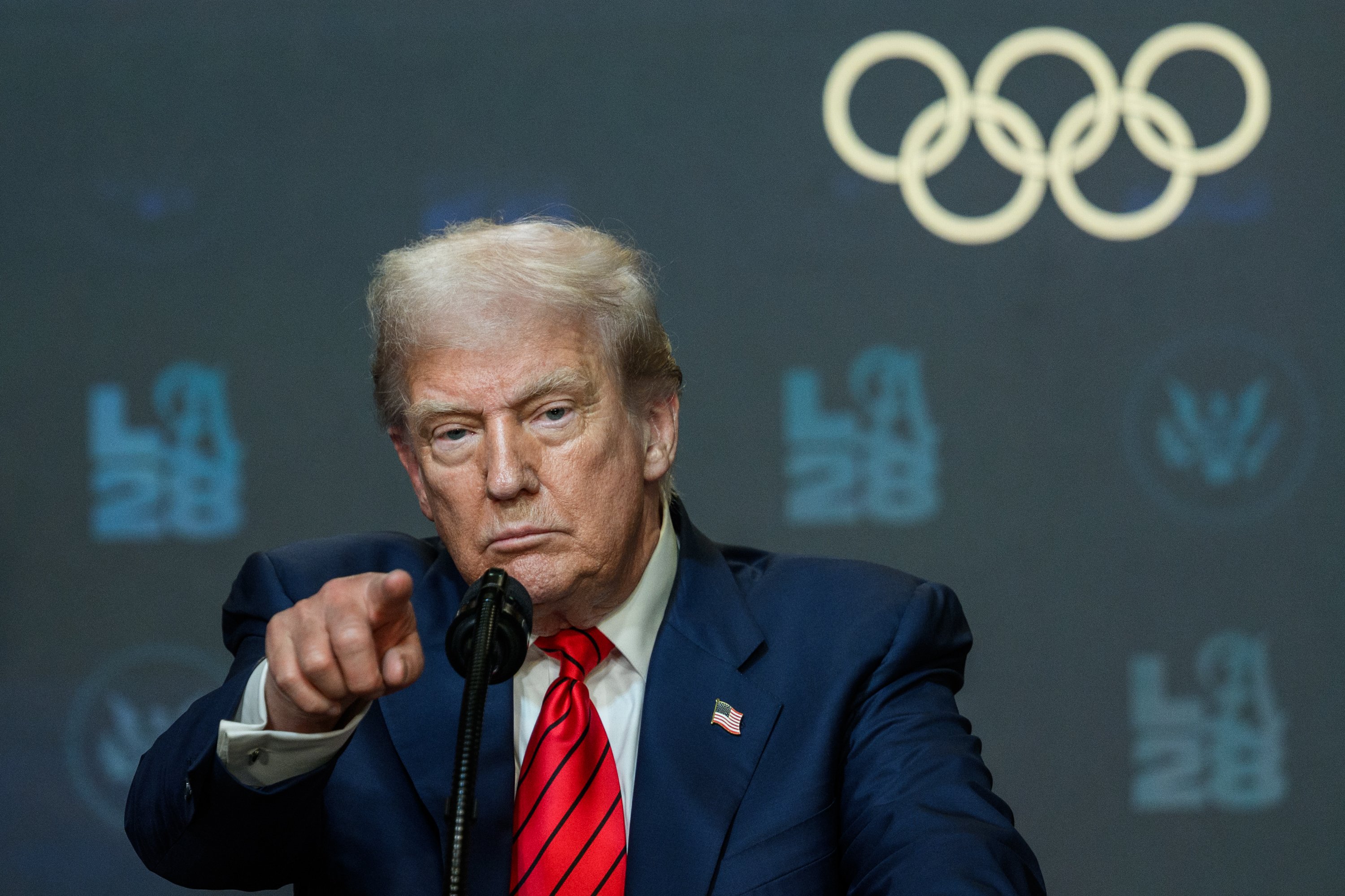
Image source: Official White House Photo by Shealah Craighead.
President Trump reignites the trade war with Europe
President Trump says the United States needs to own Greenland, an autonomous Arctic island that is owned by Denmark, because its strategic location makes it vital to national security. Leaders from Greenland and Denmark have repeatedly told Trump the territory is not for sale, and its residents do not want to be part of America. But the president is not taking "no" for an answer.
Last weekend, Trump threatened new tariffs on eight European allies until Denmark agrees to sell the Arctic territory. The countries backing Denmark's refusal to sell include Denmark, Finland, France, Germany, Norway, the Netherlands, Sweden, and the U.K. The president said products from those countries will be taxed at 10% in February, and the tariff rate will automatically jump to 25% in June without a deal for the "complete and total purchase" of Greenland.
While Trump has not provided specifics, new tariffs will likely be added to existing duties, currently 15% for most European goods and 10% for most U.K. goods. That could hurt the U.S. economy, not only because the countries threatened by Trump account for 13% of U.S. imports (making them collectively as important China or Canada), but also because the European Union plans to retaliate with tariffs on $100 billion in U.S. exports.
Here is the big picture: Trump has reignited the trade war with Europe, which bodes ill for the U.S. economy. Federal Reserve researchers recently reviewed 150 years' worth of data, and they arrived at this conclusion: Tariff hikes raise unemployment and lower GDP growth.
The S&P 500 sounds an alarm last witnessed during the dot-com crash
The S&P 500 had a cyclically adjusted price-to-earnings (CAPE) ratio of 39.9 in December, the most expensive valuation since the dot-com crash in October 2000. In fact, the index has only recorded a CAPE ratio higher than 39 during 25 months since its creation in 1957, meaning the index (a benchmark for the entire U.S. stock market) has only been this expensive 3% of the time in history.
Unfortunately, the stock market usually generates poor forward returns when starting from such a high valuation. The table shows the S&P 500's best, worst, and average return over different time periods following incidents when its monthly CAPE multiple topped 39.
|
Time Period |
S&P 500's Best Return |
S&P 500's Worst Return |
S&P 500's Average Return |
|---|---|---|---|
|
One year |
16% |
(28%) |
(4%) |
|
Two years |
8% |
(43%) |
(20%) |
Data source: Robert Shiller. Table by author.
As shown, when the S&P 500 has recorded a monthly CAPE ratio above 39, the index has declined by an average of 4% during the next year, and by an average of 20% during the next two years. In other words, history says the S&P 500 will drop 4% by January 2027 and 20% by January 2028.
Of course, past performance is never a guarantee of future results. Investors may tolerate higher CAPE ratios today because they expect artificial intelligence (AI) to increase profit margins and accelerate earnings growth in the future. In that scenario, the S&P 500 could continue moving higher while its CAPE ratio moderates.
Nevertheless, now is a good time to review your portfolio and sell any stocks you feel uncomfortable holding if there's a steep drawdown. Additionally, create a cash position in your portfolio; readily available capital will make it easy to buy future dips in the stock market.