The S&P 500 (^GSPC +0.41%) has added 1.5% year to date, and the benchmark index currently sits within half a percentage point of its all-time high. However, several Federal Reserve officials (including Chair Jerome Powell) have warned investors that stock prices are elevated by historical standards.
Wall Street anticipates double-digit gains in the S&P 500 in the remaining months of 2026, but a stock market drawdown (or even a crash) is well within the realm of possibility. Here's what investors should know.
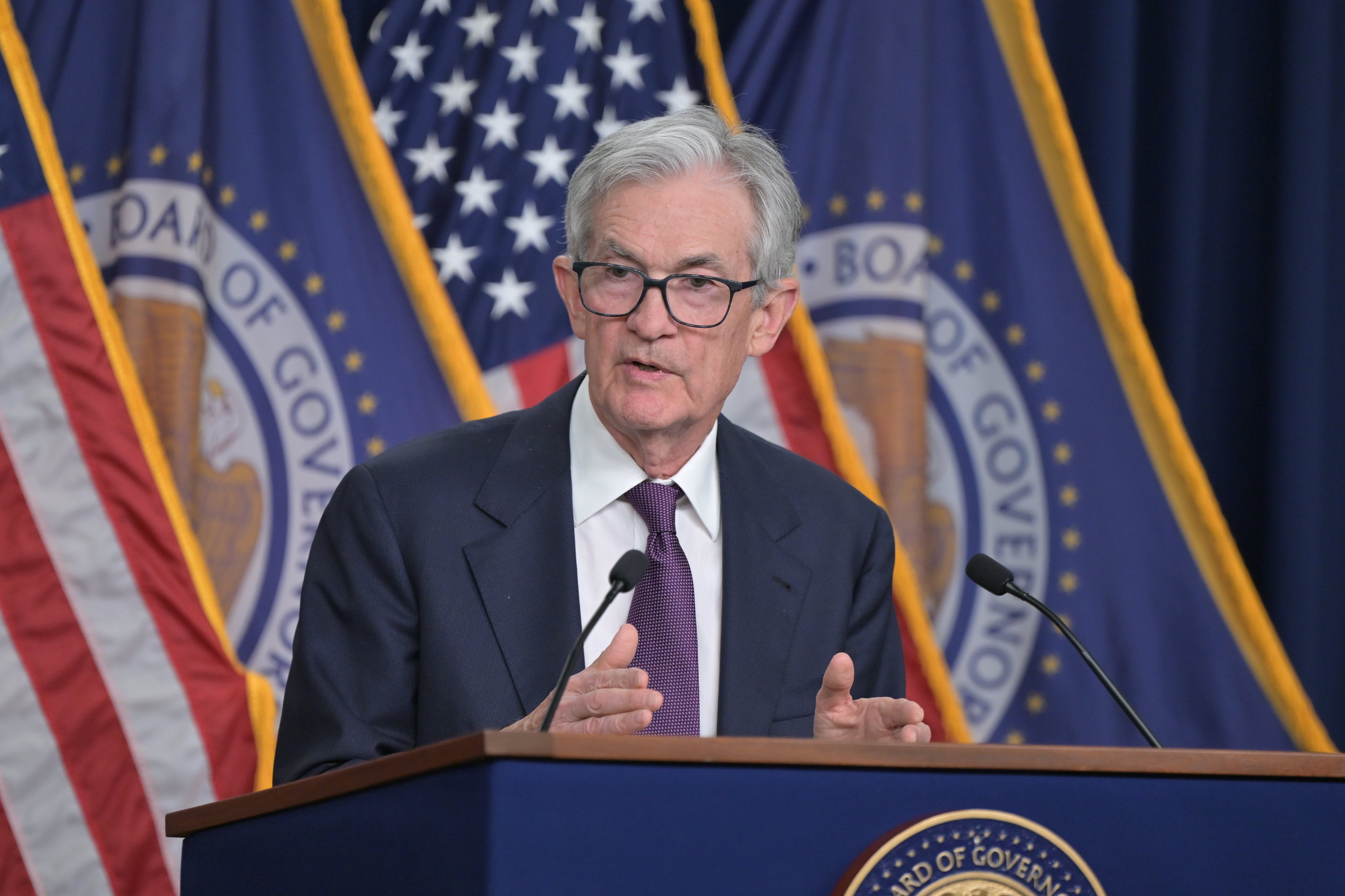
Image source: Official Federal Reserve Photo.
Fed Chair Jerome Powell warned investors that stocks are expensive
While Federal Reserve officials monitor the stock market, their monetary policy decisions do not target specific prices for any financial asset. Nevertheless, Fed Chairman Jerome Powell warned in September, "By many measures... equity prices are fairly highly valued."
Other policymakers have expressed similar concerns. Minutes from the FOMC meeting in October stated, "Some participants commented on stretched asset valuations in financial markets, with several of these participants highlighting the possibility of a disorderly fall in equity prices."
Additionally, the latest version of the Federal Reserve's semiannual financial stability report was published in November. It warned that the S&P 500's forward price-to-earnings (P/E) ratio was "close to the upper end of its historical range."
The S&P 500 sounds an alarm seen just twice in the last 40 years
Today, the S&P 500 has a forward P/E ratio of 22.1, a premium to the 10-year average of 18.8, according to FactSet Research. Comparatively, the index had a forward P/E ratio of 22.5 when Powell remarked about equity prices being "fairly highly valued" in September.
Apart from the current bull market, the S&P 500 has only sustained a forward P/E multiple above 22 during two periods in the last four decades: the dot-com bubble and the COVID-19 pandemic. The index eventually fell into a bear market both times.
The table shows the S&P 500's best, worst, and average returns over different time periods after recording a forward P/E multiple above 22.
|
Time Period |
S&P 500's Best Return |
S&P 500's Worst Return |
S&P 500's Average Return |
|---|---|---|---|
|
One year |
39% |
(24%) |
7% |
|
Two years |
34% |
(42%) |
(6%) |
Data source: Federal Reserve. Data covers January 1989 through January 2026.
As shown, the S&P 500 has returned an average of 7% during the 12-month period following a forward P/E multiple above 22. Comparatively, the index has returned an average of 10% over every 12-month period.
More concerning, the S&P 500 has declined by an average of 6% during the two-year period following a forward P/E multiple above 22. Comparatively, the index has returned an average of 21% over every two-year period.
What does that mean for investors? A forward P/E ratio above 22 does not mean a market crash is imminent, though it is a possibility because the S&P 500 is predisposed to drawdowns under such conditions. However, historical data suggests the S&P 500 will add about 7% by January 2027 and decline about 6% by January 2028.
Wall Street expects the S&P 500 to advance 10% in the remaining months of 2026
Wall Street expects S&P 500 companies to report an acceleration in revenue and earnings growth in 2026. Specifically, revenue is expected to increase 7.1% (up from 6.6% in 2025) and earnings are expected to increase 15.2% (up from 13.3% in 2025), according to LSEG.
Consequently, most analysts have an optimistic outlook for the U.S. stock market in 2026. The table details where 19 Wall Street investment banks and research organizations think the S&P 500 will finish the year. It also shows the implied upside from the current level of 6,950.
|
Wall Street Firm |
S&P 500 Target Price (2026) |
Upside |
|---|---|---|
|
Oppenheimer |
8,100 |
17% |
|
Deutsche Bank |
8,000 |
15% |
|
Morgan Stanley |
7,800 |
12% |
|
Seaport Research |
7,800 |
12% |
|
Evercore |
7,750 |
12% |
|
RBC Capital |
7,750 |
12% |
|
Citigroup |
7,700 |
11% |
|
Fundstrat |
7,700 |
11% |
|
Yardeni Research |
7,700 |
11% |
|
Goldman Sachs |
7,600 |
9% |
|
HSBC |
7,500 |
8% |
|
Jefferies Financial Group |
7,500 |
8% |
|
JPMorgan Chase |
7,500 |
8% |
|
UBS |
7,500 |
8% |
|
Wells Fargo |
7,500 |
8% |
|
Barclays |
7,400 |
6% |
|
BMO Capital |
7,400 |
6% |
|
CFRA |
7,400 |
6% |
|
Bank of America |
7,100 |
2% |
|
Median |
7,600 |
10% |
Sources: BMO Capital Markets, Reuters, Yahoo Finance.
As shown, the median forecast among 19 analysts says the S&P 500 will finish the year at 7,600. That implies 10% upside from its current level of 6,950.
However, Wall Street is notoriously bad at predicting how the S&P 500 will perform in any given year. In fact, the median estimate over the last four years was incorrect by an average of 16 percentage points. If anything, investors should be wary of Wall Street's outlook.
With valuations elevated by historical standards, stocks could fall sharply if financial results fail to meet high expectations.