At CES earlier this month, Jensen Huang, CEO of Nvidia (NVDA 1.32%), unveiled his company's latest artificial intelligence (AI) models and semiconductor chips, declaring that "the ChatGPT moment for physical AI is here."
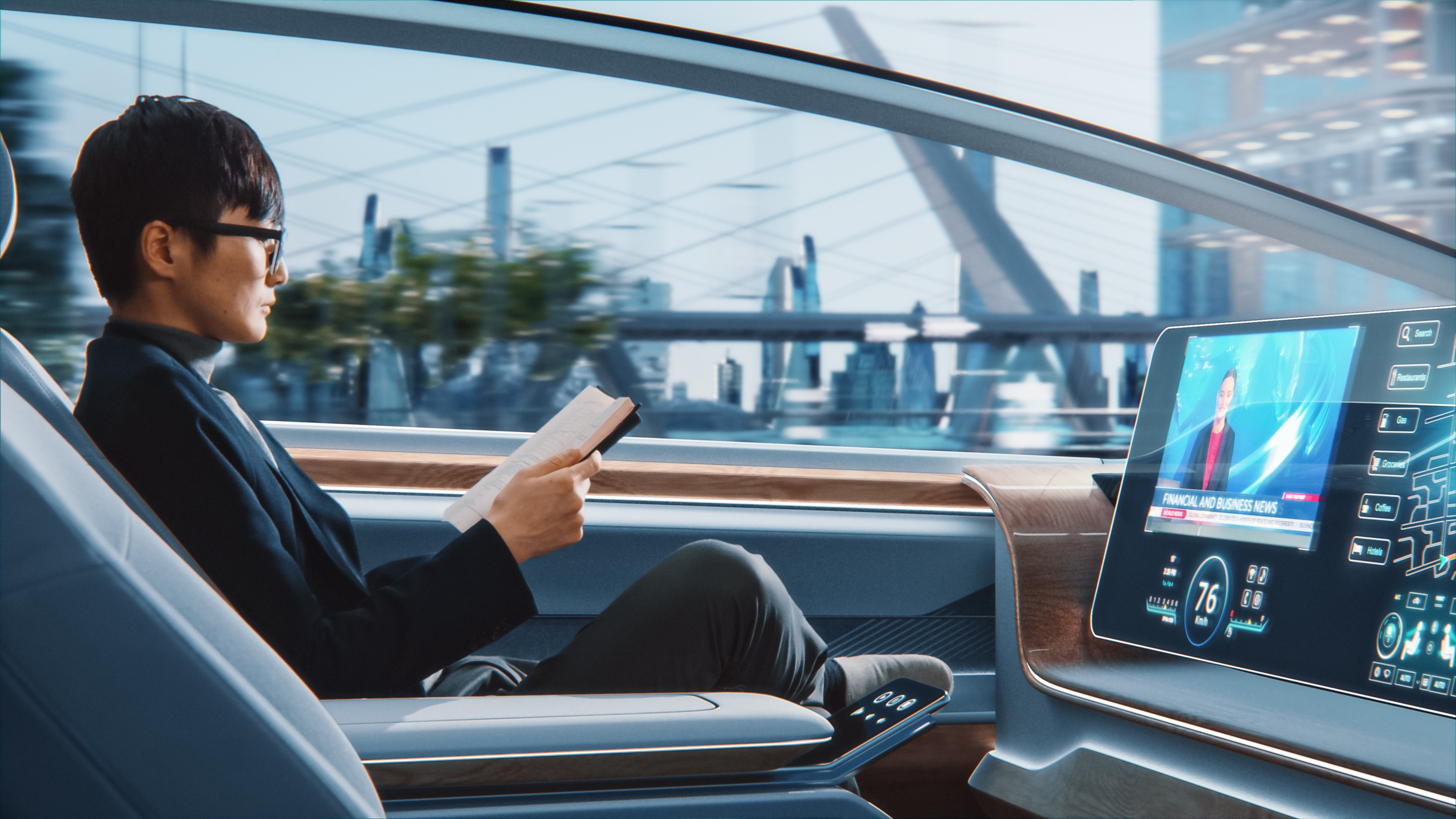
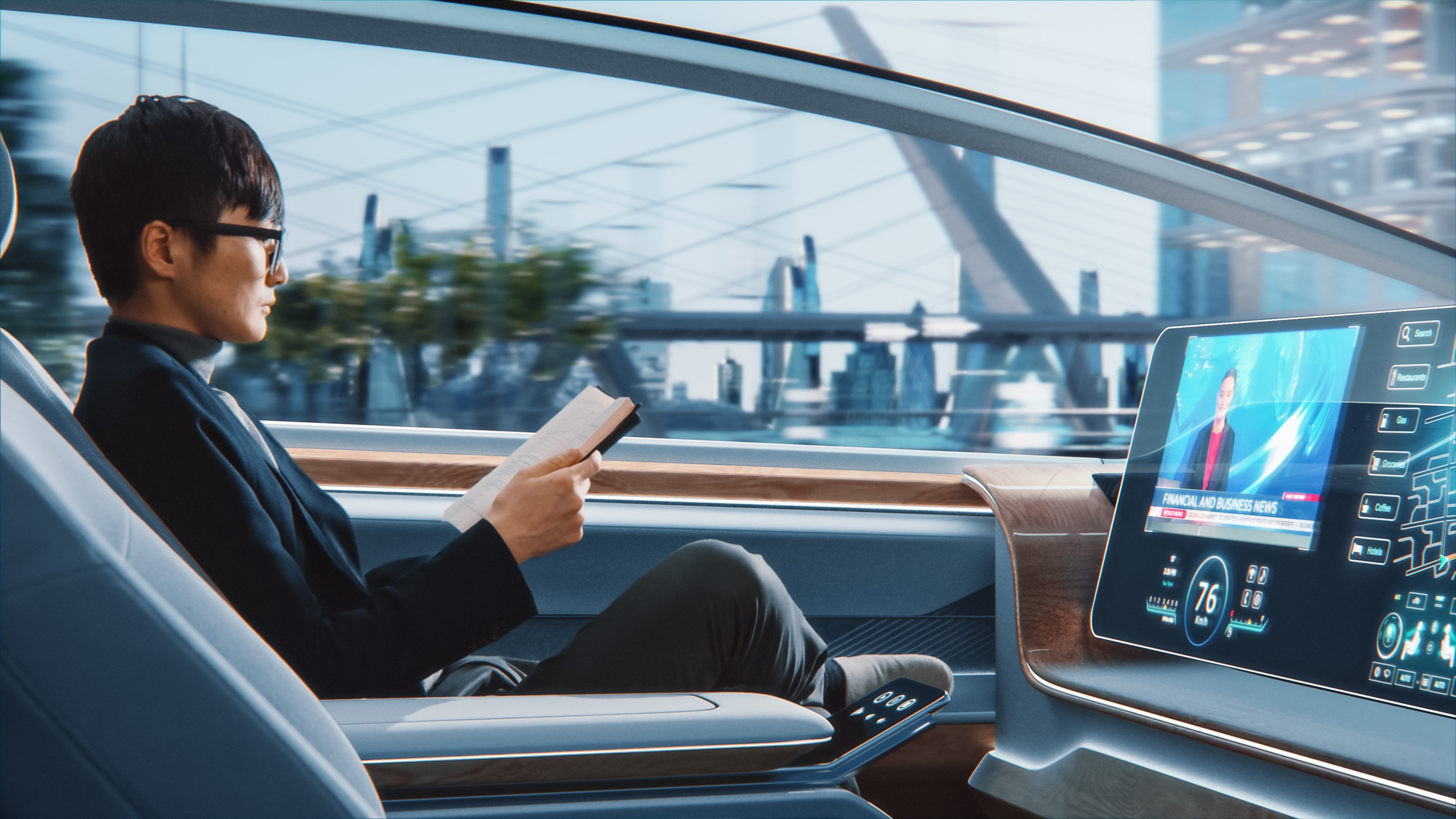
According to Huang, Nvidia's AI models for autonomous vehicles could finally make ubiquitous driverless cars a reality. He predicted that robotaxis would be among the first to benefit, as the world's first thinking, reasoning, autonomous AI -- Nvidia's Alpamayo technology -- hits the market.

Image source: Getty Images.
Huang's demonstration of Alpamayo driving a car in San Francisco was impressive, yet Nvidia shares ticked downward slightly after the conference. This might seem puzzling, considering Nvidia's show of force in an emerging industry that is projected to total $13.6 trillion by 2030, according to Fortune Business Insights.
But there are two reasons why Wall Street may be skeptical.
1. Physical AI is right around the corner -- for real this time
For many years, driverless cars have been the technology that is about to go mainstream. In 2016, Tesla (TSLA 2.52%) CEO Elon Musk predicted that a Tesla would drive itself from Los Angeles to New York City with no human needed by 2017. A decade after the prediction, while Tesla's AI-assisted driving technology is called Full Self-Driving (Supervised), it requires constant vigilance from human drivers.
In 2019, Alphabet (GOOG 1.39%)(GOOGL 1.35%) joined Tesla in predicting that self-driving technology would grow exponentially by 2021. Yet while AI driver assistance is present in many vehicles, you can't buy a truly self-driving car today.

NASDAQ: NVDA
Key Data Points
To be fair, there were many failed predictions about AI-related natural language processing software before the technology had a breakthrough moment in November 2022, with OpenAI's ChatGPT. The virtual assistant gained 100 million users in just two months. Chances are, you remember its immediate impact on markets. The tech-heavy Nasdaq Composite had its best first half of a year since 1983, while Nvidia stock went on to surge over 1,300%.
So while the driverless car revolution has had some false starts, investors should not be dismissive of this trend. Unlike ChatGPT, which was instantly available for anyone with internet access to download and check out, most driverless car technology must be approved by regulators before consumers can experience it.
That might be a key reason why Huang's Alpamayo announcement hasn't attracted a fraction of the attention that ChatGPT initially received -- yet. But waiting too long, until the breakthrough attracts more buzz and headlines, could be an expensive mistake for investors.
2. Nvidia has plenty of competition
Nvidia may well enjoy a first-mover advantage. But Jensen's ChatGPT analogy actually implies a possible dark lining for his company. After all, while Microsoft had a stake of more than $13 billion in OpenAI, the company behind ChatGPT, and Nvidia didn't, it was Nvidia that benefited far more from the AI revolution, with Microsoft shares not quite doubling since ChatGPT launched.
Still, plenty of deep-pocketed tech giants are working feverishly to beat Nvidia to this projected $13.6 trillion market -- or at least deny it market dominance. Alphabet has committed $5 billion in funding to its subsidiary Waymo, the driverless car company that has already given 450,000 weekly paid rides, with 14 million trips in 2025. Meanwhile, Morgan Stanley predicts that Tesla's prospects in the autonomous car market might actually be the biggest reason to invest in the $1.5 trillion company.
A "catch-all" way to play this trend
Ultimately, I could see any one of these companies carving out a dominant market share in this multitrillion-dollar sector, or even another clear winner emerging. It's also possible that they more or less split the difference and benefit equally, in a $13.6 trillion market that has enough room for everyone.
A simple way to profit no matter which company achieves dominance is through the Global X Autonomous & Electric Vehicles ETF (DRIV 1.99%). The exchange-traded fund (ETF), designed to provide exposure to companies developing electric vehicles and autonomous vehicles, is diversified, with a 4.19% position in Alphabet, its biggest holding, followed by a 3.53% position in Tesla, and a 2.66% position in Nvidia. Qualcomm, Microsoft, and Intel are the other big names in AI that are among its top 10 holdings.

NASDAQ: DRIV
Key Data Points
As you can see, this fund's diversification allows investors to play the driverless car trend -- and, very likely, gain exposure to its eventual winner -- without putting all their eggs in one basket. It also contains many companies that have multiple paths to glory apart from the driverless car revolution. Tesla, for instance, is hoping to launch its Optimus robot in under two years, while Alphabet's large language model Gemini is already leading to partnerships with big names like Apple and Walmart.
Finally, the ETF carries an expense ratio of 0.68%, which is reasonable considering its 10.73% average annual return since its 2018 inception.
For investors seeking a simple way to play this trend without pinning their hopes on any one tech firm, the Global X Autonomous & Electric Vehicles ETF is a buy.