Three CEOs have shaped Walt Disney (DIS +0.14%) over its 100-year history.
Visionary Walt Disney ran the company from 1923 to 1966. His brother, Roy O. Disney, who was instrumental in managing Disney's finances and making sure Walt's big ideas didn't bankrupt the company, came out of retirement to hold everything together after Walt's passing and fulfill his dream of opening Walt Disney World.
The deepest period of uncertainty came between Roy's passing in 1971 and Michael Eisner's stepping in as CEO in 1984, alongside Frank Wells as COO and president.
Eisner led Disney until 2005, when Bob Iger took the reins. Iger had his contract extended multiple times before finally passing the torch to his handpicked successor, Bob Chapek, in 2020. But Chapek lasted only until 2022, when Iger stepped back in to stabilize the company after a slew of box office flops, the bloating of Disney+'s budget, and plummeting park profits during the pandemic.
With Iger's contract ending this year, Disney announced on Feb. 3 that Josh D'Amaro would become the next CEO, effective March 18. Here's why the move signals a vote of confidence in Disney's cash cow experiences segment, and what D'Amaro needs to do to turn Disney around.
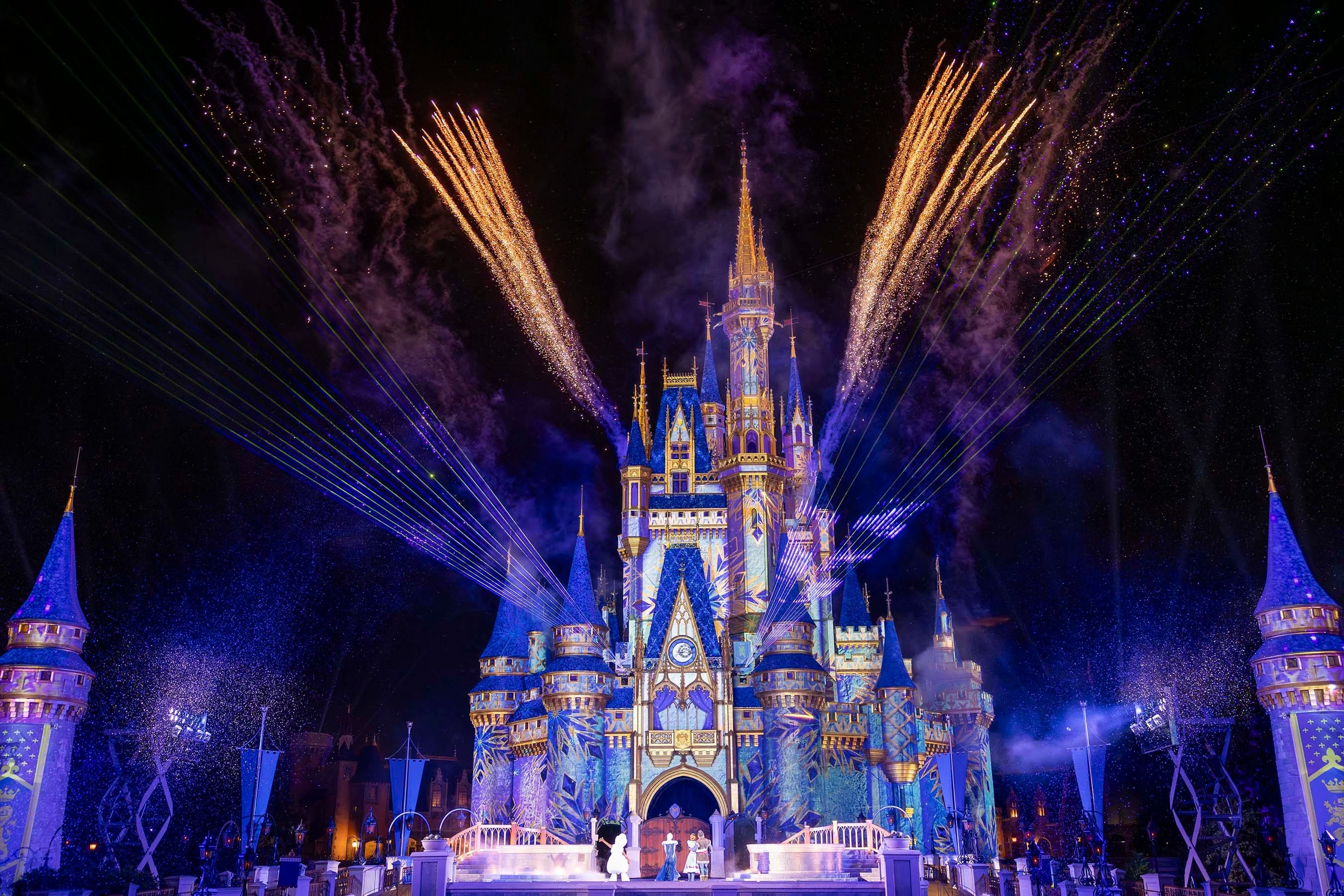
Image source: Walt Disney.
From magic to malaise
Although Eisner and Iger both served unusually long stints as CEO, both of their performances were far stronger in the first half of their terms.
Eisner was instrumental in restoring life to Disney animation, expanding the parks, integrating ABC, and saying no to then-tempting mergers and acquisition opportunities (just look at Time Warner's catastrophic merger with AOL). But Eisner eventually lost the trust of Disney shareholders and the board, which led Roy E. Disney, Walt's nephew and Roy O.'s son, to launch the "Save Disney" campaign in 2003. It eventually resulted in Iger taking over.
Iger made brilliant acquisitions: Pixar, Marvel, and Lucasfilm. He also recognized the need to build out Disney's digital content library to make it a streaming giant in a time of declining linear network performance.
On Nov. 21, 2022, the first trading day after the announcement that Iger would return as interim CEO, Disney stock gained 6.3% to close the session at $97.58 per share. On Feb. 2, 2026, the last trading day before the D'Amaro announcement, Disney closed at $104.45 per share. So in Iger's latest term, Disney stock gained a paltry 7% compared to a rip-roaring 76.6% gain in the S&P 500 index.
Iger had overall success as CEO. But during the last three-plus years, he couldn't save Disney from massively underperforming the broader market.
DIS Walt Disney
NYSE · As of 4:00 PM ET 10/21/26

Disney's road to recovery
In Iger's defense, D'Amaro is inheriting a business in far better shape than when Iger had to pick up the pieces in 2022.
Disney is having tons of box office success, especially in animation, with Zootopia 2 grossing $1.7 billion in ticket sales -- a record for a Hollywood animated film. In Disney's latest quarter, its subscription video on demand (SVOD) segment, which includes Disney+, earned $450 million in operating income and reported 8.4% operating margins. In just a few years, streaming has gone from big losses to consistent profitability.
The experiences segment is booming -- contributing a mind-numbing 71.9% of Disney's first-quarter fiscal 2026 operating income, with 33.1% operating margins.
Disney is simply too large to be the high-octane growth stock it was decades ago, when a single box-office hit could move the needle. But it can become a solid compounder for long-term investors. The blueprint is straightforward, and D'Amaro seems to be the person for the job.
Disney can focus on quality feature films, streaming, and sports content rather than big hits to carry the company. Entertainment can shift to a supporting role, with experiences taking center stage.
Disney has bold plans to take experiences to the next level by rapidly growing its cruise fleet, expanding existing parks, and opening a new Disneyland in Abu Dhabi in the early 2030s. These moves are capital-intensive and risky. But risk is a part of D'Amaro's modus operandi.
In an exclusive interview with ABC News (owned by Disney) on Feb. 3, D'Amaro referred to Iger, saying, "Bob's a big risk taker, I'm a big risk taker. And that's been true my whole life with how I've approached growing as an individual to how I've approached the business world, and I think you see that on full display today."
D'Amaro went on to discuss the risks of expanding into a new part of the world with a theme park in the Middle East, but he noted that one-third of the world's population is within a four-hour flight of Abu Dhabi.
Disney is a buy for patient value investors
If Disney can continue converting more than $0.30 of every experiences segment revenue dollar into operating income while vastly growing experiences' revenue through expansions, then the stock will likely do very well. Especially if Disney can continue improving streaming margins.
In the meantime, investor confidence is low, as evidenced by Disney's mere 15.7 forward price-to-earnings ratio.
Buying quality companies when they are out of favor takes patience. And it can be frustrating to hold a stock that underperforms the market by a wide margin. As bad as Disney has performed, the investment thesis is the best it's been in a while.
That said, if Disney fails to grow streaming margins or generates far weaker operating margins from its newer endeavors than from tried-and-true staples like Walt Disney World, the valuation will likely remain depressed.