In December, I said that Chevron (CVX +0.98%) stood out as a top high-yield dividend stock to buy before 2026 -- even better than what I consider to be the best U.S. energy exploration and production company, ConocoPhillips.
Both stocks have done phenomenally well year to date, with Chevron up 18.7% and ConocoPhillips rising 15% compared to just a 1.3% gain in the S&P 500.
With Chevron hovering around an all-time high, some investors may be concerned that the integrated oil and gas giant has run up too far, too fast. Here's why it's still a good buy now.
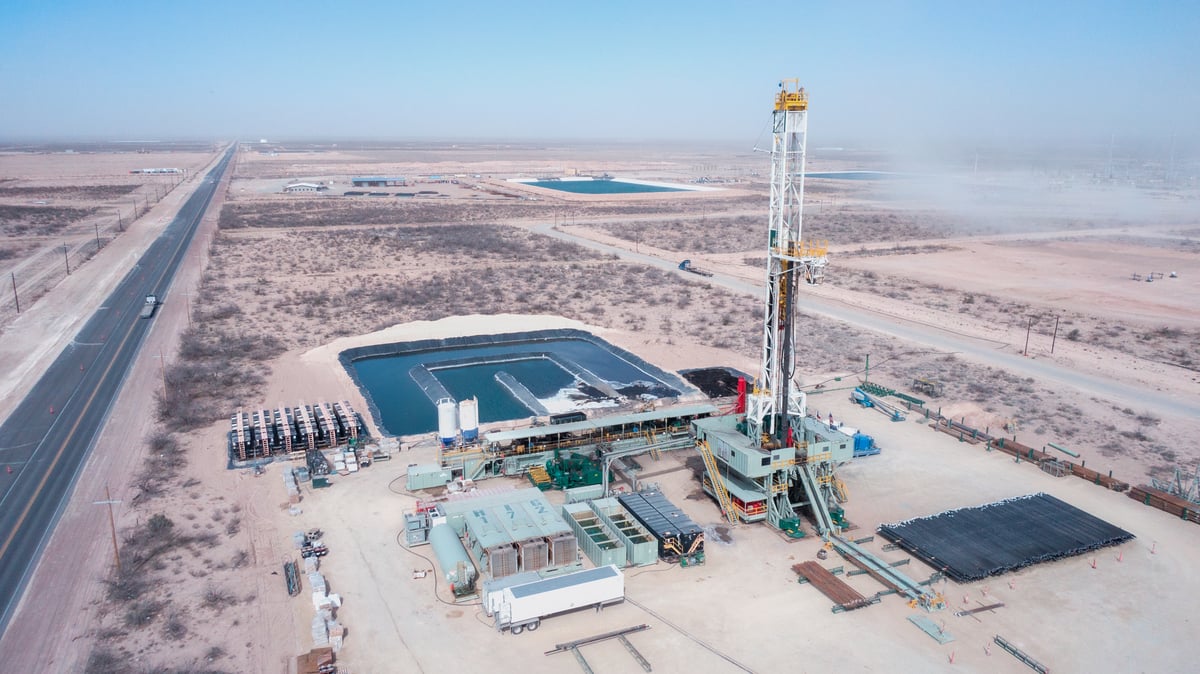
Oil and gas production facility. Image source: Getty Images.
Chevron's earnings declined
Chevron's upstream profits plummeted from $18.6 billion in 2024 to $12.82 billion in 2025, largely because of lower oil prices. But downstream profits jumped 75% thanks to higher refining margins. And the company generated $2.4 billion in added cash flow from operations to support larger capital expenditures (capex), stock buybacks, and its growing dividend.
All told, diluted earnings per share fell 31.8%. So you may be wondering why the stock is rallying to an all-time high.

NYSE: CVX
Key Data Points
Last year, the company completed its long-awaited acquisition of Hess, which boosts its production and gives it access to reserves in offshore Guyana in a consortium with ExxonMobil and China's CNOOC. Chevron and ExxonMobil are investing heavily in Guyana because of geological advantages that make it highly efficient to drill for hydrocarbons.
Directly west of Guyana is Venezuela, which has some of the world's largest offshore oil reserves. U.S investment in Venezuela could benefit Chevron because it is currently the largest U.S. operator in the region.
Chevron can thrive in less-than-ideal conditions
Besides significant growth potential in South America, oil prices have been on the rise to start 2026, which should further boost its margins. The best-performing sectors so far in 2026 are ones that don't depend on artificial intelligence (AI) to drive their investment theses, like energy, materials, and consumer staples. Amid concerns about growth stock valuations and AI spending, some investors are turning to companies like Chevron with tangible assets and a business model that can thrive even in an AI-driven downturn.
On its Jan. 30 earnings call, management said it can support its dividend payments and long-term investments at $50 per barrel of Brent crude oil (or lower). For context, Brent crude prices are around $67 per barrel at the time of this writing.
This flexibility means that fluctuations in oil prices won't necessarily derail its long-term growth plans, unless prices crash. And even if that were to happen, like they did in 2020, the company can lean on its strong balance sheet.
On Jan. 30, management announced a 4% raise to its dividend, the 38th consecutive year it has boosted its payout. There have been several oil crashes during that period, but throughout it all, investors have been able to count on the company's dividend. Today, its dividend is arguably even more reliable because of the business' improved operational efficiency, elite asset portfolio, and technological advancements that have reduced production costs.
Chevron remains a foundational value stock
Even at an all-time high, Chevron remains a balanced buy now. The stock still yields a sizable 3.9%. Its valuation isn't as cheap as it used to be, but it's still reasonable at 27.2 times earnings and 20.2 times free cash flow. And earnings were down a lot last year, which is inflating its trailing earnings multiple.
Add it all up, and Chevron stands out as a balanced value stock, especially for investors looking for ideas outside of AI stocks.