The geopolitical conflict in the Middle East has materially disrupted global energy markets. Oil and natural gas prices have risen dramatically in a very short period. While price moves of this nature aren't actually unusual in the energy sector, they are still headline-grabbing events. And they can materially boost financial results for energy producers.
Which is why Chevron's (CVX 1.51%) stock is up nearly 40% so far in 2026. Is it worth buying this industry giant, or would you be better off with a more diversified investment option like Vanguard Energy ETF (VDE 0.52%)?
Chevron is built to survive the cycle
Chevron is one of the world's largest energy companies, with assets across the entire energy value chain. That diversification helps to soften the peaks and valleys inherent to the commodity-driven energy business. On top of that, Chevron also has one of the strongest balance sheets among its closest peers, with a debt-to-equity ratio of roughly 0.25%. That would be low for any business, but it gives Chevron the ability to add leverage during industry downturns so it can support its business and dividend until oil prices recover.

Image source: Getty Images.
The strength of Chevron's business model is highlighted by its ability to regularly increase its dividend for more than a quarter-century. Add in a well above market 3.4% dividend yield, and you can see why long-term dividend investors might like the stock.
However, the real benefit of owning Chevron won't be evident until oil prices fall from their recent highs. At that point, investors will be able to sleep well at night knowing they can count on the company to keep paying its dividend.

NYSE: CVX
Key Data Points
Vanguard Energy ETF doesn't have the same downside protection
That said, if you buy Chevron, you are going all-in on one stock. Many investors would be drawn to a more diversified option, such as Vanguard Energy ETF, which offers broader industry exposure. That's not a bad decision, but it comes with different risks.
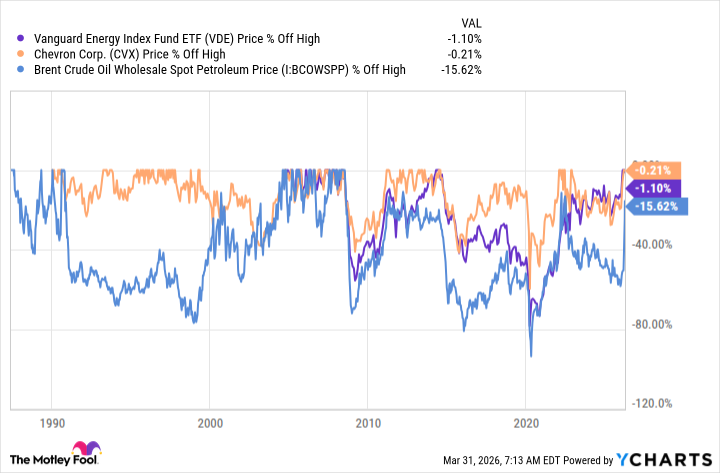
The ETF is up roughly the same amount as Chevron so far in 2026, but its dividend yield is lower at 2.5%. And, during the last two oil downturns, Vanguard Energy ETF fell further than Chevron. The added diversification didn't turn out to be a benefit when oil prices were falling, because many of the ETF's holdings are more heavily focused on energy production. And, for better or worse, a lot of investors are likely using the ETF as a way to "play" oil prices, meaning they are making just a short-term commitment. In contrast, Chevron's diversified business model and reliable dividend appear to have helped support its stock price.
For most long-term dividend investors, Chevron is likely a better energy investment than Vanguard Energy ETF.