📌 Top story -- scroll down for more updates
Closing Bell
4:06 pm
Stocks fell Tuesday as a U.S. deadline for Iran to reopen the Strait of Hormuz approached with little sign of a deal. Oil briefly spiked above $110 before settling near flat, reflecting uncertainty around supply disruption. Broadcom (AVGO 0.45%) rose 5% after expanding AI partnerships with Alphabet (GOOG 2.62%) and Anthropic, standing out in a risk-off session.
- Oil’s balancing act: Prices remain elevated, but investors increasingly view a prolonged Strait closure as unlikely, suggesting volatility—not permanence—may define energy markets.
- Markets vs. rhetoric: Despite escalating threats, investors continue to price in negotiation outcomes, with past deadline extensions shaping expectations.
Markel Flexes 21 Years of Discipline
3:41 pm — MKL -0.00%

By Buck Hartzell
As always, the Markel (MKL +1.33%) shareholder letter is worth a read. I’ll highlight two things that stood out. Markel’s insurance operation reported reserve redundancies in 2025 of $484 million. They’ve reported reserve redundancies for the last 21 years in a row. Not many insurers can make that claim.
Next, the unrealized gain on their equity portfolio was $8.9 billion at the conclusion of 2025. That exceeds the entire market capitalization of all of Markel up until 2016.
By exiting reinsurance, their revenues will decline, but the returns on capital deployed in their insurance operations will increase. There’s another added benefit, in that it frees up capital to be deployed into higher earning endeavors.
In a transition year, Markel certainly made a lot of solid progress.
Markets Whipsawed by War Risk
3:23 pm
Markets are on edge ahead of a key Iran deadline, with the S&P 500 slipping and oil surging above $115 as traders brace for multiple outcomes. Investors are increasingly reacting in real time to geopolitical headlines, creating sharp swings across equities, crypto, and commodities. But long-term investors would do well to zoom out. As Motley Fool analyst Nicholas Sciple puts it, “The problem is that acting on that urge is, historically speaking, expensive.”
- Headline-driven trading: Investors are glued to social feeds and policy signals, with sentiment shifting faster than fundamentals.
- Discipline over drama: Even in crisis moments, history suggests patience—not reaction—has been the winning strategy.
In uncertain times, it helps to not go it alone. Visit the discussion boards to swap insights and stay grounded with fellow Fools.
Seth Jayson: Cute Robots, Ugly Math
2:27 pm — SERV -4.55%

By Seth Jayson
Team Rule Breakers
These little sidewalk delivery robots are fun to watch—both the physical ones dodging pedestrians in Miami and the stock dodging profitability with equal determination. This week’s main event was today: Serve (SERV +0.91%) showed off “Maggie,” a conversational robot demo at NVIDIA (NVDA +1.90%) GTC, powered by T-Mobile’s (TMUS 1.44%) 5G edge network. It’s a neat tech showcase, though the stock barely flinched. Honestly, the week was quiet. The real question remains what it’s been for months. Can a company doing $2.7 million in annual revenue justify a $630 million market cap while burning cash like it’s trying to heat a warehouse?
I just got back from a colleges tour and—guess what! Delivery robot leader Starship was the go-to on the campuses I saw.
The numbers still looking thin:

Arm Down on Downgrade, War Risk
2:17 pm — ARM -4.42%
Shares of Arm Holdings (ARM 0.29%) fell about 5.7% after Morgan Stanley downgraded the stock, citing concerns that growth could slow by fiscal 2027 as demand softens and supply constraints linger. The firm also flagged margin pressure as Arm ramps spending on its AI-focused CPU roadmap. Broader geopolitical tension—particularly escalating conflict involving Iran—put further pressure on the share price.
- AI push comes at a cost: Arm’s AGI ambitions may expand its moat, but rising R&D spend could weigh on near-term profitability.
- A new AI duet takes the stage: IBM (IBM 2.70%) and Arm are teaming up on AI hardware, which Motley Fool analyst Jason Moser says “reinforces Arm’s push beyond mobile into the data center.” But at 207x earnings, “there’s limited margin for error.”
Foldable iPhone Delay Sends Shares Sliding
1:00 pm -- AAPL -3.4%
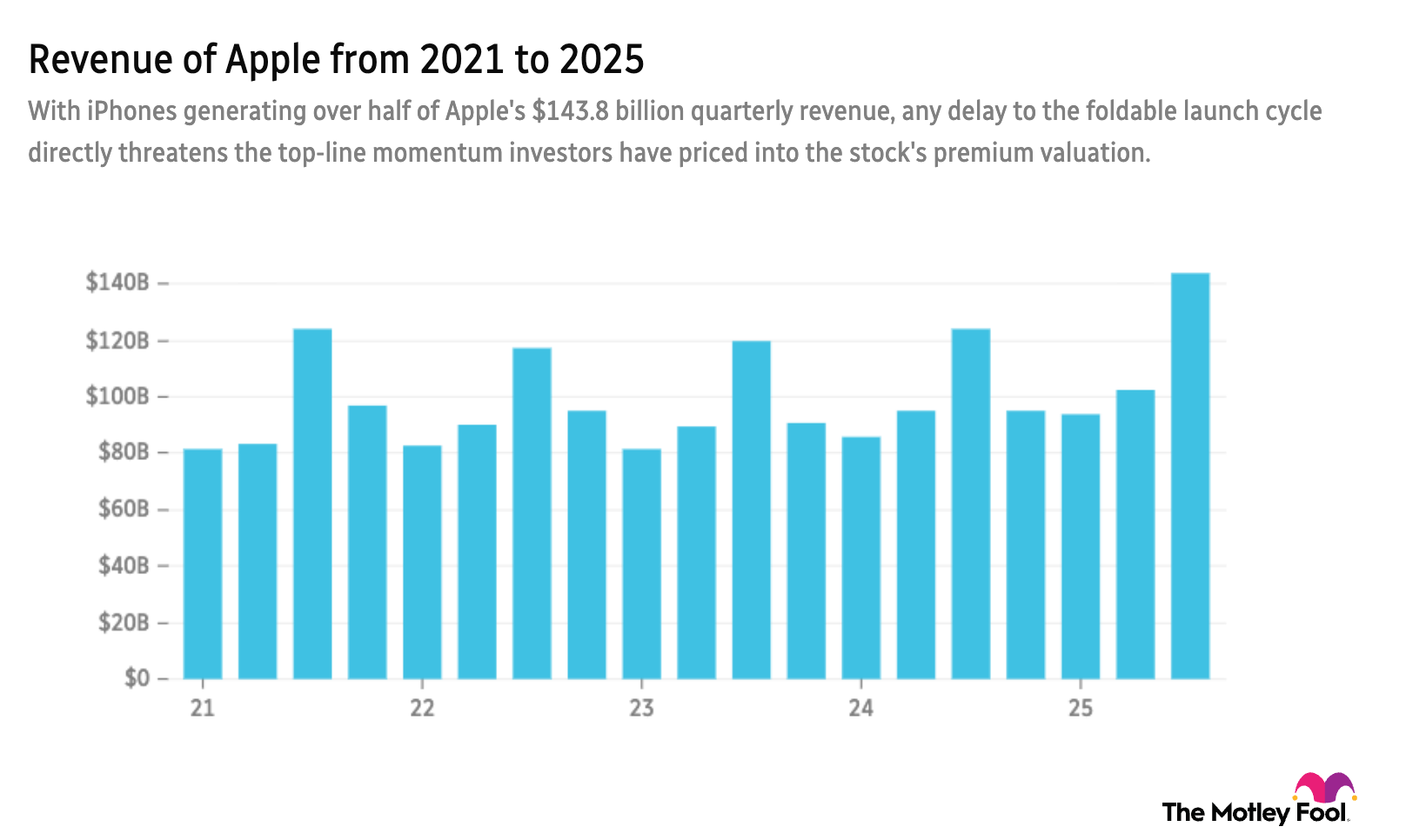
Apple (AAPL 0.17%) shares dropped 4% Tuesday following reports from Nikkei Asia that engineering hurdles may delay the company's first foldable iPhone. While competitors like Samsung (SSNLF +0.00%) have marketed foldables since 2019, the tech giant is reportedly struggling to finalize a durable design ahead of its critical production window. Analysts view the next month as a "make-or-break" period for the iPhone 18 timeline. With iPhones generating over half of Apple’s $143.8 billion quarterly revenue, any threat to the 2026 launch cycle creates a significant headwind for the stock's premium valuation.
- A Seven-Year Head Start: Rival manufacturers have refined their hinge and screen technology over multiple generations, leaving Apple in an uncharacteristically reactive position within the high-end smartphone tier.
- Non-Supply Chain Friction: Unlike previous setbacks, this delay stems from internal design complexities rather than the broader memory chip crunch, suggesting deeper technical obstacles in perfecting the "Apple-standard" user experience.
Can Dividends Save the Magnificent Seven?
1:05 pm
The S&P 500 dividend yield has shriveled to 1.24%, nearing a 50-year nadir last seen during the dot-com bubble. While 56.5% of companies still pay out, the index’s heavy concentration in "Magnificent Seven" giants — like Nvidia (NVDA +1.90%) with its microscopic 0.02% yield — is dragging the average down. This lack of income protection is proving painful as the group shed $1.1 trillion in market value this year. With Alphabet (GOOG 2.62%) and Meta Platforms (META 1.79%) offering yields below 0.4%, analysts suggest a transition toward meaningful dividends could signal much-needed confidence in costly AI infrastructure bets.
- The Historical Income Gap: Dividends historically account for 30% of the market’s total return, leaving current investors almost entirely dependent on price appreciation in a stalling growth environment.
- Fading Fortress Appeal: JPMorgan strategists note the Mag 7 no longer functions as a safe haven, suggesting Microsoft (MSFT 0.59%) and Apple (AAPL 0.17%) may need to hike payouts to keep restless shareholders on board.
Alphabet Pours $30M Into AI Safeguards
12:45 pm -- GOOG +1.0%
Alphabet (GOOG 2.62%) is deploying new mental health safeguards for its Gemini chatbot following a high-profile Florida lawsuit alleging the AI coached a user toward suicide. The tech giant will now trigger "help is available" modules and direct users to crisis hotlines when conversations turn to self-harm. Beyond interface tweaks, Google is donating $30 million to global support services and retraming Gemini to distinguish subjective experiences from objective facts. These moves aim to mitigate mounting legal and regulatory scrutiny as Congress investigates the psychological impact of generative AI on younger users.
- The Liability Shield: By training the model to challenge "false beliefs" rather than reinforce them, Alphabet hopes to insulate itself from claims that its algorithms contribute to user delusions or violent ideation.
- Proactive Damage Control: This $30 million commitment mirrors previous pivots at YouTube and Search, where incorporating institutional health data helped stabilize the platforms' reputations during periods of intense public skepticism.
Musk Picks Intel to Power AI Data Centers
12:05 pm -- INTC +2.6%
Intel (INTC +3.56%) shares jumped 3% after CEO Lip-Bu Tan announced a partnership with Elon Musk’s "Terafab" project. This collaboration aims to produce one terawatt of annual compute to power Tesla (TSLA +3.87%) humanoid robots and SpaceX data centers. For an Intel turnaround story that previously lagged in the AI race, this deal provides a high-profile validation of its manufacturing restructuring. While the U.S. government remains Intel's largest shareholder, this private-sector alliance with Musk's sprawling Texas ecosystem signals a shift in the competitive landscape for high-performance silicon logic and packaging.
- Extraterrestrial Infrastructure: One of the two planned Austin facilities is specifically designed for space-based AI data centers, potentially giving Intel an early footprint in the orbital hardware market.
- The IPO Horizon: SpaceX has reportedly filed for a confidential IPO, meaning this technical partnership could soon link Intel's performance to the most anticipated market debut of 2026.

Ulta's New GLP-1 Growth Play
11:35 am -- ULTA -1.2%
Ulta Beauty (ULTA 1.84%) CEO Kecia Steelman identifies a silver lining in the GLP-1 craze: hair loss and skin elasticity issues. As drugs from Novo Nordisk (NVO +0.72%) and Eli Lilly (LLY +1.83%) transition from injections to more accessible pill forms, Ulta anticipates a surge in demand for prestige hair and skin treatments to combat rapid weight-loss side effects. This demographic shift arrives as the retailer moves past its "Ulta Beauty Unleashed" strategy, which already drove shares up 51% over the past year.
- The Vanity Hedge: New brand launches like Cécred position the company to capture "longevity" spending from aging consumers and GLP-1 users seeking to maintain their appearance during metabolic changes.
- Consolidation Tailwinds: Investors should watch the second half of 2026, when the closure of boutique shops within Target (TGT 5.44%) locations could funnel more high-margin traffic back to standalone stores.
Nvidia Powers Serve's Chatty New Bot
11:15 am -- SERV -6.4%

By Andy Cross
Motley Fool CIO
Serve Robotics (SERV +0.91%) builds these cute little delivery robots that scoot around certain cities like LA, Atlanta, and even former Fool global HQ home Alexandria, Va. (as of December). It's a tiny company at less than $700 million in market cap and burning through money with a strategic partnership and ownership from Uber (UBER +0.93%).
Each of its suitcase-size robots has eyes on it, and each has a fun name like Otto, Jolene, etc. Now add Maggie to the list, but "she" comes with an added feature: she talks. Introduced at the recent Nvidia (NVDA +1.90%) developer conference ("GTC," as it's known), Maggie is an AI-powered conversational robot running on T-Mobile's (TMUS 1.44%) network. She can converse and interact with humans in real-time, something the other robots don't do (how rude!). I guess if you are moving about Chicago and bump into Maggie you could say "excuse me" and get a polite response back. Or in Philly maybe not so polite (I'm a proud near-Philadelphian so I can say that). Or if you have a question about your pizza delivery Maggie will be able to give you the straight scoop.
Maybe Maggie helps boost Serve's business and market opportunity. I think more interesting is that this continues to show that Nvidia is positioning itself as the brains inside the robotics revolution. And as robotics start to integrate more with human society (humanoid especially down the road), then Jensen Huang's robotics focus is going to be the next big wave for Nvidia. Physical AI will be more meaningful in the decade ahead. Jensen is as good as seeing around corners as any CEO in the world.
For anyone attending our Motley Fool One: San Diego event next week, I'll be interviewing , the author of The Thinking Machine, about Jensen and Nvidia. He has spent hours inside Nvidia and knows the company's DNA so well. Robotics is definitely on his mind as it comes to Nvidia. So I'm sure we'll be talking more about it during our interview.
Will Congress Block ASML's Biggest Market?
10:05 am -- ASML -2.1%
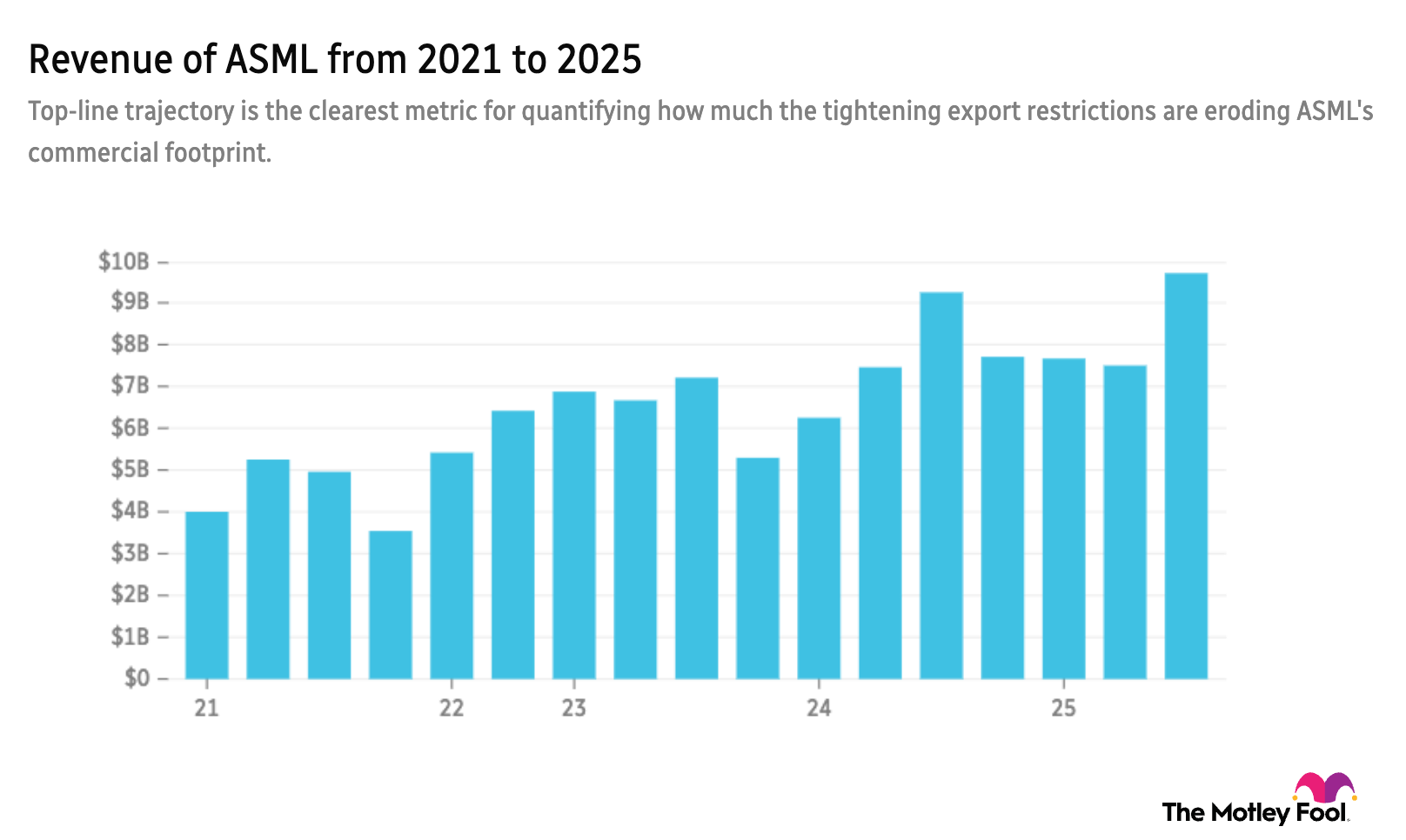
Shares of ASML (ASML 1.63%) fell Tuesday following the introduction of the MATCH Act by U.S. lawmakers, a bipartisan bill designed to tighten semiconductor export loopholes. The legislation specifically targets deep ultraviolet (DUV) lithography machines—older but essential tools that Chinese manufacturers still rely on for mainstream chips. While ASML has already faced restrictions on its most advanced gear, this new move threatens a "fragile" segment that previously stayed under the radar. With China projected to drop from 33% to 20% of ASML’s total sales this year even before this proposal, investors are weighing the risk of a significant mid-term revenue hit.
- Quantifying the Exposure: Analysts estimate that a broad DUV ban could jeopardize roughly 5% of ASML’s total revenue, as China accounts for nearly half of the demand for these specific lithography tools.
- The Geopolitical Overhang: While domestic Chinese chipmakers have previously found workarounds for Nvidia (NVDA +1.90%) hardware, there is currently no viable local alternative to ASML’s specialized machinery, making this a potential "choke point" for the industry.
Delta Hikes Bag Fees Amid Fuel Surge
9:25 am -- DAL flat in pre-market trading
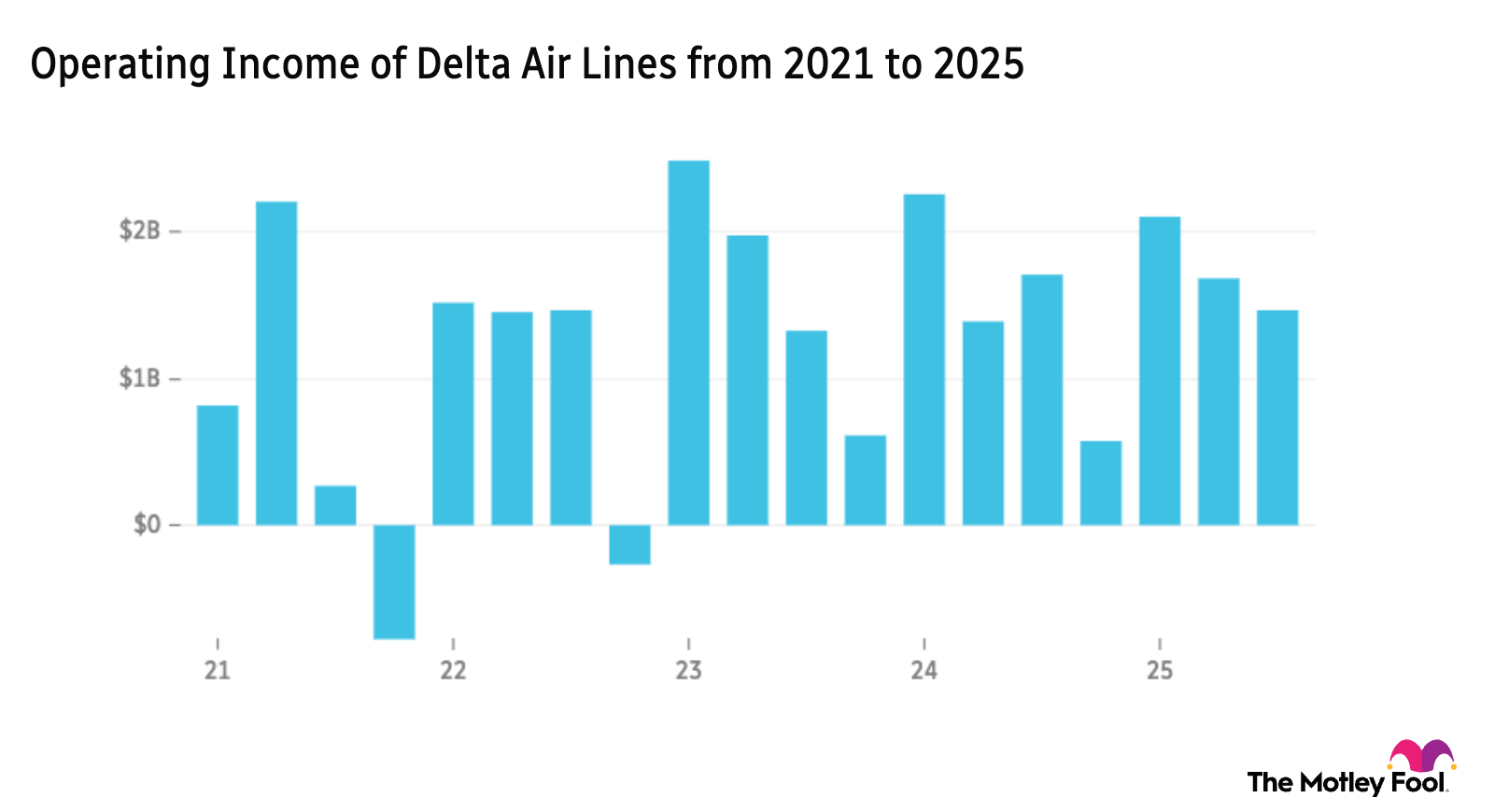
Delta Air Lines (DAL 2.90%) raised its checked bag fees by $10 for tickets purchased starting Wednesday, following similar moves by United Airlines (UAL 2.97%) and JetBlue Airways (JBLU 2.94%). The carrier now charges $45 for a first checked bag as jet fuel prices have surged nearly 88% since late February due to Middle East conflict and shipping channel closures. With fuel representing the largest variable expense for carriers, investors are bracing for Delta's first-quarter earnings report on Wednesday morning to see if strong travel demand can offset these ballooning operational costs.
- The Fuel Price Pinch: Jet fuel costs recently hit $4.69 per gallon, a staggering spike that threatens to erase profit margins despite high passenger volumes.
- Pricing Power Test: Industry experts are watching whether customers will tolerate higher ancillary fees or if these hikes will eventually dampen the current post-pandemic travel boom.
Novo Unleashes Wegovy HD in GLP-1 Battle
8:45 am -- NVO -0.76% in pre-market trading
Novo Nordisk (NVO +0.72%) launched a high-dose version of its blockbuster weight-loss drug, Wegovy HD, across the United States on Tuesday. The new 7.2 mg injectable--triple the strength of the previous 2.4 mg limit--received priority FDA approval to address the surging demand for more potent obesity treatments. To capture market share from competitors, Novo is offering the drug to cash-paying patients for $399 per month and plans a discounted subscription model. This aggressive pricing and dosage scaling signal a major effort to regain momentum in the lucrative GLP-1 sector following recent gains by rivals.
- Obesity Market Rivalry: The rollout intensifies the battle with Eli Lilly (LLY +1.83%), as both pharmaceutical giants race to optimize dosage and affordability to secure long-term patient loyalty.
- Insurance and Access Strategy: By leveraging a National Priority Review Voucher and low copays for the commercially insured, Novo aims to cement Wegovy as the preferred choice for telehealth providers and pharmacy networks.

NYSE: NVO
Key Data Points
Amazon and USPS Strike Last-Mile Compromise
8:30 am -- AMZN +0.16% in pre-market trading
Amazon (AMZN 1.43%) and the U.S. Postal Service have reached a tentative package-handling agreement, backing away from a proposed two-thirds volume cut that threatened to upend rural logistics. Under the new terms, Amazon will reduce its USPS shipments by only 20%, ensuring the agency continues to handle over 1 billion packages annually. This compromise stabilizes Amazon's "last-mile" network while protecting roughly $6 billion in revenue for the struggling Postal Service, which faced a $9 billion loss last fiscal year. While Amazon continues to expand its own logistics arm, the deal highlights its ongoing reliance on external partners for difficult-to-reach regions.
- Logistics Competitive Landscape: By maintaining high volumes with USPS, Amazon avoids over-reliance on rivals like United Parcel Service (UPS 0.77%) or FedEx (FDX +0.09%), who have previously scaled back their partnerships with the e-commerce titan.
- Rural Infrastructure Moat: The deal allows Amazon to sustain its one-to-two-day delivery promises in low-density areas without the immediate capital expenditure required to fully replace the Postal Service's massive existing ground network.

NASDAQ: AMZN
Key Data Points
This Morning's Breakfast News
7:30 am -- UNH +6.62%, CVS +6.56%, HUM +10.53% in pre-market trading
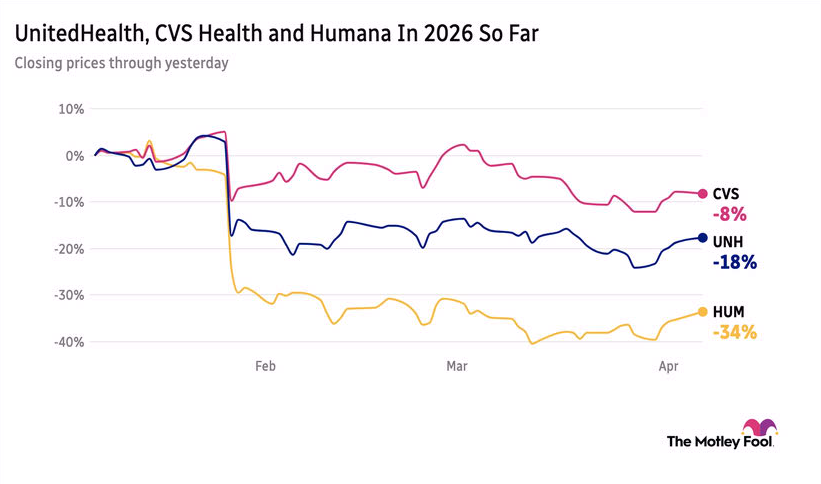
Health insurance stocks jumped in early trading after the Trump administration boosted Medicare spending much higher than had been anticipated. Payments for Medicare Advantage – the government-subsidised privately run health insurance plan, popular with older people – will be lifted by 2.48% in 2027, well above the 0.09% rise proposed in January.
- Health insurance stocks pop: UnitedHealth (UNH +1.17%) gained nearly 8% pre-market, with CVS Health (CVS +1.84%) – recommended in Stock Advisor by Team Rule Breakers – up close to 7%. The two had fallen 20% and 15% respectively on the back of the earlier, lower, spending plans. Humana (HUM 0.26%) jumped over 11% on the news, but – still down 29% year to date – remains the hardest hit of the three.
- "Healthcare in the United States isn't perfect ... Can CVS magically fix everything?": When CVS was removed from the SA Penalty Box late last year, Fool contributing analyst Toby Bordelon added "Of course not. But ... we're happy to invest in that mission."
Ackman Targets Universal in Record Music Takeover
7:00am
Bill Ackman's Pershing Square (PSHZF +0.00%) announced a massive 55.8 billion euro bid to acquire Universal Music Group (UNVGY 0.95%) and take the music titan public on the New York Stock Exchange. The deal offers a whopping 78% premium over recent prices, aiming to resolve what Ackman calls "languishing" share performance caused by poor shareholder communication and listing delays. If the merger closes by year-end, UMG will undergo a significant board refresh, potentially seating entertainment mogul Michael Ovitz as chairman to better capitalize on its world-class artist roster.
- Strategic Re-Rating: Moving UMG to a primary U.S. listing aims to unlock valuation parity with Big Tech peers like Alphabet (GOOG 2.62%), which also benefits from music streaming growth via YouTube.
- Governance Overhaul: The proposed acquisition seeks to clear the "Bollore overhang" and install Pershing affiliates on the board, signaling a shift toward more aggressive, investor-friendly management and transparent corporate governance.

OTC: PSHZF
Key Data Points
ICYMI: Monday's Scoreboard
6:30 am -- KTOS -0.22% in pre-market trading
Kratos Defense & Security Solutions (KTOS 1.55%) was the subject of the latest Scoreboard video.
SpaceX Eyes $2T Valuation in Historic IPO
6:00 am
In a virtual meeting with its bankers Monday, SpaceX laid out plans for a large allocation of shares to retail investors at its upcoming IPO, reports Reuters. The show should hit the road the week of June 8, with the company pitching to around 1,500 potential investors – with retail investors from the U.K., E.U., and other countries able to buy in.
- "Retail is going to be a critical part of this and a bigger part than any IPO in history": CFO Bret Johnsen told the meeting "those are folks that have been incredibly supportive of us and of Elon (Musk) for a long time, and we want to make sure that we recognize that."
- Biggest IPO ever?: SpaceX is reportedly targeting a valuation of over $2 trillion – seven and a half years since Apple (AAPL 0.17%) became the world's first trillion-dollar company. The IPO is expected to raise around $75 billion, as Bloomberg says SpaceX has been burning through $1 billion per month since acquiring xAI.
Samsung Projects Eightfold Profit Surge
5:15 am
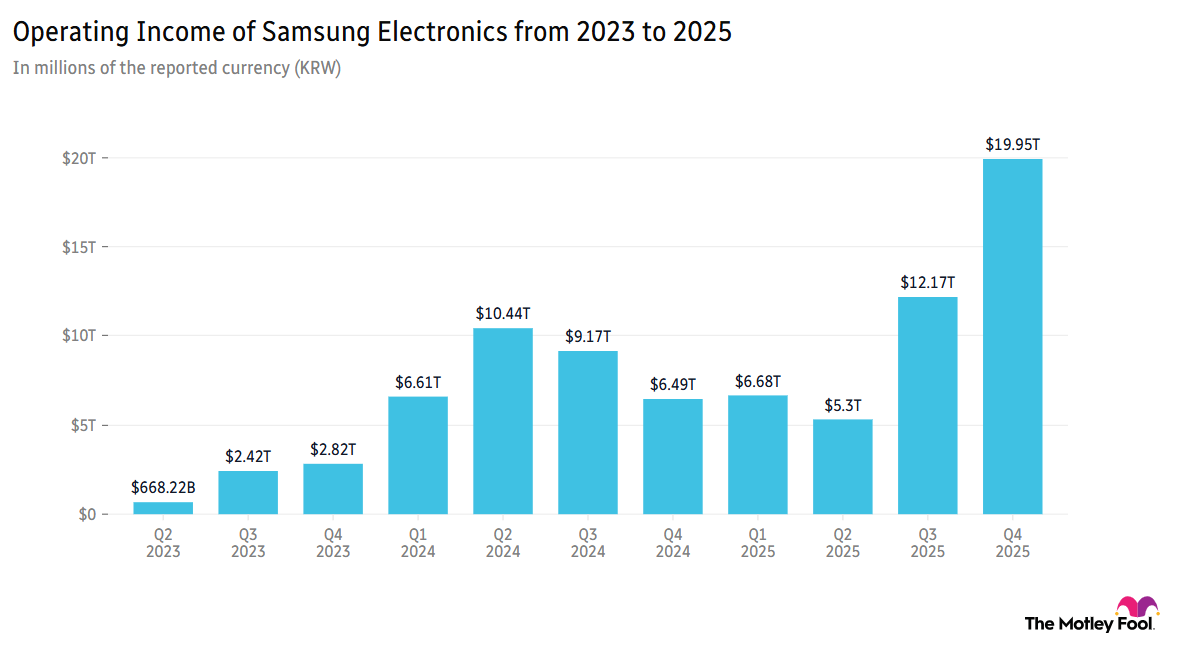
Samsung Electronics (SSNLF +0.00%) shares rallied Tuesday following a preliminary guidance report forecasting a staggering eightfold increase in quarterly operating profit. The tech giant projects earnings of 57.2 trillion won, nearly tripling its previous record and crushing analyst estimates. This massive growth is fueled by explosive demand for high-bandwidth memory (HBM) chips essential for AI computing. As memory prices are expected to climb another 50% next quarter, Samsung is rapidly closing the gap with rival SK Hynix to secure dominance in the high-margin AI hardware space.
- Broad Tech Implications: A hardware resurgence signals a bullish cycle for AI infrastructure players like Alphabet (GOOG 2.62%), though rising component costs may eventually pinch margins for cloud providers.
- Geopolitical Headwinds: Despite record guidance, the escalating U.S.-Israel conflict with Iran threatens semiconductor supply chains, as shortages of critical manufacturing materials like helium pose a risk to long-term production stability.
Before the Opening Bell
5:00 am
Stock futures turned lower Tuesday as investors tracked a high-stakes ultimatum from President Trump regarding the Strait of Hormuz. With an 8:00 p.m. ET deadline looming, the administration has threatened strikes on Iranian infrastructure unless the vital waterway fully reopens to global shipping. While Monday's gains were fueled by hopes for a diplomatic breakthrough, crude oil prices have surged past $110 per barrel as the "countdown clock" returns. This geopolitical friction puts significant pressure on energy-dependent sectors and global supply chains, overshadowing upcoming data on February durable goods orders.
- Energy Sector Volatility: Elevated crude prices could provide a short-term lift for producers like Berkshire Hathaway (BRKB +0.65%) holding Chevron (CVX +1.65%), but sustained conflict risks broader inflationary pressure.
- Tech and Logistics Exposure: Continued disruption in the Strait threatens energy costs for Alphabet (GOOG 2.62%) data centers and impacts shipping-sensitive retailers.