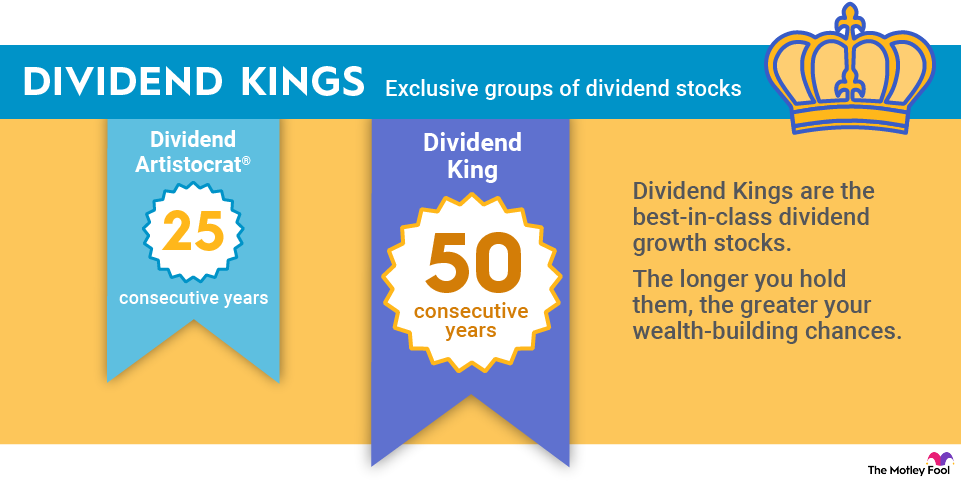
Clorox (CLX +0.66%) boosted its dividend for the 48th consecutive year last July. Clorox has yet to announce another raise, but it remains on track to achieve the sought-after 50-year dividend streak in 2027, which would make it a Dividend King.
Clorox's rising dividend, paired with its falling stock price, has pushed its yield to a multi-decade high of 5.7%.
Here's why Clorox remains committed to its dividend despite challenges in its underlying business, and why the value stock is a great buy now.

Image source: Getty Images.
Private label is a growing concern
An ongoing theme in the household and personal products industry is that private-label brands like Costco Wholesale's Kirkland Signature, Walmart's Great Value, and Sam's Club's Member's Mark are gobbling up market share from name brands.
Clorox CEO Linda Rendle said the following on Clorox's third-quarter fiscal 2026 earnings call on May 1: "But overall, private label just hasn't had the impact that many would have expected. And I know many of you are asking questions about that. We've continued to see it play the role that it normally does, which is offering a low price for those consumers who need it."
Clorox said that private-label market share remained flat in its quarter, as consumers continue to shop for high-quality brands. "But generally, consumers continue to want brands, and they continue to want value overall, not just the lowest price," said Rendle.
Private label is far from Clorox's only concern. The company is facing pressure from competitors' promotions and discounts, especially in the food category. Clorox is using product innovation, preferred shelf placement, and marketing efforts to help offset these pressures. But the business is clearly being affected, as Clorox now forecasts a 9% decline in full-year fiscal 2026 organic sales compared to guidance from just three months ago of a 5% to 9% decline. This means that Clorox's pessimistic outlook is coming to fruition.

NYSE: CLX
Key Data Points
Clorox invested in improving operating efficiency
In addition to asset sales, cost cuts, pricing pressure, and intense competition, Clorox has been undergoing a major Enterprise Resource Planning (ERP) overhaul.
In February, Clorox announced the completion of its five-year, $580 million ERP implementation, upgrading a more than 20-year-old system to a new SAP cloud-based system that integrates financial, supply chain, and sales. The new system should make the overall business more efficient. But the transition has been extremely messy, namely due to its effect on Clorox's supply chain.
Clorox is pressing the right buttons to reward patient investors
Clorox's brutal sell-off is a reminder of how much investors hate uncertainty. Management underestimated the duration and cost of the ERP transition, as well as the severity of the slowdown in consumer spending. The company has also been making major changes to its portfolio. These include the sale of its Vitamins, Minerals, and Supplements business and divestments from Argentina, Uruguay, and Paraguay in calendar year 2024, and the $2.25 billion acquisition of Purell owner GOJO Industries in April of this year.
On top of these changes, Clorox has been unable to provide reliable guidance, often totally missing its numbers or consistently guiding down.
All told, the sell-off in Clorox is totally understandable. But long-term investors care more about where a stock is going than where it has been. Clorox has the makings of a potential turnaround opportunity for patient investors, especially given its dirt cheap valuation and high yield.