In an era where artificial intelligence (AI) has reshaped industries from infrastructure to military operations, Nokia (NOK -4.67%) has emerged as an unlikely but formidable player. Once synonymous with mobile phones that defined the early years of smartphones, the Finnish telecommunications company has pivoted toward AI-native networking.
Through strategic partnerships with Nvidia (NVDA -3.16%) and Anduril, Nokia is embedding AI into radio access networks (RAN), defense communications, and edge computing. As hyperscalers continue to pour hundreds of billions of dollars into AI infrastructure and sovereign governments demand next-generation defense protocols, Nokia's technology is quietly becoming foundational.
The result is accelerating revenue growth, an expanded addressable market, and renewed investor enthusiasm. To me, Nokia's opportunity is one supported by sustained, multiyear tailwinds rather than fleeting hype.

NYSE: NOK
Key Data Points
Nokia and Nvidia are building AI networks for 5G and 6G
Back in October, Nvidia invested $1 billion into Nokia as part of a collaborative effort to co-develop AI-RAN solutions. At its core, Nvidia is integrating its accelerated computing platforms -- including CUDA and the ARC-Pro Aerial RAN Computer -- into Nokia's existing RAN portfolio. In addition, Nokia is porting 5G-Advanced and 6G software stacks onto Nvidia's hardware -- effectively creating AI-native base stations that process data at the edge rather than routing everything back to a centralized data center.
As mobile traffic explodes thanks to AI-driven applications like autonomous vehicles, augmented reality, and huge sensor networks from robotics, traditional RAN architectures are going to struggle with latency and scale. By partnering with Nokia, Nvidia gains a reliable path to quickly embed its GPUs into telecommunications infrastructure -- essentially turning cell towers into distributed AI compute nodes.
In the first quarter of 2026, Nokia's AI and cloud-related net sales surged 49% year over year, contributing to 1 billion euros ($1.17 billion) in new orders. The company's network infrastructure revenue also increased strongly, driven by demand for optical networking products that hyperscalers need for AI data center interconnects.
What's most encouraging is that Nokia raised its forecast for AI and cloud growth from 16% to a 27% compound annual growth rate (CAGR) through 2028, reflecting hyperscaler capital expenditure acceleration. AI has changed Nokia's opportunity from one of a cyclical telecom supplier to more of a critical enabler of the AI infrastructure revolution.

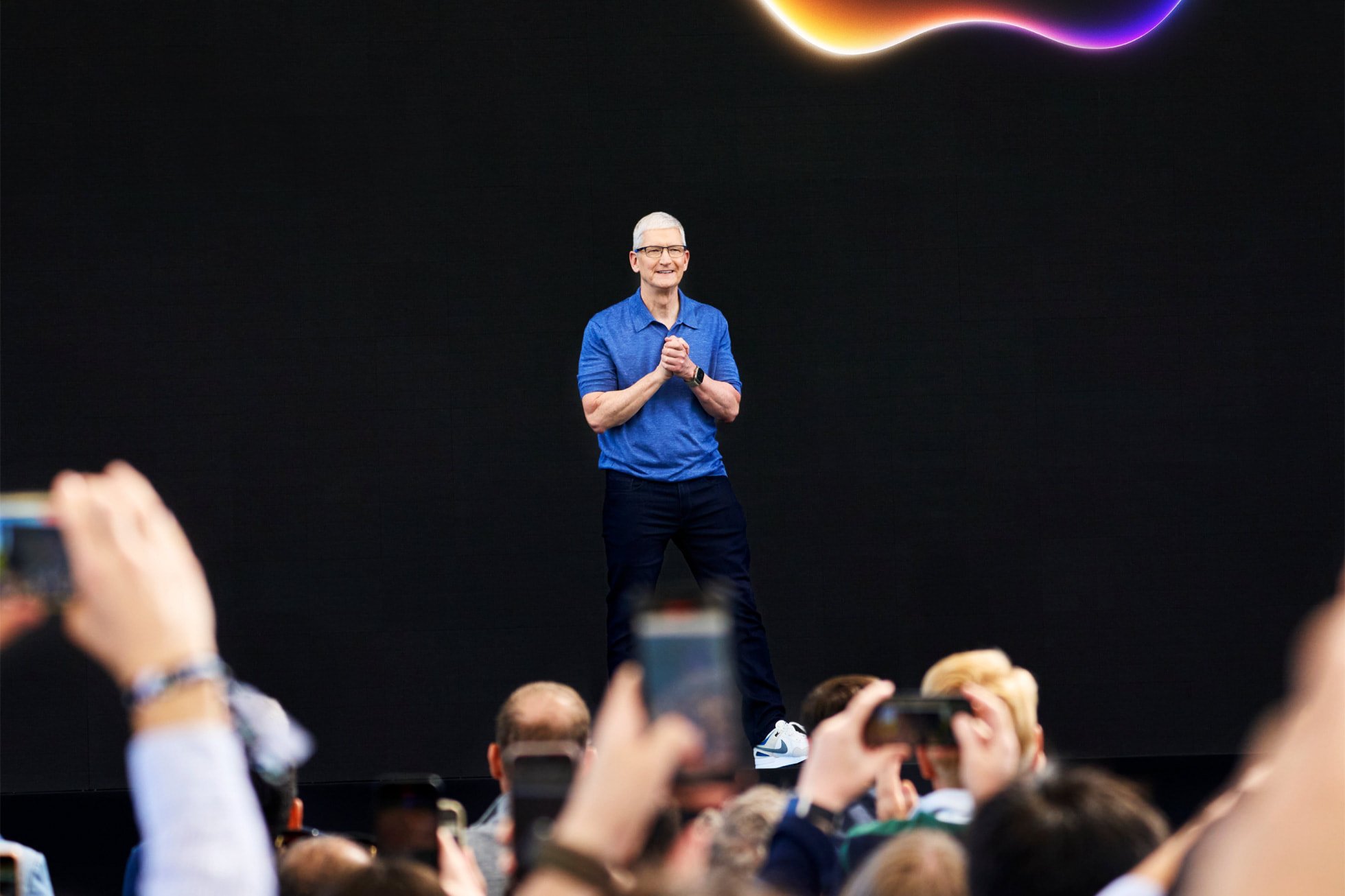
Image source: Nvidia.
Nokia is lending its AI expertise to defense operations
Nokia is parlaying its AI-RAN expertise into the defense sector through a partnership with Anduril Industries. Back in March, Nokia joined a group with Anduril and European partner COBBS to develop a counter-unmanned aerial system (C-UAS) capability for the Belgian military.
The companies co-developed the 5G Comms Sentry Tower (CST), integrating Nokia's private 5G hardware and tactical communications into Anduril's modular Sentry platform. This system was made to create deployable, secure cellular connectivity that supports real-time data from autonomous sensors, drones, and AI decision engines.
Nokia helps Anduril by supplying a high-bandwidth communications backbone essential for low-latency, jam-resistant connectivity in real-time. For Nokia, working with Anduril expands the company's Mission Critical Enterprise & Defense segment, layers AI-enhanced private networks on top of its legacy telecom foundation, and opens the door to lucrative multiyear government contracts.
Image source: Getty Images.
The case for Nokia stock as a long-term buy
AI has dramatically broadened Nokia's total addressable market (TAM). What was once a mundane telecom equipment business has evolved into a high-growth opportunity spanning AI data center equipment, edge AI computing, and defense networking.
Optical networks, which are vital for hyperscaler AI clusters, have witnessed explosive demand, while AI-RAN unlocks new revenue growth from operators upgrading to intelligent 6G. On the defense side, geopolitical tensions and sovereignty mandates will continue to drive demand for secure, AI-enabled private networks. These opportunities further diversify Nokia beyond typical consumer electronics cycles.
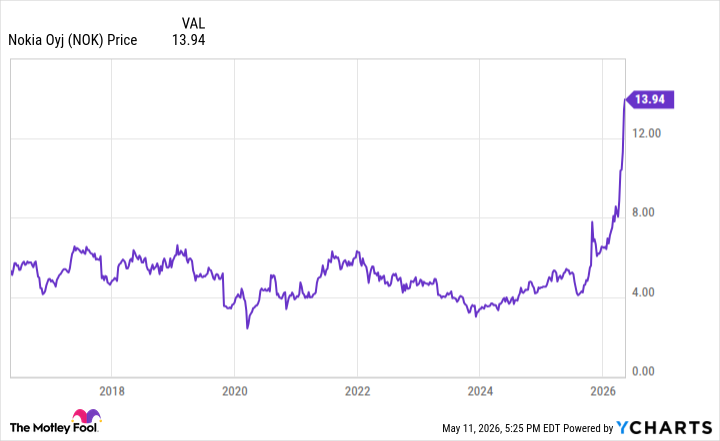
The company's newfound AI-driven momentum has propelled Nokia's stock to 16-year highs in recent months, with shares up roughly 105% year to date as of May 12. Nevertheless, I think Nokia stock remains a compelling buy in the AI era.
The secular tailwinds are clear: Multiyear hyperscaler infrastructure buildouts for AI training and inference should sustain demand for optical parts and connectivity well into the next decade. Meanwhile, AI-optimized rollouts of 5G-Advanced and 6G connectivity create recurring software and hardware upgrades, bolstering the company's top- and bottom-line profiles over time. Lastly, defense deals add long-term revenue that is typically insulated from the volatility of consumer markets.
Although Nokia's valuation has expanded considerably, the combination of measurable AI progress, technological leadership, and diversified end-markets suggests the rally has further room to run over a long-term horizon.