Rivian (RIVN -2.58%), a producer of electric pickups, SUVs, and delivery vans, went public at $78 per share in Nov. 2021. Today, its stock trades at about $15. The bulls retreated as its production slowed, it posted steep losses, and rising interest rates compressed its valuation.
It's tempting to think of Rivian as a contrarian play, since it trades at less than two times next year's sales. But it's cheap because it needs to successfully ramp up the production of its R2 SUV this year to drive away the bears. Failing to do so would represent the biggest near-term threat to Rivian's stock -- but its stock could also soar if the company finally gets its act together.

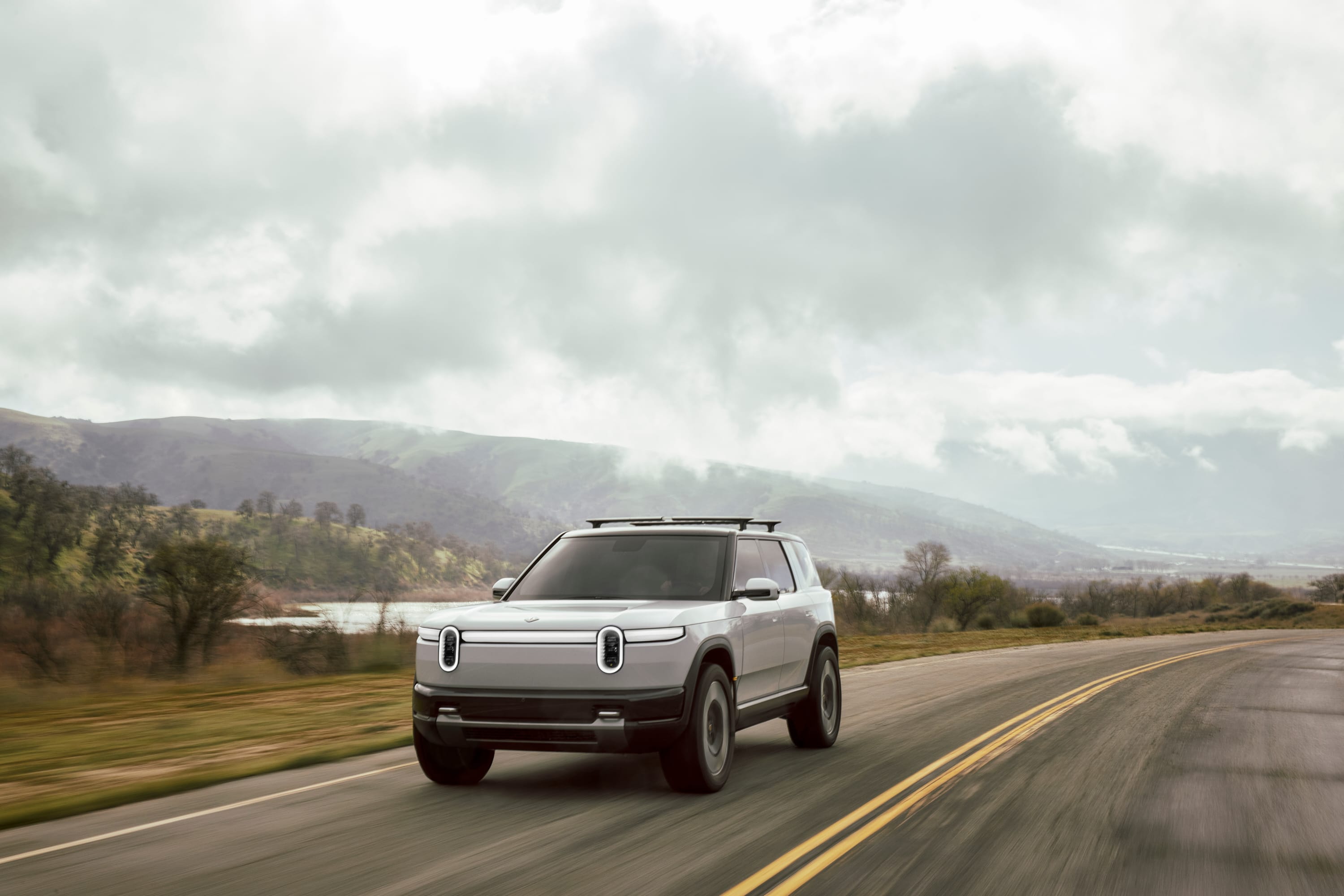
Image source: Rivian.
Why does Rivian need the R2 to succeed?
Before launching the R2 this year, Rivian only sold three vehicles: the R1T pickup, R1S SUV, and electric delivery vans for Amazon (AMZN +3.29%) and other companies. Here's how many vehicles it has produced since its market debut.
|
Year |
2022 |
2023 |
2024 |
2025 |
|---|---|---|---|---|
|
Vehicles Produced |
24,337 |
57,232 |
49,476 |
42,284 |
Data source: Rivian.
Rivian's production slowed down over the past two years as it grappled with supply chain constraints, lower EV subsidies, and intense competition from other EV makers. Rivian launched the R1T and R1S with starting prices of $77,500 (which rose with add-ons and premium trims) -- but those high price tags limited their mainstream appeal.
The R2 costs significantly less than the R1. Rivian launched its first higher-performance variant of the R2, starting at $57,990, this March. It will launch a less powerful base version for about $45,000 in late 2027. Those cheaper vehicles could help Rivian compete more effectively against Tesla's (TSLA +2.05%) Model Y, which starts at around $40,000.
Even though the R2 costs less than the R1, it's actually cheaper to manufacture because it uses fewer electronic control units, an improved battery pack, simpler wiring, and larger castings. Therefore, the R2 will also play a crucial role in boosting Rivian's gross margins.

NASDAQ: RIVN
Key Data Points
Why should investors be wary of the macro headwinds?
For 2026, Rivian aims to deliver 62,000-67,000 vehicles as it sells more R2 SUVs. Assuming that happens, analysts expect its revenue to rise 30% for the full year.
But it can only achieve that acceleration if the macro environment improves. Inflation could drive up its energy and labor costs, and fewer consumers will buy the R2 -- even if it's cheaper than the R1 -- if the Fed raises its rates again this year. Geopolitical conflicts and tariffs could still cause supply chain problems for Rivian, even as it produces more of its own components. Therefore, investors should keep a close eye on those challenges -- and realize that any macro headwinds for the R2 might keep Rivian's stock in the penalty box for the foreseeable future.