Since the artificial intelligence (AI) revolution began in late 2022, chipmaker Nvidia (NVDA +0.25%) has seen its shares soar more than 700% as it dominated the market for high-end AI processors.
But AI has boosted more than just chipmaker stocks. It's even supercharged legacy manufacturers whose businesses once had little or nothing to do with computer components or software. And one such company just scored a major win in the form of a partnership with Nvidia.
Here's how 175-year-old U.S. manufacturer Corning (GLW +1.39%) went from market loser to AI-powered market crusher and what the massive new Nvidia partnership means for shareholders in both companies.

Image source: Getty Images.
What Corning did
Corning is a glass company, best known for its shatter-resistant Corningware plates and dishes. However, the company sold that business (along with its other kitchenware brands, such as Pyrex) in 1998.
Today, Corning specializes in high-tech glass products, including shatter-resistant Gorilla Glass for smartphones and other touchscreen devices, as well as display glass for LCD TVs. But for almost a decade, its biggest revenue generator has been fiber-optic cable.
And for almost a decade, that business was one of the company's worst performers.

NYSE: GLW
Key Data Points
More money, more problems
Corning's stock also performed terribly from 2015 to 2023. During those nine years, it rose just 32.8%. Even if you factor in dividend reinvestments, Corning's stock only went up 69.3% on a total return basis. That badly trailed the S&P 500's 174% total return over the same time frame.
During that time, Corning's optical communications division was its fastest-growing, thanks to the rollout of fiber-optic TV and internet connections. Sadly, it had one of the worst profit margins in the entire company, ranging from about 10% to 15%.
That all changed with the advent of AI. Because fiber-optic cables are so good at transmitting large amounts of data at high speeds, they were the obvious choice for data-hungry AI applications. Suddenly, Corning's fiber-optic cables, which the company had been optimizing for non-AI data centers since 2018, were in extremely high demand.
And in very short supply.
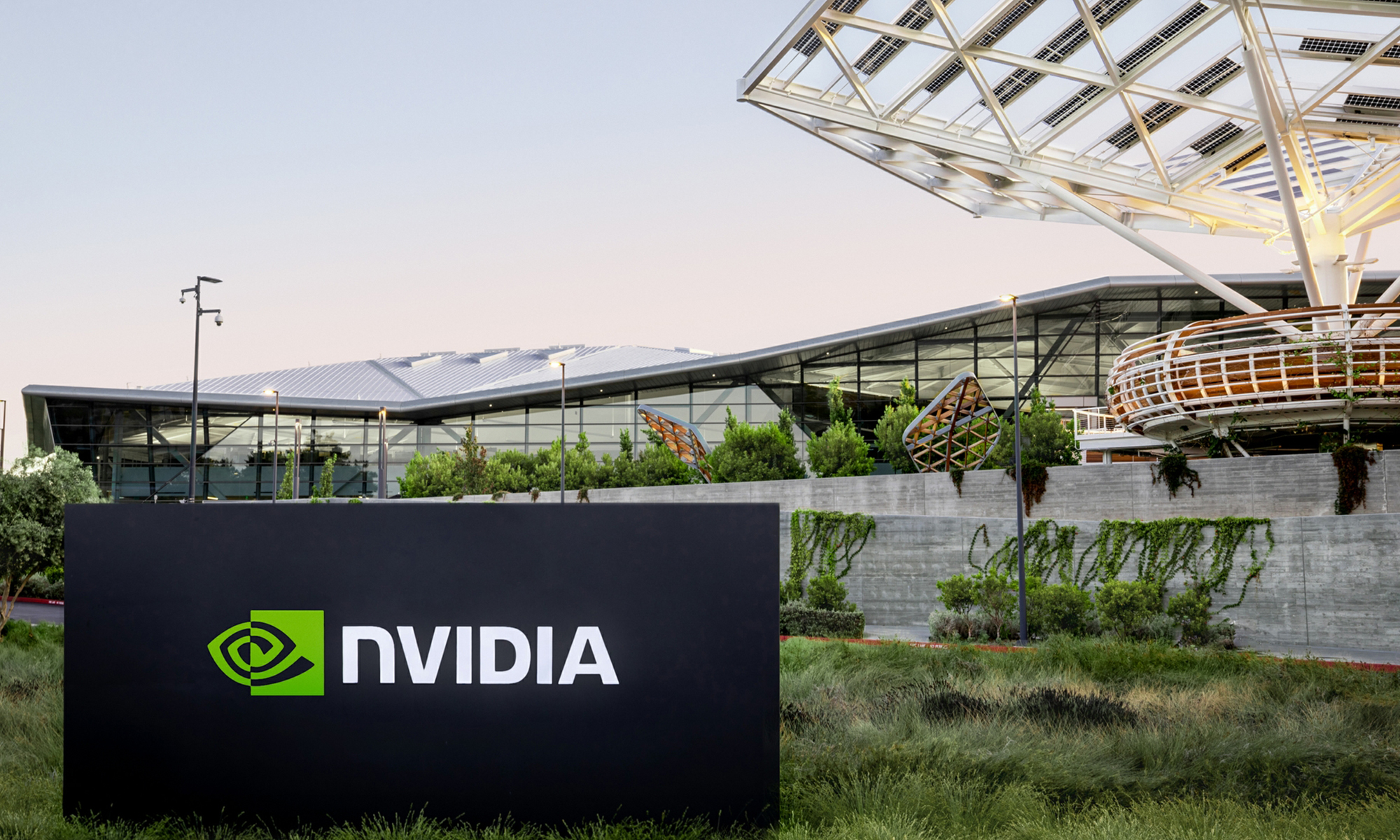
Image source: Nvidia.
How Nvidia stepped in
Corning is currently churning out fiber-optic cable at maximum capacity... and selling it all as fast as it's made, at a robust 21% profit margin. But the demand from hyperscalers keeps growing. And because Corning is the world's largest manufacturer of fiber-optic cable and supplies the bulk of the North American market, that was turning into a big problem.
So last week, Nvidia announced a multiyear partnership effort with Corning that will "dramatically expand U.S.-based manufacturing of the advanced optical connectivity solutions needed to power next-generation AI infrastructure."
The partnership will result in Corning increasing its U.S.-based fiber production capacity by more than 50% and its U.S. optical connectivity manufacturing capacity by 1,000%. As part of the effort, it will build three new advanced manufacturing facilities in North Carolina and Texas. Once completed, they will provide optical connectivity to hyperscale data centers powered by Nvidia GPUs.
As Nvidia explained in a press release, "Modern AI workloads require thousands of Nvidia GPUs -- requiring unprecedented volumes of high-performance optical fiber, connectivity, and photonics to move data at extraordinary speed and scale. As AI factories grow larger and more numerous, optical connectivity becomes an important component of the AI infrastructure."

NASDAQ: NVDA
Key Data Points
What it means for investors
With large-scale data transmission such a key component of AI systems, it's natural that Nvidia -- the leading manufacturer of AI processors -- would want to ensure a plentiful supply so its own sales of AI data center processors aren't hurt by a lack of available communication cables to connect them.
This announcement should give investors confidence that Nvidia sees the AI data center building boom as a long-term trend, rather than a short-term fad. And by locking in a partnership with the leading fiber-optic cable manufacturer, Nvidia helps cement the status of both companies as the go-to suppliers of AI data center components.
For Corning shareholders, who have already seen their stock appreciate 137% year to date, the partnership should ease concerns about manufacturing constraints that could hamper future growth. It should also offer investors confidence that the deep-pocketed AI hyperscalers will continue to spend their money on Corning's products rather than looking elsewhere.
Even so, with a trailing price-to-earnings (P/E) ratio of 100, and a forward P/E of 65, Corning's stock is now looking pretty expensive; more than twice as expensive as Nvidia's, in fact! As a result, investors deploying new money into AI stocks may want to consider Nvidia over Corning.