AST SpaceMobile (ASTS +2.63%) got disastrous news from launch partner Blue Origin overnight. A Blue Origin New Glenn rocket, undergoing an engine test, exploded on its launch pad at Cape Canaveral in Florida. Initial reports suggest the LC-36A launch complex has been badly damaged, if not destroyed.
As a result, Blue Origin won't be launching any BlueBird satellites for AST anytime soon -- and AST stock is down 17.3% as of 9:45 a.m. ET.
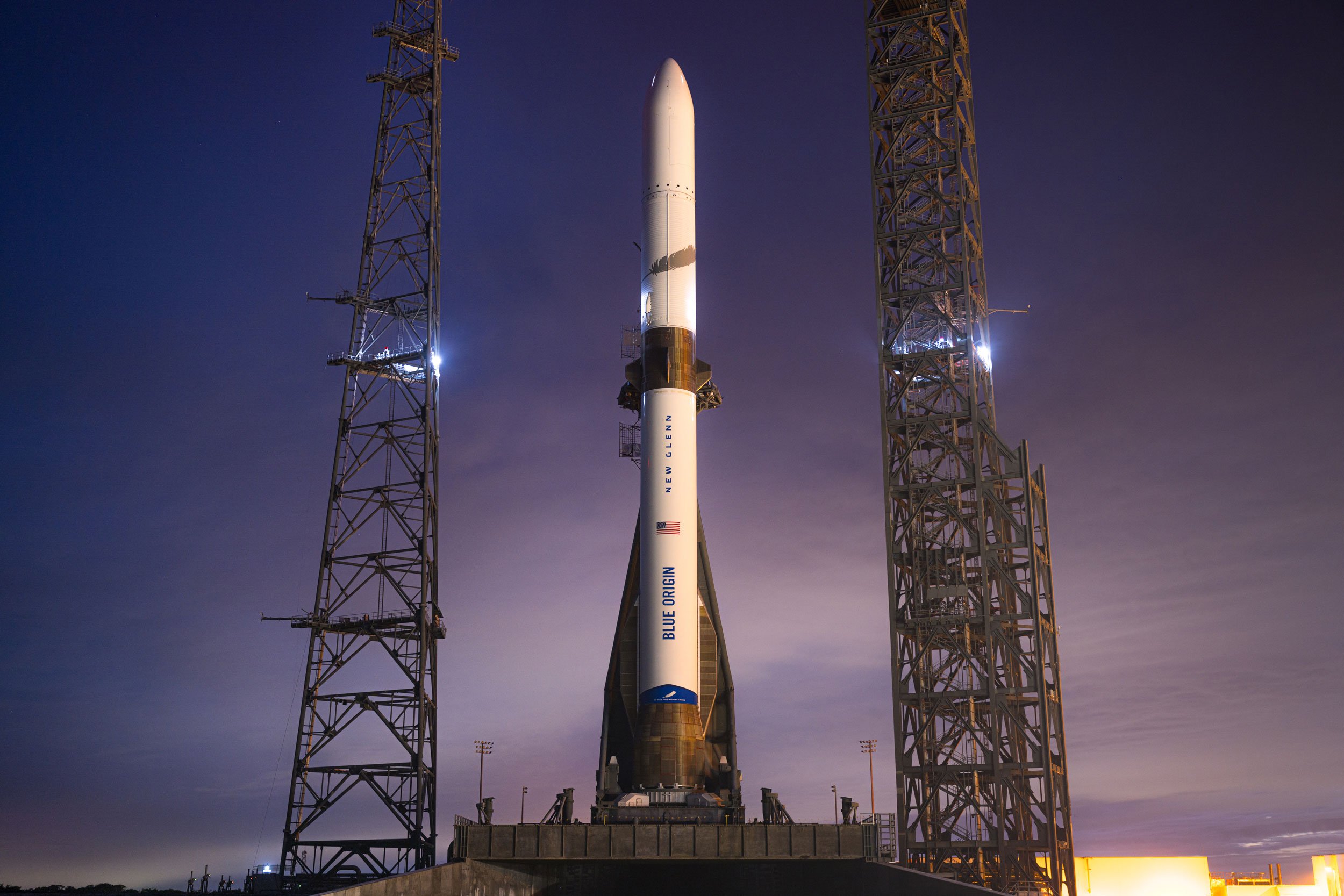
Image source: Blue Origin.
Disastrous news for Blue Origin is just bad news for AST SpaceMobile
It's worth highlighting that this is the second Blue Origin-related mishap AST has suffered. In April, a New Glenn rocket carrying BlueBird satellite 7 suffered an anomaly that prevented the satellite from reaching orbit. (At this point, one wonders if AST is getting nervous about giving any more business to Blue Origin!)
Still, the news for AST could be worse. Using multiple launch providers to place its satellites in orbit, AST has diversified its risk of exposure to any one launcher that suffers a mishap. In fact, AST's next planned launch, of three new BlueBird cell communications satellites, is scheduled to go up on a SpaceX Falcon 9 rocket launching from either LC-39A or LC-40.
So it shouldn't be immediately affected by Blue Origin's mishap.
Further good news: Additional launches of BlueBird (AST wants to grow its constellation to 45 satellites by the end of this year) on other SpaceX Falcon 9s should likewise be unaffected.
ASTS AST SpaceMobile
NASDAQ · As of 4:00 PM ET 10/23/26

Things could get worse
But now here's the other bad news: Getting to 45 satellites in orbit -- a number that might permit AST to begin commercial direct-to-cell satellite service this year -- may no longer be possible without Blue Origin shouldering some of the launch load.
Such is the risk when investing in start-ups.