The last month has been absolutely killer for artificial intelligence (AI) and quantum stocks. But every time quantum computing enters a conversation, the same names come up -- IonQ, Rigetti, and D-Wave. They dominate Reddit threads, YouTube thumbnails, and breathless analyst initiations.
But there's a newly public quantum computing company that has already done things none of the companies referenced above have: It ships quantum sensing hardware under active defense contracts across three countries, demonstrated the highest entangling gate fidelity in its hardware class, and just secured $100 million in U.S. government co-investment -- all in the span of about 90 days. It seems the market has barely noticed so far.
Infleqtion (INFQ -0.57%) became the first publicly listed neutral-atom quantum technology company in February 2026, debuting on the New York Stock Exchange after completing a special purpose acquisition company (SPAC) merger that delivered more than $550 million in gross proceeds. That's a war chest most pure-play quantum start-ups never see. And yet, as of early June 2026, the stock trades around $17.50. Over the last week, the stock is trading up 12%, and it's only going to go higher.

Image source: Getty Images.
What Wall Street is missing about Infleqtion
Infleqtion is not a single-product company. It operates two distinct business lines -- quantum computing and quantum sensing -- and both are generating real revenue from real customers. On the sensing side, the company launched Quantum Spectrum, an atom-based RF sensing platform that replaces traditional radio-frequency antennas using Rydberg atomic states. Think about what that means practically: a compact, broadband sensing system that can detect signals from 3 MHz to 6 GHz without a traditional antenna, backed by active defense contracts with the U.S., U.K., and Australian governments. That is not a science project. That is a product with paying customers in the most demanding procurement environments on Earth.
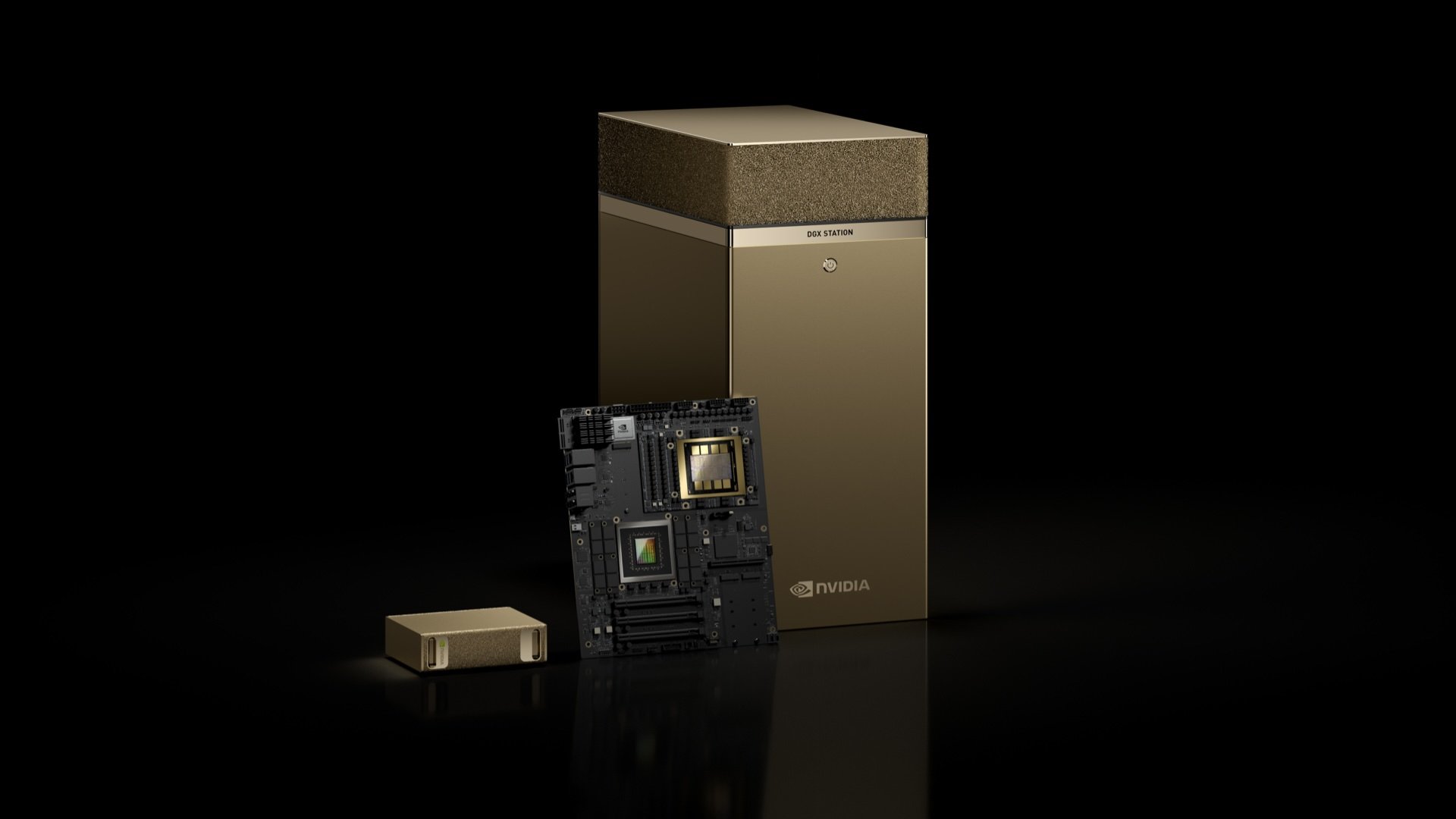
On the computing side, Infleqtion's Sqale system -- a full-stack neutral-atom quantum computer -- was on display at Nvidia's booth at GTC 2026, showcasing native integration with Nvidia's NVQLink technology that allows a quantum processor and a GPU supercomputer to communicate in real time. Nvidia does not put unproven hardware at its flagship developer conference.
INFQ Infleqtion
NYSE · As of 4:00 PM ET 10/23/26
The government has already voted
In May 2026, the U.S. Department of Commerce signed a letter of intent (LOI) with Infleqtion for $100 million in CHIPS Act funding, tied to technical milestones. The structure is important: The government also takes an equity stake at a 15% discount to market price on execution.
Infleqtion is also one of nine companies selected by the U.S. government to receive quantum grants, putting it in the same tier as IBM in terms of national security quantum priority. Earlier, the company was selected for $3.9 million in federal funding for next-generation chemistry innovation applications -- a niche example of how quantum computing starts generating practical value long before it achieves "supremacy."
The risk is real for Infleqtion investors
None of this means the stock is without risk. Infleqtion is pre-profitability, government-dependent in its early revenue base, and operating in a technology category that's still years from broad commercial adoption. The $100 million LOI is not yet a signed contract, and milestone-based funding can slip.
But Infleqtion has three governments funding its sensing hardware, a quantum computer demonstrating alongside Nvidia, $550 million in the bank, and a neutral-atom architecture that sidesteps the biggest engineering challenges its competitors face. The gap between what Wall Street sees and what is actually happening at this company is wide, and that gap is exactly where long-term investors tend to find opportunity.