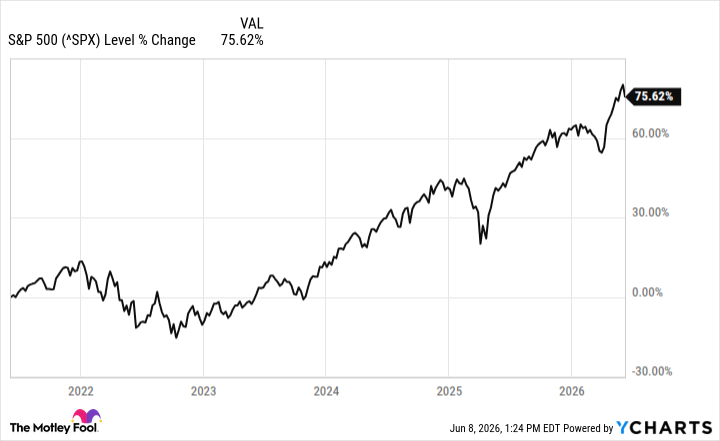
The S&P 500 (^GSPC -0.46%), which is by and large the best indicator of the strength of the overall stock market, is doing well this year. It's up around 8%, which is impressive given that investors may have expected a slowdown, given how hot the index has been in recent years. Since 2023, it has now rallied 93%.
There is, however, cause for concern. There are signs the economy isn't doing that well. Plus, with the conflict in the Middle East still ongoing, there's the potential that things could get even worse as the year goes on. Here's why the S&P 500 might give back some gains in the months ahead, and what you can do to help protect your portfolio.

Image source: Getty Images.
Low growth and high inflation could rattle the markets this year
The Organisation for Economic Co-operation and Development (OECD) recently lowered its forecast for future growth due to the potential for the war in Iran to push energy prices higher than expected. The OECD now expects the U.S. economy to grow by just 1.7% in 2027, which is lower than its previous forecast of 1.9%. It's also forecasting inflation for the current year to come in around 4%, versus the 2.8% it was previously expecting.
Concerns about elevated inflation may lead to investors pulling back on investments, out of fears that a correction may be coming. In 2022, the last time inflation spooked the market, the S&P 500 declined by 19%. If there are concerns of both slowing growth and rising inflation, that could be enough to undo the index's strong gains this year, leading to potentially negative returns.
What can you do to protect your portfolio?
While tracking the S&P 500 has historically been a great move for investors, the problem is that with it being at record highs and valuations for many top stocks also being inflated, it may not necessarily be the safest option these days, particularly if you think you may need to withdraw money for retirement or other reasons in the near future.
Tracking the S&P 500 can be a good move for the long haul, and remaining invested can still be the ideal option for young investors. But if you're concerned about the market and want to reduce your risk, then investing in funds that track value stocks or dividend investments can be more suitable options at this stage, given that they are normally less volatile holdings. Plus, with dividend stocks, you can benefit from the recurring income they generate, which can provide you with some valuable cash flow and boost your returns in the process.