"Where we're going, we don't need roads!" said Doc Brown of Back to the Future before revving up the most famous flying car in the history of film -- the iconic, lightning-powered, Flux Capacitor-embedded DeLorean.
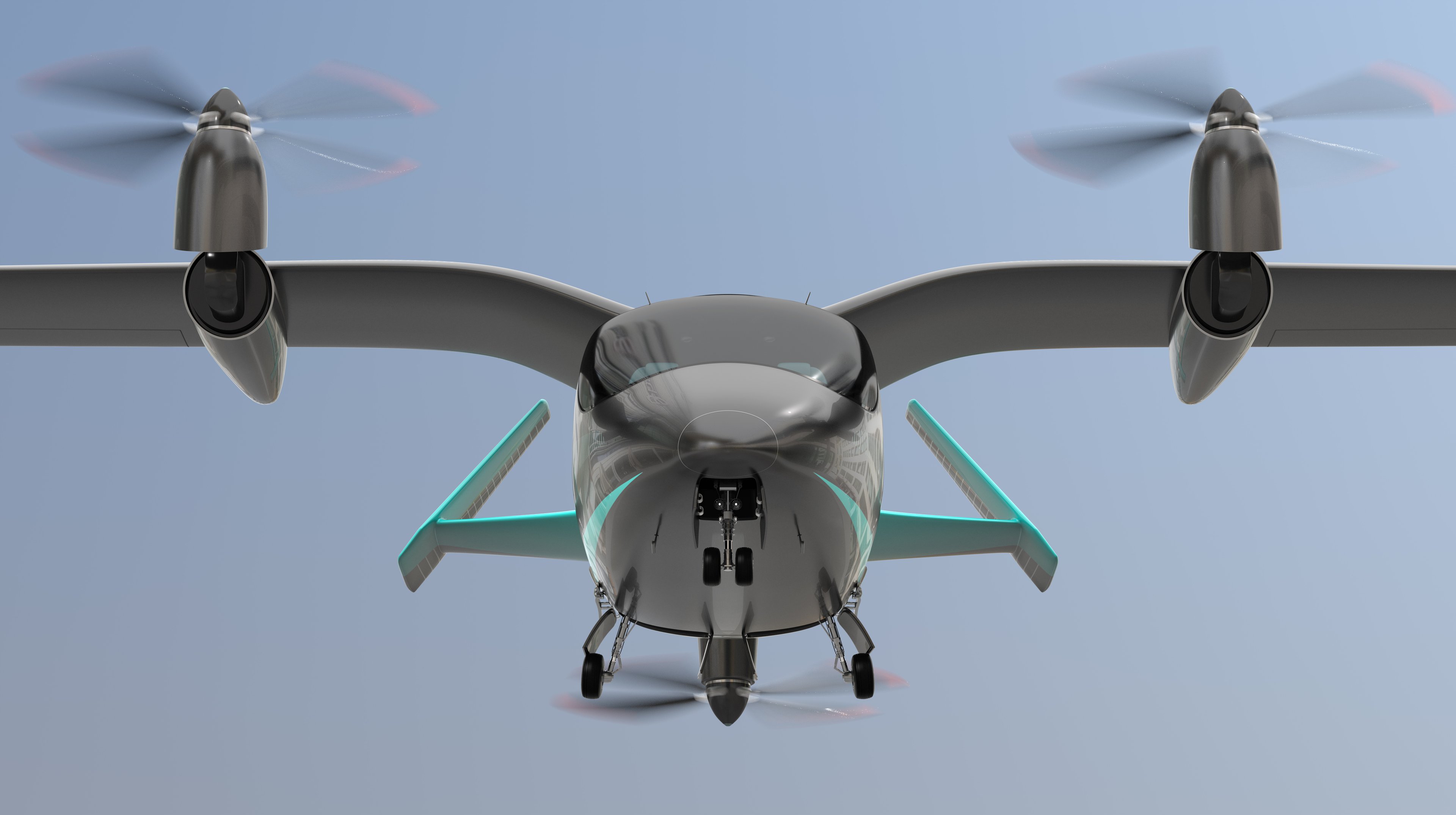
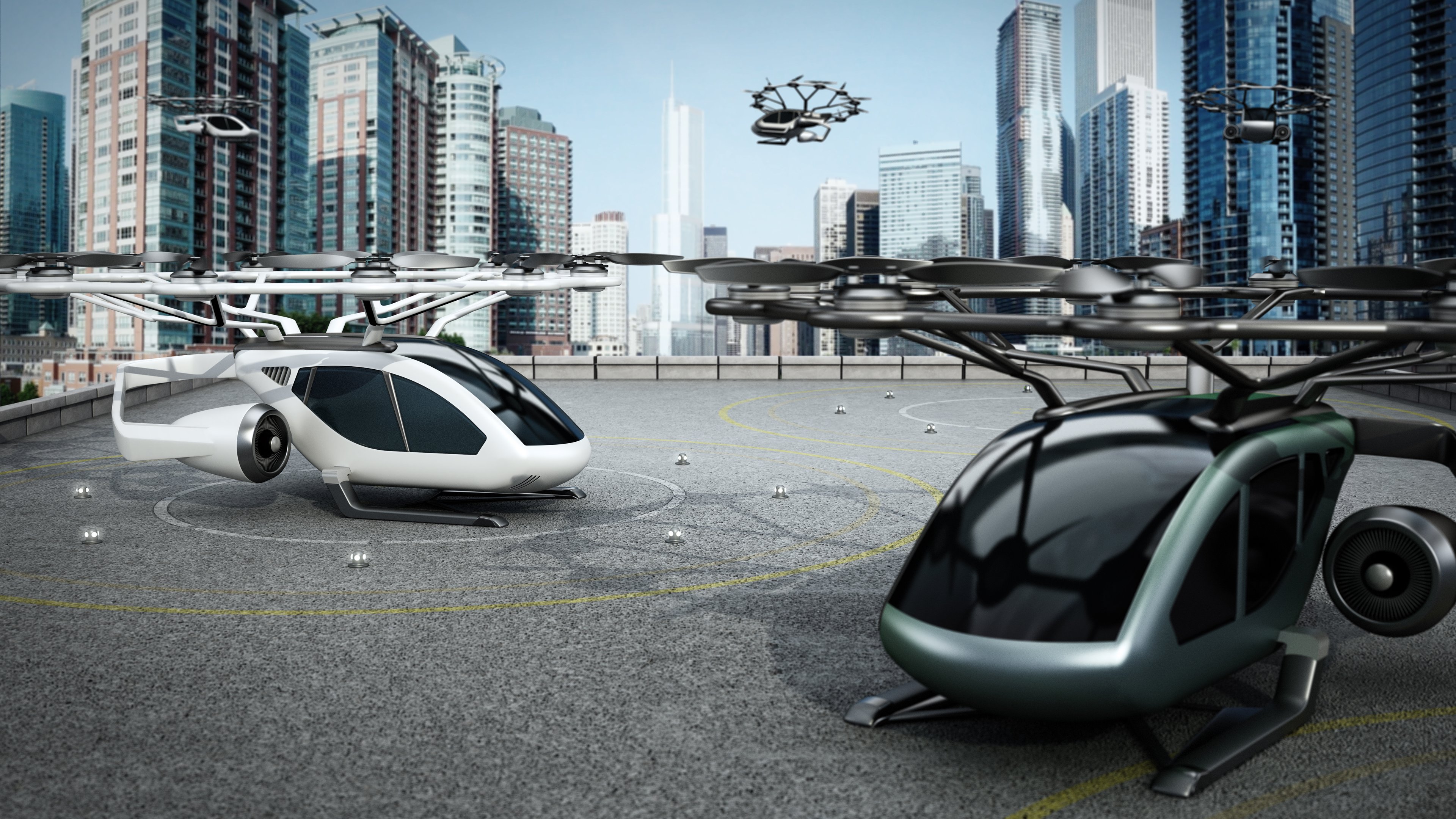
The phrase could just as well be the motto of Archer Aviation (ACHR -2.78%). Archer, like Doc, has a flying car -- Midnight, an electric takeoff vertical and landing (eVTOL) aircraft. It might not travel back in time, but it can travel above streets and turnpikes at a targeted speed of 150 mph, cutting an hour-long slog through traffic to 10 minutes or less.
Archer stock has been trailing the market in 2026, as Wall Street continues to worry about FAA certification timelines and ongoing losses. And yet for those who believe eVTOLs will transform transportation, today's dip in Archer Aviation might be an opportunity, one that could grow tenfold or more over the long run. Here's how.
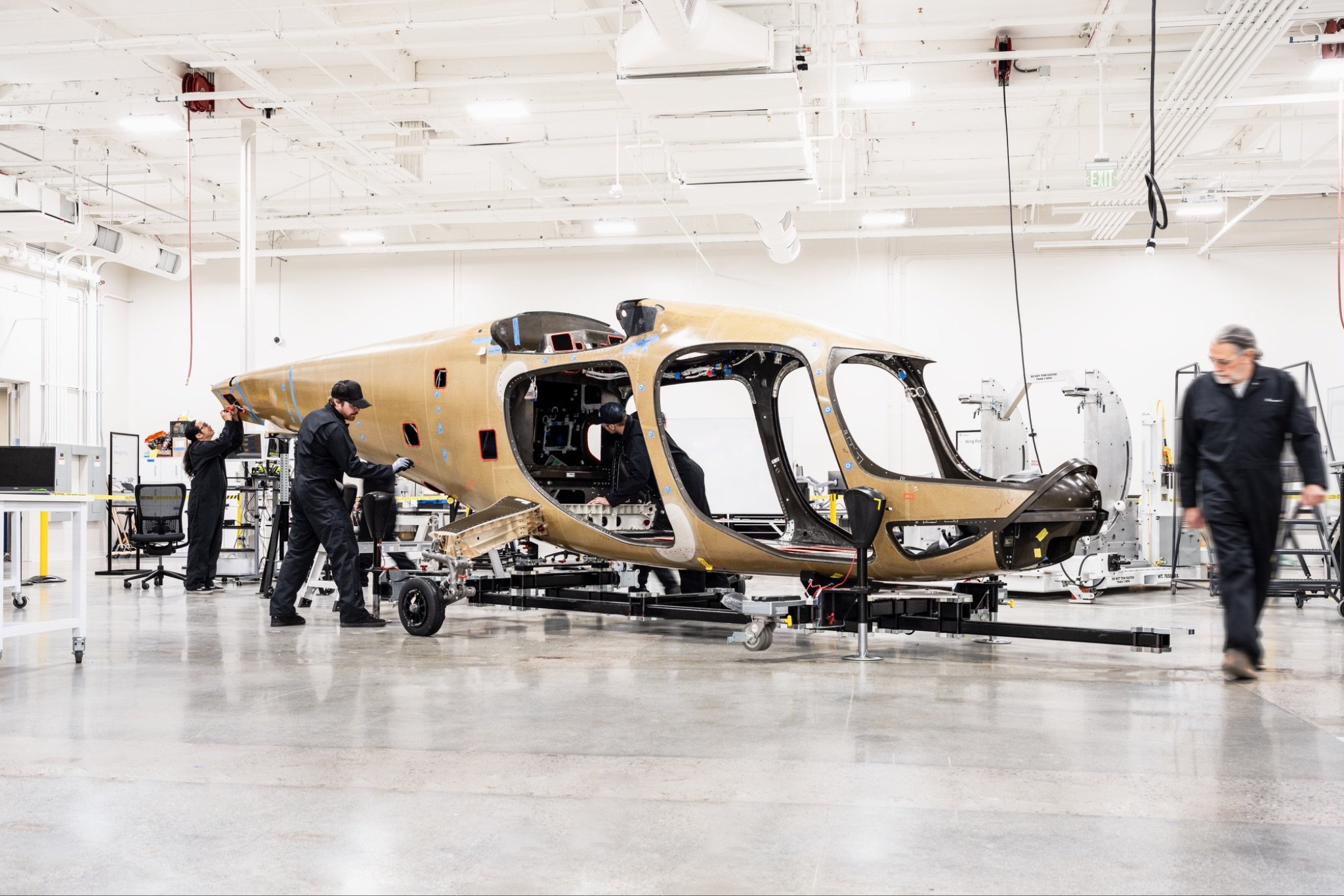
Image source: Archer Aviation.
A tenfold gain to Archer stock would bring its market cap to $45 billion
Archer Aviation currently trades between $5 and $6 a share, with a market cap of about $4.5 billion. A tenfold gain to Archer stock at today's price, then, would bring its market cap to $45 billion -- assuming no significant stock dilution. In reality, Archer has increased its share count substantially over the years to fund operations, and chances are more dilution is coming. For the sake of example, however, we'll use $45 billion, knowing that the actual market cap needed to support a tenfold gain could be higher.

NYSE: ACHR
Key Data Points
What would need to happen for this stock to grow into a $45 billion market cap? For one, the FAA regulatory process, which Archer is currently moving through, would be a thing of the past. Two, Archer would need to be generating meaningful revenue. Assuming a price-to-sales ratio of 20 -- roughly where Tesla (TSLA +4.65%) traded at the end of 2020, when investor enthusiasm reached feverish levels -- Archer would need to generate about $2.3 billion in revenue.
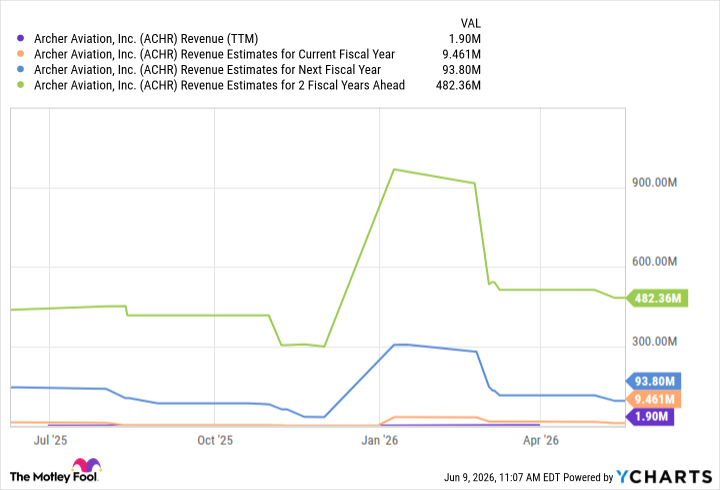
That's not a lofty long-term target. In fact, analysts currently expect Archer's revenue to reach nearly $500 million within two years.
Data by YCharts
The FAA type certification hurdle is taller than you might think
The leap from $93 million to $482 million in the graph above suggests analysts expect Archer to make substantial progress toward commercialization over the next several years. FAA type certification is crucial because, without it, Archer can't bring Midnight into commercial services.
It would be a mistake, however, to assume that Archer will just whizz through the FAA certification process in two years. Yes, the White House is very eager to see these electric aircraft flying, and yes, it is competing with China to establish leadership in eVTOL technology. But if history tells us anything, it's that the FAA will rush for no one. And big business or not, there's no reason to think eVTOL companies will get special FAA treatment.
Here's a fun example to ponder. Ever heard of the Leonardo AW609 tiltrotor? It's not an electric aircraft, but it shares the same basic concept as Archer's Midnight. It takes off like a helicopter and cruises like an airplane. The AW609 was designed in the early 1990s and began test flights in the early 2000s. It expected to get type certification by 2017. To date, it still hasn't.
Archer's Midnight aircraft, with its fully electric propulsion and motor systems, is significantly simpler than the AW609, so my mention of it isn't meant to be an apples-to-apples comparison. Still, my point is the same: One does not simply walk into the FAA and walk out with a type certification. The process could drag on for years, with deadlines sailing by and operating costs ballooning.
Well, let's hope that doesn't happen to Archer. If so, any hopes of a tenfold gain could drop vertically like the eVTOL Archer is trying to build.