NASA's Moon Base plans are shifting into high gear. As part of a wide-ranging "update on Moon Base rovers, landers, missions" last month, NASA announced a novel plan for mapping the Moon's surface -- and it involves Firefly Aerospace (FLY +2.28%), the first American company to land a spacecraft on the Moon (upright) in the past 50 years. Here's how it's going to work.
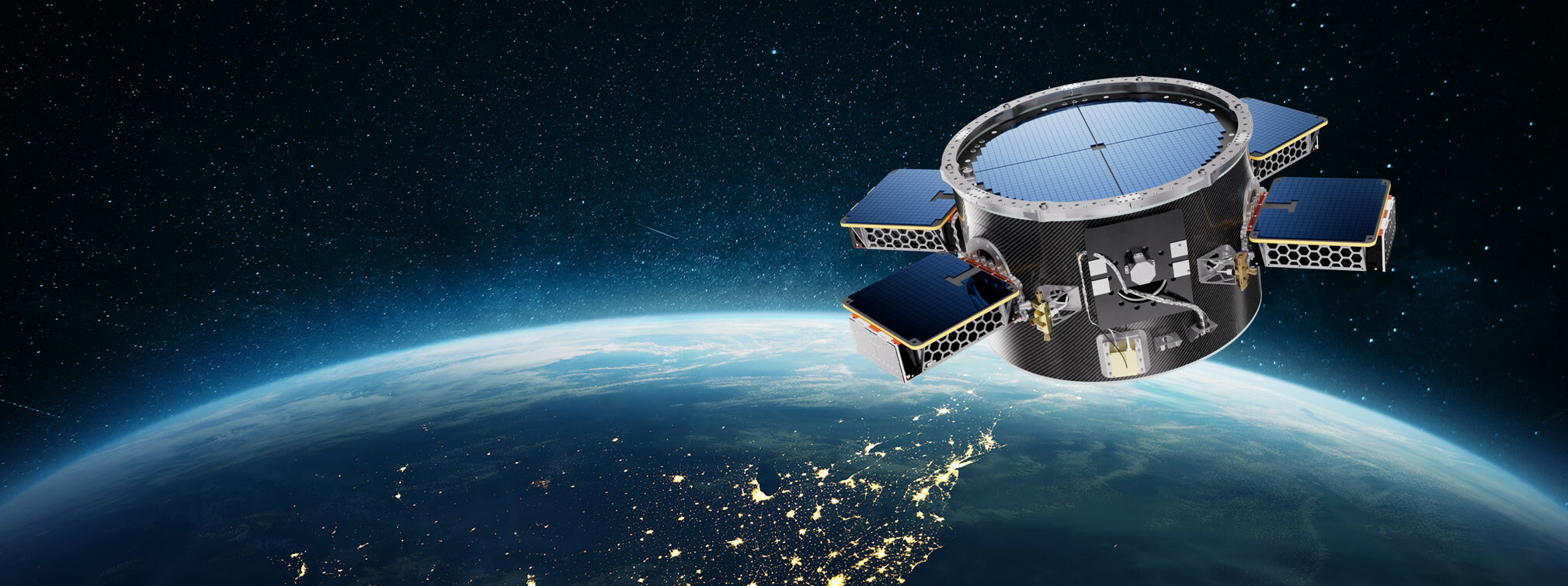
Image source: Firefly Aerospace.
Project MoonFall
It sounds a bit like a James Bond movie title, but NASA has dubbed its latest lunar project "MoonFall." Launching atop an as-yet-unidentified carrier rocket sometime in 2028, Firefly Aerospace will send one of its Elytra Dark spacecraft (the largest and most capable of the Elytra versions) to the Moon. Its cargo: four 550-pound, 7-foot-wide, 4-foot-tall "hopping" drones built for NASA by CalTech's Jet Propulsion Laboratory (JPL). Thirty miles above the lunar surface, Elytra will deploy its cargo to descend independently to the Moon. (Elytra itself will remain in lunar orbit.)
The four drones will land on the lunar surface at multiple sites. Then they will spend the next 14 days hopping all around the lunar south pole, using their rockets to launch into the "air" and then descend back to the surface. During each hop, the MoonFall drones will use high-definition cameras to map the surface they traverse. Their mission is to develop the highest-resolution map of the lunar surface ever created, detect potential caches of water ice, and confirm potential landing sites for Artemis IV and future crewed missions.

NASDAQ: FLY
Key Data Points
What it means for Firefly
Given all the missions NASA has planned for its MoonFall drones, the price it's paying Firefly to conduct the mission looks bargain-basement cheap -- just $75 million. (Paying JPL to build the drones, and hiring a rocket company to launch them and Elytra to the Moon will add some tens of millions more to the total project cost.)
Firefly gets more out of this mission than just money, however. Scouting landing sites for Artemis IV and future missions, Firefly is making itself integral to Project Artemis. There's great PR value in that (as well as pole position when bidding on further Artemis contracts).
The company is also using MoonFall as an advertisement to remind investors of its success in landing the only (upright) mission to the Moon in the past 50-plus years. As the company points out: "Firefly's Elytra spacecraft are built with proven systems from [the Blue Ghost Mission 1 lunar lander], including the core avionics, carbon composite structures, and Spectre engines that enabled the first successful commercial Moon landing."
Successful completion of the MoonFall mission, combined with a higher profile when bidding on future missions, should give Firefly a leg up as it races to meet analyst forecasts to more than 10x its annual revenue from $160 million last year to more than $2.1 billion by 2030, as estimated by S&P Global Market Intelligence. A growth stock investor couldn't ask for anything more.